
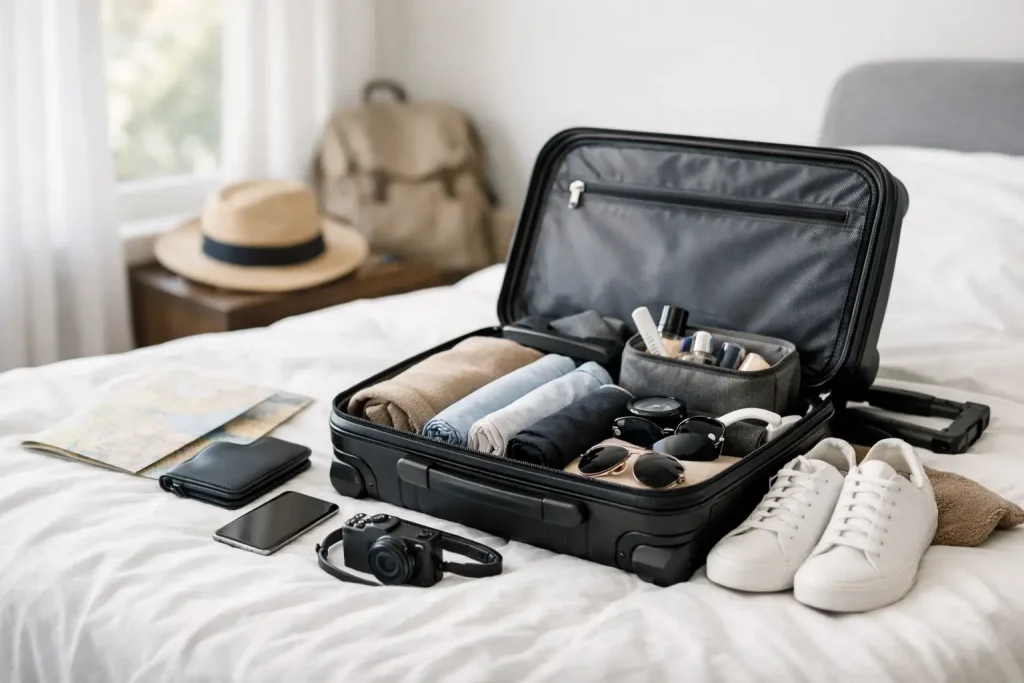
Learn how to pack carry on efficiently with a simple system for outfits, toiletries, tech, and airport rules that keeps every trip lighter and organized.
A carry-on can feel tiny when you are staring at a week’s worth of clothes, chargers, and toiletries on the bed. The secret to how to pack carry on efficiently is not becoming a minimalist overnight. It is giving every item a job, building around the trip you are actually taking, and refusing to pack for unlikely scenarios.
Smart carry-on packing saves more than baggage fees. You skip the check-in line, avoid the risk of a delayed suitcase, and can get from the airport to your plans without waiting at the carousel. With a repeatable system, even a small bag can handle a long weekend, a business trip, or a week of warm-weather travel.
Start With the Bag, Not the Clothes
Airline carry-on limits are not universal. A bag that fits comfortably in one airline’s overhead bin may be too tall, too wide, or too deep for another. Check your airline’s current size and weight limits before packing, especially on budget carriers and regional flights, where enforcement can be stricter.
A soft-sided carry-on gives you a little flexibility when a bin is crowded, while a hard-shell roller offers better structure and protection. Neither is automatically better. If you use public transit, walk long distances, or expect stairs, a backpack or compact duffel may be easier to manage. If you are bringing work clothes or traveling through several airports, a wheeled bag can make the trip less tiring.
Your personal item matters just as much. A backpack, tote, or under-seat bag should hold what you need during the flight: identification, wallet, medication, phone, headphones, a charger, reading material, and any valuables. This keeps you from reopening your main bag in a cramped aisle.
Build a Carry-On Packing Plan Around Outfits
The fastest way to overpack is choosing individual items instead of complete outfits. Begin with your itinerary, expected weather, and laundry access. Then select a small color palette so tops, bottoms, and layers work together without much thought.
For many trips, two or three bottoms, four or five tops, one layering piece, sleepwear, and enough underwear and socks for the days away is a practical starting point. Adjust from there. A beach trip may require fewer layers but more swimwear; a business trip may call for an extra shirt and one wrinkle-resistant outfit.
Wear your biggest pieces on travel day. Sneakers or boots, a jacket, and heavier jeans take up valuable room in a bag. Wearing them also gives you an extra layer if the cabin gets cold. That said, comfort comes first. Do not force yourself through a long airport day in stiff shoes simply to save a few inches of packing space.
Choose fabrics that earn their place. Lightweight knits, quick-drying activewear, wrinkle-resistant button-downs, and versatile dresses can be worn more than once with different combinations. One pair of shoes is often enough for a short leisure trip, but two pairs can be reasonable when you need a dressier option or expect rain. The goal is not deprivation. It is avoiding four pairs of shoes that serve nearly the same purpose.
Use the 24-Hour Reality Check
Before items go into the bag, ask yourself whether you would need them in the first 24 hours after landing. If the answer is no, ask whether they could be bought, borrowed, washed, or replaced at the destination. This is especially useful for bulky items such as hair tools, extra books, specialty workout gear, and “just in case” clothing.
Packing for every possible version of the trip creates a heavy bag for the version that actually happens. Check the forecast close to departure, but do not let one questionable rain icon convince you to pack a second coat.
How to Pack Carry On Efficiently Without Wasting Space
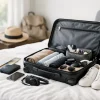
Once you have narrowed your clothing, pack in sections rather than filling every corner at random. Place heavier items near the wheel end of a roller bag so it stands upright more easily. Lay shoes along the bottom or sides, preferably in simple shoe bags, and use their interiors for socks, belts, or small accessories.
Rolling soft casual clothes can save space and reduce deep creases. Folding works better for structured items, such as blazers, collared shirts, and dress pants. A hybrid approach is usually best: fold wrinkle-prone garments into a flat layer, then place rolled T-shirts, pajamas, and underwear around them.
Packing cubes can help, particularly when you want to separate outfits, workout clothing, or clean and worn items. They do not magically create more capacity, and overstuffed cubes can make a bag harder to close. Their real value is organization. You can pull out one cube at the hotel instead of turning the entire suitcase upside down.
Use the small empty spaces deliberately. Charging cables fit into a pouch. A swimsuit can slide into a corner. Jewelry belongs in a compact case or pill organizer rather than loose in a pocket. Keep a little extra room for a souvenir, a shopping purchase, or clothing that does not compress as neatly on the way home.
Avoid vacuum-sealing bags for air travel unless you have a clear reason to use them. They can make clothing compact, but the bag may become dense, heavy, and difficult to repack without a vacuum. They are more useful for bulky cold-weather gear than for a standard weekend wardrobe.
Keep Toiletries Simple and Security-Friendly
Airport security rules make toiletries one of the easiest places to lose time and space. In the United States, liquids, gels, creams, aerosols, and pastes in a carry-on generally need to be in containers of 3.4 ounces or less and placed together in one quart-size clear bag. Rules can change, and some airports use different screening technology, so confirm requirements before departure.
Decant only what you will use. A full-size bottle of lotion or shampoo is rarely worth the space for a few days away. Solid alternatives, including bar soap, stick deodorant, shampoo bars, and powder makeup, can reduce liquid-bag pressure. Keep the clear toiletry bag near the top of your carry-on or in your personal item so screening is less of a scramble.
Prescription medicine, contact lenses, and must-have skincare should travel in your personal item, not deep inside the overhead-bin bag. If a gate agent checks your roller at the last minute, you will still have the essentials with you.
Put Tech and Travel Documents Within Reach
A well-packed carry-on can still be frustrating if your phone cable, passport, or earbuds disappear under a sweater. Create a small flight kit in your personal item. Include your charging cable, portable battery, headphones, glasses, hand sanitizer, a snack, and anything that helps you stay comfortable for several hours.
If you are traveling with a laptop or tablet, use a padded sleeve and position it where it can be removed quickly if screening requires it. Keep power banks in your carry-on rather than checked luggage, since lithium battery rules often limit where they can travel. Check the airline’s policy if your battery is unusually large.
Download boarding passes, hotel details, maps, and entertainment before leaving home. Airport Wi-Fi can be slow, and a low battery is not the time to hunt through emails for a reservation number.
Finish With a Quick Pre-Flight Check
The night before travel, zip the bag and lift it. If it feels awkward, not merely heavy, redistribute the load or remove one nonessential item. Test the handle, wheels, and zippers. A carry-on that is barely closed at home is likely to become a problem after you buy a snack, remove a jacket, or repack at the gate.
Before heading out, confirm four basics: your bag meets the airline’s current dimensions, liquids follow security rules, vital medication and valuables are in your personal item, and you have room to repack. Those few minutes prevent the most common airport surprises.
The best packed carry-on is not the one that holds the most. It is the one that lets you leave the airport ready for the trip, with what you need and nothing you have to wrestle with.













Leave a Comment
Your email address will not be published. Required fields are marked with *