Discover the latest in recent new music trends, from the rise of corridos to genre-blurring sounds shaping the future. Stay ahead!
The music world is moving faster than ever, and keeping up with recent new music feels like trying to catch lightning in a bottle. A Mexican storytelling genre called corridos has surged 71% in artist growth since 2021, almost entirely powered by independent artists with zero major label backing. That single fact tells you everything about where music is heading right now. Genre walls are crumbling, mainstream charts are getting moodier, rock is making a dramatic comeback, and grassroots artists are outrunning the traditional industry machine. Here is everything you need to understand what is shaping the soundscape of 2026.
Table of Contents
- The rise of independent genres reshaping new music
- Embracing the post-genre era: Wild genre-blending in recent releases
- The moodier, more distant emotional tone in recent hits
- Rock’s resurgence and its influence on recent new music
- How to explore and enjoy recent new music trends in 2026
- Why today’s recent new music trends signal a revolution beyond genres and labels
- Discover fresh inspiration and vibrant trends with lifestyle upgrades
- Frequently asked questions
Key Takeaways
| Point | Details |
|---|---|
| Independent music growth | Independent artists are driving rapid growth in emerging genres like corridos, reshaping how new music spreads. |
| Post-genre blending | Genre boundaries are dissolving, with recent releases blending styles to create innovative sounds. |
| Moodier mainstream hits | Popular songs increasingly feature cynical and moody themes, slower tempos, and darker timbres. |
| Rock’s evolving impact | Rock music is resurging and influencing other genres, especially country, with heavier production styles. |
| Practical discovery tips | Use social media and mood-based playlists to find fresh music across diverse genres and emerging artists. |
The rise of independent genres reshaping new music
Few stories in recent years capture the energy of today’s music scene better than corridos. At its core, corridos is a Mexican narrative folk tradition, telling stories of struggle, ambition, and identity. Its younger cousin, corridos tumbados (sometimes called sad corridos), blends those roots with trap beats, emo-tinged vocals, and urban production. Artists like Peso Pluma helped pull the subgenre into the global spotlight, but the real engine behind the movement is thousands of independent creators grinding without label support.
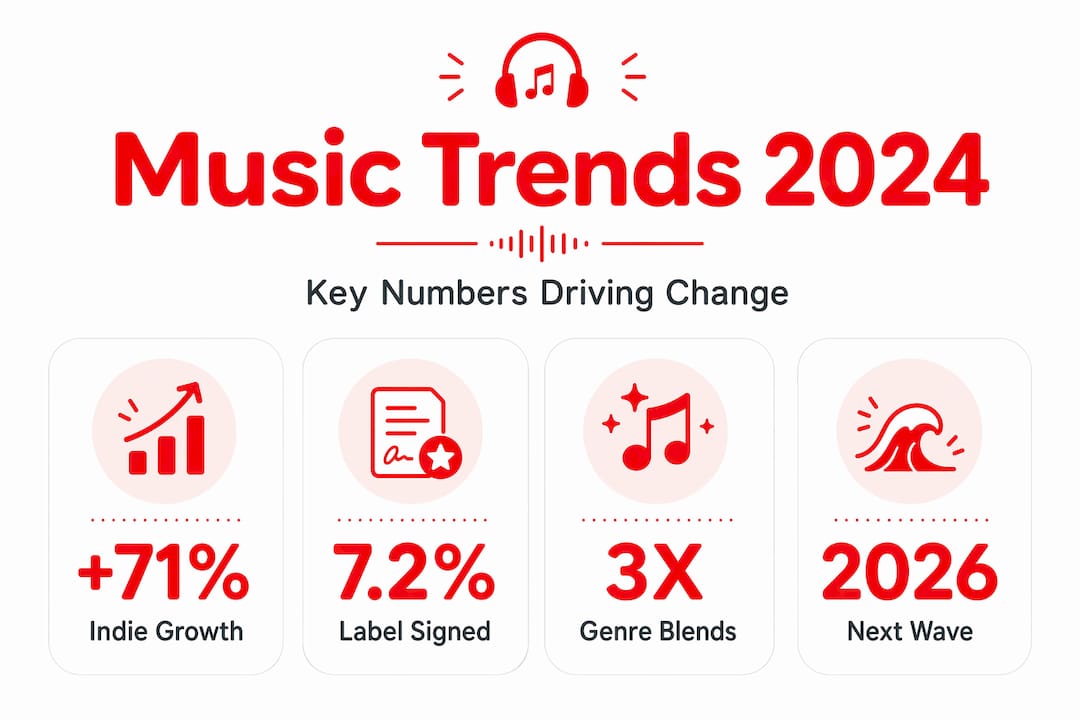
The numbers behind this growth are striking. Corridos artists increased 71% since 2021, and only 7.2% are label-signed, meaning independent infrastructure, think direct-to-fan sales, social media hustle, and streaming royalties, is fully supporting mid-level careers. This is not a fluke. It is proof that a genre can build global reach without a single executive in a corner office deciding it deserves a chance.
Here is a snapshot of how the corridos ecosystem looks across artist career stages:
| Career stage | Primary revenue source | Label affiliation |
|---|---|---|
| Emerging artists | TikTok virality, merch | Mostly independent |
| Mid-level artists | Streaming royalties, live shows | Independent or small labels |
| Established artists | Major streaming deals, tours | Mix of indie and major label |
What makes this model so exciting for the rest of the music world is the template it sets. Key factors driving corridos growth include:
- Social media discovery: Short-form video platforms allow a new track to reach millions without radio play
- Authentic storytelling: Fans connect deeply with narratives that feel real and culturally rooted
- Low-barrier production tools: Affordable home studio gear lets artists produce professionally without big budgets
- Community momentum: Fans act as grassroots promoters, sharing and championing new artists organically
Pro Tip: If you want to get ahead of the next big genre wave, search hashtags related to regional music styles on short-form video platforms. Corridos blew up on TikTok long before it hit mainstream playlists.
The corridos story is not just a Latin music event. It is a preview of how the next wave of popular songs this month could come from anywhere, built by anyone, and heard everywhere.
Embracing the post-genre era: Wild genre-blending in recent releases
If you have noticed that your favorite new tracks seem impossible to describe in one word, you are experiencing the post-genre era firsthand. This is not a marketing phrase. It is a genuine shift in how music is created and consumed. Genre boundaries are increasingly irrelevant, with artists treating styles the way a chef treats ingredients, mixing and matching whatever creates the most exciting result.
Think about what this looks like in practice. A bedroom pop artist layers reggaeton percussion under dreamy indie vocals. A country singer channels punk guitar energy. An R&B producer drops a jazz trumpet solo mid-track. These are not novelty experiments. They are the new normal in latest music releases, and listeners are rewarding the boldness with massive streams.
Streaming algorithms and AI music tools are accelerating this trend in fascinating ways. Recommendation engines do not just play you “similar songs” anymore. They find emotional and sonic patterns across wildly different genres, which means listeners are being exposed to genre combinations they would never have searched for themselves. This creates a feedback loop: artists see that cross-genre sounds perform well, so they experiment more, which teaches the algorithms to recommend more hybrid music.
“The post-genre era is not about abandoning identity. It is about expanding it. The most captivating new artists do not pick a lane. They build entirely new roads.”
Here is what the post-genre movement means for you as a listener:
- Mood-based discovery: Instead of searching by genre, try searching by feeling: “melancholic late night drive” or “euphoric workout energy”
- Global sounds entering the mix: Afrobeats, cumbia, hyperpop, and phonk are now regular ingredients in mainstream-adjacent releases
- Shorter attention cycles: Artists experiment faster because they do not need to commit to a genre identity for an entire album cycle
- Collaborative surprise: Unexpected collaborations between artists from totally different scenes are now celebrated rather than questioned
Pro Tip: Build a playlist around a single emotion rather than a genre. You will stumble across what’s new in music from scenes you never knew existed, and it is genuinely one of the most rewarding ways to discover fresh sound.
Understanding post-genre music is not just about staying current. It opens up your entire relationship with sound.
The moodier, more distant emotional tone in recent hits
There is something darker in the air when you scroll through the latest music releases. It is not your imagination. Between 2021 and 2025, cynical lyrical themes rose from 59% to 70% in Hot 100 songs, and production choices across genres shifted toward slower tempos and darker timbres. The music hitting hardest right now does not promise sunshine. It sits in the storm with you.
This emotional turn reflects something real in the cultural atmosphere. Listeners are gravitating toward songs that validate frustration, distance, and complicated nostalgia rather than packaged optimism. Artists who lean into that honesty are being rewarded with genuine emotional connection from their audiences.
Even the structure of popular songs this month reflects this shift. Song titles have gotten shorter and more direct: single-word or two-word titles that carry emotional weight without explaining themselves. Think of the difference between “Happy” and something like “Numb” or “Gone.” The latter two do not need a preamble.
Here is a look at the key emotional characteristics defining today’s chart-topping sound:
| Characteristic | 2021 trend | 2025 trend |
|---|---|---|
| Lyrical tone | Upbeat, romantic | Cynical, nostalgic, distant |
| Tempo | Mid-to-fast | Slower, deliberate |
| Timbre | Bright, polished | Darker, more textured |
| Song title length | Descriptive, longer | Short, emotionally blunt |
The shift is visible across multiple genres. Here are the key emotional directions shaping recent new music:
- Cynicism as connection: Songs that express frustration or world-weariness are resonating because they feel honest rather than performative
- Anger with nuance: Rage-adjacent tracks are not one-dimensional. They carry grief and confusion beneath the surface
- Nostalgic longing: References to simpler times or past relationships carry a particular ache that listeners find comforting
- Emotional distance as aesthetic: Detached, whispered vocals over atmospheric production create intimacy through restraint rather than volume
This trend is not about music becoming pessimistic. It is about music becoming more honest. And listeners right now are hungry for that authenticity.
Rock’s resurgence and its influence on recent new music
If someone told you five years ago that rock would be one of the defining sounds of 2025 and 2026, you might have raised an eyebrow. But the data is clear. Rock doubled its presence on the Hot 100 from 10% in 2021 to 22% in 2025. That is not a trend. That is a comeback.
Several forces are driving this revival. Viral moments on short-form video platforms have reintroduced younger audiences to classic rock sounds, sparking curiosity about both legacy acts and new artists channeling that energy. Artists like Olivia Rodrigo blending pop with raw guitar-driven production helped normalize rock aesthetics in mainstream spaces. And the moodier emotional climate described above turns out to be a perfect incubator for rock’s signature intensity.
“Rock’s resurgence is not about nostalgia. It is about a generation finding that distorted guitars and driving drums express exactly what they feel right now.”
The genre’s influence is also reshaping country music in striking ways. A new wave of country rock features heavier guitar tones and punchier drum sounds than traditional Nashville production, marking a real evolution in the genre’s identity. Artists who were previously filing firmly under country are now landing on rock-adjacent playlists, and listeners seem genuinely thrilled about it.
Key elements of rock’s current resurgence include:
- Guitar-forward production returning to mainstream radio and streaming charts
- Drum sounds getting louder and more physical, moving away from the polished, sample-heavy production of the mid-2010s
- Rock-pop hybrids allowing artists to carry rock energy without sacrificing mainstream accessibility
- Country’s rock crossover creating an entirely new lane of listeners who want emotion and edge in equal measure
- Independent rock artists thriving in the same grassroots ecosystem as corridos, building audiences through live performance and social media
Rock’s return feeds directly into the post-genre energy driving upcoming album releases across the board. When the lines between rock, country, pop, and R&B blur this productively, the result is some of the most exciting music in years.
How to explore and enjoy recent new music trends in 2026
Knowing that music is changing is one thing. Knowing how to actually find the good stuff is where the real reward lives. Navigating what’s new in music in 2026 requires a slightly different approach than it did even three years ago, because the landscape is bigger, faster, and more fragmented than ever.
The most important mindset shift is moving from genre-first to feeling-first discovery. Rather than asking “what genre do I like,” ask yourself “what do I want to feel right now.” That question opens doors that genre labels keep firmly shut.
Here is a practical roadmap for discovering recent new music and making the most of the current landscape:
- Follow grassroots scenes on TikTok and Instagram. Independent artists thrive on social platforms for discovery. Search genre hashtags, regional music tags, and even city-specific music communities to find artists before they blow up.
- Let streaming algorithms surprise you. AI-driven streaming playlists are increasingly organized around feelings rather than genres. Accept a “recommended” playlist you would normally skip and listen without skipping for at least 20 minutes.
- Diversify your live music diet. Attend a show in a genre you have never explored. The corridos scene, local rock venues, and genre-blending festival lineups all offer immersive discoveries you cannot replicate through headphones alone.
- Support artists directly. Buy a record, a piece of merch, or a ticket. Independent artists in emerging genres often survive on direct fan support, and that investment deepens your connection to the music itself.
- Build theme playlists with friends. Collaborative playlists where everyone contributes songs fitting a mood or vibe are one of the best social tools for discovering upcoming album releases you would never find solo.
Pro Tip: Use streaming platform’s “radio” feature starting from an independent or emerging artist you already love. The algorithm will surface artists at a similar career stage, which is far more likely to introduce you to genuinely new sounds than the main “Discover” sections.
The listeners who stay most connected to the pulse of new music trends are not the ones who know the most. They are the ones who stay the most curious.
Why today’s recent new music trends signal a revolution beyond genres and labels
Here is what most articles about music trends will not say out loud: the industry is not driving these changes. Fans are. The corridos explosion, the post-genre blending, the rock comeback, the moodier mainstream, none of these trends emerged from a label boardroom deciding what listeners should want. They all began in communities, algorithms, bedrooms, and concert venues, then forced the industry to catch up.
The data from the corridos study is particularly telling. Labels increasingly acquire rather than discover talent, signing artists only after grassroots momentum is already proven. This is a profound power shift. It means the gatekeepers are no longer guarding the gate. They are waiting outside it, watching to see who the crowd will crown.
The post-genre era dissolves old boundaries in a way that democratizes both creation and consumption. An artist in Mexico City producing corridos tumbados on a laptop, an indie rock band in Nashville experimenting with R&B production, a solo singer in Lagos blending Afrobeats with country twang, these are not outliers. They are the new center.
What this means for you as a listener is genuinely exciting. You now have unprecedented access to authentic artistry from every corner of the world, often before the industry has even noticed it. But that access requires something in return: an open mind, a willingness to explore outside your comfort zone, and an active curiosity rather than a passive one. The revolution in music is already happening. The question is whether you are listening.
Discover fresh inspiration and vibrant trends with lifestyle upgrades
Music sounds better when your environment matches the energy. Whether you are discovering the latest music releases through late-night playlist sessions or hosting friends for a genre-blending listening party, the right atmosphere transforms the experience. Explore creative outdoor lighting ideas to create an inviting backyard space that feels like your own personal festival. Pair that with fitness lifestyle tips to build energy habits that keep pace with music’s relentless momentum. And when it comes to setting the scene indoors, browse home improvement tips that maximize both comfort and style, because the best music experiences deserve a space that truly feels alive.
Frequently asked questions
What is the meaning of the post-genre era in music?
The post-genre era refers to a period when traditional music genre boundaries blur as artists and technology merge styles freely, resulting in more diverse and hybrid musical expressions. Genre boundaries are increasingly irrelevant as wild genre-blending becomes standard practice in new releases.
How are independent artists influencing recent new music trends?
Independent artists are leading growth in emerging genres like corridos through grassroots efforts, social media, and direct fan engagement, fundamentally rewriting how the music industry operates. Nine out of ten corridos artists operate independently, fueling rapid genre expansion without label support.
Why are recent popular songs showing moodier and more cynical themes?
Between 2021 and 2025, hit songs increasingly featured cynical, angry, and nostalgic lyrics reflecting broader cultural moods, paired with slower tempos and darker production. Cynical themes rose from 59% to 70% among Hot 100 songs during that period.
How is rock music influencing current country music trends?
A new wave of country rock blends heavier instrumentation and rock-informed production with mainstream country songwriting, creating a sound that appeals to audiences of both genres. Rock’s resurgence is shaping country music with bigger guitar and drum sounds that mark a genuine evolution in the genre.
What are effective ways to discover recent new music trends?
Explore independent artists via social media platforms like TikTok, use streaming playlists arranged by mood rather than genre, and embrace genre-blending sounds from global scenes. Social platforms and AI-driven streaming now help fans discover music far beyond traditional genre boundaries.


















Leave a Comment
Your email address will not be published. Required fields are marked with *