
Discover why investing in smart homes boosts convenience, security, and ROI. Learn how smart upgrades can transform your lifestyle and savings.
Smart home technology is no longer the exclusive territory of tech enthusiasts with unlimited budgets. Today, 93% of homeowners own at least one smart device, proving that connected living has quietly become the standard, not the exception. Whether you want to slash energy bills, feel safer at night, or simply make daily routines smoother, smart home upgrades deliver real, measurable rewards. This article explores every compelling reason to invest, from energy savings and ironclad security to property value gains and the privacy safeguards that protect your family.
Table of Contents
- Boosting energy efficiency with smart homes
- Enhancing security: Smart home safety explained
- The convenience factor: Automation and accessibility
- Return on investment: Smart homes as financial assets
- Smart home market growth and future demand
- Privacy, risks, and mitigation: Navigating smart home concerns
- Expert perspective: What most guides miss about smart home investing
- Next steps: Transform your home with smart tech
- Frequently asked questions
Key Takeaways
| Point | Details |
|---|---|
| Major energy savings | Smart devices can cut household energy use by up to 30% and pay for themselves quickly. |
| Enhanced security | Smart home systems dramatically reduce burglary risk and improve peace of mind. |
| Convenience and accessibility | Automation and voice control make daily life easier and adaptable to any lifestyle. |
| Strong investment ROI | Smart upgrades boost home value by 3-10% and often pay back in under four years. |
| Consider privacy safeguards | Network segmentation and certified devices help protect your data without sacrificing benefits. |
Boosting energy efficiency with smart homes
Picture this: your home’s heating system kicks on 30 minutes before you arrive home from work, your lights dim automatically when daylight is strong, and your coffee maker shuts off without you thinking about it. That’s not science fiction. That’s the quiet, daily brilliance of smart home automation working for you.
The numbers are genuinely exciting. Smart thermostats cut heating and cooling costs by 8 to 15%, with some households reporting total energy bill reductions of up to 27%. When you layer in smart lighting and smart plugs, the compound savings become substantial over a year. For an average household spending $2,000 annually on utilities, even a modest 10% reduction means $200 back in your pocket every year.
Here’s a quick look at how different smart devices contribute to energy savings:
| Smart device | Estimated savings | Typical payback period |
|---|---|---|
| Smart thermostat | 8–15% on HVAC costs | 1–2 years |
| Smart lighting (LED + dimming) | 5–10% on electricity | Under 1 year |
| Smart plugs and power strips | 2–5% by eliminating standby drain | Under 1 year |
| Smart water heater controller | 10–15% on water heating | 1–3 years |
The environmental impact is just as significant as the financial one. By reducing energy consumption at home, you lower your household carbon footprint without sacrificing comfort. A family that installs a smart thermostat, replaces traditional bulbs with app-controlled LED lighting, and uses smart plugs on entertainment systems can reduce their carbon emissions by hundreds of kilograms per year.
Key energy-saving strategies to consider:
- Schedule heating and cooling around your real daily routine, not a generic timer
- Set motion-triggered lights so rooms never burn energy when empty
- Monitor consumption in real time using smart energy dashboards
- Automate appliance shutoffs for devices left on standby overnight
- Pair your solar panels with smart storage and inverter controls if applicable
Explore energy efficient home upgrades to find practical ideas that pair perfectly with smart automation.
Pro Tip: Don’t automate devices in isolation. Linking your smart thermostat schedule to your lighting scenes and security modes creates a layered system where savings multiply. When your alarm system enters “away mode,” your thermostat, lights, and appliances all respond at once.
Enhancing security: Smart home safety explained
Security is consistently ranked as the top reason homeowners embrace smart technology, and the results speak for themselves. Homes equipped with smart security systems are 30% less likely to be burglarized, and 73% of smart home users report feeling noticeably safer than before they upgraded.
“Smart homes are 30% less likely to be burglarized, and 73% of users report a significant increase in their sense of security.” Smart Home Statistics, Gitnux
What makes smart security so effective? Traditional alarm systems react after something happens. Smart security systems are proactive. A smart doorbell camera identifies unusual activity before anyone approaches your door. Smart locks let you grant or revoke access from anywhere. Motion sensors trigger immediate phone alerts so you can respond within seconds, not hours.
Here’s how traditional security systems compare to smart security setups:
| Feature | Traditional security | Smart security |
|---|---|---|
| Remote monitoring | Limited or none | Full real-time control from any device |
| Access control | Physical keys only | Digital codes, fingerprints, remote lock/unlock |
| Alerts and notifications | Siren-only or landline call | Instant app alerts with live video |
| Response time | Depends on monitoring service | Immediate owner notification |
| Evidence capture | Basic siren deterrence | HD video footage stored in cloud |
| DIY installation | Rarely possible | Common with plug-and-play devices |
Setting up a foundational smart security system is simpler than most homeowners expect. Here’s a straightforward sequence to follow:
- Start with a smart doorbell camera. It covers the most common entry point and gives you real-time visibility at the front door.
- Add a smart lock to your main entrance. Set unique codes for family members and trusted visitors, and revoke access instantly when needed.
- Install indoor and outdoor motion sensors. These alert you immediately if movement is detected in zones you specify.
- Connect a central hub or security panel. This ties all devices together so they communicate and respond as a unified system.
- Set up cloud or local video storage. Ensure footage is preserved securely and accessible if you ever need to share it with authorities.
- Configure geofencing. Your system automatically arms when you leave and disarms as you approach home.
The peace of mind this creates is genuinely transformative. Parents can check on children remotely. You can confirm deliveries were left safely. You can see who rang the doorbell while you were in the shower. Smart security doesn’t just protect your property. It puts you back in control of your space.
The convenience factor: Automation and accessibility
Beyond energy and security, the pure daily convenience of a smart home is where the real magic lives. Imagine waking up to lights that gently brighten at your preferred pace, a thermostat already at your ideal morning temperature, and the coffee maker finishing its cycle right on cue. That sense of an effortlessly personalized home is what smart home convenience is all about, and it genuinely saves time while improving comfort, health, and accessibility for everyone in the household.
Voice commands make daily interactions with your home feel almost futuristic. Ask your smart speaker to turn off every light in the house, set a cooking timer, or lock the front door from the couch. You don’t need to walk from room to room or worry whether you remembered something. Your home listens, learns, and responds.
The accessibility angle is especially important and often overlooked. For elderly residents or people with mobility challenges, smart home automation is genuinely life-changing. Voice-controlled lighting eliminates the need to navigate dark rooms. Smart locks remove the physical struggle with keys. Automated medication reminders and air quality monitors contribute to better health outcomes at home. These aren’t luxuries. They’re practical supports that enable independent living.
Everyday conveniences worth building into your setup:
- Morning routines: Lights on, thermostat adjusted, and news playing automatically at your wake time
- Departure automations: One tap or voice command locks doors, turns off all lights, adjusts heating, and arms security
- Arrival scenes: Lights, music, and temperature shift to welcoming settings as you pull into the driveway
- Bedtime routines: Smart locks confirm all doors are secured, lights fade off gradually, and the thermostat drops to sleep temperature
- Guest access: Temporary digital keys mean no spare keys hidden under doormats
- Allergy management: Air purifiers and HVAC filters activate automatically based on air quality readings
Before building your setup, check out this smart home setup guide for step-by-step direction, and browse top smart home devices to identify the right starting points for your lifestyle.
Pro Tip: Link your morning routine automation to sunrise timing rather than a fixed clock. As seasons shift and daylight changes, your home adapts automatically without you needing to update settings manually. This creates a living environment that genuinely aligns with natural rhythms. You can find more ideas for seamlessly weaving tech into everyday life.
Return on investment: Smart homes as financial assets
Smart home technology isn’t just spending money on gadgets. It’s investing in a financial asset. Smart home upgrades typically pay for themselves within 1 to 4 years through energy savings alone, then continue generating value through increased property worth and buyer appeal.
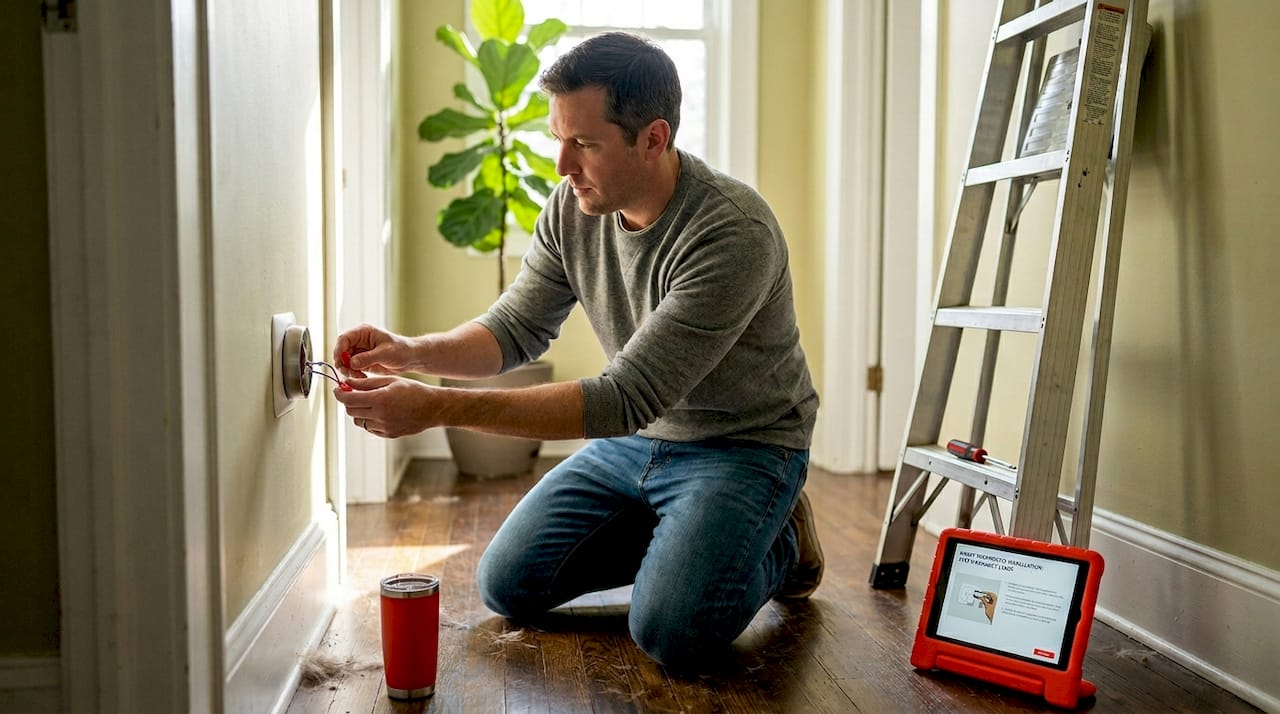
The property value impact is measurable and growing. Homes equipped with smart technology command 3 to 10% higher sale prices compared to equivalent properties without it. In a hot real estate market, that can mean tens of thousands of dollars. Beyond price, smart homes sell faster, because today’s buyers actively seek connected features during their search.
Here’s a sample ROI breakdown for a typical mid-range smart home investment:
| Upgrade | Estimated cost | Annual savings | Property value added |
|---|---|---|---|
| Smart thermostat | $150–$250 | $130–$145 | $500–$1,500 |
| Smart security system | $300–$800 | Insurance discounts ~$100 | $2,000–$5,000 |
| Smart lighting system | $200–$500 | $80–$150 | $500–$2,000 |
| Smart locks | $150–$400 | Negligible direct | $500–$1,000 |
| Total investment | ~$800–$1,950 | ~$310–$395/year | $3,500–$9,500 |
The financial case is compelling when you see it in one place. An investment under $2,000 can realistically return $3,500 to $9,500 in added property value, with annual savings beginning from year one. That’s a financial return most home improvement projects can’t match.
Additional financial advantages worth noting:
- Insurance discounts: Many insurers reduce premiums for homes with verified smart security systems, sometimes by 5 to 15%
- Buyer competition: Listed smart homes attract more offers and shorter days on market
- Future-proofing value: Buyers increasingly expect smart-ready infrastructure, making retrofitting now more valuable than waiting
- Energy rebates: Some utility providers offer rebates on certified smart thermostats, reducing upfront costs
Visit our home improvement tips section and real estate insights for deeper guidance on upgrading strategically. If you want the full picture on maximizing home ROI, that resource breaks it down upgrade by upgrade. You can also explore our broader home hobbies section for hands-on inspiration.
Smart home market growth and future demand
The smart home industry is experiencing explosive, sustained growth that shows no signs of slowing. The global smart home market was projected at over $154 billion in 2024 and is expanding at a compound annual growth rate of 22.8%, with forecasts placing it at nearly $950 billion by 2032. These aren’t optimistic projections from industry insiders hoping for the best. They’re market realities driven by consumer demand, falling device prices, and ecosystem maturity.
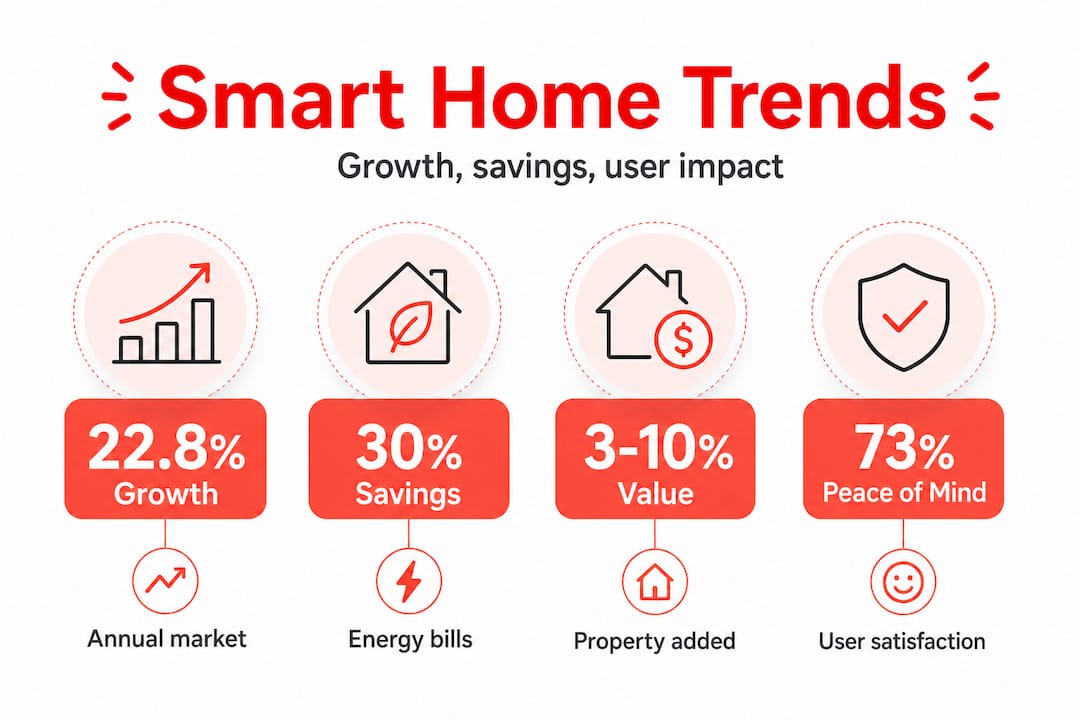
Smart home market growth projections at a glance:
| Year | Projected market size | Key driver |
|---|---|---|
| 2024 | $154 billion | Mainstream adoption, affordable devices |
| 2026 | ~$233 billion | AI integration, voice assistant expansion |
| 2028 | ~$352 billion | Matter protocol standardization |
| 2030 | ~$533 billion | New home builds with smart infrastructure |
| 2032 | ~$950 billion | Global mid-market and emerging market growth |
Trends accelerating smart home adoption right now:
- The Matter standard: A new universal connectivity protocol allowing devices from different brands to work seamlessly together, removing compatibility headaches
- AI-powered automation: Systems that learn your habits and preferences, anticipating your needs before you express them
- Affordable device pricing: Entry-level smart plugs now cost under $10, making smart homes accessible at any budget
- Builder integration: New construction homes increasingly include smart-ready wiring, hubs, and pre-installed devices as standard
- Energy grid integration: Smart homes connecting to utility providers for demand-response programs, rewarding homeowners who shift usage to off-peak hours
- Health and wellness tech: Air quality monitors, circadian lighting, and sleep-tracking environments becoming mainstream home features
Investing now means you’re building into a growth curve, not chasing a trend. Buyers looking at properties five years from now will increasingly expect smart features as standard. Those who upgrade today capture both the current lifestyle benefits and the future resale premium. For cutting-edge ideas on home transformation, explore best home improvement tech ideas and see how smart innovation shapes modern lifestyles.
If you’re also navigating the financial side of a home investment, expert perspectives on home loans and luxury real estate can help you position your smart home upgrades within a broader property strategy.
Privacy, risks, and mitigation: Navigating smart home concerns
Smart home technology is genuinely powerful, and with that power comes a real conversation about privacy. Connected devices collect data. That data can be vulnerable if your network isn’t secured properly. Acknowledging this honestly is essential because the risks are manageable, and mitigating them with network segmentation, local control hubs, and certified secure devices is entirely within reach for everyday homeowners.
The most common privacy concerns include:
- Data collection by manufacturers: Smart speakers, cameras, and thermostats often collect usage data that is stored in manufacturer clouds
- Weak network security: Default router passwords and unsegmented home networks create entry points for hackers
- Third-party app access: Many smart home apps request broad permissions that go beyond what the device actually needs
- Outdated firmware: Devices running old software often have unpatched vulnerabilities that attackers can exploit
- Voice recording risks: Smart speakers process audio commands and may retain recordings that could theoretically be accessed
The good news is that each of these risks has a clear, practical solution:
- Segment your network: Create a separate Wi-Fi network specifically for smart home devices. This contains any breach to that network rather than exposing your computers, phones, and financial data.
- Use local control hubs: Devices that process commands locally rather than routing through manufacturer cloud servers reduce external exposure significantly.
- Change default credentials immediately: Every new device should have a strong, unique password set up during installation, not the factory default.
- Audit app permissions: Review what each smart home app accesses and restrict permissions to only what’s truly necessary.
- Enable automatic firmware updates: Keeping devices current ensures you benefit from security patches as soon as they’re released.
- Review manufacturer privacy policies: Choose brands with transparent data policies and clear opt-out mechanisms.
Pro Tip: When buying new smart devices, look for the Matter certification label. Matter is an open, industry-wide security standard that ensures devices meet rigorous interoperability and security benchmarks. Choosing Matter-certified devices means you’re building on a foundation designed for both safety and long-term compatibility.
Privacy management in a smart home isn’t a one-time setup task. It’s an ongoing practice, much like updating your phone’s operating system. Treating it as part of your regular home maintenance routine keeps your connected lifestyle secure and enjoyable.
Expert perspective: What most guides miss about smart home investing
Most smart home articles give you lists of popular gadgets and leave you with the impression that buying more devices equals a smarter home. That’s the part we want to push back on firmly.
The real insight, earned from watching hundreds of homeowners set up connected systems, is that integration matters infinitely more than individual devices. A $300 smart thermostat that isn’t linked to your security system or daily schedule delivers a fraction of its potential value. A $25 smart plug that’s part of a well-designed automation ecosystem saves time every single day. The gadget is never the point. The connected experience is.
The privacy and security trade-off also deserves more nuanced treatment than most guides provide. Smart homes balance convenience, security, and efficiency against real privacy risks, and the answer isn’t to avoid smart technology out of caution. It’s to adopt it thoughtfully using network segmentation, local hubs, and Matter-certified devices as your foundation. The trade-off isn’t all-or-nothing. It’s a spectrum you can actively manage.
Here’s the hard-won lesson we’d share with any new smart homeowner: start with one room and one problem. Don’t try to automate your entire house in a weekend. Pick the friction point that bothers you most, whether that’s wasted energy from a poorly programmed thermostat, security anxiety about the front door, or the annoyance of getting up to turn off lights after everyone’s in bed. Solve that problem well, then expand.
What marketers consistently get wrong is focusing on the wow factor of individual devices rather than the transformation that comes from integration and daily life impact. The magic of a smart home isn’t the glowing app controls or the voice-activated gadgetry. It’s the morning you realize you haven’t touched a light switch in three months, and your home has simply been reading your life and responding to it. That’s the level of seamless living worth building toward.
When you’re ready to level up your setup, home tech upgrades offers thoughtful, practical ideas that go well beyond the basics.
Next steps: Transform your home with smart tech
You now have a clear picture of what smart home technology delivers: lower energy bills, stronger security, effortless daily routines, and real financial returns on your investment. The next step is turning that knowledge into action, and you don’t need to figure it out alone. At Lizard’s Lunch, we’ve curated practical guides that help you move from curious reader to confident smart homeowner. Whether you’re looking for your first upgrade or ready to build a fully integrated system, start with our resources on maximizing home ROI to prioritize upgrades that deliver the strongest returns. Then explore our best home tech ideas for inspiration that matches your style, budget, and goals.
Frequently asked questions
How much can smart home technology reduce my energy bills?
Smart thermostats and automated controls can cut energy use by 10 to 30%, saving an average of $131 to $145 annually, with some households reporting reductions as high as 27% on total energy bills.
Do smart security systems really make homes safer?
Yes. Homes with smart security are 30% less likely to be burglarized, and 73% of users report feeling significantly more secure after installing connected devices.
Will investing in smart home tech increase property value?
Smart home upgrades boost property value by 3 to 10% and typically pay for themselves within 1 to 4 years, while also helping homes sell faster in competitive markets.
How do I protect my privacy with smart devices?
Using network segmentation, local hubs, and choosing certified secure devices are the most effective steps to reduce privacy risks without giving up smart home convenience.
Is smart home adoption just a passing trend?
Not at all. The global smart home market is growing at 22.8% annually and is projected to reach nearly $950 billion by 2032, reflecting deep, durable consumer demand across every income level.

















Leave a Comment
Your email address will not be published. Required fields are marked with *