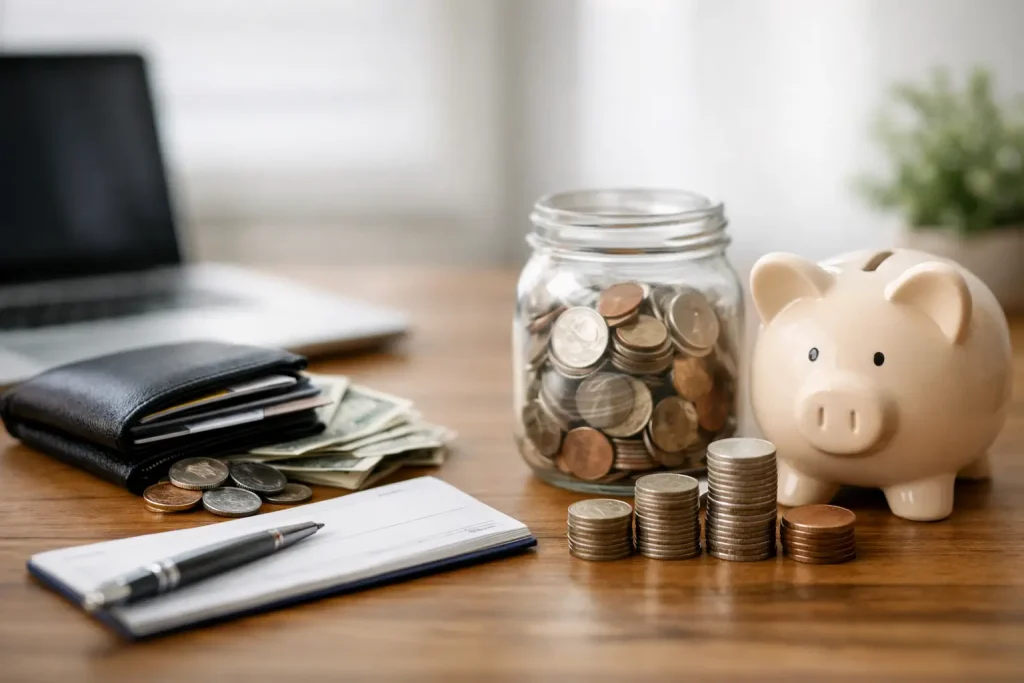
Checking versus savings account explained clearly – compare access, fees, interest, and best uses so you can choose the right place for your money.
A lot of money mistakes start with using the right account for the wrong job. If you keep your emergency fund in checking, it is easy to spend. If you keep your bill money in savings, transfers and limits can get annoying fast. That is why understanding a checking versus savings account matters more than it sounds.
For most people, this is not an either-or choice. It is a how-do-you-use-both-smartly question. Checking is built for everyday movement. Savings is built for money you want to protect and grow, even if the growth is modest. Once you separate those roles, your banking setup usually gets simpler.
Checking versus savings account: the core difference
A checking account is designed for frequent transactions. It is the account you use to pay rent, swipe your debit card at the grocery store, set up direct deposit, send money, withdraw cash from an ATM, and cover recurring bills. It is your day-to-day money hub.
A savings account is designed for holding money you do not plan to spend regularly. It usually pays more interest than checking, although rates vary a lot by bank. The trade-off is that it is less convenient for constant transactions. That inconvenience is partly the point. A little friction can help you keep savings intact.
If you want the shortest possible version, it is this: checking is for spending, savings is for storing.
When a checking account makes more sense
Checking works best for money that needs to be available now. Your paycheck lands there, your bills come out of there, and your debit card is usually tied to it. If you are managing monthly cash flow, checking is the account doing the heavy lifting.
This makes checking especially useful for fixed and predictable expenses. Mortgage or rent, utilities, insurance premiums, phone bills, subscriptions, groceries, and gas all fit naturally here. Many people also use checking as a staging area for automatic transfers into savings after each paycheck.
The downside is that checking accounts often pay little or no interest. Some online banks offer interest-bearing checking, but the rate is usually lower than what a good savings account pays. So while checking is convenient, it is not where you want large amounts of idle cash sitting for long.
Fees are another factor. Some checking accounts charge monthly maintenance fees, overdraft fees, out-of-network ATM fees, or minimum balance fees. Plenty of banks now offer low-fee or no-fee options, but the details matter. Two checking accounts can look similar on the surface and cost very different amounts over a year.
When a savings account is the better fit
Savings accounts are a better home for money with a purpose but no immediate spending date. That includes emergency funds, vacation savings, holiday shopping funds, car repair reserves, a future down payment, or a cushion for irregular bills.
The main advantage is interest. You will not get stock-market-level growth, but a competitive savings account can still help your money earn something while staying relatively accessible. That makes savings useful for short-term to medium-term goals when you want safety and liquidity.
There is also a behavioral advantage. Money parked in savings is less likely to get mixed into your spending routine. That separation matters. People often save more successfully when the money is slightly out of reach, even if it is still only a transfer away.
That said, savings accounts are not ideal for making multiple purchases every week. Some banks still discourage excessive withdrawals or transfers, and many do not provide the same everyday payment tools you get with checking. If you treat savings like checking, it stops being helpful very quickly.
Interest, access, and convenience
The practical difference in a checking versus savings account usually comes down to three things: how much you earn, how fast you can access the money, and how easy it is to spend.
Checking wins on access and convenience. You can use debit cards, checks, ATMs, payment apps, and online bill pay with minimal friction. If you need money today, checking is usually the fastest route.
Savings wins on earnings, at least in most cases. High-yield savings accounts, especially from online banks, often pay noticeably more than standard checking. Over time, that rate difference can matter, especially if you keep several thousand dollars parked there.
But convenience has a hidden cost. If your emergency savings sits in checking, it is one impulse purchase away from becoming sneaker money or takeout money. Savings adds a useful barrier. Not a wall, just a speed bump.
Common fees and features to compare
Not all bank accounts are created equal, and the label alone does not tell the full story. A checking account may come with early direct deposit, ATM fee reimbursements, and no minimum balance. Another may charge you for dropping below a threshold. The same goes for savings accounts. Some pay competitive interest with no monthly fee, while others offer weak rates and extra requirements.
When comparing accounts, pay attention to monthly maintenance fees, minimum balance rules, overdraft policies, ATM access, mobile app quality, transfer speed, and customer support. On the savings side, the annual percentage yield, or APY, deserves special attention. A small difference in APY might not matter on $100, but it matters more on a growing emergency fund.
Also check whether the bank makes it easy to link checking and savings for automatic transfers. That one feature can turn saving from an occasional good intention into a routine.
Do you need both accounts?
For most adults, yes. A checking account and a savings account do different jobs, and using both usually makes money management easier.
A common setup looks like this: your paycheck goes into checking, your bills and daily spending come out of checking, and a fixed amount moves automatically into savings every payday. This creates a clean system. Your spending money stays separate from your goals money.
If you only use checking, you may earn less interest and make it harder to protect savings from routine spending. If you only use savings, everyday money management becomes awkward. You may run into transfer delays, fewer payment features, or a general lack of convenience.
There are exceptions, of course. Someone living paycheck to paycheck may prioritize keeping things simple with one primary account for a while. Someone with substantial savings may use multiple savings accounts for different goals. It depends on income stability, spending habits, and how hands-on you want to be.
Which account should hold your emergency fund?
Usually, savings is the better place for an emergency fund. The goal of emergency money is not daily access. It is safety, separation, and a little bit of growth. A savings account checks those boxes better than checking.
Still, there is nuance here. If your savings account takes several business days to transfer funds, you might keep a small buffer in checking for urgent needs and the rest in savings. That way, you can handle a surprise bill right away without leaving your full emergency fund exposed to everyday spending.
If your bank offers instant internal transfers between checking and savings, the split becomes even easier to manage.
How to choose the right checking versus savings account setup
Start with your habits, not the marketing. If you swipe your card often, pay bills online, and need ATM access, a no-fee checking account should be your foundation. Look for broad ATM access, low fees, and a solid mobile app.
Then think about what you are saving for. If you need a place for emergency cash or short-term goals, a savings account with a competitive APY makes sense. If you are trying to avoid dipping into your savings, consider using a separate bank for savings so transfers are a little less tempting. That is not necessary for everyone, but it works well for some people.
Automation helps more than perfection. Even a small recurring transfer from checking to savings can build momentum. The best account setup is not the fanciest one. It is the one you will actually use consistently.
A simple rule of thumb
Use checking for money that needs to move. Use savings for money that needs to stay put.
That rule will not cover every edge case, but it handles most real-life decisions. If the money is for bills, groceries, subscriptions, and everyday purchases, checking is the better tool. If the money is for emergencies, future plans, or a cushion you do not want to casually spend, savings is usually the smarter home.
The best banking strategy is rarely complicated. Give each dollar a job, keep your spending and saving in separate lanes, and let your account setup do some of the discipline for you.

















Leave a Comment
Your email address will not be published. Required fields are marked with *