
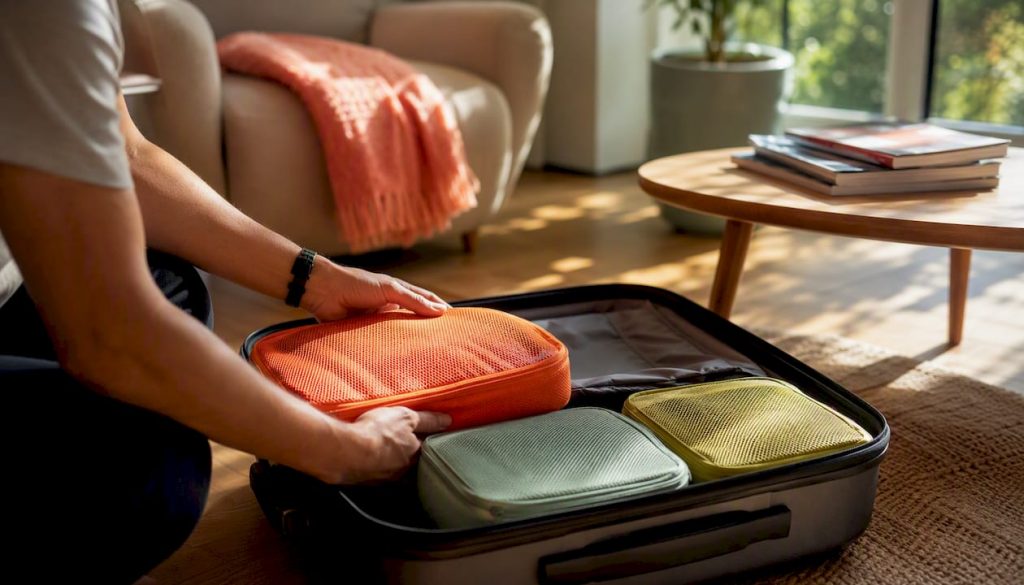
Discover why using packing cubes simplifies travel. Enjoy faster packing, effortless organization, and clean separation of clothes on every trip.
Packing cubes are absolutely worth it for most travelers, and the primary reason has nothing to do with creating extra space. The real value is organization and repacking speed — the ability to find what you need instantly and move between hotels without turning your suitcase inside out.
Here is the quick verdict:
- You stay organized effortlessly. Each cube holds one category of clothing, so you never dig through a chaotic pile at 6 AM. Pack Lightly’s honest guide confirms the main wins are behavioral, not volumetric.
- Repacking becomes fast. For multi-stop trips, a cube system can turn a 30-minute repacking chore into a five-minute task, according to Traveler’s Choice.
- Clean and dirty clothes stay separated. Double-sided or specialty wet cubes keep worn items away from fresh ones throughout your trip.
One honest caveat: if you are staying in a single location for a week and unpacking fully into a dresser, cubes add weight without much payoff. Ultralight packers counting every gram may also prefer to skip them.
Key Takeaways
Packing cubes deliver their greatest value through organization and repacking speed, not through creating extra space in your bag.
| Point | Details |
|---|---|
| Main benefit is behavioral | Cubes speed up repacking and reduce rummaging, not primarily space creation. |
| Compression cubes save real volume | Compression cubes reduce volume on soft clothing; standard cubes offer minimal volume reduction. |
| Use the 75% fill rule | Fill compression cubes to three-quarters before compressing to keep them flat and protect zippers. |
| Best for multi-stop travelers | Buy a set if you change accommodations more than twice; skip if you unpack once and stay put. |
| Start with three pieces | A small, medium, and large cube covers most trips; test on a short trip before investing in a full set. |
Table of Contents
- What are packing cubes, and which type do you need?
- What do packing cubes actually do for you on a trip?
- How to use packing cubes effectively on your next trip
- Compression cubes versus standard cubes: which one is right for you?
- Who gets the most value from packing cubes?
- Downsides and common mistakes to avoid
- How to choose packing cubes: sizes, materials, and what to look for
- Our team’s practical packing workflow
- How to clean and maintain your packing cubes
- Our team’s honest take on when cubes change everything
- Sources
What are packing cubes, and which type do you need?
Packing cubes are zippered fabric organizers that sit inside your luggage and divide your clothing and gear into distinct compartments. Think of them as portable drawers you carry inside your bag. They come in three main categories, and choosing the right type matters more than most buyers realize.
Standard organizational cubes are the most common. They are lightweight, usually made from nylon or polyester with a mesh top panel for visibility, and they hold a category of items without compressing them. Their value is purely behavioral: they keep your bag tidy and your packing consistent trip after trip.
Compression cubes add a second zipper that cinches the cube down after you fill it. Eagle Creek’s Pack-It line and similar products use this design to reduce the volume of soft clothing like t-shirts and fleece. The compression effect is real but limited to soft, compressible fabrics. Jeans, shoes, and toiletry kits compress very little.
Specialty cubes include double-sided clean/dirty designs, wet bags for swimwear, and shoe pouches. These are genuinely useful for beach trips, active travel, or any itinerary where wet or soiled items need to stay isolated from the rest of your bag.
One limitation worth naming upfront: every cube adds a small amount of fabric weight to your load.
What do packing cubes actually do for you on a trip?
The benefits of packing cubes show up most clearly in real travel scenarios, not in a neatly packed bag sitting on your bed at home.
On a multi-stop city trip, you arrive at a new hotel, drop your suitcase on the luggage rack, pull out the cube you need, and you are done. No unpacking, no rummaging, no hunting for the one shirt buried at the bottom. That consistency across five different rooms across ten days is where cubes genuinely earn their place.
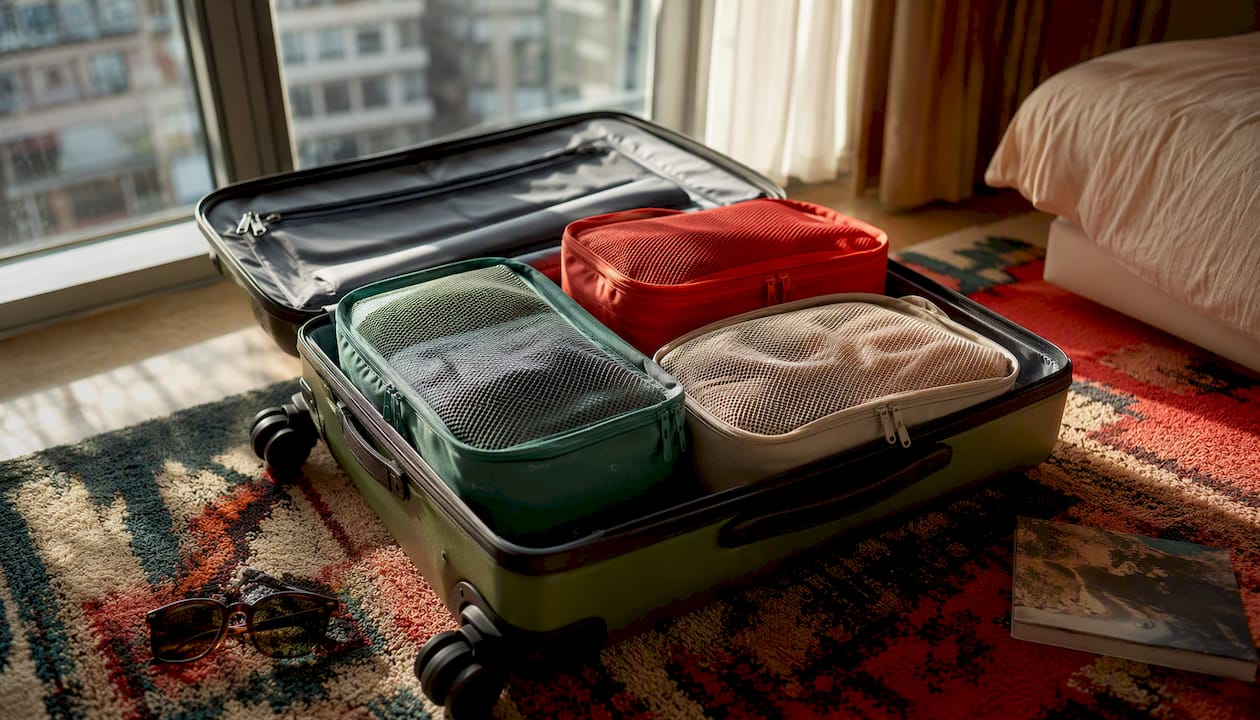
For families, color-coded cubes are a revelation. Each person gets a color, and the shared suitcase becomes navigable in seconds. One cube per person per category means no more “whose socks are these?” moments at airport security.
Carry-on-only business travelers get a different benefit: the CubePacker guide describes this well as the “cube full = done” effect. When your shirt cube is full, you stop packing shirts. The physical boundary enforces discipline that a mental checklist rarely does.
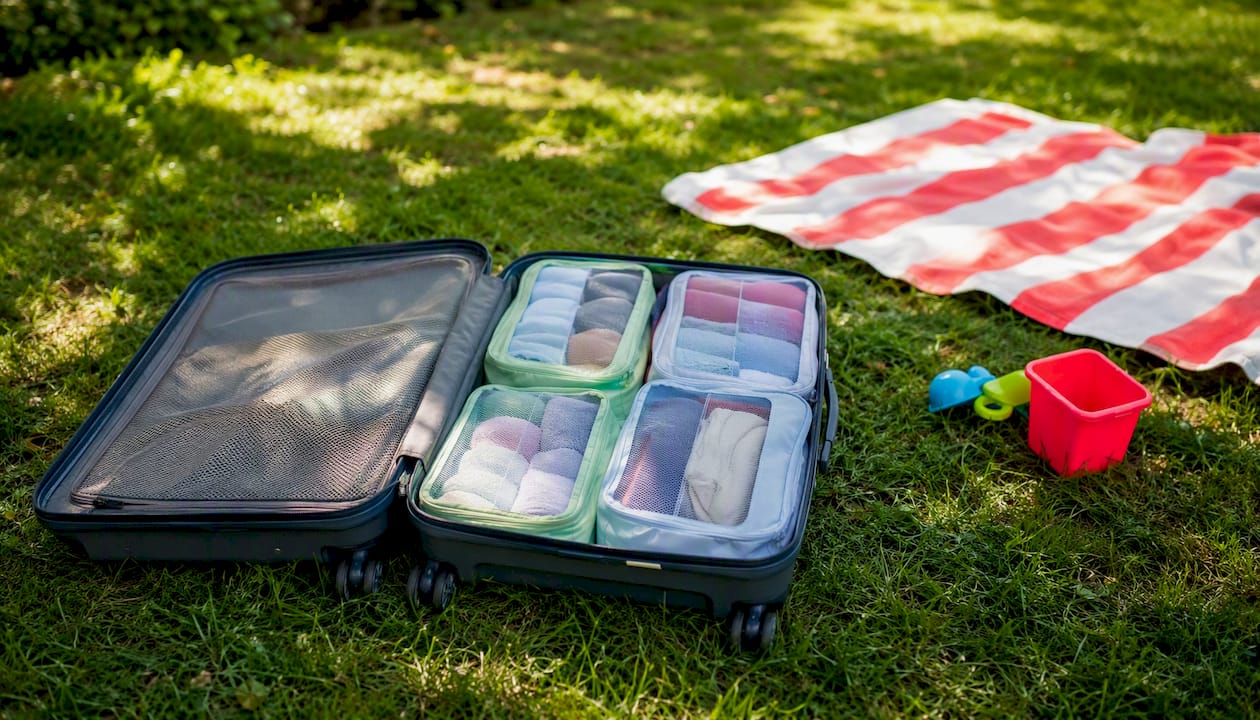
On beach or active trips, a wet bag cube keeps your damp swimsuit from soaking everything else. Eagle Creek notes that double-sided cubes also protect clean clothes from hotel drawer grime in unfamiliar accommodations — a small but genuinely satisfying benefit.
Pro Tip: For families sharing one suitcase, assign each person a cube color and label them with a luggage tag loop. You will spend zero time sorting at the hotel and zero time arguing at the airport.
How to use packing cubes effectively on your next trip
The short version: sort by category first, choose your packing method to match the item, then load cubes strategically into your luggage. The system is the value, not the fabric.
Here is the full step-by-step process:
- Choose the right sizes before you pack. wikiHow’s packing cube guide recommends small cubes for toiletries and accessories, medium cubes for light clothing like t-shirts and underwear, and large cubes for bulkier items like sweaters or jeans. Match cube size to your bag’s interior dimensions, not just your clothing volume.
- Pre-assign one category per cube. Tops in one, bottoms in another, undergarments in a third. Do not mix categories. The National Traveller’s packing cube guide emphasizes a system-first approach: sort before you pack, not while you pack.
- Roll or file-fold, depending on the item. Roll t-shirts and casual pants to minimize creasing and maximize visibility. File-fold dress shirts and structured items so they stand upright inside the cube. Vertical file storage lets you see every item at a glance without excavating the whole cube.
- Fill to the right level. For standard cubes, fill until the zipper closes without straining. For compression cubes, fill to about 75% before engaging the compression zipper — overfilling creates lumpy, unstackable bricks that defeat the purpose.
- Load cubes into your luggage in the right order. Place the largest cube flat against the back wall, opposite the wheel side. Orient all zippers toward the main opening. Slot smaller cubes into the gaps around the large one. Condé Nast Traveler’s expert organizer guide calls this the Tetris approach, and it genuinely works.
Common mistakes to avoid: overstuffing cubes until zippers strain, mixing shoes or tech gear inside clothing cubes, and forgetting to designate a dirty cube before you leave home. That last one is the most common — without a pre-assigned dirty cube, worn clothes end up loose in the bag by day three.
Pro Tip: Designate your dirty cube before departure, not mid-trip. Flip it inside out when it is full so you know at a glance which cube goes straight to the laundry.
Compression cubes versus standard cubes: which one is right for you?
The answer-first version: compression cubes reduce volume on soft items; standard organizational cubes deliver order and repacking speed. These are different tools for different constraints.
Standard organizational cubes shine when your primary problem is chaos, not space. They weigh less, cost less, and last longer because there is no secondary zipper to fail. The trade-off is minimal volume reduction.
Compression cubes genuinely help when you are fighting a carry-on size limit and packing soft, compressible layers like fleece, down, or cotton t-shirts. The space savings are real but bounded.
| Cube Type | Volume Reduction | Best For | Key Risk |
|---|---|---|---|
| Standard organizational | small volume reduction on soft items | Multi-stop trips, organization, repacking speed | Minimal space savings |
| Compression | ~15–30% on soft clothing | Carry-on volume limits, bulky layers | Overfilling, zipper wear |
Source: Pack Lightly
A few practical notes on compression cubes. Denim, shoes, and toiletry bags compress almost nothing. Second, the compression zipper is the most stress-prone component — cheap sets fail here first. Third, follow the 75% fill rule from Traveler’s Choice: fill the cube to three-quarters capacity before engaging compression, and the cube stays flat and stackable.
If you are a carry-on-only traveler fighting volume, compression cubes earn their price. If your main frustration is disorganization and slow repacking, standard cubes solve the problem at lower weight and cost.
Who gets the most value from packing cubes?
Buy a set if: you change accommodations more than twice on a trip, travel with family in shared luggage, or want faster unpacking at each stop. Skip them if: you unpack fully into a dresser at one hotel and stay put, or you are on a strict ultralight budget where every gram counts.
The travelers who benefit most:
- Carry-on frequent flyers who need to maximize a small bag and keep it navigable through multiple security checks.
- Multi-stop travelers on city-hopping itineraries where repacking happens every two or three days. For these travelers, Pack Lightly notes the main ROI is time saved and lower cognitive load at each new destination.
- Families sharing one or two suitcases who need to locate a specific child’s item without emptying the bag.
- Road-trippers who use cubes as trunk organizers or daily-access bins, keeping the car tidy across a long road trip itinerary. A printable RV packing checklist pairs well with a cube-based system for longer drives.
- Business travelers who need a clean/dirty separation and want to pull out a presentation outfit without disturbing the rest of the bag.
Edge cases where cubes add less value: ultralight packers who travel with a single 20-liter daypack, single-destination vacationers who unpack completely on arrival, and travelers on weight-sensitive budget fares where every ounce triggers a fee.
Downsides and common mistakes to avoid
Packing cubes are not perfect, and knowing their limits saves you from a frustrating first experience.
Real downsides:
- Added weight. Every cube adds fabric weight. A full set of four to six cubes can add 8–14 oz to your load, which matters on strict carry-on weight limits.
- Temptation to overpack. Cubes create structure, but they can also create the illusion that filling every cube is necessary. The CubePacker guide warns that the “cube full = done” effect cuts both ways: if you buy too many cubes, you may feel compelled to fill them all.
- Zipper failure on cheap sets. The compression zipper on budget cubes is the first thing to fail. A broken zipper mid-trip turns a helpful organizer into a loose fabric bag.
- Poor fit for structured garments. Blazers, dress pants, and structured jackets do not cube well. They wrinkle and lose shape. These items belong flat in the main compartment or in a dedicated garment folder.
Red flags when buying:
- No mesh or visibility panel (you cannot see what is inside without opening)
- No grab handle (awkward to pull from a packed bag)
- Thin, single-layer zipper on compression cubes
- Materials that bleed color when wet
Quick mitigation tips:
- Stick to the 75% compression rule to protect zippers and keep cubes stackable.
- Keep shoes in a dedicated shoe bag, never in a clothing cube.
- Assign your dirty cube before you leave home, not after day three.
How to choose packing cubes: sizes, materials, and what to look for
A good set of packing cubes does not need to be expensive, but it does need to match your bag and your travel style. Here is what to check before buying.
Buying checklist:
- Sizes that fit your bag. Measure your luggage interior before buying. A large cube designed for a checked bag will not lie flat in a carry-on.
- Mesh visibility panel. You should be able to identify contents without unzipping. Solid-top cubes require opening every time.
- Handle on each cube. A small grab loop makes pulling a cube from a packed bag dramatically easier.
- Zipper quality. Look for YKK or equivalent zippers. On compression cubes, check that the secondary zipper wraps the full perimeter.
- Water resistance. A DWR-coated nylon shell protects contents from light spills and rain. Not waterproof, but meaningfully better than untreated fabric.
- Weight. Lighter is better for carry-on travel. Aim for under 2 oz per cube for standard sizes.
Price ranges and what to expect:
Budget sets (under $20 for a four-piece) like AmazonBasics offer decent organizational value but often use thinner zippers and heavier fabric. They work fine for occasional travelers. Mid-range options ($25–$50) from brands like Osprey deliver better zipper quality, lighter materials, and more size variety. Premium sets ($50–$100+) from Eagle Creek (Pack-It series) and Sea to Summit use ultralight ripstop nylon, reinforced zippers, and thoughtful features like color-coded size indicators. For frequent travelers, the premium investment pays off over years of use.
| Best For | Cube Style | Compression | Typical Price |
|---|---|---|---|
| Carry-on volume-pressed travelers | Compression cubes | Strong compression | $30 to $50 |
| Multi-stop organization trips | Standard organizational | Light compression | $15 to $50 |
| Family shared luggage | Standard, color-coded sets | None to light | $20 to $50 |
| Bulky layers (fleece, down) | Compression cubes | Strong | $35 to $50 |
A three-to-five piece set covers most travelers well. An eight-piece set sounds appealing but often means you are carrying cubes you never use. Start small, test the system, and add pieces only if a specific need arises. For matching cube sizes to your carry-on backpack dimensions, check the bag’s interior measurements before ordering.
Outside Online’s packing cube guide recommends a mixed setup: standard cubes for shirts and basics, compression cubes for bulky sweaters and layers. That combination gives you the best of both worlds without overpaying for compression capability you will rarely use.
Our team’s practical packing workflow
Our team at Lizard’s Lunch uses a two-phase workflow: sort by category first, then pack by arrival priority. The idea is simple — the first cube you need at your destination goes in last, so it comes out first.
Here is the full sequence:
- Pre-assign your cubes before touching a single item of clothing. Label or color-code each cube: tops, bottoms, undergarments, and one compression cube for bulky layers.
- Pack your “arrival cube” last. This cube holds the outfit and toiletries you need within the first hour at your destination. It goes on top of everything else in the bag.
- Apply the 75% fill rule to compression cubes. Fill to three-quarters, then engage the compression zipper. The cube stays flat, stackable, and kind to its zipper.
- Orient all cube zippers toward the main bag opening. This single habit saves you from flipping cubes around every time you need something.
- Place the largest cube flat against the back wall, opposite the wheel side. This keeps the bag balanced and the heaviest item low. Slot medium cubes alongside it, then tuck small cubes into the remaining gaps. Condé Nast Traveler’s expert organizers call this the Tetris method, and it applies equally to a hardshell carry-on and a soft duffel.
- Use file-fold or vertical storage inside each cube. Items stand upright like files in a drawer, so you see everything at once. No more excavating to find one t-shirt.
In a hardshell carry-on, the large compression cube sits flat against the back panel, two medium cubes stack beside it, and a small cube tucks into the front pocket or the gap near the handle. In a soft duffel, the same logic applies but the cubes also help the bag hold its shape.
Pro Tip: Keep one thin, empty cube folded flat at the bottom of your bag. By the end of the trip, it holds souvenirs or overflow items without disrupting the rest of your system.
Pro Tip: Use a compression cube as a temporary dirty-laundry bag mid-trip. When it is full, compress it down and it takes up far less space than a loose laundry bag.
For a deeper look at minimalist packing strategies that pair well with this workflow, our team has a full guide worth reading before your next trip.
How to clean and maintain your packing cubes
Good cubes last for years with minimal care. Here is how to keep them in shape.
- Machine wash on a gentle cycle if the care label allows. Most nylon and polyester cubes handle a cold, gentle wash without issue. Zip all zippers before washing to protect the teeth.
- Air dry only. Heat from a dryer degrades the DWR water-resistant coating and can warp zipper pulls. Hang cubes open so the interior dries fully.
- Spot clean for light dirt. A damp cloth with mild soap handles most surface grime without a full wash cycle.
- Store flat or loosely stuffed. Storing cubes completely flat prevents creasing and keeps the fabric from developing permanent fold lines. Alternatively, stuff them lightly with a small item to help them hold shape on the shelf.
- Lubricate zippers occasionally. A light pass with a zipper lubricant or a beeswax stick keeps zippers running smoothly and extends their life considerably.
- Check seams after heavy trips. Reinforced seams and bar-tack stitching at stress points are signs of a well-built cube. If seams start to fray, a few stitches now prevent a full failure later.
Pro Tip: Before a long international trip, wash one cube alone to test for color bleeding. Some budget cubes bleed dye when wet, which can transfer to light-colored clothing. Better to find out at home than in a hotel sink.
Our team’s honest take on when cubes change everything
Our team at Lizard’s Lunch uses packing cubes on every multi-stop trip and skips them entirely on single-destination getaways where we unpack fully. The difference is stark. On a four-city trip, cubes mean we spend about five minutes repacking at each hotel instead of twenty. On a one-week beach stay where everything goes into a dresser on day one, the cubes just add weight to the checked bag.
The trips where cubes genuinely change the experience: any itinerary with three or more accommodations, family travel with shared luggage, and carry-on-only business trips where the bag needs to stay navigable through a full week of meetings.
Our recommendation: if you are planning a multi-stop trip in the next few months, buy a three-piece set and test the system. Start with a medium cube for tops, a medium for bottoms, and a small for undergarments. That is enough to feel the organizational benefit without committing to a full eight-piece set you may not need.
Sources
The citations below appear inline throughout this article for verification. Here is a quick reference list for deeper reading:
- Are Packing Cubes Worth It? An Honest, Practical Guide – Pack Lightly
- How to Use Packing Cubes More Effectively, According to Expert Organizers | Condé Nast Traveler
- How to Pack a Suitcase with Packing Cubes | Traveler’s Choice
- Are Packing Cubes Worth It? An Honest, Practical Guide — CubePacker
- How to Pack with Packing Cubes (with Pictures) – wikiHow
- Benefits of using packing cubes | Eagle Creek
- The best packing cubes in 2026 — what they actually do and how to use them | National Traveller














Leave a Comment
Your email address will not be published. Required fields are marked with *