
Discover what sustainable fashion means and why it matters for our planet. Learn how to make eco-friendly choices in your wardrobe today.
Sustainable fashion is an approach to clothing that weighs the environmental and human cost of a garment across its entire life, from raw fiber to landfill, rather than just its price tag on the rack. The stakes are real: the fashion industry generates up to 10% of global greenhouse gas emissions, consumes roughly 93 billion cubic meters of freshwater a year, and produces over 92 million tons of textile waste annually. This article walks through what that lifecycle actually looks like, the social and environmental damage behind the numbers, and what you can realistically do about it.
Key Takeaways
Sustainable fashion works when lifecycle transparency, from fiber sourcing to end-of-life recycling, gets paired with consumer habits that prioritize durability and reduced consumption over quantity.
| Point | Details |
|---|---|
| Definition is lifecycle-wide | Sustainability spans fiber choice, manufacturing, use, and end-of-life, not just the purchase moment. |
| Recycling is limited | Only about 1% of textiles get recycled into new clothing, so extending garment life matters more. |
| Certifications signal, not guarantee | Look for multiple credentials like GOTS, Fair Trade, and Oeko-Tex rather than trusting one label. |
| Rebound effects are real | Cheap secondhand pricing can accidentally boost total consumption instead of curbing it. |
| Extending garment life pays off | Wearing clothes nine months longer cuts their footprint by 20 to 30%. |
Table of Contents
- What Is Sustainable Fashion, Exactly?
- Why Does Sustainable Fashion Matter So Much Right Now?
- Where in the Lifecycle Does Sustainability Actually Happen?
- What Does Sustainable Fashion Look Like in Practice?
- How Can You Spot Greenwashing in Fashion Marketing?
- What Are the Real Limits to Sustainable Fashion Today?
- What Are the Highest-Impact Steps You Can Take Today?
- What Do We Prioritize When We Cover Sustainable Fashion?
- Our Take: Transparency Beats Good Intentions
- Frequently Asked Questions
- Sources
What Is Sustainable Fashion, Exactly?
Sustainable fashion means looking at a garment’s full lifecycle: the fiber it’s grown or synthesized from, how it’s woven and dyed, how it travels to a store, how you wash and wear it, and what happens when you’re done with it. It’s not one action. It’s a chain of decisions, and sustainability lives or dies at each link.
The concept rests on what’s often called the triple bottom line: environmental impact, social impact on the people who make clothes, and economic viability for the businesses involved. A shirt made from organic cotton but sewn by underpaid workers isn’t sustainable fashion. Neither is a “fair trade” label slapped on a garment dyed with toxic runoff. Both pieces of the equation have to hold.
You’ll also see related terms used almost interchangeably, though they mean different things:
- Ethical fashion focuses primarily on labor conditions and fair treatment of workers.
- Slow fashion pushes back against rapid trend cycles and disposable clothing, favoring fewer, better purchases.
- Circular fashion designs garments to be reused, repaired, or recycled instead of thrown away.
- Sustainable fashion is the umbrella term that tries to account for all three at once.
No brand hits every mark perfectly. As the Interreg SUDOE research on textile recycling makes clear, sustainable fashion is a systemic shift, not a badge a company earns once. Transparency and continuous improvement matter more than any single sustainability claim.
Why Does Sustainable Fashion Matter So Much Right Now?
The scale of the industry’s footprint is what makes this urgent. Beyond the 10% emissions share and 93 billion cubic meters of freshwater use, the UN’s reporting on fashion’s environmental impact puts textile waste north of 92 million tons every single year. That’s clothing piling up in landfills or getting burned, often within months of purchase.
The human cost runs parallel to the environmental one. Garment workers in many production hubs face wages that fall short of a living wage, long hours, and unsafe factory conditions, issues that surfaced dramatically after the 2013 Rana Plaza collapse in Bangladesh and have never fully gone away.
- Chemical dyes and finishing agents, including PFAS compounds flagged by industry sustainability reporting, contaminate waterways near manufacturing hubs.
- Monoculture cotton farming and synthetic fiber production strain biodiversity and soil health.
- Microfiber shedding from synthetic garments is now found in oceans, drinking water, and even human tissue.
Where in the Lifecycle Does Sustainability Actually Happen?
Sustainability isn’t decided at checkout. It’s built in stages, and each one carries its own trade-offs.
- Fiber choice. Natural fibers like organic cotton and hemp biodegrade but often demand heavy water and land use. Synthetics like polyester use less water upfront but shed microplastics and rely on fossil fuels. Recycled fibers split the difference, though supply remains limited.
- Manufacturing. This stage covers energy use, chemical finishing, and worker safety. Traceable supply chains, where a brand can name the factory that made a specific garment, are one of the clearest signs of accountability.
- Distribution and retail. Shipping, packaging, and the sheer volume of unsold inventory (much of it destined for landfill or discount liquidation) all add to the footprint before a garment reaches you.
- Use phase. How you wash and dry clothes matters more than most people realize. Frequent hot washes degrade fibers faster and release more microfibers into wastewater.
- End-of-life. This is where the system breaks down hardest. At most 1% of textiles gets recycled back into new clothing, with another 12% downcycled into insulation or rags. The rest goes to landfill or incineration.
Design decisions made at the very start, fiber blends, seam construction, whether a zipper can be replaced, determine how many of these later stages even have a chance of going well, a point underscored in MDPI’s policy review of sustainable fashion.
What Does Sustainable Fashion Look Like in Practice?
Sustainable fashion shows up in specific, recognizable habits and business models rather than abstract ideals. Here’s what it actually looks like on the ground:
- Secondhand and vintage shopping extends a garment’s life without any new manufacturing at all, often the single highest-impact swap available to a shopper.
- Resale platforms let you recoup value from clothes you no longer wear while keeping them in circulation.
- Rental and subscription models work well for occasion wear, formalwear, or maternity clothing you’ll only need briefly.
- Repair and local tailoring keep garments functional far past the point most people would toss them, restoring a hem or a zipper instead of buying a replacement.
- Design-for-durability with organic or recycled materials tends to cost more upfront but delivers more wear per dollar over time.
Each of these carries a trade-off. Rental cuts down on ownership but adds shipping emissions. Secondhand shopping is low-impact individually but can, at scale, feed a churn cycle if it just becomes another form of frequent buying.
How Can You Spot Greenwashing in Fashion Marketing?
Greenwashing usually hides behind vague, feel-good language rather than specifics. Watch for phrases like “eco-friendly,” “conscious,” or “green” with no supporting data, leafy imagery paired with zero factory information, or a single “sustainable” capsule collection sitting inside an otherwise fast-fashion catalog.
Credible signals look different. They’re specific and checkable:
- GOTS (Global Organic Textile Standard) certifies organic fiber content and processing conditions.
- Fair Trade certification addresses wages and worker conditions directly.
- Oeko-Tex screens for harmful chemical residues in the finished textile.
- Textile Exchange labels track recycled and preferred fiber sourcing.
No single certification tells the whole story, so look for several relevant credentials together rather than trusting one logo. Increasingly, brands are also adopting Digital Product Passports, digital records that track a garment’s materials and journey, which give shoppers a way to verify claims instead of just reading them.
Pro Tip: Search for a brand’s published factory list or life-cycle assessment before trusting its sustainability page. If neither exists, the claim is marketing, not evidence.
What Are the Real Limits to Sustainable Fashion Today?
Some problems here don’t have a clean consumer-side fix yet. Blended fabrics, think a cotton-polyester tee, are notoriously hard to recycle because mechanical recyclers need mono-material inputs, and chemical recycling that can separate blends remains expensive and small in scale, according to Columbia Climate School’s analysis. That’s a major reason so much clothing still ends up in landfill or incinerated.
There’s also a rebound effect worth taking seriously:
- Cheap secondhand prices can encourage more total consumption, not less, undercutting the benefit of buying used.
- Resale platforms sometimes function as a new acquisition channel rather than a genuine alternative to buying new.
- Individual habit changes can’t substitute for policy: extended producer responsibility laws, recycling infrastructure investment, and industry-wide fiber standards.
None of this means individual choices don’t matter. It means they need backup from regulation and industrial investment to scale.
What Are the Highest-Impact Steps You Can Take Today?
If you want your effort to actually count, prioritize the moves with the biggest return before worrying about the smaller ones.
- Buy less, first. This sounds obvious, but it’s the single highest-leverage decision you can make, ahead of any material choice.
- Extend what you already own. Wearing a garment nine months longer than average cuts its carbon, water, and waste footprint by 20 to 30%, a bigger swing than most people expect from something so simple.
- Choose secondhand before new. Thrift stores, consignment shops, and resale apps stretch a garment’s useful life without any new production.
- Repair instead of replace. A local tailor fixing a seam or swapping a zipper often costs less than a fast-fashion replacement.
- Favor quality and mono-materials when buying new. A well-constructed, single-fiber garment lasts longer and stands a better chance of eventual recycling.
Care habits matter more than most shoppers assume. Washing clothes in cold water, skipping the dryer when you can, and using a microfiber-catching laundry bag or filter all cut down on both energy use and plastic shedding into wastewater.
Your purchasing decisions carry weight beyond your own closet, too. Asking brands directly about factory locations, wage practices, and material sourcing pushes transparency further than silent boycotts do. Supporting policy efforts around extended producer responsibility and looking for certifications like GOTS or Fair Trade when you do buy new both send the same signal: shoppers expect proof, not slogans.
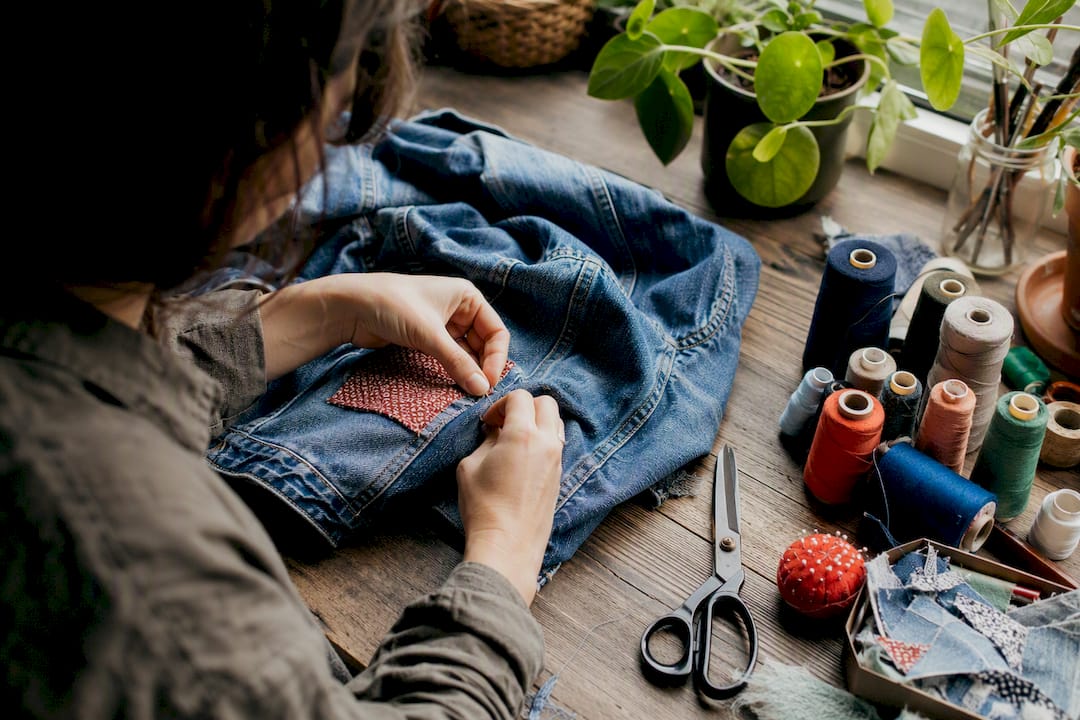
Pro Tip: Check your city for a repair café or local mending collective before assuming a damaged item is beyond saving. Most zippers, hems, and small tears are a $10 to $20 fix, not a reason to buy new.
Local consignment shops, library-style clothing swaps, and community repair events are often the most underused resources for circular fashion, sitting quietly in most neighborhoods while shoppers default to buying new out of habit.
What Do We Prioritize When We Cover Sustainable Fashion?
Our team at Lizard’s Lunch treats measurable transparency as the strongest signal in this space. Certifications and lifecycle assessments beat marketing copy every time, because they can actually be checked.
A few resources worth exploring if you want to go deeper:
- Our guide on the role of technology in fashion covers traceability tools and recycling innovation in more detail.
- Eco-friendly materials breaks down fiber choices and the health trade-offs behind them.
- Running an eco-friendly business is a useful read if you want to understand what credible brand transparency looks like from the inside.
Individual habits move the needle, but they work best paired with pressure on brands and policymakers to build the infrastructure that makes circularity possible at scale.
If you’re rethinking your closet as part of a broader shift toward mindful consumption, our guide on minimalism as a lifestyle offers a practical framework for buying less across the board, not just in fashion. And if sustainable habits are part of a bigger wellness goal, our complete guide to healthy living covers how those choices connect.
Our Take: Transparency Beats Good Intentions
The research behind this piece points to one conclusion we think gets underweighted: intentions don’t scale, but traceability does. A shopper who buys “sustainable” cotton but has no way to verify the factory conditions behind it isn’t meaningfully better off than one who bought fast fashion, at least not on the social side of the equation.
Where conventional advice falls short is in treating certifications as a finish line. They’re a starting point for asking better questions, not proof of a clean supply chain. We’d rather see wider adoption of tools like Digital Product Passports, which make claims checkable instead of just plausible, become the norm brands compete on.
If you take one thing from this, prioritize extending the life of what you already own before researching your next “sustainable” purchase. It’s less exciting than a new organic-cotton haul, but the math behind it is far stronger.
Frequently Asked Questions
What is sustainable fashion in simple terms?
Sustainable fashion is clothing production and consumption that accounts for environmental and human impact across a garment’s full life, from raw material to disposal, rather than just its price or style.
How to be sustainable in fashion without spending more money?
Buy less, extend the life of clothes you already own through repair and proper care, and choose secondhand over new when you do need something.
What does sustainable fashion mean for certifications like GOTS or Fair Trade?
These labels signal specific, checkable practices, organic fiber content or fair wages, but no single certification proves a garment is fully sustainable across its entire lifecycle.
Are sustainable fashion brands more expensive?
Often yes upfront, since durable materials and fair wages cost more to produce, but higher-quality garments frequently last long enough to offset the price difference over time.
Can recycling actually solve fashion’s waste problem?
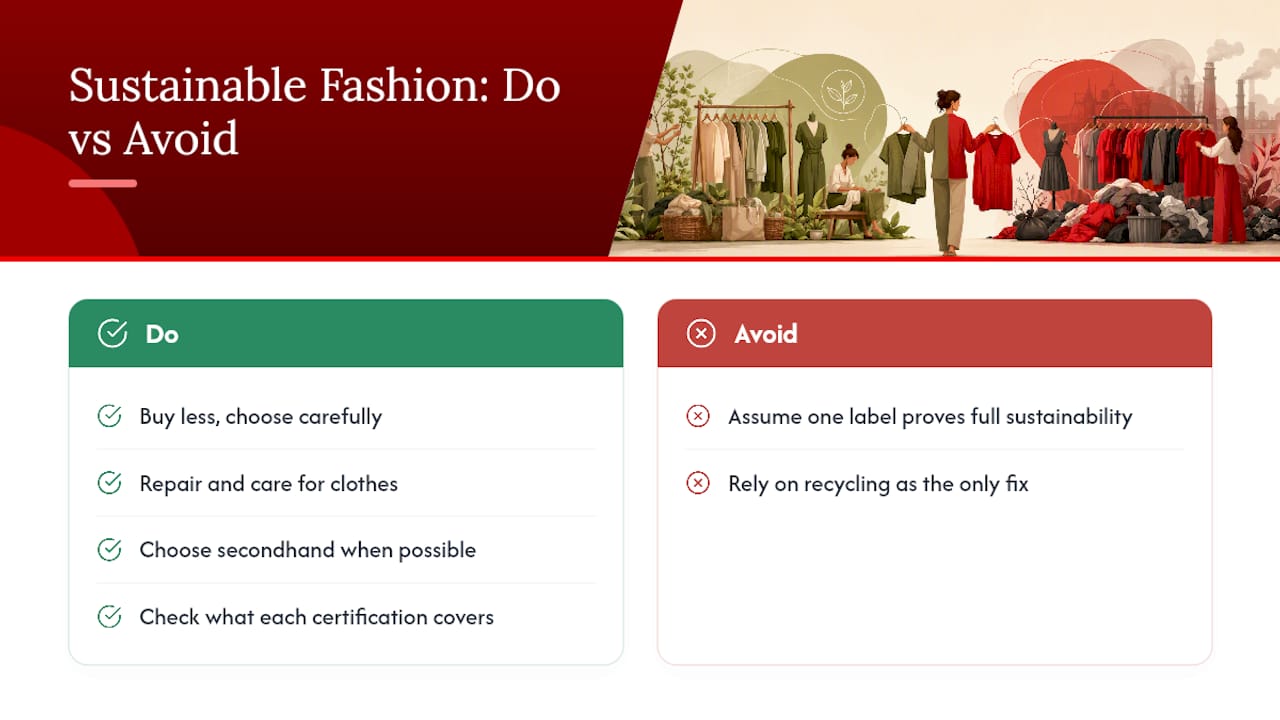
Not on its own. Blended fabrics are difficult to recycle with current technology, and most textiles still end up in landfill or incineration rather than becoming new clothing.


















Leave a Comment
Your email address will not be published. Required fields are marked with *