
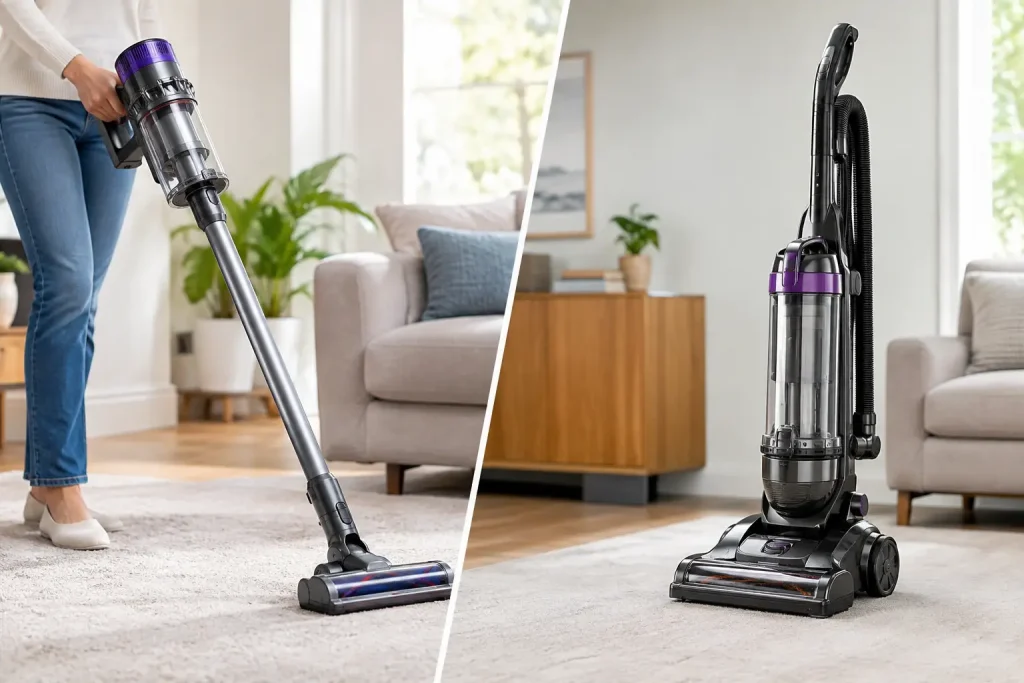
Compare cordless vacuum versus upright models for cleaning power, runtime, weight, storage, and cost to choose the right fit for your home today, easily.
A vacuum that dies halfway through the living room or refuses to pull pet hair from the rug quickly stops feeling like a convenience. The cordless vacuum versus upright decision comes down to how you clean, what is underfoot, and whether you value grab-and-go freedom more than sustained deep-cleaning power.
For many homes, the right answer is not simply the newest or most expensive model. Cordless vacuums have become impressively capable, while traditional uprights remain hard to beat for large carpets, long cleaning sessions, and dependable performance. Here is how to choose without getting distracted by flashy features you may never use.
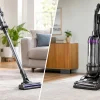
Cordless Vacuum Versus Upright: The Core Difference
A cordless vacuum runs on a rechargeable battery and is usually built around a slim stick-style body. It is light, portable, and easy to pull from a charging dock for a quick pass through the kitchen, entryway, or car. Most can convert to a handheld unit for stairs, upholstery, and tight spaces.
An upright vacuum plugs into the wall and typically has a larger floor head, dust bin or bag, motor, and power cord. That design is less nimble, but it gives the machine room for stronger, more consistent suction and a wider cleaning path. Many upright models are designed with carpet as their main job, although settings for hard floors are common.
Neither format wins every category. A cordless model can make frequent cleaning so much easier that your floors stay cleaner overall. An upright may remove more embedded debris when it is time for a serious whole-house reset.
Choose a Cordless Vacuum for Fast, Frequent Cleaning
Cordless vacuums shine in homes where messes happen in small bursts. Think breakfast crumbs, tracked-in dirt by the front door, scattered litter, shed pet fur, or a quick clean before guests arrive. Because there is no cord to unwind or outlet to find, there is far less friction between noticing a mess and actually handling it.
Weight is another major advantage. Most cordless stick vacuums are easier to carry upstairs than an upright, and their low-profile heads can slide beneath sofas, beds, and cabinets. For apartment dwellers, older adults, and anyone with several flights of stairs, that difference can matter more than maximum suction figures on a product page.
They are also often the better choice for hard flooring. A soft roller head can pick up fine dust on wood, tile, vinyl, and laminate without flinging debris around. The handheld conversion is genuinely useful, too. It can replace a dustbuster for couch cushions, vehicle seats, window tracks, and corners.
The catch is battery runtime. Many cordless vacuums advertise 30 to 60 minutes, but that figure is usually based on a low-power setting with a basic attachment. Use a motorized brush roll or high-power mode on carpet, and usable runtime can drop considerably. In a large house, you may need to recharge before finishing or buy a second battery.
Cordless bins are also smaller. That is fine for daily touch-ups, but households with big dogs, thick rugs, or lots of foot traffic may find themselves emptying the bin several times during one session. Fine dust can puff out if the bin is overfilled or emptied too quickly, so regular maintenance is part of the deal.
Choose an Upright Vacuum for Carpet and Bigger Jobs
If most of your home is carpeted, an upright is usually the practical workhorse. Its larger motor, full-size brush roll, and continuous wall power help it pull grit, hair, and allergens from deeper in carpet fibers. This matters most in busy family rooms, homes with pets, and high-traffic hallways where dirt settles below the visible surface.
An upright is built for longer sessions. You can clean multiple rooms without watching a battery indicator, and a wider nozzle can reduce the number of passes needed in larger spaces. Many models hold more debris than cordless vacuums, which means fewer trips to the trash can.
There are different upright designs to consider. Bagged models are often an excellent option for allergy sufferers because dust stays contained when it is time to dispose of it. Bagless models avoid ongoing bag purchases and let you see when the canister needs emptying. Both can work well, provided filters are maintained according to the manufacturer’s instructions.
The compromise is maneuverability. Uprights are bulkier, often heavier, and less convenient for stairs. Their cords can reach far, but they still require outlet changes and a little planning. Storage can also be awkward in a compact apartment or closet.
Some modern uprights include swivel steering, detachable canisters, LED lights, and lift-away modes that make them more flexible than the old-school models many people remember. Still, if your main need is quick cleaning around furniture every day, an upright can feel like more machine than you want to pull out.
Compare the Features That Actually Affect Cleaning
Marketing terms can blur the differences between vacuum types. Focus on the details that match your floor plan and cleaning habits.
Suction matters, but brush design matters too. On carpet, a motorized brush roll helps lift hair and ground-in debris. On delicate hard floors, look for a setting that turns off the brush roll or a soft roller designed to collect dust without scratching. If long hair is common in your household, an anti-tangle brush roll can save time and frustration.
Filtration deserves attention if anyone has allergies or asthma. A sealed system paired with HEPA filtration is more meaningful than a HEPA filter alone because it is designed to prevent captured particles from leaking back through gaps in the vacuum body. No vacuum replaces medical care or regular home cleaning, but good filtration can make routine upkeep less dusty.
Attachments also influence value. A crevice tool and upholstery brush are useful for nearly everyone. A powered mini tool is especially helpful for pet hair on stairs and furniture. Do not pay extra for a cabinet full of specialty accessories unless you can name when you would use them.
Finally, consider maintenance before buying. Cordless vacuums need battery care, filter washing or replacement, and occasional brush-roll cleaning. Uprights need similar filter and brush-roll attention, plus bags if you choose a bagged design. A vacuum that is easy to empty and clean is more likely to stay effective over time.
Which Vacuum Is Better for Pets?
Pet owners should start with floor type, not the pet label on the box. For heavy shedding on wall-to-wall carpet, an upright with strong agitation, a large bin or bag, and a tangle-resistant brush roll is often the stronger primary vacuum. It can handle long fur and repeated passes without stopping for a recharge.
For pet hair on hard floors, furniture, stairs, and in-between cleanups, a cordless vacuum is hard to beat. Its handheld mode makes it easier to address the places fur gathers most visibly. A home with multiple pets may benefit from both: an upright for weekly deep cleaning and a cordless model for daily maintenance.
Cost, Longevity, and the Two-Vacuum Option
Price ranges overlap more than they used to. Entry-level cordless vacuums can be affordable, but premium stick models may cost as much as, or more than, a quality upright. The higher price often buys better batteries, improved filtration, extra attachments, and automatic dirt-sensing features, not necessarily a perfect substitute for a full-size vacuum.
Uprights can deliver strong value because they tend to have fewer battery-related limitations. A replaceable battery can extend the life of a cordless vacuum, but not every model makes replacement simple or inexpensive. Check whether batteries, filters, brush rolls, and belts are readily available before committing.
For a larger home, buying two complementary machines can be smarter than forcing one vacuum to do every task. A reliable upright for carpets and a modest cordless stick vacuum for kitchen crumbs, stairs, and daily touch-ups can be more useful than one premium machine that compromises in both roles.
Make the Choice Based on Your Home
Choose a cordless vacuum if you have mostly hard floors, limited storage, several stairs, or a habit of cleaning small messes as they happen. It is the better fit when convenience is what will get you vacuuming more often.
Choose an upright if you have substantial carpeting, pets that shed heavily, a larger home, or a preference for one long weekly cleaning session. It is usually the better fit when deep cleaning and uninterrupted runtime are your priorities.
The best vacuum is the one that matches the messes you actually live with. Picture your busiest room, your most difficult floor, and the moment you are most likely to clean. That answer will point you toward the machine you will reach for instead of leaving in the closet.













Leave a Comment
Your email address will not be published. Required fields are marked with *