
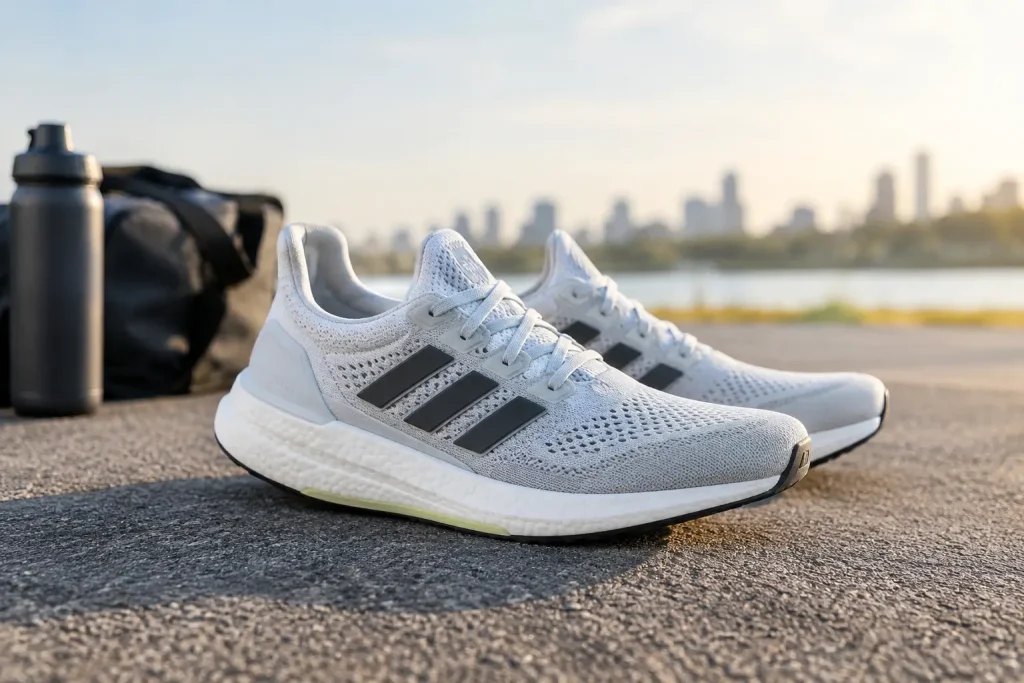
adidas Ultraboost 5 pairs plush cushioning with a lively ride. See how its fit, comfort, durability, and running performance stack up before you buy one.
A daily trainer has to earn its place by the door. It needs to feel good during an easy three miles, hold up to pavement, and still look right with jeans afterward. The adidas Ultraboost 5 aims squarely at that sweet spot, bringing the line’s familiar comfort-first identity into a lighter, more run-ready package.
This is not a stripped-down racing shoe built for chasing a personal best at all costs. It is a cushioned, versatile sneaker for runners who prioritize an agreeable ride, plus walkers, commuters, and gym-goers who want one pair that can cover a lot of ground. That flexibility is its biggest selling point, though it also means the Ultraboost 5 will not be the best match for every type of workout.
adidas Ultraboost 5 at a Glance
The Ultraboost 5 keeps the features that made the franchise recognizable: a springy foam midsole, a flexible knit-style upper, a structured midfoot support system, and a durable rubber outsole designed for everyday pavement. The newer formula puts more emphasis on reducing bulk and creating a smoother transition from landing to toe-off.
On foot, the result is a shoe that feels cushioned without being excessively squishy. There is enough bounce to make relaxed miles feel less flat, but the ride remains stable enough for errands, travel days, and long walks. It is the kind of shoe people often reach for when the calendar includes more than just a run.
That said, comfort is personal. Runners who love a low-to-the-ground, firm, highly responsive feel may find the Ultraboost 5 too soft and substantial. Those who want maximum softness for recovery days may also prefer a more specialized max-cushion model. The Ultraboost 5 sits in the practical middle: noticeably plush, but not built like a pillow.
How the Ride Feels on the Road
The main event is the Light BOOST cushioning. It gives the shoe a protected, slightly energetic underfoot feel that works especially well at easy and moderate paces. On concrete sidewalks and aging asphalt, the foam takes the sting out of repetitive impact without making every step feel disconnected from the ground.
The midsole geometry also helps the shoe roll forward naturally. Newer runners often appreciate this because it makes an easy run feel less demanding on the feet and calves. Experienced runners may enjoy it as a recovery-day option, when the goal is simply to accumulate comfortable miles rather than attack intervals.
For speed work, expectations should be realistic. The Ultraboost 5 can handle a few pickups or an impromptu faster mile, but it is not especially snappy compared with lightweight tempo shoes. Its strengths are consistency and protection, not aggressive propulsion. If most runs are relaxed, steady, or social, that trade-off is easy to live with.
The platform feels most at home on roads, treadmills, trackside paths, and packed gravel. It is not a trail shoe, and the tall cushioned setup is less ideal for uneven, technical ground where a lower, more locked-in ride can inspire more confidence.
Fit, Upper, and Everyday Comfort
A great foam setup means little if the upper causes rubbing or pressure. Here, adidas leans on a breathable engineered upper that wraps the foot more like a performance sock than a traditional heavily padded trainer. The material has enough give to feel accommodating, while the lacing system lets runners dial in the midfoot hold.
For many feet, the fit should feel secure through the heel and midfoot with reasonable room in the toe area. Still, knit-based uppers can be divisive. People with narrow feet may love the close, adaptive feel, while runners with very wide feet should pay close attention to available width options and try the shoe on when possible. A soft upper does not automatically mean a roomy one.
The heel structure deserves attention as well. A daily trainer needs to stay put when you turn corners, walk down stairs, or pick up the pace. The Ultraboost 5 balances its flexible upper with rearfoot structure and midfoot support, producing a more dependable locked-in sensation than a purely lifestyle-focused sneaker.
Wear the socks you normally run in when testing the fit. Make sure there is a thumb’s width of space ahead of the longest toe, then walk briskly and jog if the store allows it. A shoe that feels perfect while standing can reveal heel slip or toe pressure after only a few minutes of movement.
Outsole Grip and Durability
A premium everyday shoe should not look worn out after a short stretch of city use. The Ultraboost 5 uses a rubber outsole built to handle frequent contact with pavement, with coverage in the high-wear areas that usually take the hardest beating. The traction is dependable for ordinary dry roads and sidewalks, and it should offer reassuring grip on damp surfaces when conditions are not extreme.
No road-running outsole is invincible. Slick painted crosswalks, wet leaves, icy sidewalks, and loose dirt can challenge almost any sneaker. But for commutes, dog walks, vacations, and regular training routes, the outsole is one of the reasons this model can justify a higher price than a basic casual shoe.
Durability will depend on gait, body weight, terrain, and how often the pair is worn. Rotating between two pairs of running shoes can help the midsole recover between runs and may extend the useful life of both. It also gives the upper time to dry fully after hot or rainy outings.
Who Should Buy the adidas Ultraboost 5?
The adidas Ultraboost 5 makes the most sense for the runner who values comfort over race-day minimalism. It is particularly appealing for beginners building a routine, casual runners doing short-to-medium distances, and experienced runners who want a pleasant option for easy days. It is also a strong crossover choice for people who walk extensively and do not want to change shoes every time a workout becomes an errand run.
Style is part of the equation, too. Ultraboost models have long occupied the space between athletic gear and streetwear, and the 5 continues that appeal. If you want a shoe that can move from a morning walk to a coffee run without looking overly technical, it has a clear advantage over more specialized running models.
It may be less suitable for runners training primarily for fast races, track sessions, or long runs at demanding paces. Those athletes often benefit from a lighter shoe with a firmer, quicker transition. Runners who need substantial motion-control features should also look beyond general stability from the midfoot system and seek a shoe designed specifically for their support needs.
What to Check Before You Buy
Colorways and versions can make a practical difference beyond appearance. A light-colored knit upper may show dirt more quickly, while darker options are easier to keep presentable for everyday wear. Check the product listing for the exact upper material, width availability, and sizing guidance, since details can vary across men’s, women’s, and special-edition releases.
Think honestly about where the shoe will spend most of its time. If it will be worn for walking, commuting, standing at work, and a few weekly runs, the Ultraboost 5 is a compelling all-purpose choice. If it will only be used for hard training sessions, its lifestyle-friendly versatility may be more than you need.
Price matters as well. The Ultraboost name typically sits in the premium range, so a sale can make the value proposition much stronger. Buying a previous colorway at a discount is often a smart move when the fit and intended use are right.
Keeping Your Pair Fresh
For routine cleaning, remove surface dirt with a soft brush, mild soap, cool water, and a damp cloth. Avoid tossing the shoes into a hot dryer, which can damage foam, adhesives, and the shape of the upper. Let them air-dry away from direct heat, with paper inside if they need help holding their form.
The best reason to choose the Ultraboost 5 is not that it dominates one narrow category. It is that it makes ordinary movement feel better, whether that means an easy run before work, a full afternoon on your feet, or the walk home when the day runs long.
















Leave a Comment
Your email address will not be published. Required fields are marked with *