
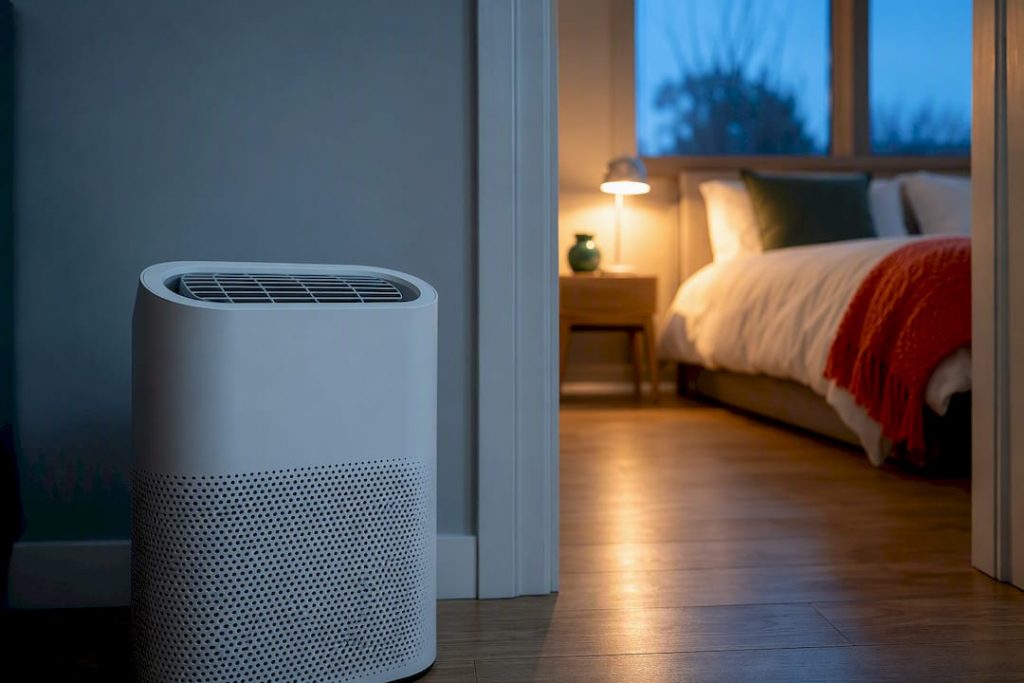
Evidence-backed Canadian guide to air purifier benefits: how units cut indoor PM2.5, who gains most, and what to buy and run for results.
Air purifiers work. Properly sized, HEPA-equipped units can substantially cut in-room PM2.5 and airborne allergens, delivering real relief for people with allergies, asthma, cardiovascular sensitivities, or homes affected by wildfire smoke. Filtration isn’t a stand-alone fix, though. It supplements ventilation and source control, and it won’t touch every gas or VOC without a serious carbon filter behind it.
TL;DR:
- Properly sized HEPA units can reduce in-room PM2.5 levels by up to 79%, mainly benefiting those with respiratory or cardiovascular sensitivities.
- Filtration alone does not remove gases or VOCs unless paired with a substantial activated carbon filter, which is essential for wildfire smoke and odor control.
- Air purifiers can help improve sleep and concentration for allergy sufferers and those near urban pollution, but effects are generally modest for well-ventilated or cleaner air environments.
- A single unit cannot cover entire homes effectively, and maintenance such as filter replacement is necessary to sustain performance without re-emitting odors.
- For meaningful benefits, run units continuously, match CADR to room size, and combine filtration with ventilation and source control strategies.
Table of Contents
- Air Purifier Benefits at a Glance
- How Does HEPA Filtration Help With Allergies and Asthma?
- Can an Air Purifier Lower PM2.5 and Protect Your Heart?
- Do Air Purifiers Remove Smoke and Odors?
- Will an Air Purifier Improve Your Sleep or Focus?
- Do Air Purifiers Reduce Airborne Illness Risk?
- What Do HEPA, Carbon, and CADR Actually Mean?
- What Are the Downsides and Maintenance Requirements?
- How Do You Choose and Use an Air Purifier Correctly?
- Our Take on Air Purifier Benefits
- Where This Information Comes From
- Sources
- FAQ
Air Purifier Benefits at a Glance
Before getting into mechanisms and evidence, here’s the shorthand version of what a well-chosen unit can realistically deliver:
- Allergy symptom relief — HEPA filters capture pollen, dander, and mold spores that trigger reactions.
- Lower PM2.5 exposure — real-world trials show in-room reductions of roughly 58% to 79% in the treated space.
- Wildfire smoke reduction — HEPA media pulls fine smoke particles out of circulation efficiently.
- Odor and VOC reduction — only with a substantial activated carbon bed, not a token filter.
- Better sleep and comfort — cleaner air can mean less nighttime nasal irritation.
- Fewer airborne fine droplets — a complementary, not standalone, layer of protection.
- Peace of mind — visible feedback (particle sensors, cleaner-smelling rooms) that something is working.
Each benefit comes with a caveat, and the sections below walk through exactly where those caveats matter.
How Does HEPA Filtration Help With Allergies and Asthma?
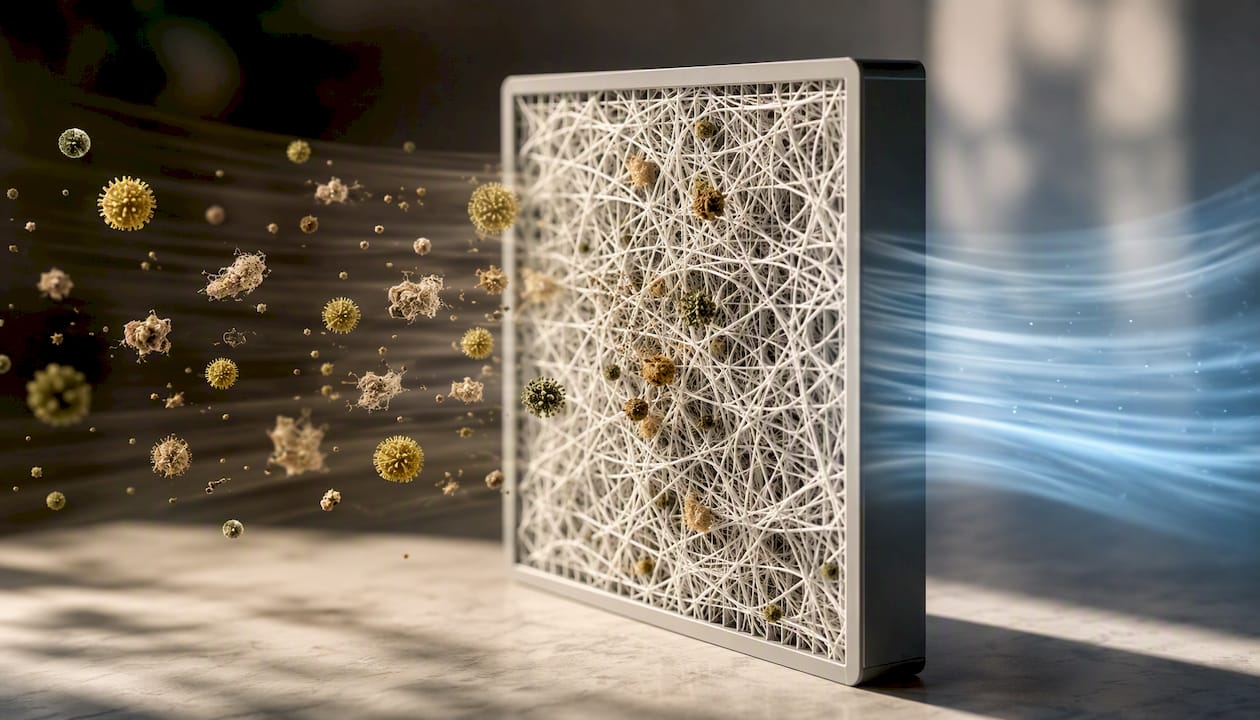
HEPA filters trap airborne allergen particles as they pass through a dense mesh of fibers, catching pollen, pet dander, and many mold spores before they recirculate through a room. That’s the mechanism behind most air purifier benefits people actually notice day to day.
Health Canada’s 2024 guidance and the EPA’s guide to air cleaners both describe the same pattern: modest but measurable symptom improvement for some people with asthma or allergies, not a dramatic cure. That distinction matters for expectations. A purifier won’t touch dust-mite allergens embedded in carpets or bedding, since those settle onto surfaces rather than staying airborne. For dust mites, you still need mattress covers, regular vacuuming, and washing bedding in hot water. Filtration handles what’s floating; you handle what’s settled.
Can an Air Purifier Lower PM2.5 and Protect Your Heart?
Fine particulate matter, PM2.5, is small enough to slip past your body’s usual defenses and reach deep into the lungs and bloodstream. Reducing it indoors is where air purifiers show some of their strongest evidence.
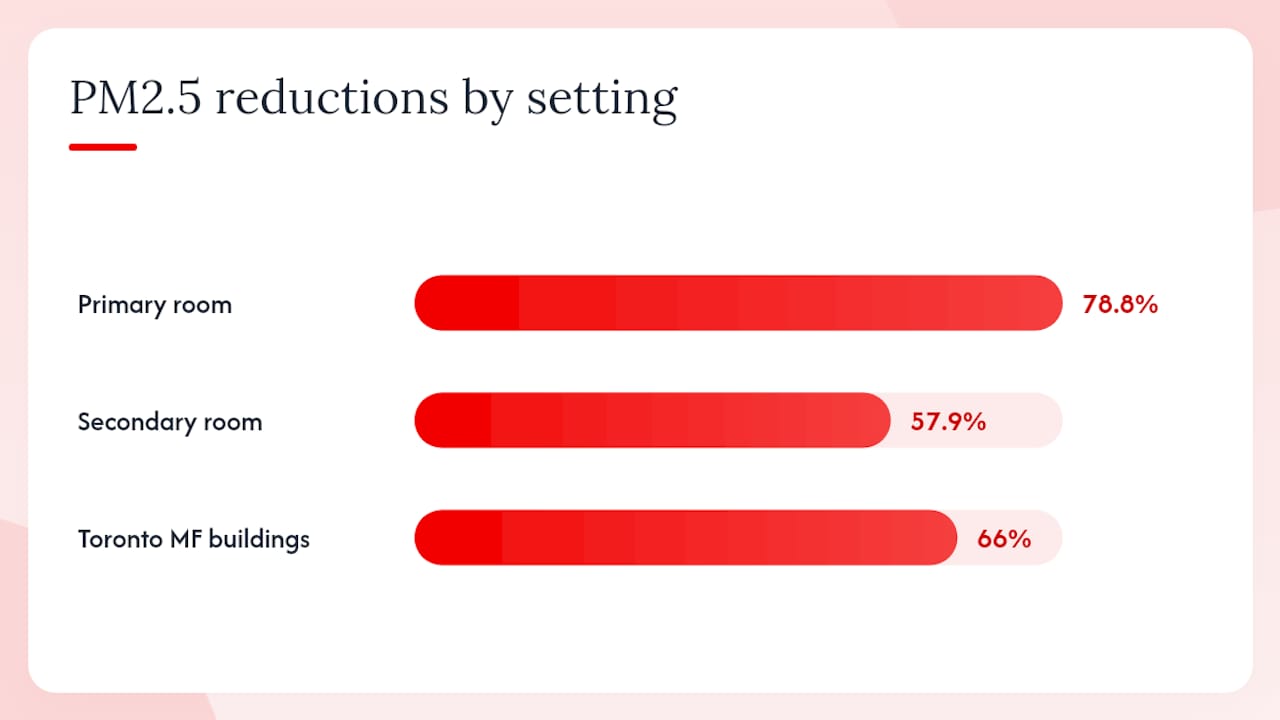
A randomized crossover study of real-world homes found primary-room PM2.5 reductions around 78.8%, with smaller but still meaningful drops of about 57.9% in secondary rooms. A separate 2026 trial in Toronto multi-family buildings found constant operation cut weekly median PM2.5 by an average of 66% versus placebo, though results varied depending on how residents actually ran their devices.
The EPA notes some studies link these particle reductions to small improvements in respiratory and cardiovascular markers. People with existing heart or lung disease tend to see the most measurable benefit; healthy individuals mostly gain comfort rather than a clinical shift.
Do Air Purifiers Remove Smoke and Odors?
HEPA media is genuinely good at pulling smoke particles out of the air, which is why they show up so often in wildfire-season advice. Gases and odors are a different story entirely. HEPA filters don’t adsorb them. That job belongs to activated carbon, and here’s where a lot of budget purifiers quietly fail.
Many low-cost units include a thin, sheet-style carbon layer that looks like a real filter but has almost no adsorption capacity. According to IQAir’s breakdown of HEPA versus carbon filtration, meaningful VOC and odor removal depends on the weight and depth of the carbon media, not just its presence. If you’re shopping specifically for wildfire smoke or cooking odors, look for a high-CADR HEPA unit paired with a genuinely substantial carbon bed, not a marketing checkbox.
Will an Air Purifier Improve Your Sleep or Focus?
Reduced particulate exposure can ease nasal irritation that disrupts rest, and cleaner air tends to correlate with better sleep quality for people sensitive to dust or allergens. Indoor air quality improvements in office settings have also been linked to sharper concentration in some studies, though the effect size is usually modest on average.
The people most likely to notice a difference are allergy sufferers, light sleepers, and anyone in a home near traffic, wood smoke, or a smoker. If your air is already relatively clean, the gain may be barely perceptible. If it isn’t, a purifier running quietly overnight is, one of the, more reasonable comfort upgrades in a bedroom.
Do Air Purifiers Reduce Airborne Illness Risk?
HEPA filters can capture fine respiratory droplets that carry viruses, and studies in controlled settings show measurable reductions in airborne particle counts when purifiers run continuously. That’s a real, if narrow, benefit.
It’s not a substitute for ventilation, hygiene, masking, or vaccination. Public-health guidance consistently frames purifiers as one layer among several, not a stand-alone shield. Hospital-grade setups also use higher air-exchange rates and sometimes UV disinfection that home units simply can’t replicate, so treat any illness-risk claim for consumer purifiers as a complement, never a guarantee.
What Do HEPA, Carbon, and CADR Actually Mean?
True HEPA filters capture at least 99.97% of particles at 0.3 microns, the size range that includes most PM2.5 and many allergens. That standard is why HEPA shows up in nearly every serious air purifier benefits claim.
Activated carbon works differently, adsorbing gas molecules onto a porous surface rather than trapping physical particles. Media mass and depth determine how much odor or VOC capacity a filter actually has.
CADR, or Clean Air Delivery Rate, tells you how much filtered air a unit produces per minute for smoke, dust, and pollen. A simple rule of thumb: match CADR to roughly two thirds of your room’s square footage for smoke particles. Consumer Reports recommends checking for AHAM Verifide certification and ENERGY STAR labeling, and running units continuously rather than intermittently for the best average reduction. Intermittent, spike-triggered operation saves energy and noise but generally delivers weaker average PM2.5 reduction than constant operation.
What Are the Downsides and Maintenance Requirements?
The biggest misconception is that a single unit purifies an entire house. It doesn’t. Effective coverage depends on room mixing and airflow, and furniture or HVAC patterns can shrink the usable volume well below the room’s geometric size, which is why oversized rooms often need multiple units for real whole-home coverage.
Other pitfalls worth knowing:
- Saturated carbon filters can start re-emitting the odors they once absorbed.
- Clogged HEPA filters restrict airflow and quietly tank performance over time.
- Ionizing or ozone-generating technologies should generally be avoided, since ozone itself is a lung irritant.
Pro Tip: Check your pre-filter monthly and replace the primary HEPA and carbon filters on the manufacturer’s schedule, not when the unit seems louder. By the time performance drops noticeably, you’ve likely lost weeks of effective filtration.
How Do You Choose and Use an Air Purifier Correctly?
Buying the right unit comes down to matching the device to your actual pollutant and room size, then running it in a way that sustains performance.
- Identify your primary concern: allergens, smoke, or odors/VOCs.
- Choose HEPA alone for particles, or HEPA plus a substantial carbon bed if gases and odors matter too.
- Check the CADR rating against your room’s square footage before buying.
- Compare replacement filter costs and availability. A cheap unit with expensive filters isn’t actually cheap.
- Place it centrally, away from walls and furniture that block airflow.
- In bedrooms, run it on low or constant speed overnight. In living rooms, bump it up during cooking or smoke events.
For deeper model comparisons and filter-cost breakdowns, a detailed Air Purifier Review Guide walks through specific units side by side.
Our Take on Air Purifier Benefits
The realistic case for air purifiers is narrower than marketing suggests, but stronger than skeptics assume. They genuinely help with allergies, wildfire smoke, and PM2.5 exposure when sized correctly and run consistently. We’d pair filtration with ventilation upgrades and basic source control, like indoor plants that support cleaner air habits and regular filter swaps, rather than treating one machine as the whole solution.
— Alexander
Where This Information Comes From
Our team pulled the claims in this guide from Health Canada’s portable air cleaner guidance, the EPA’s air cleaner guide, a peer-reviewed real-world effectiveness trial, and Consumer Reports’ buying guide.
Homeowners weighing broader efficiency upgrades alongside filtration may also find this practical guide to home efficiency improvements useful for tackling ventilation at the source.
If you run a lifestyle or home site and want to reach readers researching topics like this one, our team at Lizard’s Lunch offers banner ads and guest post placements for brands looking to connect with an engaged home and health audience.
Sources
- Using a portable air cleaner to improve indoor air — Health Canada (2024-05-31)
- Guide to Air Cleaners in the Home | US EPA
- Real-World Effectiveness of Portable Air Cleaners in Reducing Home Particulate Matter Concentrations — PMC
- Consumer Reports — Air purifier buying guide (2026)
FAQ
Are Air Purifiers Really Useful?
Yes, for specific groups. People with allergies, asthma, cardiovascular sensitivities, or exposure to wildfire smoke tend to see the most measurable benefit, with in-room PM2.5 reductions commonly in the 58% to 79% range when a unit is properly sized and run continuously.
Should I Sleep With an Air Purifier On?
Running one on low or constant speed overnight is generally fine and can reduce nasal irritation for allergy-prone sleepers. Choose a unit with a quiet low setting so it doesn’t disrupt sleep in the process of trying to improve it.
What Are the Disadvantages of an Air Purifier?
Main downsides include limited whole-home coverage from a single unit, ongoing filter replacement costs, no effect on settled allergens like dust mites, and the risk of ozone exposure from certain ionizing technologies. Poor maintenance, like a clogged HEPA filter or saturated carbon media, can also quietly erode performance over time.
What Are Signs You Need an Air Purifier?
Frequent allergy or asthma flare ups indoors, persistent cooking or pet odors, visible dust buildup, or living in an area affected by wildfire smoke or heavy traffic pollution are all signs a purifier could help. A PM2.5 or particle sensor can confirm whether indoor air quality is actually a problem before you buy.







Leave a Comment
Your email address will not be published. Required fields are marked with *