
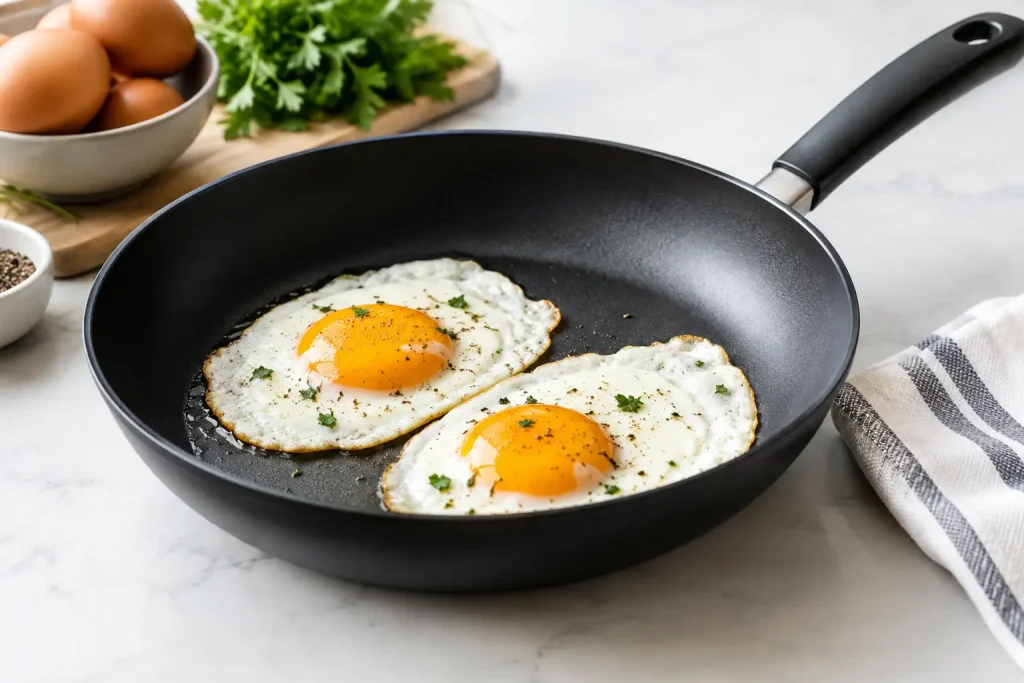
Find the best nonstick pans for eggs, from budget-friendly skillets to premium picks, with tips on coatings, sizes, care, and cooking better breakfasts.
A fried egg is a brutally honest test for cookware. If the white tears, the yolk breaks during the flip, or cleanup requires a soak, the pan has failed the breakfast shift. The best nonstick pans for eggs make delicate cooking feel easy, whether you prefer a lacy-edged sunny-side-up egg, a folded omelet, or soft scrambled eggs that never get crusty.
A good egg pan does not need to be the most expensive skillet in the kitchen. It does need even heat, a genuinely slick cooking surface, comfortable handling, and a size that suits how many people you feed. Here are eight strong choices, plus the details that matter before you buy.
The Best Nonstick Pans for Eggs
1. OXO Professional Nonstick Frying Pan
The OXO Professional is an easy all-around pick for most kitchens. Its hard-anodized aluminum body heats quickly and evenly, while the low, gently sloped sides make it simple to slide eggs onto a plate or turn an omelet with a spatula.
A 10-inch version is especially useful for one to three eggs, while a 12-inch pan gives families more room for scrambled eggs and larger omelets. The handle is comfortable and stays relatively manageable during stovetop cooking. It is a practical middle-ground option for shoppers who want dependable performance without premium-pan pricing.
2. Tramontina Professional Restaurant Fry Pan
For a straightforward, budget-conscious egg skillet, Tramontina’s professional-style fry pan remains a favorite. It has a simple commercial-kitchen look, a lightweight feel, and a slick traditional nonstick surface that is well suited to frequent breakfast duty.
This pan is not designed to be a forever purchase, and that is part of the value equation. Nonstick coatings eventually wear, particularly under heavy use. But for someone who wants an affordable, no-fuss pan dedicated to eggs, pancakes, and grilled cheese, it delivers where it counts.
3. GreenPan Valencia Pro
The GreenPan Valencia Pro is a compelling choice for cooks who prefer ceramic nonstick cookware. Its ceramic coating releases eggs well when the pan is used over moderate heat, and its sturdier construction feels more substantial than many lightweight ceramic pans.
Ceramic is not automatically better for every cook. It can lose its easy-release performance sooner than a high-quality traditional coating if overheated or cleaned aggressively. Still, the Valencia Pro is a smart option for shoppers looking for a polished pan with broad cooktop compatibility. Check the specific size and version for induction compatibility.
4. All-Clad HA1 Hard Anodized Nonstick Fry Pan
If you want a more substantial skillet that can also handle weeknight cooking beyond breakfast, the All-Clad HA1 deserves a look. The pan’s heavier build promotes steadier heat, which helps when eggs need to cook gently rather than seize around hot spots.
It costs more than a basic egg pan, but it has the finish and capacity of a versatile everyday skillet. The trade-off is weight. If wrist comfort is a priority, especially when flipping or transferring food, try a smaller size or choose a lighter pan.
5. Made In CeramiClad Non Stick Frying Pan
Made In’s CeramiClad pan brings a cleaner-lined, premium feel to the ceramic nonstick category. It is a good fit for cooks who care about presentation but still want a pan that can turn out a neat omelet on a weekday morning.
The construction is designed for more even heating than bargain ceramic pans, and the cooking surface performs best with low to medium heat and a little care. It is a higher-investment choice, so it makes the most sense for people who will use it often and follow the care instructions closely.
6. T-fal Ultimate Hard Anodized Fry Pan
T-fal’s Ultimate Hard Anodized line offers strong value for cooks who want a family-friendly skillet with convenient features. The brand’s heat indicator is useful for beginners learning when a pan is warmed up, though eggs still benefit from gentler heat than steaks or stir-fries.
This is a practical option for larger batches of scrambled eggs, breakfast sandwiches, and veggie omelets. Choose a 10-inch pan for everyday egg cooking or a 12-inch model when you regularly cook for several people. As with every nonstick skillet, avoid metal utensils if you want the coating to last.
7. Caraway Fry Pan
Caraway’s fry pan is best known for its colorful, countertop-friendly look, but it can also be a capable egg pan. The ceramic cooking surface is notably easy to clean when new, and the wide cooking area works nicely for two fried eggs or a generous scramble.
The main consideration is maintenance. Ceramic nonstick pans reward low heat, soft utensils, and gentle washing. If you want cookware that doubles as kitchen decor and you are willing to treat it carefully, Caraway can be a satisfying pick. If you need a workhorse that takes daily hard use, a traditional nonstick pan may be more forgiving.
8. Scanpan Classic Fry Pan
Scanpan is a premium option for cooks who would rather buy a more durable-feeling nonstick skillet than replace a bargain pan frequently. Its pans tend to have solid heat retention and a tougher overall build, making them useful for eggs as well as fish, vegetables, and quick sautés.
The upfront price is the catch. For a household that only makes eggs on weekends, it may be more pan than necessary. For frequent home cooks who want a refined, sturdy skillet and are prepared to protect the surface, the investment can make sense.
What Makes an Egg Pan Actually Good?
The ideal egg pan is usually smaller than people expect. An 8-inch skillet is excellent for one or two eggs and compact omelets. A 10-inch skillet is the sweet spot for most households because it gives food enough room without spreading eggs too thin. A 12-inch pan is useful for bigger scrambles and family breakfasts, but a single egg can look lost in it.
Shape matters almost as much as size. Gently flared sides help a silicone spatula slide beneath eggs and make plated transfers cleaner. A flatter, wider base gives fried eggs room to spread. For omelets, look for a pan without sharply angled corners, where egg tends to catch.
Weight is personal. Lightweight aluminum pans heat fast and are easy to maneuver, but they can develop hot spots on powerful burners. Heavier hard-anodized or clad-base pans generally heat more steadily but may be less comfortable for anyone with limited hand strength. There is no universal winner – the best choice depends on your stove, cooking habits, and comfort level.
Traditional Nonstick vs. Ceramic for Eggs
Traditional nonstick coatings are still the easiest route to reliably slippery egg cooking. They typically provide excellent release and remain forgiving when you are working with minimal oil or butter. Their weakness is that high heat, abrasive cleaning, and metal tools shorten their lifespan.
Ceramic nonstick has a different appeal. It is often chosen by shoppers who prefer a coating made without PTFE, and it can be remarkably slick at the beginning of its life. The realistic trade-off is durability: ceramic surfaces can become less nonstick more quickly if they are repeatedly overheated or put through a dishwasher.
Neither category eliminates the need for basic technique. Eggs can stick in any pan when the heat is too high, the surface is dirty, or the pan is past its useful life.
How to Keep Your Egg Pan Nonstick Longer
Use low to medium heat. Eggs cook quickly, and high heat does more damage to a nonstick surface than good. Let the pan warm for a minute or two, then add a small amount of butter, oil, or cooking spray before the eggs go in.
Use silicone, wood, or nylon utensils. Even coatings marketed as metal-utensil-safe will last longer without repeated scraping. When breakfast is finished, let the pan cool before washing it with a soft sponge and mild dish soap. Avoid stacking it directly against bare metal cookware; a pan protector or folded kitchen towel prevents unnecessary scratches.
Finally, replace a nonstick pan when the coating is deeply scratched, peeling, or no longer releases food despite careful use. A dedicated egg skillet is one of the simplest kitchen upgrades you can make: choose a manageable size, cook gently, and breakfast becomes a lot less frustrating.














Leave a Comment
Your email address will not be published. Required fields are marked with *