
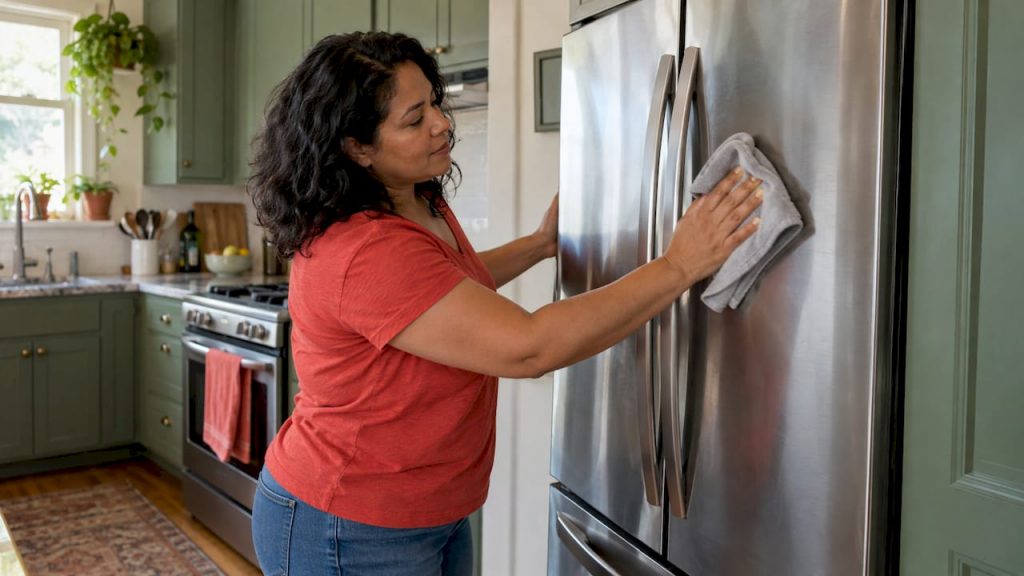
Learn how to clean stainless steel appliances, fridges and sinks without streaks or scratches, with a simple routine, fixes for stains and a list of what to avoid.
The best way to clean stainless steel is also the simplest. Wipe with warm water and a little dish soap on a soft cloth, always moving in the direction of the grain. Then dry the whole surface with a clean microfiber cloth. That one habit does more for a fridge, dishwasher or range hood than any miracle spray. Fingerprints, water spots and streaks come from skipped drying and wiping across the grain, not from steel that is hard to love.
We wrote this guide for Canadian kitchens, where a stainless fridge or range often sits at the centre of a busy home. Below you will find the everyday routine, how to handle a fridge door, how to fix streaks and stubborn marks, and what to keep far away from your appliances. Your kitchen can look bright, polished and welcoming again, and it does not take much.
TL;DR
- Wash with warm water, a drop of dish soap and a soft cloth, moving with the grain, then dry completely with a clean microfiber cloth.
- Drying is the step that prevents streaks and spotting. Do not let the steel air-dry.
- Skip steel wool, abrasive pads, bleach, ammonia and chloride-based products. Check your appliance manual before using vinegar or a polish.
- Fingerprint-resistant finishes need even gentler care: mild soap, warm water and a microfiber cloth only.
- A quick weekly wipe keeps a deep clean from ever becoming a big job.
Table of Contents
- What you need before you start
- Find the grain first
- The everyday routine, step by step
- How to clean a stainless steel fridge
- Fingerprint-resistant stainless steel needs a lighter touch
- Fixing streaks and smudges
- Stains, water spots and stubborn marks
- What to avoid on stainless steel
- Disinfecting stainless steel surfaces
- Sinks, pans and small appliances
- A simple schedule that keeps steel looking new
- Common mistakes that cause streaks
- Our perspective
- Promote your cleaning or home brand with us
- FAQ
- Sources
What you need before you start
You do not need a cupboard full of products. A short kit handles nearly every job:
- Two clean microfiber cloths. One for washing, one for drying and buffing. Consumer Reports explains that a used dishrag can leave food oils and residue behind that dull the finish and gradually wear down the protective chromium oxide layer on the steel, which is why a fresh microfiber cloth is the better choice.
- Mild dish soap. A few drops in warm water is the gentlest effective cleaner you can use.
- A soft, nonabrasive sponge for stuck-on spots.
- Baking soda, kept in reserve for tougher marks.
- A stainless steel cleaner or polish (optional). Handy for a refresh, but check your manufacturer’s advice first, because some finishes should never see one.
It also helps to know your finish. Traditional stainless steel and fingerprint-resistant stainless are cared for differently, and we cover both below. If you are not sure which you own, look in your appliance manual or on the manufacturer’s support page for your model number.
Find the grain first
Look closely at your fridge door or range hood in good light. You will see very fine lines running in one direction, either horizontally or vertically. That is the grain, left by the brushing process when the steel was finished.
Every major manufacturer in our research gives the same instruction: wipe with the grain. Frigidaire’s care guide says to always clean, wipe and dry with the grain to prevent scratching. Whirlpool likewise asks you to rub evenly in the direction of the grain.
Can’t spot it? Run a fingertip lightly across the surface in both directions. It will feel slightly smoother along the grain than across it. On some very smooth or patterned panels the grain is faint, so trust your eyes and your touch together.
The everyday routine, step by step
This is the method we would hand a friend. It takes about five minutes for a fridge, and it suits routine cleaning of ranges, dishwashers, microwaves and sinks too.
- Dust and crumbs first. Wipe the surface with a dry or barely damp microfiber cloth so grit does not get dragged across the finish.
- Mix your cleaner. Add a few drops of mild dish soap to a bowl of warm water. Whirlpool’s guidance for traditional stainless steel is warm soapy water, liquid detergent and a nonabrasive sponge.
- Wash with the grain. Dampen your cloth or sponge, wring it well and wipe in long, even strokes along the grain. Work from top to bottom so drips land on areas you have not cleaned yet.
- Rinse the cloth and wipe again. Use plain water on a clean cloth to lift away soap residue. Leftover soap is a common cause of cloudy streaks.
- Dry completely. Take your second, dry microfiber cloth and buff the surface, again with the grain, until it is dry and gleaming.
- Step back and check the light. Streaks show most at an angle. If you see any, buff again with a dry part of the cloth.
Why drying matters so much
This step is the one people skip, and it is the one that makes the difference. Whirlpool’s product help team notes that water left on stainless steel can cause discoloration, because water can contain iron that starts the discoloration. NYT Wirecutter makes the practical point that the easiest way to avoid streaks is to dry the entire appliance by hand instead of letting it air-dry.
In short: wet cloth to clean, dry cloth to finish. Every time.
How to clean a stainless steel fridge
The fridge is the biggest stainless surface in most homes, and it collects the most fingerprints, so it deserves its own plan.
For the exterior doors and handles, Frigidaire recommends a mix of soap and warm water, or a cleaner made for stainless steel. It also warns against chloride, bleach and household cleaners that contain ammonia or bleach. KitchenAid suggests warm soapy water with a soft sponge, or a mild appliance cleaner and a microfiber cloth. Canadian Living’s guide for Canadian households offers a spray or cream stainless cleaner, or a one-to-one mix of white vinegar and mineral oil, used with two microfibre cloths.
Those recommendations differ a little, so here is how we would resolve it. Begin with the gentlest option, soap and warm water. Move to a stainless steel cleaner only if your manufacturer permits it. Treat vinegar with care, which we explain in the section on what to avoid.
A few fridge-specific tips:
- Start with the handles. They carry the most oils and bacteria from daily use, so give them their own clean cloth or at least a fresh side.
- Mind the seams and edges. Run a barely damp cloth along gaskets and trim, then dry well so water does not sit in the crevices.
- Do the whole door in one pass. Wiping a patch at a time can leave visible borders where the finish looks different.
- Check the dispenser area. Water spots gather around ice and water dispensers, so finish with a dry buff there.
If your kitchen is due for a refresh, a gleaming fridge is one of the quickest wins. For more ideas on how finishes and layout work together, see our roundup of small kitchen makeover examples that work.
Fingerprint-resistant stainless steel needs a lighter touch
Many newer appliances have a coating designed to resist smudges. It looks like stainless steel, but the care rules are stricter. KitchenAid’s guidance for fingerprint-resistant finishes is to use only mild soap, warm water and a microfiber cloth, and to make sure the surface is completely dry afterwards. It says not to use stainless steel cleaners or polish, and to avoid harsh products such as window sprays and scouring cleansers.
That means the oil-based polishes and sprays that are fine on some traditional finishes may not suit these. When in doubt, soap, water and a cloth are always the safer path.
If you enjoy the science of why coated surfaces behave this way, there is a helpful explainer on cleaning anti-fingerprint surfaces so the effect lasts. The principle carries over to your kitchen: be gentle, and the coating keeps working for you.

Fixing streaks and smudges
Streaks are not a sign that you did something terribly wrong. They are usually a sign of leftover moisture, soap or cleaner. Here is how to remove them.
- Re-wipe with a barely damp cloth. Use clean water and follow the grain to lift away any soap film.
- Dry and buff. Canadian Living, citing the usual advice, recommends using a dry microfibre cloth to buff out remaining marks after you wipe in the direction of the grain.
- Use a stainless steel cleaner if your finish allows it. Weiman’s care guide suggests wiping with a microfiber cloth in the direction of the grain using firm, consistent strokes, then buffing with a second clean cloth until the surface is streak-free.
- Do not scrub harder. For heavier deposits, Weiman advises a second pass with fresh product instead of more pressure.
Consumer Reports adds a sensible rule of thumb: always wipe with the grain and finish by buffing with a clean, dry cloth.
If a polish leaves streaks
Too much product is the usual cause. Sub-Zero and Wolf advise that when streaking happens with their polish, you clean the area with rubbing alcohol and start the polishing again. That advice is specific to their products, so check your own appliance’s guidance. In general, less polish and more buffing gives the best shine.
Stains, water spots and stubborn marks
Everyday smudges are easy. Dried-on splatter, hard-water spots and cooked-on residue take a little more patience.
- Dried food or grease. Lay a warm, damp cloth over the spot for a minute or two to soften it, then wipe gently with the grain. A soft sponge and dish soap handle most of it.
- Water spots. Wipe with a damp cloth, then dry thoroughly. If the spot lingers, use a stainless steel cleaner as the manufacturer allows. Weiman’s guide says its cleaner can remove stains and water spots when applied to the affected area and wiped with the grain.
- Gritty or stuck-on areas. Make a loose paste of baking soda and water, apply it with a soft cloth and rub gently along the grain. Rinse well and dry. Canadian Living lists baking soda among the helpful tools for stubborn stains.
- Water spots elsewhere in your home. The same principle of removing minerals and drying promptly applies to tile and other surfaces, and you can read how it works in this guide to removing hard water stains from tile.
Patience beats pressure. Steel that has been scratched cannot be un-scratched, but a stain can almost always be coaxed away with a second gentle pass.
What to avoid on stainless steel
This is the section to bookmark. The products below are the ones manufacturers and testers warn about most often.
| Avoid | Why |
|---|---|
| Steel wool and abrasive scrub pads | Consumer Reports notes they scratch the surface, and tiny steel particles can lodge in the finish, rust and cause staining. |
| Bleach and chloride-based cleaners | Frigidaire says never to use chloride or bleach cleaners on its stainless exteriors. |
| Ammonia | Listed as a no-go by Frigidaire and by Whirlpool. |
| Paper towels, newsprint, abrasive cloths | Whirlpool says not to use them, since they can scratch or leave residue. |
| Abrasive powders and oven cleaners | Whirlpool lists both as products to avoid on its stainless surfaces. |
| Citrus-based cleaners | Also on Whirlpool’s list of products to avoid. |
| Window sprays and scouring cleansers | KitchenAid warns against them on fingerprint-resistant finishes. |
Canadian Living’s guide agrees that you should skip harsh abrasives like steel wool and scrub brushes, along with anything containing bleach, alcohol, ammonia or chlorides.
What about vinegar?
Vinegar is the most debated item on the list, so let’s be clear. You will find plenty of advice online that praises it. Yet Whirlpool specifically lists vinegar-based cleaners among products not to use, and a representative of the American Cleaning Institute told Wirecutter that vinegar’s acidity has the potential to corrode stainless steel, while dish soap or a cleaner made for stainless steel does not compromise the metal.
Our take: soap and warm water do the job beautifully, so there is no need to reach for vinegar on your appliances. If you prefer a homemade solution, follow what your manufacturer allows.
What about WD-40?
People often ask whether it is safe. It can be wiped over steel, but it leaves an oily film, and that film attracts dust and fingerprints. If you have used it, wash the surface with warm dish-soap water, then dry thoroughly to avoid streaks. For a kitchen appliance, a dedicated stainless cleaner or plain soap is simpler.
Disinfecting stainless steel surfaces
Handles, fridge doors and counters see a lot of hands. For disinfecting, Sub-Zero and Wolf recommend 70% rubbing alcohol on a clean microfiber cloth, wiped in the direction of the grain and left to air dry. They do not recommend bleach on appliance exteriors because it can damage the stainless steel.
Note that this advice comes from one manufacturer and applies to its products. Fingerprint-resistant finishes have their own rules, so check your manual before reaching for alcohol.
Sinks, pans and small appliances
Stainless steel is not only for big appliances. The same principles help across your kitchen.
- Sinks. Rinse after use, wash with dish soap and a soft sponge, then dry the basin. Drying keeps water spots from building up around the drain and faucet. When you are choosing fixtures, our guide to kitchen faucet types and how to pick the right one can help you match the finish to your sink.
- Pots and pans. Warm water, dish soap and a non-scratch sponge handle everyday cleaning. For stubborn stains, a baking soda paste applied gently works well, and a good rinse and dry finishes the job.
- Small appliances. Kettles, toasters and coffee gear collect splashes. A soft damp cloth followed by a dry buff keeps them bright. If you own a stainless steel milk frother, this quick guide to cleaning a milk frother with a short daily rinse is worth a read.
- Gadgets and tools. Many handy kitchen tools are stainless too. If you are curious what is worth the drawer space, browse our list of the best Amazon kitchen gadgets.
- Cooktops and ranges. Wipe spills while the surface is cool, and dry it. If you are deciding between cooking methods, our comparison of induction versus gas cooking covers what each means for your kitchen, including how easy each is to keep clean.
A simple schedule that keeps steel looking new
A little regular care means you rarely need a deep clean. Here is a rhythm that fits most households:
| How often | What to do |
|---|---|
| Daily, as needed | Wipe fingerprints and splashes with a dry or barely damp microfiber cloth. |
| Weekly | Wash fridge doors, handles and the front of the dishwasher with soapy water, rinse and buff dry. |
| Monthly | Wipe the whole appliance, edges and seams included, and check for any spots that need a gentle second pass. |
| As needed | Treat stains with baking soda paste or an approved stainless cleaner, following the grain. |
Keep your cloths clean, too. Launder microfiber without fabric softener so it stays absorbent, and keep one cloth strictly for stainless. A cloth that has wiped greasy counters will only smear oil across your fridge.
Common mistakes that cause streaks
If your steel never looks right despite your best efforts, one of these is likely the culprit:
- Wiping across the grain. It scratches and catches the light unevenly.
- Using too much cleaner. Extra product just gives you more to buff off.
- Skipping the rinse. Soap residue dries into a hazy film.
- Letting it air-dry. Water spots and discoloration follow.
- Cleaning in direct sun or on a hot surface. Liquids dry too fast and leave marks. Wait for the surface to cool.
- Reusing a dirty cloth. It deposits residue and dulls the finish.
Getting these six right gives you most of the benefit of a professional-looking finish.
Our perspective
We love guides that make a home feel a little more inviting, and stainless steel is a perfect example. People assume a gleaming fridge needs special products, expensive polish or hours of scrubbing. In our experience, what really changes the result is technique: follow the grain, rinse, and dry the whole surface with a clean microfiber cloth.
That is also why our team at Lizard’s Lunch likes to point readers to the manufacturer’s own care instructions before anything else. A fingerprint-resistant fridge and a traditional stainless range may sit side by side in the same kitchen, and they do not always want the same treatment. A minute with the manual saves a lot of regret.
Our approach to every topic, from kitchen care to travel to tech, is the same. We gather practical, up-to-date advice, explain it in plain words and show you the simple path first. Cleaning is the same as everything else we cover: small, consistent habits bring the biggest, brightest results. We hope this guide helps you enjoy your kitchen even more.
Alexander
Promote your cleaning or home brand with us
Do you make or sell home care products, appliances or kitchen accessories? Our team at Lizard’s Lunch reaches readers who love practical lifestyle guidance, and we offer banner ads and guest post opportunities for brands that want to connect with them. Get in touch through that page to talk about what would suit you.
FAQ
What is the best thing to clean stainless steel with?
For most appliances, warm water with a few drops of mild dish soap and a soft microfiber cloth is the best starting point. Wipe with the grain, rinse with clean water and dry completely. Use a dedicated stainless steel cleaner only if your manufacturer allows it for your finish.
How do I remove streaks from stainless steel?
Re-wipe the surface with a barely damp microfiber cloth, moving along the grain, to lift any soap or cleaner film. Then buff dry with a clean, dry microfiber cloth until the surface is even. If streaks keep coming back, you are likely using too much product or letting the steel air-dry.
Can I use vinegar on stainless steel appliances?
We suggest avoiding it on appliances. Whirlpool lists vinegar-based cleaners among products not to use on its stainless steel, and an American Cleaning Institute representative told Wirecutter that vinegar’s acidity could potentially corrode the metal. Dish soap and warm water clean just as well and are safer for the finish.
How do I clean a stainless steel fridge without leaving fingerprints?
Wash the doors and handles with soap and warm water, wiping with the grain. Rinse with a clean damp cloth, then dry and buff with a fresh microfiber cloth. If your fridge has a fingerprint-resistant finish, use only mild soap, warm water and a microfiber cloth, and dry it completely.
Is it safe to use steel wool on stainless steel?
No. Steel wool and abrasive pads scratch the surface, and Consumer Reports notes that tiny particles of steel wool can lodge in the finish and later rust and stain. A soft sponge and a baking soda paste are gentler ways to lift stubborn marks.
Sources
- How To Get Rid Of Streaks On Your Stainless Steel Appliances (Canadian Living)
- How to Clean and Care for Stainless Steel Surfaces (Whirlpool)
- Refrigerator Clean and Care Guide (Frigidaire)
- How to Care for Stainless Steel (Weiman)
- Best Stainless Steel Cleaners (Consumer Reports)
- How to Clean Stainless Steel Appliances (NYT Wirecutter)
- Stainless Steel and Platinum Cleaning (Sub-Zero and Wolf)
- Anti-fingerprint surface cleaning guide
- Cleaning a milk frother quickly
- Removing hard water stains from tile


















Leave a Comment
Your email address will not be published. Required fields are marked with *