

Explore the famous photographers of landscape who transformed nature art. Discover their techniques and insights to enhance your photography skills.
Landscape photography is defined as the art of capturing natural environments in ways that reveal their emotional depth, not just their physical appearance. The most famous photographers of landscape have done far more than document scenery. Artists like Ansel Adams, Sebastião Salgado, Michael Kenna, and Cherry Kearton transformed raw terrain into images that move people, shift perceptions, and spark conservation movements. Their work sits at the intersection of technical mastery and genuine artistic vision, and studying it gives you a direct line to what makes a great nature photograph. Whether you are chasing your first golden hour shot or building a serious body of work, these masters offer lessons that no gear guide can match.
Who are the most famous photographers of landscape, and what sets them apart?
The best photographers of landscapes share one defining quality: a personal vision so strong that you recognize their work before you see their name. Each built that vision through years of fieldwork, experimentation, and a willingness to wait for the right moment.
Here is a closer look at six photographers whose contributions define the field:
- Ansel Adams is the most recognized name in American landscape photography. His Zone System, a method for controlling tonal range from pure black to pure white, gave photographers a repeatable framework for mastering exposure and darkroom printing. His images of Yosemite Valley and the Sierra Nevada remain the standard against which all black and white landscape work is measured.
- Sebastião Salgado spent eight years traveling to 32 countries for his Genesis project, documenting untouched natural environments and indigenous communities across the Democratic Republic of Congo, Ecuador, and Madagascar. That scale of commitment is almost unheard of in contemporary photography. His images carry a weight that comes directly from that physical and emotional investment.
- Michael Kenna has built a 50-year career on minimalist black and white landscapes shot on medium format film with long exposures. His technique smooths water into silk and dissolves clouds into open sky, stripping each scene to its quietest, most essential form.
- Dhritiman Mukherjee brings over 20 years of experience to nature and wildlife photography in India, earning a highly commended award at the 2020 BBC Wildlife Photographer of the Year for his work capturing rare species like the Bengal Florican and Narcondam hornbill. His photographs function as both art and scientific record.
- Cherry Kearton pioneered wildlife photography in the early 20th century by spending six months living among penguins to capture images no one had made before. His artistic framing set him apart from the scientific photographers of his era and directly influenced a young David Attenborough.
- Frank Gohlke documented both man-altered and purely natural environments, including grain elevators on the American plains and the aftermath of Mount St. Helens’ eruption. His practice of returning to the same locations repeatedly gave his work a rare sense of time passing across a place.
Pro Tip: Study the body of work of one photographer at a time rather than browsing highlight reels. Spending a week with Michael Kenna’s complete catalog teaches you more about tonal restraint than any tutorial.
What techniques define the best photographers of landscapes?
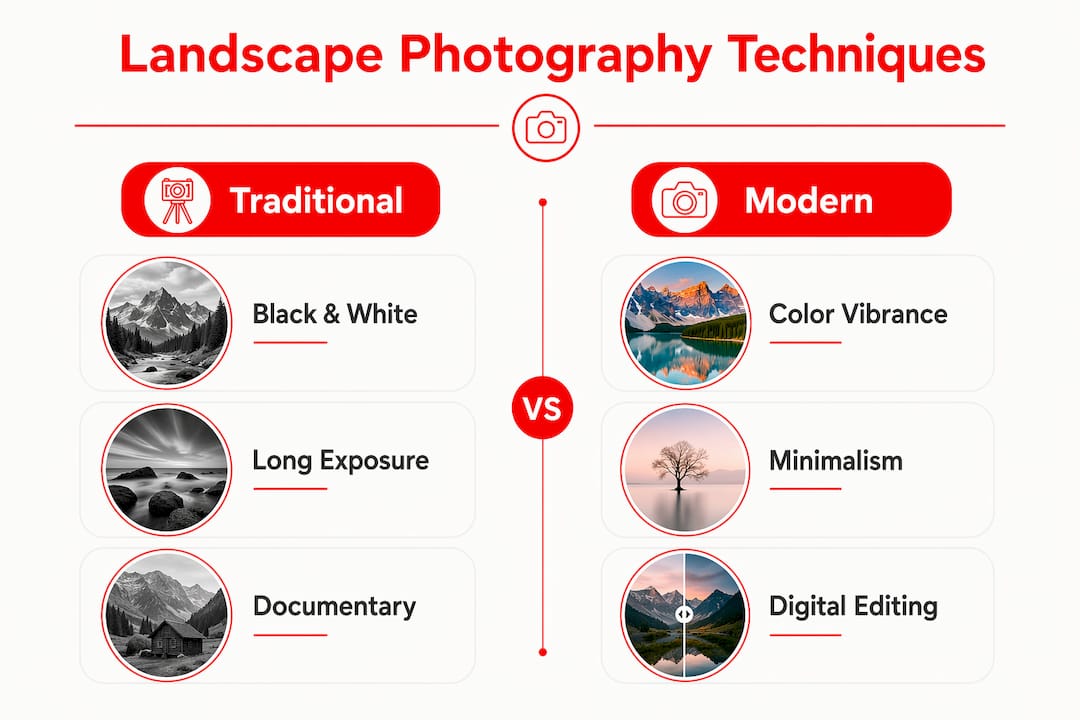
Great landscape photography rests on a small set of techniques applied with extraordinary patience and intentionality. The photographers above each mastered these methods in their own way, and understanding them gives you a framework for developing your own approach.
- Long exposure photography. Michael Kenna’s defining technique uses shutter speeds that last minutes rather than seconds. The result is water that looks like polished glass and skies emptied of clouds. Long exposures remove distractions and reveal the underlying geometry of a scene. This is not a filter effect. It requires a sturdy tripod, a neutral density filter, and the willingness to stand still for a very long time.
- Black and white minimalism. Both Adams and Kenna chose black and white not as a limitation but as a creative decision. Removing color forces the viewer to focus on light, shadow, shape, and texture. Kenna’s compositional restraint teaches that a single tree on a foggy horizon can carry more visual weight than a crowded panorama.
- Long-term documentary projects. Salgado’s Genesis project required physical endurance and work in extreme environments across eight years. This approach treats landscape photography as a sustained argument rather than a series of individual shots. The cumulative effect of a long project is far greater than any single image.
- Innovative field access. Cherry Kearton combined inventive technical approaches with extended field immersion to reach subjects no one else had photographed. He built custom camera housings and lived in the field for months. Dhritiman Mukherjee applies a similar philosophy in India’s most remote ecosystems, spending weeks in a single location to earn the trust of rare animals.
- Tonal range control. Adams’ Zone System remains the most systematic approach to controlling how a scene’s full range of light translates into a final print. Understanding tonal range, from the deepest shadow to the brightest highlight, is the foundation of any serious landscape practice.
Pro Tip: Expert Tom May notes that true progress in landscape photography comes from developing an eye for composition and tonal range, not from upgrading your camera. Spend your next shoot with a single fixed focal length lens and force yourself to move your feet instead.
Composition principles connect all of these techniques. A pro guide to visual storytelling shows how leading lines, negative space, and framing choices apply directly to the kind of work these masters produce.
How have famous landscape photographers influenced environmental awareness?
Photography changes how people feel about places they have never visited. That emotional shift is the mechanism through which iconic landscape photography drives conservation.
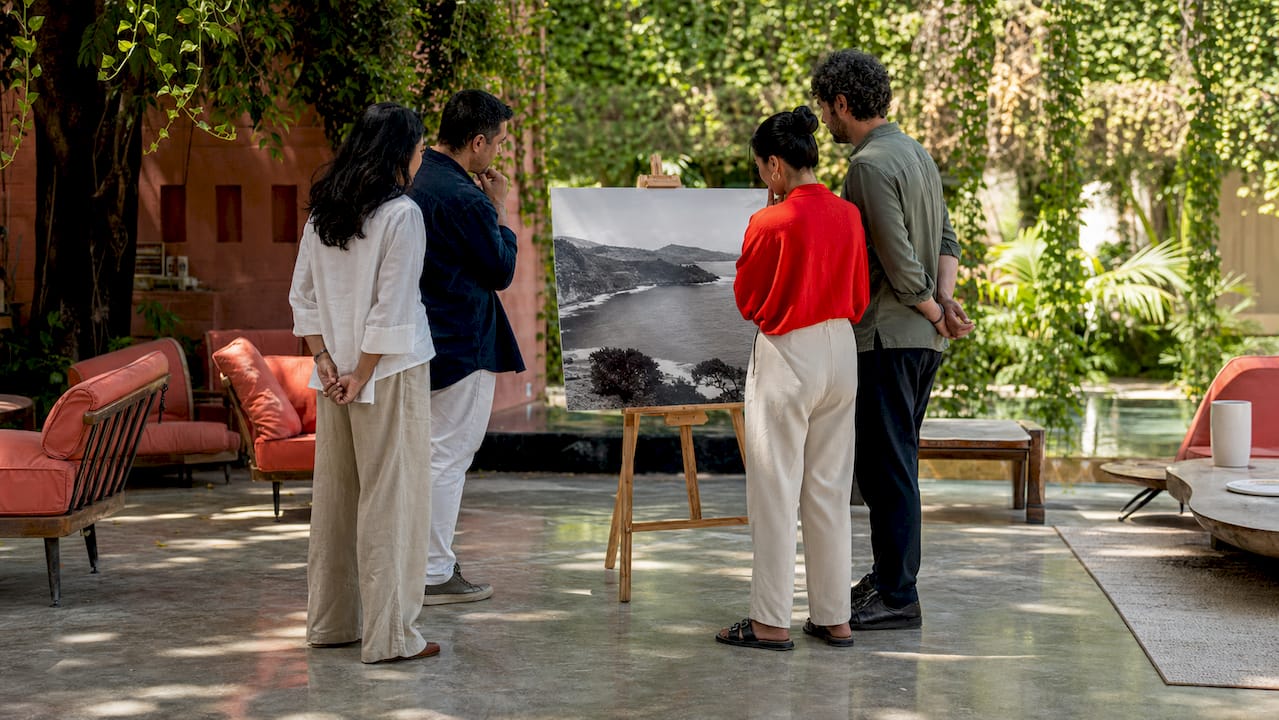
Sebastião Salgado states directly that his goal is to shift viewers’ perception of the planet, making people feel closer to and more moved by nature. The Genesis project achieved this at scale, bringing images of the world’s last untouched places to audiences who would never travel there. That emotional proximity is what turns a viewer into an advocate.
Dhritiman Mukherjee’s conservation focus works at the species level. By photographing rare animals like the Bengal Florican in their natural habitat, he creates visual proof of their existence and vulnerability. His images appear in scientific publications and conservation campaigns, giving policymakers and the public a face to attach to abstract biodiversity statistics.
Frank Gohlke’s documentation of Mount St. Helens after the 1980 eruption contributed to a different kind of environmental awareness. His repeated visits to the same devastated landscape showed how nature recovers and how human activity intersects with geological forces. Major museums collect his work precisely because it holds that long view of the human relationship to land.
Cherry Kearton’s influence operates through the photographers and filmmakers he inspired. Historian John Bevis credits Kearton’s success to balancing artistic vision with technical adaptability, which set him apart from contemporaries focused purely on scientific documentation. That balance, art plus access, is the template that nature documentary filmmaking still follows today.
The common thread across all four photographers is this:
- They chose subjects that most people could not access on their own.
- They brought those subjects into living rooms, galleries, and classrooms.
- They made the invisible visible, and the distant feel personal.
What lessons can aspiring photographers draw from these renowned professionals?
The working habits of the world’s top landscape photographers reveal a set of principles that apply whether you shoot on a full-frame mirrorless camera or a film point-and-shoot.
Patience is the primary skill. Professional landscape photographers often wait extensive periods for optimal lighting, returning to the same location across seasons and years. Kenna has revisited certain sites dozens of times. That repetition is not indecision. It is the process of learning a place deeply enough to photograph it honestly.
Develop a personal visual style before worrying about gear. Every photographer on this list is immediately recognizable. Salgado’s dramatic black and white documentary style, Mukherjee’s intimate wildlife framing, Gohlke’s quiet attention to ordinary American terrain. Each style emerged from a clear sense of what the photographer cared about, not from the equipment they used.
Choose meaningful subjects and commit to them long-term. Salgado’s eight-year Genesis project required physical endurance and planning on a scale most photographers never attempt. Kearton spent months living in isolation to capture nature images no one else had made. The lesson is not that you need to spend years on every project. The lesson is that depth of commitment produces depth of work.
Here are four practical habits drawn directly from how these masters work:
- Scout before you shoot. Visit a location without your camera first. Understand the light at different times of day and the way weather changes the scene.
- Limit your focal lengths. Shooting with one or two lenses forces creative problem-solving and builds a consistent visual language across your work.
- Edit ruthlessly. Kenna’s output is famously small relative to the time he spends in the field. Quality over volume is not a cliché. It is a discipline.
- Study fine art photography alongside technical tutorials. Books like the minimalist landscape aesthetics explored in fine art collections show you what is possible when composition and light take priority over spectacle.
Pro Tip: Build a photography workflow before your next field trip. Knowing how you will organize, cull, and edit your images frees your mind to focus entirely on seeing when you are in the field.
Key Takeaways
The most enduring landscape photography combines patient fieldwork, a clear personal vision, and a genuine connection to the subject, not just technical skill.
| Point | Details |
|---|---|
| Commitment defines great work | Salgado’s Genesis project spanned 8 years and 32 countries, proving that depth of commitment produces depth of impact. |
| Technique serves vision | Long exposure, tonal control, and minimalist composition are tools, not goals. Each master uses them to express a specific point of view. |
| Photography drives conservation | Images by Salgado, Mukherjee, and Kearton have directly influenced public awareness and policy around endangered ecosystems and species. |
| Patience outweighs gear | Expert Tom May and Michael Kenna’s career both confirm that composition and observation matter more than camera upgrades. |
| Personal style is built, not found | Every iconic landscape photographer developed a recognizable visual language through years of focused, repetitive practice in specific subjects. |
Our team’s take on what these photographers really teach us
Our team at Lizard’s Lunch has spent a lot of time with the work of these photographers, and the thing that strikes us most is not the beauty of the images. It is the stubbornness behind them.
Cherry Kearton built custom camera rigs and lived among penguins for half a year. Salgado traveled to 32 countries over eight years, often in physically punishing conditions. Kenna returns to the same foggy Japanese coastline again and again, waiting for a version of the scene that only he can see. None of that is romantic. It is work, and it is the kind of work that most people are not willing to do.
What we find genuinely inspiring is that none of these photographers achieved their results by having better equipment than everyone else. They achieved them by caring more about their subject than anyone else did. That is a transferable quality. You do not need to travel to Madagascar to apply it. You need to find something you care about enough to return to, study, and photograph with real attention.
The other lesson we keep coming back to is the relationship between restraint and impact. Kenna’s most powerful images contain almost nothing. A single tree. A horizon line. A reflection. The restraint is the point. Adding more would take away from the feeling. That principle applies to photography, but it also applies to how you approach any creative work. Knowing what to leave out is the hardest skill to develop, and these photographers have mastered it completely.
— Our team at Lizard’s Lunch
Bringing landscape inspiration into your everyday space
The work of the world’s top landscape photographers does more than inspire your next outdoor shoot. It changes how you see light, space, and natural beauty in everyday environments. That same sensitivity to texture, tone, and negative space that defines great outdoor photography can shape how you design and decorate your living spaces.
At Lizardslunch, we cover the full range of lifestyle inspiration, from photography techniques to the spaces where you live and create. If studying these masters has sparked a desire to bring more natural beauty into your home, our guide to home renovation ideas offers practical ways to add character and warmth inspired by the natural world. You can also explore our photography resources for deeper dives into technique, gear, and the creative habits that define great image-making.
FAQ
Who are the most famous photographers of landscape?
Ansel Adams, Sebastião Salgado, Michael Kenna, Dhritiman Mukherjee, Cherry Kearton, and Frank Gohlke are among the most influential landscape and nature photographers in history. Each built a distinctive body of work defined by a personal vision and deep commitment to their subjects.
What techniques do top landscape photographers use?
Long exposure photography, black and white minimalism, tonal range control, and long-term documentary projects are the core techniques used by renowned landscape photographers. Patience and compositional restraint consistently matter more than camera equipment.
How does landscape photography support conservation?
Photographers like Salgado and Mukherjee use their images to build emotional connections between viewers and endangered environments or species. That emotional connection translates into public awareness and support for conservation efforts.
What is the best way to develop a landscape photography style?
Study the complete body of work of one photographer at a time, shoot with limited focal lengths, and return to the same locations repeatedly. A personal style emerges from focused practice and a clear sense of what subjects matter most to you.
How long do professional landscape photographers spend on a single project?
Sebastião Salgado spent eight years on his Genesis project, traveling to 32 countries. Cherry Kearton spent six months living among penguins for a single body of work. Long-term commitment is a defining characteristic of the most impactful landscape photography.


















Leave a Comment
Your email address will not be published. Required fields are marked with *