

Build a working financial plan in one afternoon. Gather numbers, set a 90 day goal, automate savings, size an emergency fund, and run the ‘financial…
Financial planning is a written roadmap that aligns your money to your life goals, covering budgeting, saving, investing, insurance, taxes, and estate decisions in one coordinated plan. The core benefit is clarity: you make fewer money decisions on emotion and more on a plan you already trust. Your immediate next action is simple. Gather your account balances, income, and monthly expenses, then set one short-term money goal you can measure within 90 days.
TL;DR:
- Building a comprehensive financial plan begins with tracking net worth, cash flow, debts, and setting clear, measurable goals with specific timelines.
- An emergency fund should cover three to six months of essential expenses, adjusted based on job stability and income sources.
- Hiring a professional is recommended for complex situations like inheritance or business sale, with fee structures including flat, hourly, or percentage-based models.
- Using tools such as retirement calculators, debt pay-off planners, and secure tracking apps helps keep the plan aligned with real progress and account changes.
- Regular reviews, at least annually or after major life events, are crucial to ensure the financial plan remains relevant and effective over time.
Table of Contents
- What Finance Planning Actually Covers, and Why It Matters
- Core Components Every Personal Financial Plan Should Include
- How to Build Your First Working Financial Plan
- Budgeting Frameworks and How Big Your Emergency Fund Should Be
- When to Hire a Professional, and What They Cost
- Tools and Calculators That Make the Plan Real
- Our Team’s Checklist for Keeping the Plan Current
- Where to Find Reliable Guidance
- What Most Financial Advice Gets Backwards
- Sources
What Finance Planning Actually Covers, and Why It Matters
A complete financial plan is the comprehensive process of building a roadmap for your money that reduces risk and moves you toward specific goals, according to the Canadian Investment Regulatory Organization. It is not just a budget spreadsheet. A real plan touches:
- Budgeting and cash flow tracking
- Debt repayment order
- Emergency savings
- Investing and retirement accounts
- Insurance coverage
- Tax positioning
- Estate documents like wills and beneficiaries
A written plan works as a decision filter. When a big purchase or job offer shows up, you check it against the plan instead of guessing. That alone lowers financial stress, because you are not relitigating your priorities every month.
Should you do this yourself? For most people with straightforward income and no major life event pending, yes. DIY planning works well once you have the basic structure in place. Complexity is the trigger for bringing in help, which we cover further down.
Core Components Every Personal Financial Plan Should Include
Comprehensive planning typically starts with a snapshot of where you stand right now, then expands into seven areas: day-to-day finances, investments, retirement, education, tax planning, estate planning, and insurance, according to the Bogleheads Wiki. Here is what that looks like in practice:
- Net worth snapshot: total assets minus total debts, updated at least twice a year
- Cash-flow tracking: what comes in versus what goes out, by month
- Debt inventory: balances, interest rates, and minimum payments listed together
- Goals with timelines: short-term (under 1 year), medium-term (1 to 5 years), long-term (5-plus years), each with a dollar target
- Emergency reserve: a cash cushion sized to your job stability and expenses
- Insurance review: life, disability, and health gaps that could derail the plan
- Investment and retirement accounts: chosen for your time horizon, not last year’s headlines
- Estate basics: a will, named beneficiaries, and powers of attorney
- Tax considerations: which accounts shelter income now versus in retirement
One detail people miss: net worth statements usually exclude illiquid personal items like your car or collectibles. Counting those as available cash is a common planning mistake that makes your safety net look thicker than it is.
How to Build Your First Working Financial Plan
You do not need a financial degree to build a working plan. You need an afternoon, your last three months of statements, and a sequence to follow.
- Gather your numbers. Pull account statements, list monthly income and recurring expenses, then calculate net worth (assets minus debts).
- Clarify your values, then set goals. Pick 1 to 3 concrete goals with timelines and dollar amounts. Vague goals like “save more” do not survive a busy month.
- Build a realistic budget. Choose a framework (more on that below) and automate at least part of your savings so the plan does not depend on willpower.
- Fund your emergency reserve and attack high-interest debt. These two compete for the same dollars, so decide your order before you start.
- Pick an investing approach. Index funds, a robo-advisor, or your employer’s retirement plan can all work, depending on your time horizon and how hands-on you want to be.
- Lock in insurance and estate basics. A gap here undoes years of careful saving if something goes wrong.
- Set a review cadence. Annual reviews plus reviews triggered by life events keep the plan from going stale.
A practical checklist covering these same moves, from assessing your situation to scheduling regular reviews, is outlined by Fidelity’s learning center as the standard sequence financial professionals use with new clients.
Pro Tip: Do step 1 with real numbers, not estimates. Rounding your expenses “to be safe” is the single most common reason a first-time budget falls apart within six weeks.
Budgeting Frameworks and How Big Your Emergency Fund Should Be
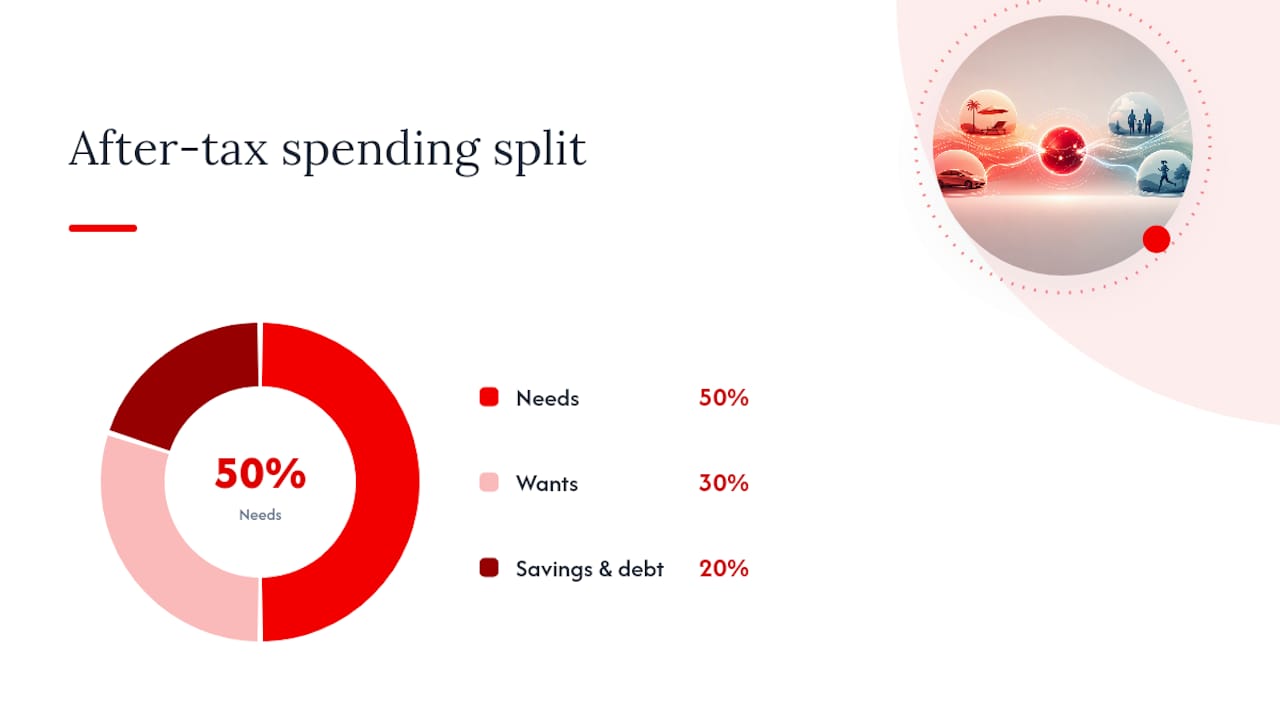
The 50/30/20 rule allocates about half your after-tax income to needs, a smaller portion to wants, and the remainder to savings and debt repayment. It is a starting template, not a mandate. If your rent alone eats 40% of your income, the ratios need adjusting to stay honest.
Two alternatives worth knowing:
- Zero-based budgeting: every dollar gets assigned a job before the month starts, which suits people who overspend without a hard structure.
- Percent-of-pay guidelines: simpler than zero-based, useful once your spending is already stable and you just want guardrails.
On emergency savings, experts recommend keeping 3 to 6 months of essential expenses in an accessible, low-volatility account such as a high-interest savings account. Lean toward 3 months if your income is stable and you have a second earner in the household. Lean toward 6 or more if you are self-employed, commission-based, or the sole earner. A guide to emergency fund basics available on the web walks through sizing this for different job situations.
For automation, split your paycheck across accounts on payday, schedule transfers the same day bills are due, and set bill-pay rules so nothing depends on you remembering. A comparison of checking versus savings accounts explains where each type of transfer belongs.
When to Hire a Professional, and What They Cost
Complex taxes, an inheritance, a business sale, or any large lump sum landing in your lap are the usual triggers for bringing in help. Below that threshold, most people manage fine with the tools in this guide.
Fee models vary widely, and each has tradeoffs:
- Fee-only: flat charge for advice, no commission on products sold, generally the least conflicted model
- Percentage of assets under management (AUM): common for ongoing portfolio management, scales with your account size
- Hourly: pay for the time you use, good for a one-time plan checkup
- Flat fee: predictable cost for a defined scope of work
Two credentials worth checking before you hire anyone: CFP (Certified Financial Planner) and QAFP (Qualified Associate Financial Planner). Both signal standardized training and an enforceable code of conduct. FP Canada maintains a searchable directory of credentialed planners, which is the fastest way to confirm someone is actually certified rather than just claiming it on a business card.
Tools and Calculators That Make the Plan Real
A plan without measurement drifts. The calculators worth bookmarking include retirement and savings projection tools, mortgage payoff calculators, debt avalanche versus snowball comparisons, and a simple net worth tracker you update quarterly.
When picking tools, prioritize:
- Data privacy and security, especially for anything linked to bank logins
- Availability and support for Canadian account types
- The ability to export your data if you switch tools later
Run your numbers through a savings calculator before committing to a monthly contribution. It turns a vague goal like “retire comfortably” into a specific number you either hit or adjust for. A resource like Facet’s money management tools can help track cash flow alongside these calculators, A roundup of budgeting apps for beginners covers which platforms handle this well.
Our Team’s Checklist for Keeping the Plan Current
A plan built once and never revisited stops matching your life within a year. Treat it as a living document with two review triggers.
- Annual “financial summit.” Once a year, review your goals, insurance coverage, named beneficiaries, and whether your portfolio needs rebalancing.
- Life-event triggers. Marriage, a new baby, a home purchase, a job change, or retirement should each prompt an off-schedule review.
Behavioral habits matter as much as the numbers.
Pro Tip: Track three metrics quarterly: your savings rate, your debt-to-income ratio, and your liquidity buffer in months of expenses. These three numbers catch problems months before they show up in your bank balance.
Where to Find Reliable Guidance
For official checklists and consumer protections, Canada.ca’s financial planning guidance is a solid starting point. Use FP Canada’s directory for credentialed planners, and check a vetted list like Verified’s finance site rankings when evaluating which platforms to trust with your data.
If your plan touches a home purchase or renovation budget, A home improvement guide breaks down how to budget for a project without blowing up your emergency fund in the process.
What Most Financial Advice Gets Backwards
Most financial planning content leads with investment returns and asset allocation charts, as if picking the right fund is the hard part. It rarely is. The hard part is the boring middle step everyone skips: writing down actual numbers and setting a review date you will honor.
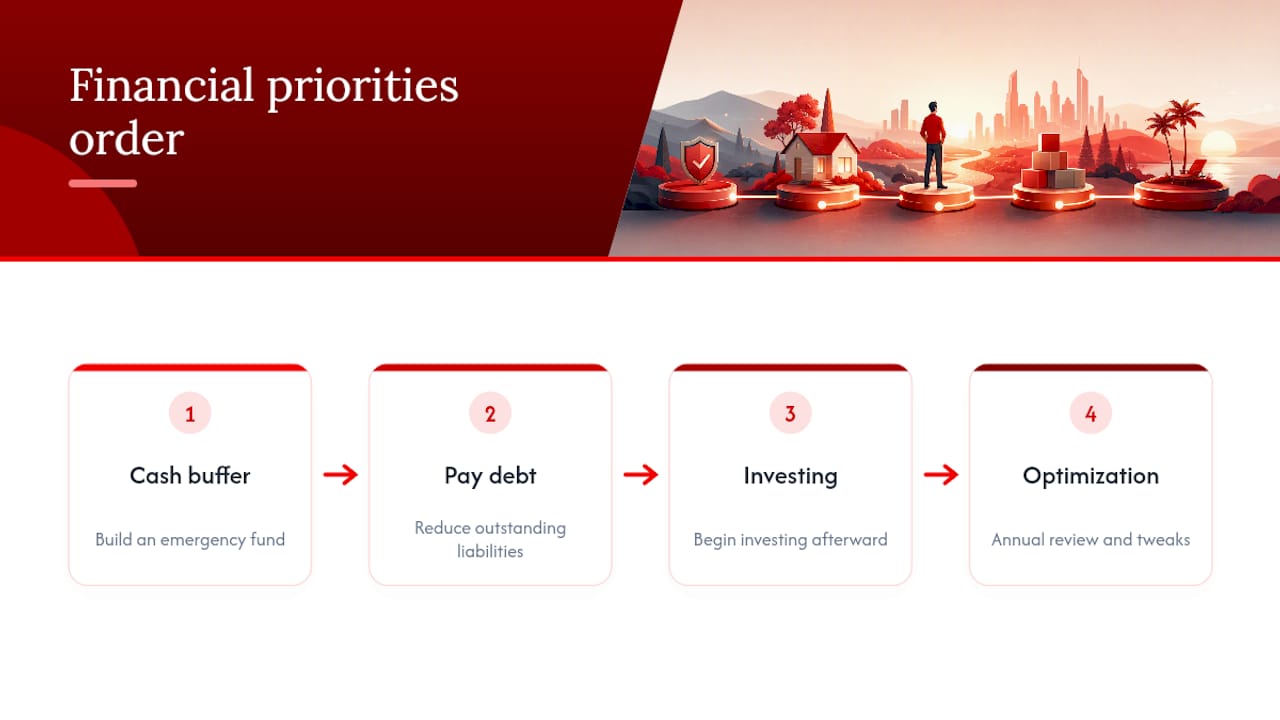
The conventional advice to “start investing early” is correct but incomplete. Starting early with no emergency fund just means you sell investments at a loss the first time your car transmission fails. The order matters more than the enthusiasm. Cash buffer, then debt, then investing, then optimization.
What is genuinely overrated: obsessing over the exact budgeting framework. The 50/30/20 rule, zero-based budgeting, and percentage guidelines all work fine as long as you actually track spending against them monthly. What is underrated: the annual review. A plan reviewed once a year against real numbers beats a beautiful spreadsheet that nobody opens after March.
If you take one thing from this guide, make it the review habit, not the calculator.
— Alexander
This article is general information, not a substitute for advice from a qualified financial advisor. Consult a qualified financial professional about your own circumstances before acting on anything here.


















Leave a Comment
Your email address will not be published. Required fields are marked with *