
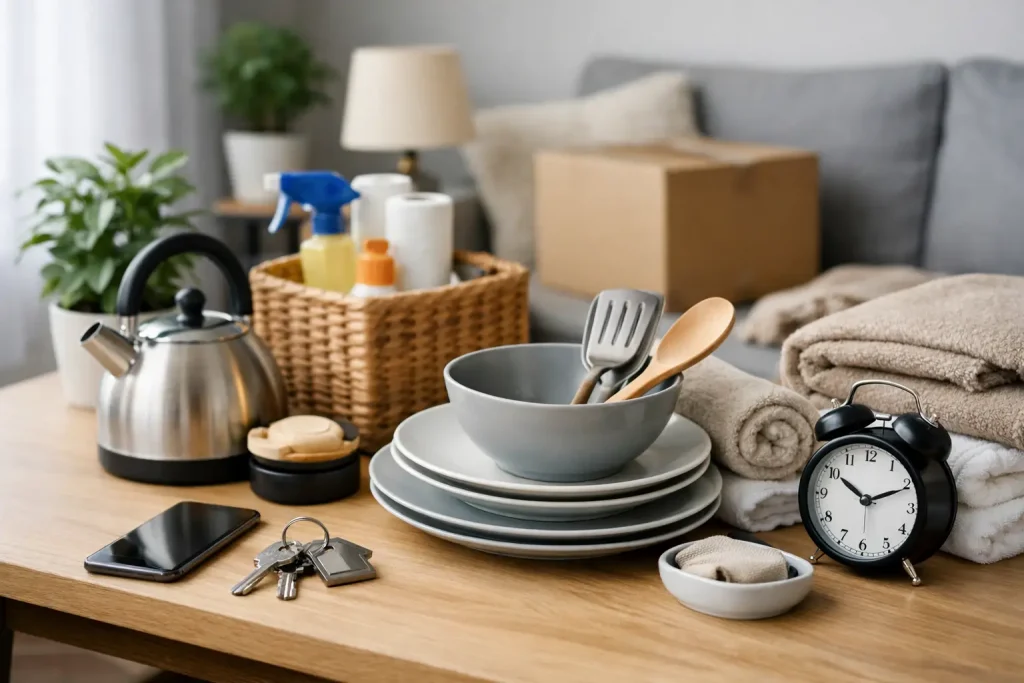
This guide to first apartment essentials helps you buy what you need first, avoid clutter, and make a new place comfortable on a realistic budget now
The first night in a new apartment has a way of revealing every missing item at once. You may have a mattress but no sheets, a kitchen but no can opener, or a bathroom with nothing but a roll of paper towels. This guide to first apartment essentials is built for that real-life moment: buying enough to live comfortably without draining your move-in budget on things that can wait.
A first apartment does not need to look finished on day one. It needs to be safe, clean, functional, and capable of getting you through mornings, meals, laundry, and sleep. Start there, then let your space develop around your routines instead of filling it with random purchases.
Start With the First Apartment Essentials You Need Immediately
Before shopping, separate necessities from upgrades. If an item supports sleeping, bathing, eating, cleaning, safety, or basic organization, it belongs in the first round. Decorative pieces, specialized kitchen gadgets, extra seating, and matching storage bins can come later.
It also helps to check what is already included. Many rentals provide a refrigerator, oven, blinds, smoke detectors, and sometimes a dishwasher or laundry machines. Do not buy duplicates before your walk-through. Measure rooms, closets, cabinet interiors, and doorways, especially if you are bringing a sofa, bed frame, or desk.
A good rule is to buy for the first two weeks, not for every possible future scenario. Your habits will show you what you actually need. Someone who makes coffee at home every morning has a different priority list than someone who cooks only on weekends.
Bedroom Basics That Make the Apartment Livable
Sleep is the one category where cutting too much can backfire. A basic mattress, bed frame or platform, pillow, sheets, and comforter are worth arranging before move-in day. A frame is not strictly required, but lifting a mattress off the floor can improve airflow and make the room feel more intentional.
Buy at least two sheet sets. One can be on the bed while the other is in the wash, which prevents the frustrating late-night realization that laundry is not dry yet. Add a laundry hamper, a small bedside lamp, and curtains or a temporary privacy solution if the apartment does not provide adequate window coverings.
You do not need a fully styled bedroom right away. Nightstands, area rugs, wall art, and throw pillows improve the look, but they do not solve an immediate problem. Prioritize comfortable sleep first.
Kitchen Essentials for Simple, Affordable Meals
A sparse kitchen encourages takeout, and takeout can quickly become one of the most expensive parts of living alone. You can make a wide range of meals with a compact starter setup. Choose durable basics rather than buying a giant boxed set full of tools you may never use.
Your core kitchen checklist should include:
- A chef’s knife, paring knife, and cutting board
- One skillet, one medium pot, and one baking sheet
- A spatula, wooden spoon, tongs, can opener, and measuring cups
- Two plates, two bowls, two drinking glasses, and basic silverware
- A microwave-safe food container set for leftovers
- Dish soap, a sponge, dish towels, and a drying rack if needed
Two place settings are usually enough at first. They cover a guest without creating an overflowing sink after one meal. If you entertain often or share the apartment, expand the quantity based on the number of people living there.
A coffee maker, blender, air fryer, rice cooker, or stand mixer may be useful, but these are habit-based purchases. Buy the appliance that supports a routine you already have, not the one that looks exciting in a shopping cart. Counter space disappears faster than most first-time renters expect.
Bathroom and Cleaning Supplies to Buy Before Move-In
The bathroom is the least forgiving room to leave unfinished. Pack toilet paper, hand soap, bath towels, a shower curtain and liner if required, a bath mat, and your everyday toiletries in a clearly labeled bag. Keep this bag with you rather than loading it into a moving truck.
Cleaning supplies matter just as much. Even a professionally cleaned apartment may need a quick reset before you unpack. You will also want supplies on hand for spills, dust, and the mysterious marks that appear during move-in.
Start with an all-purpose cleaner, disinfecting cleaner, toilet bowl cleaner, microfiber cloths, a scrub brush, trash bags, paper towels, a broom and dustpan, and a vacuum or mop suitable for your flooring. If you have a dishwasher, buy dishwasher detergent. If you have in-unit laundry, add detergent, stain remover, and a drying rack for delicate items.
For apartment living, storage space is often limited. Concentrated products and multi-purpose cleaners can be smarter than purchasing separate bottles for every surface. Just do not mix cleaning chemicals, particularly products containing bleach and ammonia.
Safety, Tools, and Paperwork Often Get Overlooked
A small tool kit earns its place quickly. You may need it to tighten furniture, hang a curtain rod, assemble a shelf, or replace batteries. A hammer, screwdriver set, tape measure, adjustable wrench, level, and box cutter cover most early jobs. Command-style picture strips can be useful, but review your lease rules before mounting anything.
Keep a flashlight, fresh batteries, basic first-aid kit, and phone charger accessible from the first day. Check the smoke and carbon monoxide detectors during your move-in walk-through, then report any problem to management immediately. Renters insurance is another practical early task. It may cost less than expected and can protect personal belongings after covered theft, fire, or water damage.
Document the apartment’s condition before filling it with furniture. Take dated photos and videos of walls, floors, appliances, windows, fixtures, and existing damage. Send maintenance requests in writing when possible and save copies. This is not glamorous, but it can make a major difference when it is time to recover your security deposit.
Furniture: Buy for Function, Then Add Personality
The biggest budgeting mistake is trying to furnish every room at once. Start with the pieces that determine whether daily life works: a bed, a place to sit, a table or desk, and storage for clothes. The right mix depends on the apartment’s layout and whether you work from home.
A dining table can double as a desk in a smaller apartment. A compact sofa may be more useful than a large sectional that blocks walking paths. If your bedroom has a substantial closet, a dresser might wait. If it does not, a simple clothing rack or drawer unit becomes more urgent.
Secondhand shopping can stretch your budget, especially for tables, bookcases, chairs, and solid wood storage. Inspect used furniture carefully for odors, stains, pests, missing hardware, or unstable construction. Mattresses and upholstered items require more caution, so many renters prefer to buy those new.
Make a Smart First-Apartment Budget
Give each purchase a job before you pay for it. Ask whether it solves a current problem, fits the space, and will still be useful in a year. If the answer is no, put it on a 30-day list. Many impulse buys lose their appeal once you have lived in the apartment for a few weeks.
It is also wise to reserve part of your budget for surprises. Utility deposits, parking fees, moving supplies, delivery charges, laundry cards, replacement light bulbs, and a late-night hardware run can add up. A modest cushion is more valuable than a perfectly decorated coffee table during the first month.
When choosing between low-cost and higher-quality items, consider how often you will use them. Spend more thoughtfully on a mattress, everyday cookware, work chair, and vacuum if your budget allows. Save on trendy decor, occasional-use appliances, and furniture that may not fit your next place.
Build the Home One Useful Layer at a Time
Once the essentials are handled, pay attention to what creates friction in your routine. Maybe it is a lack of entryway hooks, a lamp that makes your work corner easier to use, or storage containers that stop pantry food from getting lost. Those are the purchases that make an apartment feel genuinely yours.
Your first place does not need a reveal-worthy makeover. It needs a good night’s sleep, a clean bathroom, a workable kitchen, and enough breathing room in the budget to enjoy the independence you just earned.
















Leave a Comment
Your email address will not be published. Required fields are marked with *