

Compare iced coffee and cold brew through the science of heat and a 12 to 24 hour steep. Explore flavor, caffeine, and recipes to try at home.
Cold brew steeps in cold or room-temperature water for hours, which sensory research from UC Davis links to a smoother, less bitter cup, while iced coffee is brewed hot and then chilled or flash-brewed over ice for a brighter, faster result. Both can deliver similar caffeine when matched for strength, and Health Canada caps healthy adult intake at 400 mg a day regardless of which one you pour.
TL;DR:
- Flash brewed iced coffee takes minutes; cold brew needs 12 to 24 hours, so reserve it for batch preparation rather than rushed mornings.
- For concentrate, use coarse grounds at a 1:4 to 1:5 coffee to water ratio, steep 12 to 18 hours, then dilute before serving.
- Sealed cold brew concentrate keeps in the refrigerator for up to two weeks, while hot brewed coffee starts losing flavor within a day.
- Hot and cold brews can have comparable pH, but hot brewing extracts more titratable acid, so people with acid sensitivity may find cold brew gentler.
Table of Contents
- What Is Iced Coffee and What Is Cold Brew?
- Why Temperature, Time, and Grind Change the Way Coffee Tastes
- What the Research Says About Taste and Chemistry
- How Much Caffeine Should You Expect?
- Which One Should You Actually Order or Brew?
- How to Make Both at Home
- How We Tested and Researched This Comparison
- Our Honest Take on the Iced Coffee vs Cold Brew Debate
- FAQ
- Sources
What Is Iced Coffee and What Is Cold Brew?
Iced coffee starts as hot coffee. Most shops and home brewers make it one of two ways: brewing a full-strength pot or pour-over with hot water and then pouring it over ice, or flash-brewing, where hot water passes through grounds directly onto ice so the coffee chills the instant it is made. Both methods use the same hot-extraction chemistry you would use for a regular cup; the ice just drops the temperature fast.
Cold brew works differently from the start. Grounds steep in cold or room-temperature water for an extended period, often many hours, using immersion (grounds fully submerged) or cold drip (water slowly filters through grounds over time). There is no heat involved at any stage, which is the single biggest mechanical difference between the two drinks.
A few terms get used loosely in cafes and recipe blogs:
- Cold brew concentrate is cold brew made at a stronger ratio, meant to be diluted with water, milk, or ice before drinking.
- Nitro cold brew is standard cold brew infused with nitrogen gas for a creamy texture and cascading visual effect, not a separate brewing method.
- “Iced coffee” at some shops actually means a flash-brew, so the brewing method behind the name can vary by location.
Knowing which process you are drinking matters because temperature and time, not the ice itself, drive most of the flavor and caffeine differences discussed below.
Why Temperature, Time, and Grind Change the Way Coffee Tastes
Every brewing method follows what coffee researchers call a universal brew curve: hot water pulls flavor compounds out of ground coffee quickly, while cold water pulls them out slowly. According to the UC Davis sensory study, hot immersion brewing reaches its equilibrium strength in about 20 to 30 minutes, room-temperature cold immersion takes roughly 5 hours, and refrigerated cold brew can take more than 10 hours to fully extract. That gap in extraction speed is the reason cold brew recipes call for steeping overnight while flash-brews finish in minutes.
Three variables shift alongside temperature:
- Time. Flash-brew and standard iced coffee extract in minutes; cold brew needs 12 to 24 hours depending on grind and ratio.
- Grind size. Cold brew typically uses a coarse grind to avoid over-extracting bitter compounds during the long steep; iced coffee uses a grind suited to quick hot extraction.
- Ratio. Cold brew is often brewed stronger, around 1:4 to 1:8 coffee-to-water by weight, then diluted; iced coffee is usually brewed at normal strength and simply poured over ice.
Filtration and dilution choices add another layer. A paper-filtered cold brew tastes cleaner and lighter in body than one strained through a mesh bag, which lets more oils and fine particles through. Serving a cold brew concentrate at full strength produces a heavier, more intense cup than diluting it 1:1 with water or milk, which is why two cold brews from the same batch can taste like entirely different drinks depending on how they are poured.
Pro Tip: If your iced coffee tastes watery, brew it slightly stronger than usual since the ice will dilute it as it melts.
What the Research Says About Taste and Chemistry
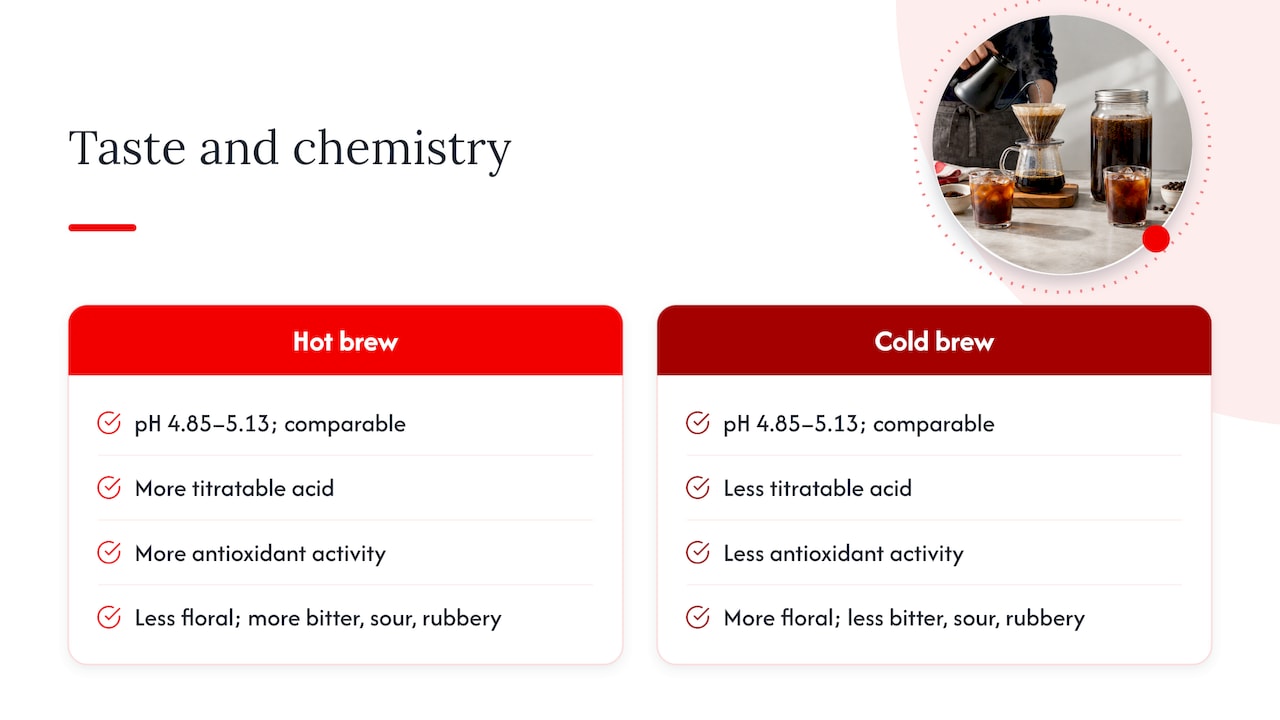
The flavor gap between these two drinks is not just anecdotal. The UC Davis sensory panel found cold brew to be measurably more floral and less bitter, sour, and rubbery than hot brew, even when both were brewed to the same strength and served at the same temperature. That last detail matters: the difference comes from the brewing temperature itself, not from one drink simply being colder when you taste it.
Cold-brewed coffee was found to be significantly more floral, and less bitter, sour, and rubbery, than hot brew coffee.
A separate 2022 study published in Foods backs this up, reporting that cold brew tasted less bitter and sour and more floral than hot brew at matched concentration and serving temperature. The same study measured pH in both brews and found them comparable, generally in the 4.85 to 5.13 range, while hot brew extracted more total titratable acid.
The acid gap between hot and cold brew shows up in titratable acidity, not pH, according to chemical analysis published in Scientific Reports, which also found hot brews carried higher antioxidant activity than cold brews made with the same grind-to-water ratio. That distinction explains why cold brew gets called “smoother” rather than strictly “less acidic”: the measurable acid compounds differ even when the pH reading looks similar on paper.
Roast level and bean origin often swing flavor more than brew temperature does. Specialty Coffee Association reporting on this research notes that a dark roast brewed cold can still taste bolder than a light roast brewed hot, so the bean you choose deserves as much attention as the method.
How Much Caffeine Should You Expect?
Caffeine content in both drinks depends more on grind, ratio, and serving size than on brewing temperature alone. When coffee-to-water strength is matched, an iced coffee and a cold brew can land in a similar caffeine range per ounce. The practical difference shows up in how each drink is usually served:
- Cold brew concentrate is often poured undiluted or lightly diluted, which packs more caffeine into a single serving than a typical iced coffee.
- Standard iced coffee uses a normal brew strength, so its caffeine per cup tracks close to a regular hot cup of the same size.
- Diluting cold brew concentrate 1:1 or 1:2 before drinking brings its caffeine level back down closer to a standard cup.
A typical 8-ounce brewed coffee carries roughly 135 mg of caffeine, though the amount varies by bean, grind, and brew strength, and Health Canada recommends healthy adults cap total daily intake at 400 mg. People who are pregnant, trying to conceive, or giving coffee to children should follow lower limits, since both groups are advised to restrict caffeine well below the general adult guideline. If you are also tracking how caffeine affects your sleep or recovery, a look at how caffeine shifts heart-rate variability is worth a read before your next afternoon cup.
Which One Should You Actually Order or Brew?
The right choice usually comes down to timing, taste preference, and how your stomach handles coffee, not which drink is objectively “better.”
- Rushed weekday morning: reach for flash-brewed iced coffee since it is ready in minutes and needs no advance planning.
- Sunday batch prep for the week: make a cold brew concentrate once and portion it out, since it keeps in the fridge far longer than brewed hot coffee.
- Sensitive stomach or acid reflux concerns: try cold brew first, since research points to lower titratable acidity and a smoother sensory profile, though individual tolerance varies.
- Prefer bold, black coffee with more bite: iced coffee’s hot extraction pulls out more of the acidic and bitter compounds that give coffee its traditional edge.
A short mental checklist helps when you are standing at the counter or planning your next grocery run: how much time do you have, do you want a drink ready now or a batch for the week, how sensitive is your stomach to acidity, and how much caffeine do you actually want in one serving.
Both drinks take modifications well. A splash of oat milk or cream softens cold brew’s body without erasing its low-bitterness profile, while a simple syrup or flavored syrup brightens an iced coffee that leans too sharp. Diluting cold brew concentrate further with water also tames its caffeine load if a full-strength pour feels like too much.
How to Make Both at Home
A flash-brew iced coffee comes together fast: use a medium-fine grind, brew at your normal hot-coffee ratio (around 1:16 coffee to water), but pour the hot water over a bed of ice equal to about half your usual water volume. The ice chills the coffee instantly, which limits oxidation and keeps the flavor cleaner than coffee that sits and cools slowly on a counter.
Cold brew concentrate takes patience instead of speed:
- Use a coarse grind, similar to what you would use for a French press.
- Combine with cold water at roughly a 1:4 to 1:5 ratio by weight for a strong concentrate.
- Steep at room temperature or in the fridge for 12 to 18 hours, then strain through a paper filter or fine mesh bag for a cleaner cup.
- Dilute the finished concentrate 1:1 with water for a standard-strength cup, or 1:2 with milk for a creamier, lower-caffeine drink.
Pro Tip: Grounds hold onto some water as they steep, so your final yield will be a bit less than the water you started with, plan your batch size with that in mind.
Cold brew concentrate keeps well in a sealed container in the fridge for up to two weeks, far longer than brewed hot coffee, which starts losing flavor within a day. If you are weighing which brewing gear fits your kitchen setup, our guide to different coffee maker types covers options for both hot and cold methods.
How We Tested and Researched This Comparison
This comparison was built by pairing the published sensory and chemistry research cited throughout this article with hands-on brewing at home, steeping the same beans both hot and cold to see how closely the results tracked the lab findings. We cross-checked caffeine guidance against Health Canada’s published limits rather than relying on shop estimates alone. If you are shopping for brewing gear afterward, our roundup of gifts for coffee lovers covers equipment worth considering.
Our Honest Take on the Iced Coffee vs Cold Brew Debate
The most useful experiment you can run is a boring one: brew the same bag of beans both ways, match the strength as closely as you can, and taste them side by side. Most people assume the brewing method is what decides their preference, but bean origin and roast level often move the needle more than hot versus cold ever will. Skip the debate about which method is “correct” and treat both as tools: one for speed, one for a smoother, slower payoff, and let your own palate pick the winner.
— Alexander
FAQ
Is Cold Brew Better for You Than Iced Coffee?
Neither drink is clearly healthier across the board. Cold brew tends to have lower titratable acidity, which some people find easier on the stomach, but chemical analysis also found hot brew carries higher antioxidant activity, so the better option depends on what you are optimizing for.
What Is Stronger, Iced Coffee or Cold Brew?
Cold brew concentrate served undiluted is typically stronger in both flavor and caffeine than a standard iced coffee, simply because it is brewed at a tighter ratio. Once diluted to a normal serving strength, the two can land much closer together in caffeine content.
Which Tastes Better, Cold Brew or Iced Coffee?
Taste comes down to preference, but sensory research from UC Davis found cold brew more floral and less bitter, sour, and rubbery than hot brew when both were matched for strength. If you prefer a brighter, more traditional coffee taste, iced coffee’s hot extraction delivers that edge.
How Much Caffeine Is Safe to Drink in a Day?
Health Canada recommends healthy adults keep total daily caffeine intake at or below 400 mg, regardless of whether it comes from iced coffee, cold brew, or other sources. Pregnant people and children are advised to stay well below that general limit.
Does Cold Brew Really Have Less Acid Than Iced Coffee?
It is more nuanced than a flat “less acidic” claim. Research shows pH levels between hot and cold brew are often comparable, but hot brew extracts more total titratable acid, which is the measure more closely tied to that sharp, acidic taste.
Sources
- Sensory Analysis of Full Immersion Coffee: Cold Brew Is More Floral, and Less Bitter, Sour, and Rubbery Than Hot Brew
- Foods (2022) sensory analysis/study listing on PubMed
- Health Canada — Caffeine guidance
- Comparative study of acidity and antioxidant activity in cold vs hot brew (Scientific Reports 2018)

















Leave a Comment
Your email address will not be published. Required fields are marked with *