
Discover the vibrant world of Jazz. Explore styles, iconic artists, and essential techniques that shape this captivating musical genre.
Jazz is a musical genre defined by improvisation, syncopated rhythms, and a captivating blend of African and European musical traditions. Encyclopaedia Britannica defines jazz as a hybrid musical form where characteristic improvisation sits at the very heart of the sound. Born in New Orleans in the late 19th and early 20th centuries, jazz grew from African American communities into one of the most influential art forms the world has ever heard. Whether you are a first-time listener or a seasoned educator, understanding jazz means understanding a living, breathing conversation between musicians. Institutions like Jazz at Lincoln Center continue to carry that conversation forward today.
1. What jazz music actually is
Jazz features syncopated rhythm and repeating harmonic sequences that give the music its characteristic forward momentum. Syncopation places rhythmic accents on unexpected beats, creating a sense of tension and release that pulls listeners in. This rhythmic complexity, layered over cyclical chord progressions, is what separates jazz from classical or folk traditions.
The genre blends West African rhythmic sensibility with European harmonic language, producing something entirely new. That fusion is not accidental. Enslaved Africans brought their musical traditions to the American South, and those traditions collided with European church music, marching band repertoire, and blues to produce jazz. The result is a genre that feels both structured and free at the same time.
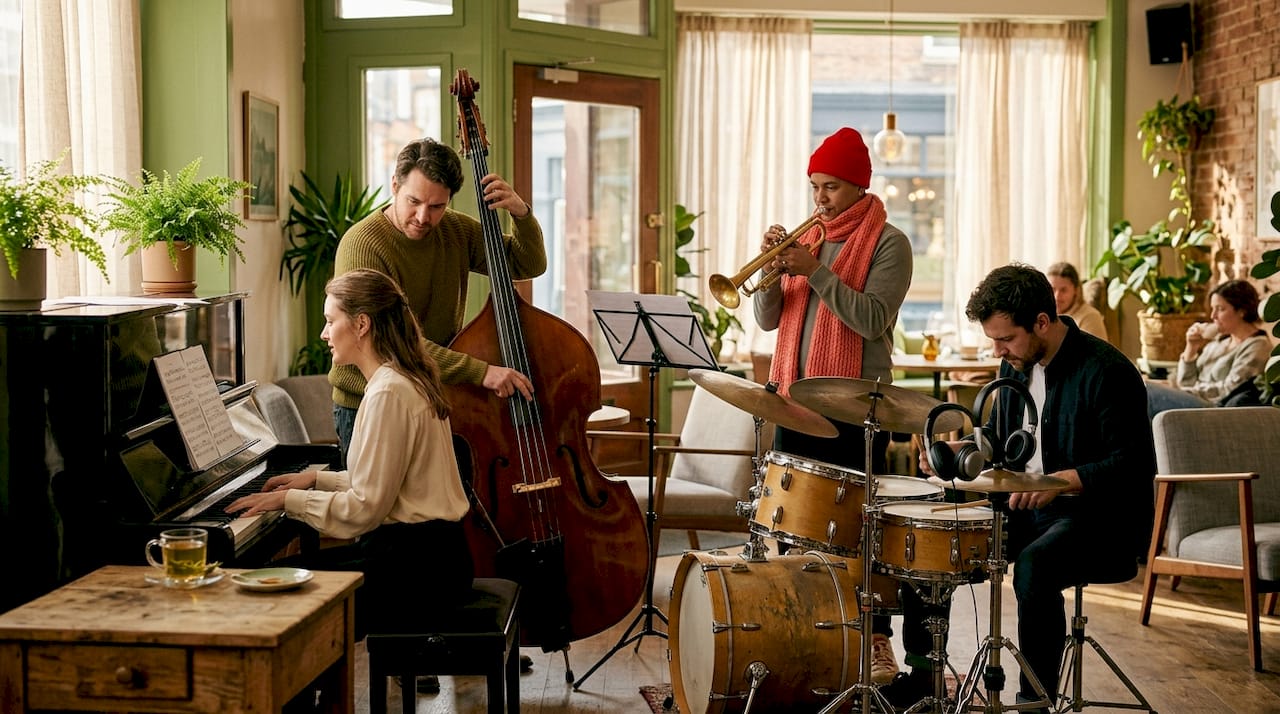
Improvisation makes it hard for listeners to distinguish planned from spontaneous parts. This is one of jazz’s most fascinating qualities. A soloist might play something that sounds composed, but it was invented on the spot, shaped by the chord changes happening beneath them.
2. The major jazz styles you need to know
Jazz did not stay still. It evolved through a series of distinct styles, each one building on or reacting against what came before. Here is a breakdown of the most important ones:
- New Orleans jazz (1900s–1920s): The original form, rooted in African American communities in New Orleans. It features collective improvisation, where trumpet, clarinet, and trombone all improvise simultaneously over a rhythm section. Louis Armstrong emerged from this tradition and transformed it.
- Swing and big band (1930s–1940s): Jazz went mainstream during the swing era. Large orchestras led by figures like Duke Ellington and Count Basie played danceable, arranged music with room for featured soloists. Swing defined popular music for an entire decade.
- Bebop (1940s–1950s): Bebop emerged as a reaction to big band swing, shifting rhythmic emphasis and increasing harmonic density. Charlie Parker and Dizzy Gillespie drove this change, playing at faster tempos with complex chord substitutions. Bebop was not designed for dancing. It was designed for listening.
- Hard bop (1950s–1960s): A response to bebop’s sometimes cerebral quality, hard bop brought blues and gospel feeling back into the music. Art Blakey’s Jazz Messengers and Horace Silver were central figures. The music was still harmonically sophisticated but emotionally warmer.
- Cool jazz (1950s): Miles Davis’s 1949 recordings, later released as Birth of the Cool, defined this style. Cool jazz favored relaxed tempos, smoother textures, and a more restrained emotional palette. West Coast musicians like Dave Brubeck and Chet Baker developed it further.
- Post-bop (1960s onward): Post-bop is less a single style and more an umbrella for experimentation. John Coltrane, Herbie Hancock, and Wayne Shorter all worked in this space, blending modal jazz, free jazz, and funk influences into something that resists easy categorization.
Each style carries its own emotional character and technical demands. Recognizing them by ear is one of the great pleasures of deepening your jazz knowledge.
3. Iconic jazz artists and what they gave the world
The history of jazz is inseparable from the artists who shaped it. These musicians did not just play the genre. They redefined it.
- Louis Armstrong: Armstrong transformed jazz from a collective art into a soloist’s art. His trumpet playing introduced melodic invention and rhythmic freedom that nobody had heard before. His gravelly vocal style became equally iconic.
- Charlie Parker and Dizzy Gillespie: These two invented bebop together in the early 1940s. Parker’s alto saxophone lines moved at breathtaking speed through complex harmonies. Gillespie added Afro-Cuban rhythmic elements that gave bebop an additional layer of energy.
- Miles Davis: No single artist spans more jazz history than Miles Davis. He helped create cool jazz, then modal jazz with Kind of Blue in 1959, then jazz fusion with Bitches Brew in 1970. Each pivot changed the direction of the genre.
- John Coltrane: Coltrane’s career moved from hard bop through modal jazz to free jazz in less than a decade. A Love Supreme (1964) is widely considered the most spiritually profound jazz recording ever made. His technical mastery and emotional depth remain unmatched.
- Ella Fitzgerald and Billie Holiday: These two vocalists represent different poles of jazz singing. Fitzgerald’s scat improvisation and pitch-perfect delivery set the standard for vocal jazz technique. Holiday’s emotionally raw phrasing, especially on recordings like “Strange Fruit,” showed that jazz could carry the weight of lived experience.
- Contemporary voices: Vincent Gardner’s Everything Changes, premiered at Jazz at Lincoln Center in 2024, shows bebop’s DNA alive in modern composition. Artists like Kamasi Washington and Esperanza Spalding carry jazz forward with fresh energy while honoring its roots.
4. How jazz improvisation actually works
Jazz improvisation involves selecting chord tones and embellishing them, best understood as variation over harmonic structure. The soloist is not playing randomly. They are navigating a map of chord changes, choosing notes that fit, and decorating those notes with rhythmic and melodic ideas. This is why jazz improvisation sounds both spontaneous and organized at the same time.
Here is a practical breakdown of how improvisation is constructed:
- Learn the chord changes. Every jazz standard has a set of chords that repeat through the form. The soloist’s job is to know those chords well enough to navigate them without thinking.
- Focus on chord tones first. The root, third, fifth, and seventh of each chord are the safest notes to land on. Effective bebop practice starts with harmony and chord tones before adding complex devices like enclosures.
- Use guide tones. The third and seventh of a chord define its quality. Moving smoothly between guide tones across chord changes creates melodic lines that sound intentional and musical.
- Add scales and passing tones. Once chord tones feel natural, scales provide the connective tissue between them. The bebop scale, for example, adds a chromatic passing tone to the major or dominant scale, making eighth-note lines land on strong beats.
- Develop rhythmic vocabulary. Improvisation is not just about notes. Rhythmic placement, rests, and phrasing shape the emotional impact of a solo as much as the pitches themselves.
Pro Tip: Start by singing your improvised lines before playing them. If you can hear the phrase in your head and sing it, you can play it. This ear-first approach is how Charlie Parker and Dizzy Gillespie both described learning to improvise.
Teaching improvisation as an organized practice reduces listener confusion and builds genuine appreciation. When educators frame improvisation as disciplined variation rather than random note selection, students begin to hear the logic inside the spontaneity.
5. Key jazz instruments and their roles
Jazz ensembles range from solo piano to big bands of twenty musicians, but certain instruments appear consistently and serve defined roles.
- Trumpet: The trumpet carries melody and leads solos in most traditional jazz settings. Louis Armstrong and Miles Davis both used it to define entire eras of the music.
- Saxophone: The saxophone is jazz’s most expressive voice. Alto, tenor, and soprano saxophones each carry a different character. Charlie Parker owned the alto; John Coltrane and Sonny Rollins defined the tenor.
- Trombone: The trombone adds harmonic depth and a warm, sliding quality to jazz ensembles. J.J. Johnson elevated it as a bebop solo instrument in the 1940s.
- Piano: The piano serves as both harmonic anchor and solo voice. Bill Evans, Thelonious Monk, and Herbie Hancock each developed a distinct approach to jazz piano, from Evans’s impressionistic voicings to Monk’s angular, percussive style.
- Guitar: In jazz, the guitar typically provides harmonic support through comping. Wes Montgomery and Joe Pass later elevated it to a primary solo voice.
- Bass: The upright bass defines the harmonic foundation and keeps time. Paul Chambers and Ron Carter are the gold standard for jazz bass playing.
- Drums: The drum kit in jazz is not just a timekeeping device. Jazz drummers like Art Blakey and Tony Williams engage in active conversation with soloists, responding and pushing the music forward.
Shell voicings using root, third, and seventh create clearer comping and leave sonic space for soloists. This matters because a cluttered harmonic texture masks the soloist’s lines. Rhythm section players who understand space make soloists sound better.
6. Essential jazz albums every enthusiast should hear
These recordings are not just historically significant. They are genuinely thrilling to listen to, and each one reveals something new on repeated plays.
| Album | Artist | Why it matters |
|---|---|---|
| Kind of Blue (1959) | Miles Davis | The best-selling jazz album ever recorded; introduced modal jazz to a wide audience |
| A Love Supreme (1964) | John Coltrane | A four-part spiritual suite that pushed jazz into sacred territory |
| Ella Fitzgerald Sings the Cole Porter Songbook (1956) | Ella Fitzgerald | The definitive vocal jazz benchmark; set the standard for songbook interpretation |
| Saxophone Colossus (1956) | Sonny Rollins | A masterclass in bebop and calypso-inflected hard bop improvisation |
| The Shape of Jazz to Come (1959) | Ornette Coleman | Introduced free jazz and challenged every harmonic convention in the genre |
| Bitches Brew (1970) | Miles Davis | Fused jazz with rock and electronic instruments; created jazz fusion as a genre |
Pro Tip: Start with Miles Davis’s Kind of Blue if you are new to jazz. Its modal structure means the soloists have more freedom and the music breathes more openly than bebop. It is the most welcoming entry point the genre has to offer.
You can explore jazz recordings and features to find curated listening guides that pair these albums with historical context. Streaming platforms like Spotify and Apple Music carry all of these records, and many are available on vinyl for the full analog experience.
Key takeaways
Jazz is defined by improvisation over harmonic structure, and understanding that principle unlocks every style, artist, and recording in the genre.
| Point | Details |
|---|---|
| Improvisation is structured | Jazz soloists navigate chord changes using chord tones, guide tones, and scales, not random notes. |
| Styles build on each other | From New Orleans jazz through bebop to post-bop, each style reacts to and evolves from the last. |
| Rhythm section shapes the sound | Shell voicings and active drumming create space that makes soloists sound their best. |
| A few albums unlock the whole genre | Kind of Blue, A Love Supreme, and Saxophone Colossus cover the essential range of jazz history. |
| Teaching context deepens listening | Framing improvisation as organized practice helps listeners hear the logic inside the spontaneity. |
Why jazz rewards patience more than any other genre
I have spent years listening to jazz, and the single most important thing I can tell you is this: jazz does not give itself up immediately. The first time you hear a bebop record, it can sound frantic and impenetrable. That is not a flaw. That is the genre asking you to meet it halfway.
What changed my relationship with jazz was learning to follow one instrument at a time. On a first listen, try tracking only the bass. On the second, follow the piano’s comping. By the third listen, the soloist’s lines start to make sense because you understand what they are responding to. This is not how most people listen to music, but jazz rewards that kind of attention in a way that pop or rock rarely does.
I also think the conventional advice to “start with the classics” is only half right. Yes, Kind of Blue is the perfect entry point. But I would argue that hearing a live jazz performance, even at a small local venue, changes your understanding faster than any recording. Watching musicians communicate in real time, seeing a drummer respond to a pianist’s phrase, makes the conversation audible in a way that studio recordings can obscure.
Jazz is also one of the few genres where music theory knowledge pays off almost immediately for listeners, not just players. Understanding that a soloist is playing over a ii-V-I chord progression, or that a particular phrase resolves the harmonic tension of a tritone substitution, turns passive listening into active engagement. You do not need a music degree. You need curiosity and a willingness to learn a few basic concepts.
The genre’s history is inseparable from African American culture, and that context matters. Jazz did not emerge in a vacuum. It emerged from communities navigating oppression and finding expression through music. Hearing Billie Holiday’s “Strange Fruit” without that context is hearing only half the song. The music carries history inside it, and that history makes it more powerful, not less accessible.
— Alexander
Discover more music guides and jazz resources
If jazz has sparked your curiosity, there is a whole world of music waiting to be explored. From understanding music theory basics to discovering new artists across every genre, building your musical knowledge is one of the most rewarding hobbies you can pursue. The music hobby guides at Lizard’s Lunch cover jazz techniques, listening tips, instrument guides, and inspiration for every level of enthusiast. Whether you want to go deeper into bebop history, find the best jazz festivals near you, or start learning an instrument, those resources give you a clear, enjoyable path forward. Explore new music trends alongside jazz to see how the genre continues to influence contemporary artists across every style.
FAQ
What is jazz music, exactly?
Jazz is a musical genre defined by improvisation, syncopated rhythms, and a blend of African and European musical traditions. It originated in New Orleans in the early 20th century within African American communities.
What are the main types of jazz music?
The major types include New Orleans jazz, swing, bebop, hard bop, cool jazz, modal jazz, free jazz, and post-bop. Each style has distinct harmonic, rhythmic, and emotional characteristics.
Who are the most influential jazz musicians?
Louis Armstrong, Miles Davis, John Coltrane, Charlie Parker, Dizzy Gillespie, Ella Fitzgerald, and Billie Holiday are the foundational figures. Contemporary artists like Kamasi Washington and Esperanza Spalding carry the tradition forward.
What is the best jazz album for beginners?
Miles Davis’s Kind of Blue (1959) is the most recommended starting point. Its modal structure gives soloists more melodic freedom, making it more accessible than bebop recordings.
How does jazz improvisation work?
Jazz improvisation is variation over harmonic structure. Soloists navigate chord changes by targeting chord tones and guide tones, then connecting them with scales and rhythmic phrasing to create spontaneous melodies.












Leave a Comment
Your email address will not be published. Required fields are marked with *