
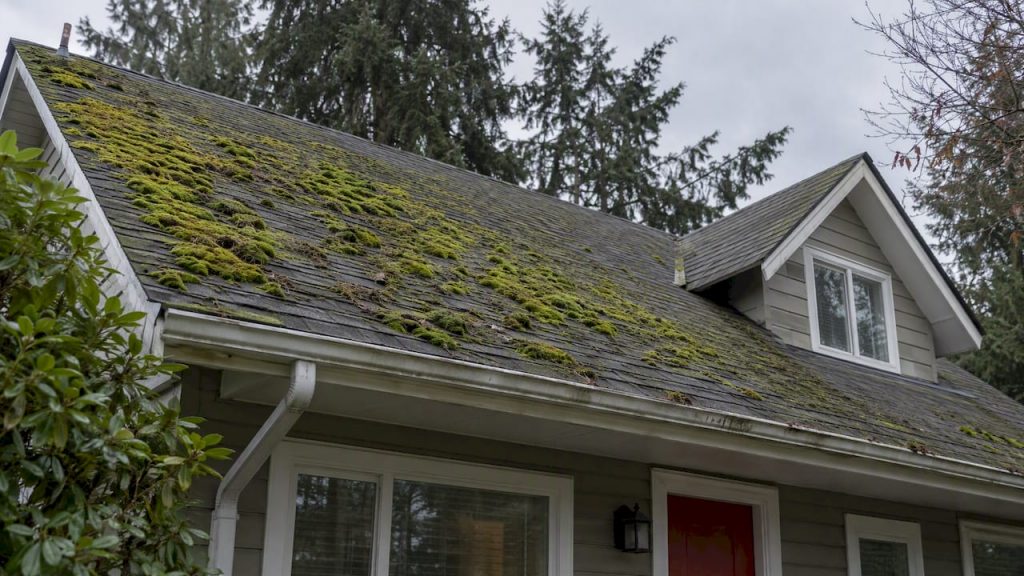
Learn how to remove moss from your roof without wrecking the shingles, which treatments are safe in Canada, and how to stop it coming back for good.
The safest way to remove moss from a roof is to loosen it gently by hand or treat it with a moss-control product that is registered for roof use in Canada, then fix the conditions that let it grow. Skip the pressure washer, skip the bleach, and stay off a steep, wet roof if you are not set up to work at height. Below we walk through what moss actually does, how to choose a method, what to look for on a product label, and how to keep your roof clean for years.
TL;DR
- Moss holds moisture against your roof and can lift shingle edges, so it is worth dealing with early, while it is still a thin green film.
- Gentle physical removal or a registered moss-control product is the safe route. Pressure washing strips protective granules from asphalt shingles.
- In Canada, a roof treatment should carry a registration number and a label that allows roof use. Homemade mixes are not evaluated for safety or effectiveness.
- Prevention is simple: more sunlight, clean gutters, less debris and zinc or copper strips near the ridge.
- If the roof is steep, high or slick, hiring a trained crew is the safer call.
Table of Contents
- Why moss shows up on Canadian roofs
- Does moss damage a roof?
- Should you remove it now or wait?
- Safe ways to remove roof moss
- What to know before you buy a moss killer
- Why pressure washing is the wrong tool
- When to leave it to the professionals
- Our perspective
- How to keep moss from coming back
- Protect the area around your house
- For roofing and home-service businesses
- Common mistakes to avoid
- FAQ
- Sources
Why moss shows up on Canadian roofs
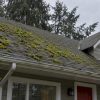
Moss loves three things: shade, moisture and a surface that stays damp. That is why you see it so often on north-facing slopes, under overhanging trees and on roofs that collect needles and leaves. Coastal British Columbia, with its long, damp winters, is the classic example, but any shaded roof in the Maritimes, the Ottawa Valley or the Greater Toronto Area can grow a green carpet when debris builds up and sunlight is scarce.
The first stage is often not moss at all. It starts as a thin green or dark film of algae, then moss spores settle in the gaps and granule texture of the shingle and take hold. This is why the earliest stage is the easiest to treat. A light film can often be handled with a single careful treatment, while a thick, cushiony mat means roots have already worked their way into the shingle surface and under the tabs.
It also helps to know that a mossy roof is telling you something about your property. Trees have grown, gutters have slowed, or the slope never sees the sun. Remove the moss without addressing that cause and it will usually be back within a season or two.
Does moss damage a roof?
Yes, though how quickly depends on the roofing material and how thick the growth is. The Asphalt Roofing Manufacturers Association (ARMA), which covers the United States and Canada, explains that moss can lift or curl shingle edges, which raises the risk of shingles blowing off, and that severe buildup can lead to moisture damage in the roof deck or even leaks.
Think of it as a sponge sitting on your roof. After rain, the moss stays wet far longer than bare shingles do, and that moisture is held right against the surface. Over many freeze-thaw cycles, which Canadian homeowners know well, that trapped water expands and contracts, and edges that have already been nudged upward are more exposed to wind.
Here is what to watch for:
- Curling or lifted shingle edges where moss grows thickest.
- Bare patches or heavy granule loss in gutters and at downspout outlets.
- Dark stains or soft spots on the ceiling below a mossy section, which can point to a leak.
- Moss packed into valleys and behind chimneys, where water should run freely.
If you notice a ceiling stain, treat that as a separate problem. Health Canada advises fixing leaks and water infiltration to help prevent mould, so a damp attic deserves attention whether or not you clean the roof.
Should you remove it now or wait?
In most cases, sooner is better. A thin film is cheap and easy to handle. A thick mat gets harder to remove, and scraping it off can take granules with it. A few quick questions help you decide.
| Situation | What it usually means | Sensible next step |
|---|---|---|
| Light green film, no lifting | Early algae or moss | Treat with a registered product and fix the cause |
| Thick patches on one shaded slope | Established moss, localized | Gentle removal plus treatment, then trim back shade |
| Moss across the whole roof, curled edges | Advanced growth, possible shingle wear | Have a roofer inspect before cleaning |
| Soft decking, stains inside, sagging | Moisture has already got in | Repair first, clean afterward |
| Roof near the end of its life anyway | Cleaning may not be worth it | Get a replacement quote and compare options |
That last row is worth a moment. If your shingles are already brittle and bald, cleaning will not bring them back. It may be wiser to put the money toward a new roof, and our guide to tile roofs versus shingles can help you think through the longer-term value of each material.
Safe ways to remove roof moss
There are two broad approaches, and many homeowners combine them: physically loosening the moss, and treating it so the remainder dies back and washes away on its own.
Gentle physical removal
The British Columbia government’s roof-cleaning fact sheet lists physical removal such as scraping as one of the safe options. For a manageable roof, the approach looks like this:
- Wait for a dry, calm day. Dry moss is brittle and comes away more easily, and you are safer on dry shingles.
- Work from the top down. Push the moss in the direction water flows, from ridge toward eaves, so you are lifting with the lay of the shingles and not against it.
- Use a soft-bristle brush or a plastic scraper. Metal tools and stiff wire brushes scrape off granules and gouge the surface.
- Go gently around edges and tabs. If a tab is already curled, you can crack it.
- Collect the debris. Sweep or bag the moss so it does not wash into gutters and clog them.
- Inspect afterward. Look for exposed mat, bare spots and lifted edges, and note anything that needs a roofer’s attention.
This works best for small areas and light growth. It is slow, physical work, and it is the part that puts you on the roof, which brings us to safety later in this guide.
Treating the moss
Treatment is gentler on the shingles than scrubbing, because the product does the work and rain slowly rinses the dead moss away over weeks. The important part is picking the right product, and in Canada that means paying attention to the label.
What to know before you buy a moss killer
It is tempting to grab whatever is on the shelf or mix something up in the garage. Resist both impulses. The BC fact sheet is clear that if you use a chemical, you should check that its label approves roof use in Canada, confirm it has a registration number, and keep it out of waterways.
Health Canada backs this up. Its guidance says to use only registered pesticides and follow the label instructions, and that authorized products show a registration number on the label.
A quick label checklist
- A registration number printed on the label.
- Roof use named on the label. A product made for lawns or walkways is not automatically approved for shingles.
- Surface warnings. Some treatments can stain or damage metal flashing, gutters, skylights, painted surfaces or concrete tile, so read the cautions about what to keep clear.
- Application and weather directions. Many products ask for a dry period after application, so check the forecast before you open the bottle.
- Runoff cautions. Anything that rinses off your roof ends up in your downspouts, garden or storm drain.
What about dish soap, bleach and the white powder?
These are the most common questions homeowners ask, so here is a straight answer on each.
Dish soap. Reader forums are full of people who swear by it, but it is not a registered roof treatment. The BC government warns that bleach or soap reaching waterways can cause serious environmental damage. Health Canada also notes that homemade pesticides are not evaluated, come with no safe-use instructions and may not work.
Bleach. It can discolor surfaces, harm plants below and run into storm drains. The same BC fact sheet calls out bleach as a risk to waterways.
The white powder. The powder many people sprinkle on roofs is generally a zinc-based product. Treat it like any other pesticide: use it only if the specific product you bought is registered for roof use in Canada, and follow the label for the amount and placement. Do not assume that a powder sold for another purpose is fine because it looks similar.
If the label does not mention roofs and does not show a registration number, put it back on the shelf.
Why pressure washing is the wrong tool
It feels like the obvious fix: blast it off. But ARMA says never to pressure-wash an asphalt shingle roof because it causes granule loss and is very likely to cause premature roof-system failure.
Those granules are not decoration. They shield the asphalt underneath from sun and help the roof shed water. Once they are stripped, the shingle ages faster, and you can end up replacing a roof years earlier than you needed to. You also force water under the tabs, which is exactly where you do not want it.
Pressure washing is a different story on hard surfaces such as concrete, where the material is tougher. If you have a mossy driveway or patio as well, this guide to eco-friendly moss control on concrete covers what works there. Just keep the high-pressure wand off the shingles.
When to leave it to the professionals
Moss removal is a task where the risk is not the moss, it is the fall. A wet, mossy roof is slippery, and moss grows most on shaded, often steeper, slopes. Ask yourself honestly whether you are comfortable and equipped.
WorkSafeBC’s guidelines, written for workplaces but a useful benchmark for anyone, say a portable ladder may be acceptable for about 15 minutes or less when a work platform is not practicable, as long as the worker keeps three points of contact and their waist between the ladder’s side rails. Their fall-protection approach prefers guardrails or similar restraint when practicable, then other restraint systems, then fall arrest or rope access. Relying on work procedures alone is for situations where those options are impracticable or more hazardous.
Translate that to your own home and these are good reasons to call a trained crew:
- The roof is steeper than you can comfortably stand on.
- It is two storeys or higher, or the eave sits far off the ground.
- The surface is wet, frosty or covered in a thick moss mat.
- You would need to work from a ladder for longer than a quick reach.
- You have no harness, anchor point or someone to spot you.
- You notice soft spots or sagging underfoot.
If you do hire help, ask what they use on the roof. A reputable company should be able to tell you the product name and registration number, explain how they protect plants and capture runoff, and confirm that they will not use a pressure washer on asphalt shingles. Get at least two written quotes and ask whether any ongoing treatment is included. Prices vary by roof size, pitch and how heavy the growth is, and they differ across regions, so rely on local quotes rather than a number from another city.
Our perspective
We read a lot of home-maintenance advice, and moss is a topic where the quick fix often costs more in the end. The temptation is to scrub hard or spray something strong and call it done. What tends to serve homeowners better is patience and sequence: treat gently, let the product and the rain do the work, and then spend your effort on the cause.
Here is how we would approach it at our own home:
- Start with a look from the ground. Binoculars show a lot. Mark which slopes are mossy and why.
- Fix the shade and the gutters first. That is the part that keeps working for you long after the moss is gone.
- Treat with something that is registered for the job. If a product has no registration number, we do not use it.
- Keep your own safety on the list. No patch of moss is worth a fall. We would rather pay for a crew than gamble on a ladder.
The best roof moss strategy is boring: a little attention every year beats a big rescue every five. That is the same thinking behind most of our home guides, from preparing for storms to choosing roofing materials, and it is why we point readers toward preparing a roof for severe weather alongside everyday upkeep.
— Alexander
How to keep moss from coming back
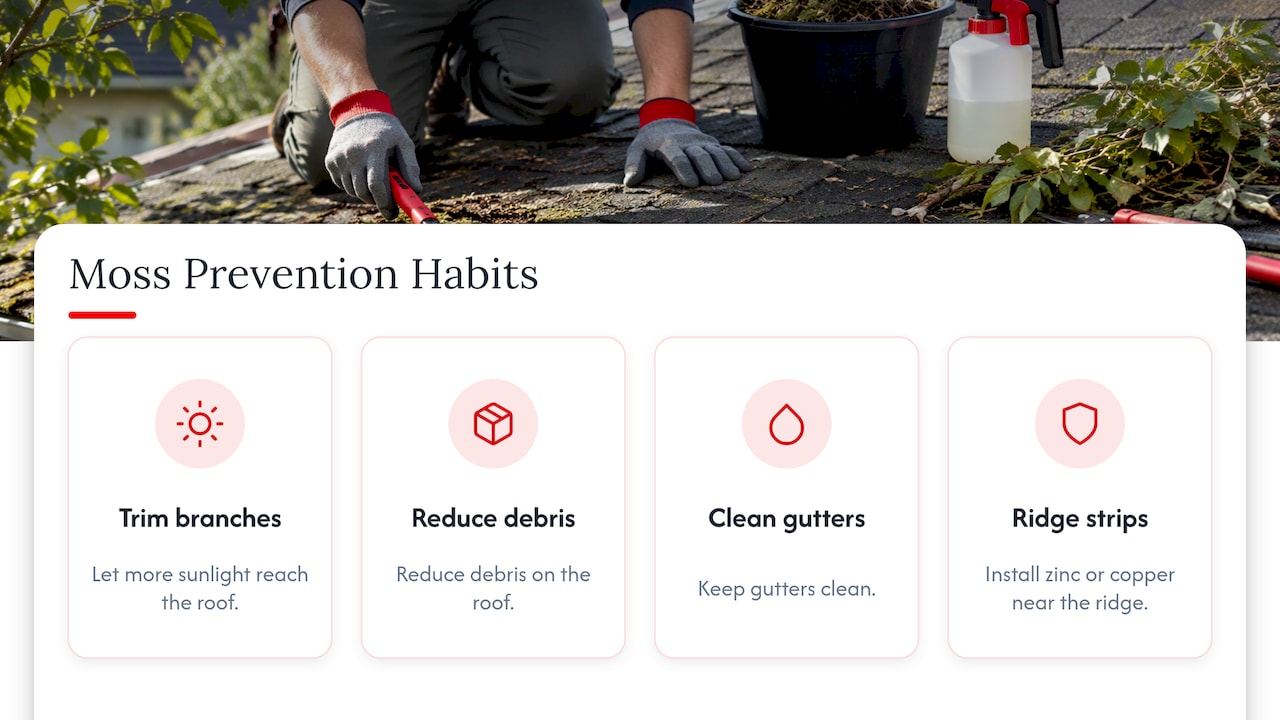
Removal is only half the job. ARMA’s prevention advice comes down to a handful of habits: trimming branches to let more sunlight reach the roof, reducing debris, keeping gutters clean and installing zinc or copper strips near the ridge to inhibit growth.
Let in more light
Sun and airflow dry the roof quickly, and a dry roof is a poor place for moss. Cut back branches that overhang the shingles, especially on the north and east sides. If a mature tree is the main source of shade, ask a certified arborist before removing anything large, since some cities regulate tree removal on private property and a professional can advise on pruning that keeps the tree healthy.
Clear the debris
Needles, leaves and seed pods hold water and feed moss. Sweep valleys and the area around chimneys and vents with a soft broom a couple of times a year. A leaf blower used from a ladder is not a good idea for most people, so again, consider this a job to hand off if the roof is high.
Keep gutters flowing
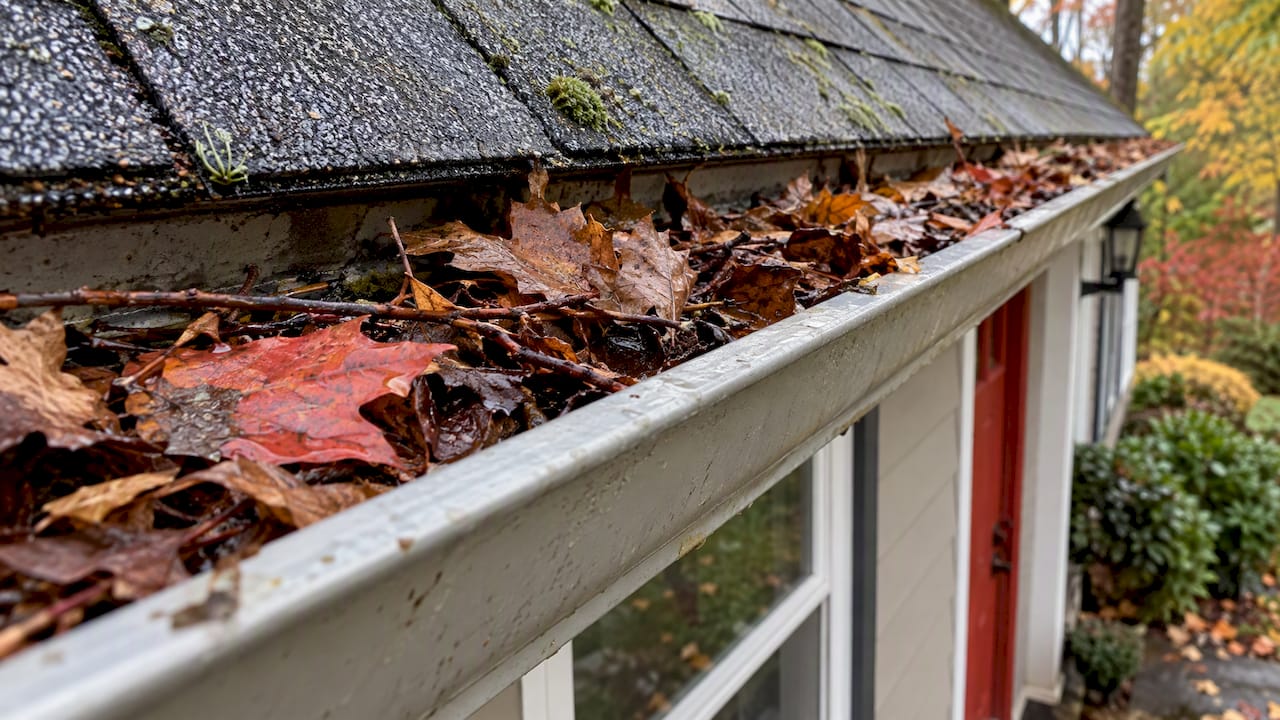
Full gutters back water up at the eaves. Insurer Nationwide notes that overflowing gutters can damage roof sheathing and lead to rot, so regular cleaning protects more than the shingles. Do it in late fall once the leaves are down and again in spring.
Add zinc or copper strips
When rain runs over a zinc or copper strip, trace metal ions wash down the slope and discourage growth below. The strips go near the ridge so the runoff covers the roof. They are a long-term measure, not an instant cure, and they work best on a roof that has been cleaned first. A roofer can install them without disturbing the shingles, and it is worth asking about them at your next inspection or when you replace the roof.
Plan a simple yearly routine
| When | What to do |
|---|---|
| Late fall | Clear gutters, sweep debris from valleys, check for new shade growth |
| Late winter or early spring | Look for lifted edges, moss patches and granules in the downspout |
| After big storms | Check for fallen branches and debris |
| Every few years | Inspect and, if needed, re-treat with a registered product |
Protect the area around your house
Whatever you use, think about where the water goes. Runoff from a treated roof flows into your gutters, then to the ground or a storm drain. The BC government stresses keeping products out of waterways, which is a good rule everywhere in Canada.
A few practical habits help:
- Water nearby plants lightly before and after application, if the label allows.
- Cover or move pets’ bowls, toys and outdoor furniture.
- Do not let rinse water run onto the street or into a storm drain.
- Store leftover product sealed, in its original container, out of reach of children and pets.
- Follow the disposal directions on the label rather than pouring leftovers down a drain.
If your outbuildings have the same problem, treat them with the same care. Our guide to storm-proofing a shed is a good companion read for the rest of the property.
For roofing and home-service businesses
If you run a roofing, gutter-cleaning or exterior-maintenance business and want to reach homeowners who are searching for exactly this kind of guidance, we offer banner placements and guest posts. You can see the options on our advertise with us page.
Common mistakes to avoid
- Scrubbing hard with a wire brush. It removes the moss and the granules along with it.
- Using a pressure washer on asphalt shingles. ARMA’s warning is blunt for good reason.
- Mixing your own solution. Homemade treatments are not evaluated for safety or results.
- Spraying and walking away from the runoff. Plants, pets and waterways all share your downspout.
- Cleaning without fixing the cause. Shade and clogged gutters bring the moss back.
- Climbing up in the wet. The damp moss itself is the hazard.
- Ignoring a leak because the moss is gone. A stain inside means a roofer should look at it.
FAQ
Should you get moss removed from a roof?
Usually yes, especially when it is thick or growing near shingle edges. Moss can lift edges and hold moisture against the roof, which raises the risk of blow-off and, in severe cases, deck damage. A thin film is easy to treat early, so do not wait until the roof is covered.
Does moss damage roof shingles?
It can. ARMA reports that moss may lift or curl shingle edges and that heavy buildup can cause moisture damage or leaks. The damage tends to be gradual, so regular checks and early treatment keep it small.
Does dish soap kill roof moss?
It is not a registered roof treatment, and Health Canada says homemade pesticides are not evaluated and may not work. The BC government also warns that soap reaching waterways can seriously harm them. Choose a product with a registration number and roof use on the label instead.
What is the best way to prevent roof moss?
Increase sunlight by trimming overhanging branches, keep gutters and valleys clear of debris, and consider zinc or copper strips near the ridge. Combine these with a quick seasonal check so any new growth gets treated while it is still a thin film.
Can I pressure wash moss off my roof?
Not if it is an asphalt shingle roof. ARMA says never to pressure-wash these roofs because it strips granules and is very likely to cause premature failure. Use gentle removal or a registered treatment instead.
Sources
- Algae & Moss Prevention and Cleaning for Asphalt Roofing Systems, ARMA
- Commercial Roof Cleaning: Ensuring Environmental Protection, Government of British Columbia
- Pesticide safety, Health Canada
- Mould infographic, Health Canada
- OHS Guidelines, Part 11, WorkSafeBC
- Identifying Signs of Roof Damage, Nationwide
- Eco-friendly moss control on concrete
















Leave a Comment
Your email address will not be published. Required fields are marked with *