

Discover what is a healthy lifestyle and how simple habits can enhance your well-being. Start your journey to better health today!
A healthy lifestyle is defined as a consistent pattern of daily behaviors that support physical, mental, and social well-being while reducing the risk of chronic disease. The World Health Organization and Harvard Medical School both recognize that key health behaviors like moving more, eating well, and managing stress protect against a wide range of conditions simultaneously. This is not about perfection or radical change. It is about building habits that fit your life and compound over time into something genuinely powerful. If you have been wondering what makes a lifestyle healthy, the answer is simpler and more achievable than most people expect.
What is a healthy lifestyle made of?
A healthy lifestyle rests on five core pillars: nutrition, physical activity, sleep, stress management, and social connection. No single pillar works in isolation. When you strengthen all five, the benefits multiply across your cardiovascular, metabolic, cognitive, and mental health at the same time.
Nutrition: quality over perfection
No single perfect diet exists. Harvard Health confirms that healthy dietary patterns prioritize plant-based proteins, whole grains, and healthy oils while minimizing processed meats and refined carbohydrates. That means more lentils, oats, olive oil, and leafy greens. It means fewer packaged snacks, sugary drinks, and fast food. The good news is that these patterns adapt to virtually any cultural cuisine, so you do not have to abandon the foods you love.
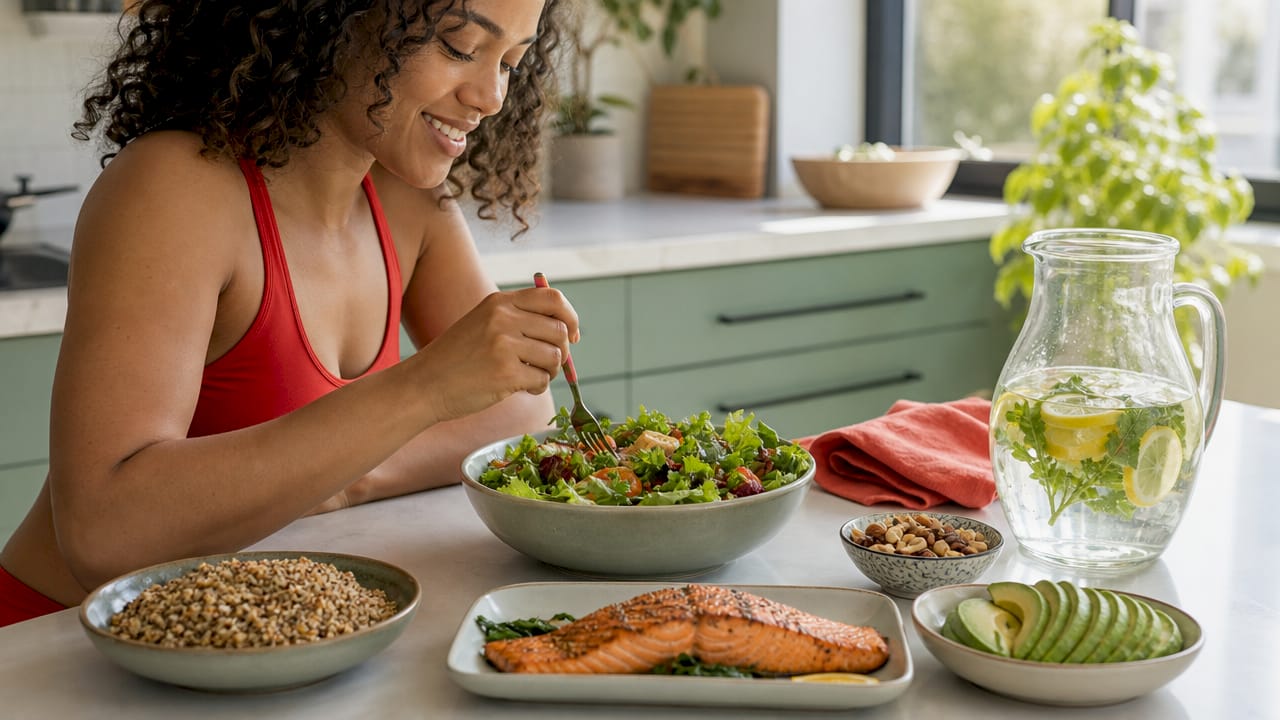
The impact of diet on disease risk is concrete and measurable. Every 66-gram increase in daily fruit and vegetable intake links to a 25% lower risk of developing type 2 diabetes. That is roughly one medium apple or a handful of baby carrots added to your day. Small additions to your plate carry real protective power.
Physical activity: more than just cardio
The WHO recommends at least 150 minutes of moderate-intensity aerobic activity or 75 minutes of vigorous activity each week, spread over at least three days. Brisk walking, cycling, and swimming all count as moderate intensity. Running, swimming laps, and aerobic dance classes qualify as vigorous.
Cardio alone is not enough. Muscle-strengthening exercises at least twice weekly are necessary for bone density, muscle mass, and fracture prevention. Bodyweight squats, resistance bands, and free weights all qualify. Many people skip strength training entirely, which leaves a critical gap in their long-term health.
Sleep, stress, and social connection
Sleep is not passive recovery. Poor sleep raises cortisol, disrupts blood sugar regulation, and weakens immune function. Most adults need 7–9 hours per night. Consistent sleep and wake times matter more than total hours alone.
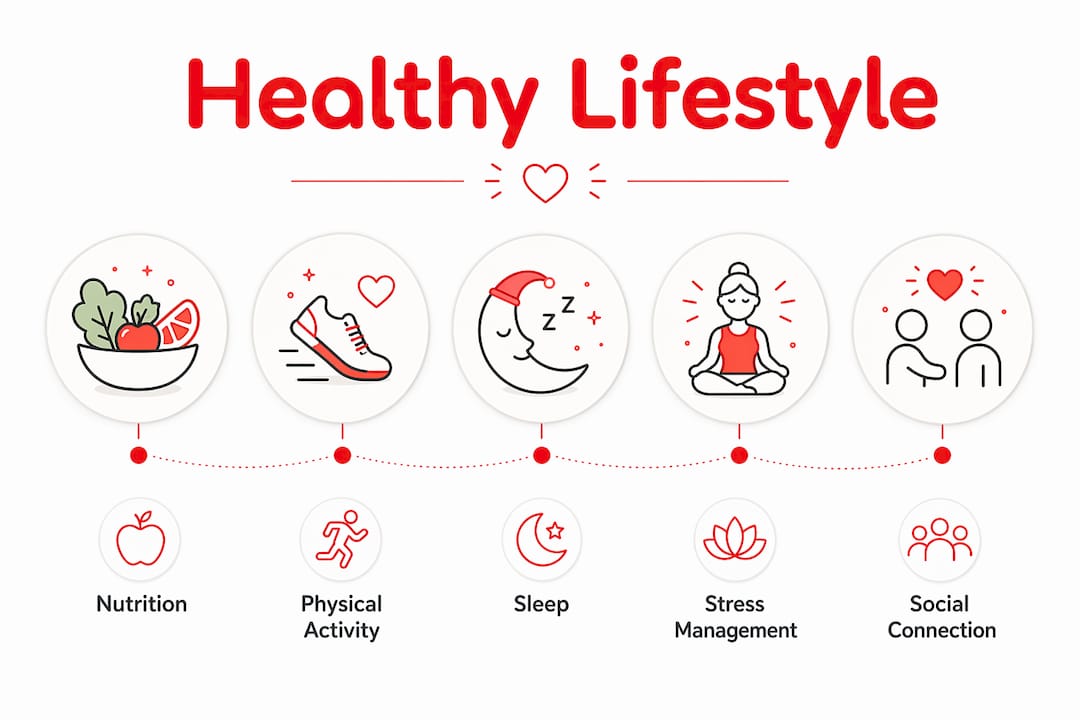
Stress management is equally non-negotiable. Chronic stress drives inflammation, which connects to heart disease, depression, and metabolic disorders. Mindfulness practices, time in nature, and strong social relationships all reduce stress effectively. Mental well-being is not a bonus feature of a healthy lifestyle. It is a core requirement.
Avoiding harmful behaviors
Healthy living also means reducing behaviors that actively damage your health. Smoking, excessive alcohol consumption, and chronic sleep deprivation each carry independent disease risks. Preventive care rounds out the picture: managing blood pressure and cholesterol, staying current on vaccinations, and protecting your skin from UV exposure all complement your daily habits.
Pro Tip: You do not need to eliminate every unhealthy habit at once. Identify the one behavior causing the most harm and address that first. Progress on one front builds confidence for the next.
How do small habits build a sustainable healthy lifestyle?
Small, steady changes are easier to maintain than drastic lifestyle overhauls and lead to more sustainable results. This is not motivational advice. It is a behavioral reality backed by research from MedlinePlus. The people who succeed long-term are rarely the ones who overhauled everything in January. They are the ones who made one small change, kept it, and added another.
The concept behind this is called habit stacking. You attach a new health behavior to an existing routine so it requires less willpower to execute. Here is how to apply it practically:
- Start with your morning anchor. Pick one existing habit, like making coffee, and attach a new behavior to it. Drink a full glass of water before the coffee. That single addition improves hydration without requiring any new time or effort.
- Add movement to transitions. Walk during phone calls. Take the stairs instead of the elevator. Park farther from the entrance. These micro-movements add up across the day without requiring dedicated gym time.
- Batch your nutrition prep. Spend 30 minutes on Sunday washing and chopping vegetables. When healthy food is already prepared, you are far more likely to eat it during a busy weekday.
- Replace, do not just remove. Instead of cutting out afternoon snacks, replace chips with a handful of almonds or an apple with peanut butter. Substitution is psychologically easier than elimination.
- Track one metric weekly. Whether it is steps, servings of vegetables, or hours of sleep, tracking one number creates awareness without obsession. Apps like MyFitnessPal or a simple notebook both work.
The psychology here matters. Perfection is the enemy of consistency. Missing one day does not break a habit. Missing two days in a row starts to. The goal is to make returning to the habit easier than abandoning it.
Pro Tip: Breaking exercise into 10–15 minute intervals throughout the day delivers the same long-term health benefits as one continuous session. A morning walk, a lunchtime stretch, and an evening bike ride each count fully.
How does a healthy lifestyle impact disease risk and longevity?
The evidence connecting healthy behaviors to longer, healthier lives is not theoretical. It is specific, quantified, and consistent across major research institutions including Stanford Medicine and the WHO.
| Behavior | Measured Benefit |
|---|---|
| Improved aerobic fitness | 11%–17% lower overall mortality risk |
| Improved aerobic fitness | Up to 18% lower heart failure risk |
| Increased fruit and vegetable intake (66g/day) | 25% lower type 2 diabetes risk |
| Muscle-strengthening twice weekly | Reduced fracture risk and maintained independence |
| Quitting smoking and limiting alcohol | Lower cancer, liver, and cardiovascular disease risk |
These numbers represent real reductions in the probability of serious illness. An 11%–17% drop in mortality risk is not a marginal gain. It is the difference between a life cut short and one lived fully.
“The same key behaviors have been shown to help virtually everything — cognitive health, cardiovascular health, metabolic health, cancer risk, and mental health.” — Stanford Medicine
What makes this especially encouraging is that benefits accumulate even with partial adherence. You do not need to hit every target every week. Improving aerobic fitness even modestly, adding one extra serving of vegetables daily, or sleeping an extra 45 minutes each night each contribute measurable protection. The fitness and longevity connection is one of the most well-supported findings in modern medicine.
The combined effect of multiple healthy behaviors is greater than the sum of its parts. Moving more, eating better, and managing stress do not just add their individual benefits. They interact and reinforce each other across every major body system.
What practical steps can you take today to start living healthier?
Knowing the components of a healthy lifestyle is one thing. Putting them into practice is another. These steps are realistic, specific, and designed for people starting from wherever they are right now.
- Build a personalized eating pattern. You do not need to follow a named diet like Mediterranean or DASH exactly. Focus on the principles: more plants, more fiber, less sugar, less sodium. Adapt those principles to the foods your culture and family already enjoy. A Nigerian pepper soup with extra vegetables is as valid as a Greek salad.
- Set a physical activity goal you can actually hit. If 150 minutes per week feels impossible, start with 30 minutes three times a week. That is 90 minutes. Build from there. Consistency at a lower volume beats inconsistency at a higher one every time.
- Prioritize sleep hygiene. Set a consistent bedtime. Keep your bedroom cool and dark. Avoid screens for 30 minutes before sleep. These three changes alone improve sleep quality for most people without any supplements or devices.
- Reduce stress with structure, not willpower. Schedule 10 minutes of quiet time daily. It can be a walk, journaling, or simply sitting without your phone. Stress does not disappear on its own. You have to create space for your nervous system to recover.
- Engage socially with intention. Loneliness carries health risks comparable to smoking. Schedule regular time with friends or family. Join a community group, fitness class, or volunteer organization. Social connection is a health behavior, not a luxury.
- Get regular health screenings. Blood pressure, cholesterol, blood sugar, and cancer screenings catch problems before they become crises. Talk to your doctor about which screenings apply to your age and risk profile.
- Avoid common misconceptions. A healthy lifestyle does not require expensive supplements, a gym membership, or a perfect diet. It requires consistent effort across the five core pillars, adapted to your real life.
The healthy living habits that stick are the ones that feel manageable on your worst day, not just your best. Design your habits for the hard days, and the good days will take care of themselves.
Key takeaways
A healthy lifestyle is built on consistent daily behaviors across nutrition, physical activity, sleep, stress management, and social connection, and the science confirms that even partial adherence delivers meaningful protection against chronic disease.
| Point | Details |
|---|---|
| Definition of healthy lifestyle | Consistent daily behaviors supporting physical, mental, and social well-being. |
| Diet quality over perfection | Prioritize plant-based foods and whole grains; no single perfect diet exists. |
| Physical activity targets | Aim for 150 minutes of moderate aerobic activity weekly plus strength training twice weekly. |
| Small habits beat big overhauls | Incremental changes integrated into existing routines are more sustainable long-term. |
| Disease risk reduction is real | Improved aerobic fitness alone lowers overall mortality risk by 11%–17%. |
Why consistency beats intensity every time
I have watched people approach healthy living the same way every year. They go all-in for three weeks, burn out, and return to square one. The intensity is impressive. The results rarely are.
What actually works is far less dramatic. The people I have seen make lasting changes are the ones who made their habits boring on purpose. They walked the same route every morning. They ate the same three or four healthy breakfasts on rotation. They went to bed at the same time even on weekends. Boring, yes. Effective, absolutely.
The part most articles skip is the mental health dimension. A healthy lifestyle is not just about your body. Your mental well-being shapes every other health behavior. When you are anxious, you sleep poorly. When you sleep poorly, you crave sugar. When you eat poorly, your energy drops and exercise feels impossible. The cycle runs in both directions. Fixing one thing genuinely helps everything else.
My honest advice: pick one pillar that feels most neglected right now. Not the one you think you should fix. The one that, if improved, would make the biggest difference to how you feel day to day. Start there. Build one habit. Keep it for 30 days. Then add the next one. That is not a slow approach. That is the only approach that actually works.
— Alexander
Your living space matters too
Well-being does not stop at your habits. The environment you live in shapes your stress levels, sleep quality, and daily energy in ways that are easy to underestimate. A cluttered, uncomfortable home creates low-level friction that drains you before your day even starts. Small upgrades to your living space can reduce that friction and support the healthy habits you are building.
Lizardslunch covers a range of home comfort upgrades that make your space work for your well-being, not against it. Whether you are looking for renovation ideas that add character or practical improvements that increase your home’s comfort and value, the guides on Lizardslunch give you clear, actionable direction. A healthier life is easier to build when your environment supports it.
FAQ
What is a healthy lifestyle in simple terms?
A healthy lifestyle is a set of consistent daily habits that support your physical, mental, and social health. It includes balanced nutrition, regular movement, adequate sleep, stress management, and meaningful social connection.
How many minutes of exercise does a healthy lifestyle require?
The WHO recommends at least 150 minutes of moderate-intensity aerobic activity or 75 minutes of vigorous activity per week, spread over at least three days, plus muscle-strengthening exercises twice weekly.
Can small changes really make a difference to your health?
Yes. Research from MedlinePlus confirms that small, steady changes are easier to maintain and more effective long-term than drastic overhauls. Even adding 66 grams of fruits and vegetables daily links to a 25% lower type 2 diabetes risk.
What are the biggest benefits of a healthy lifestyle?
The benefits of a healthy lifestyle include reduced risk of heart disease, type 2 diabetes, certain cancers, and premature death. Improved aerobic fitness alone lowers overall mortality risk by 11%–17%, according to Stanford Medicine.
Do you need a gym membership to live a healthy lifestyle?
No. Physical activity does not require a gym. Brief bouts of movement throughout the day, including walking, bodyweight exercises at home, and cycling, meet the WHO guidelines and deliver the same long-term health benefits as gym-based workouts.


















Leave a Comment
Your email address will not be published. Required fields are marked with *