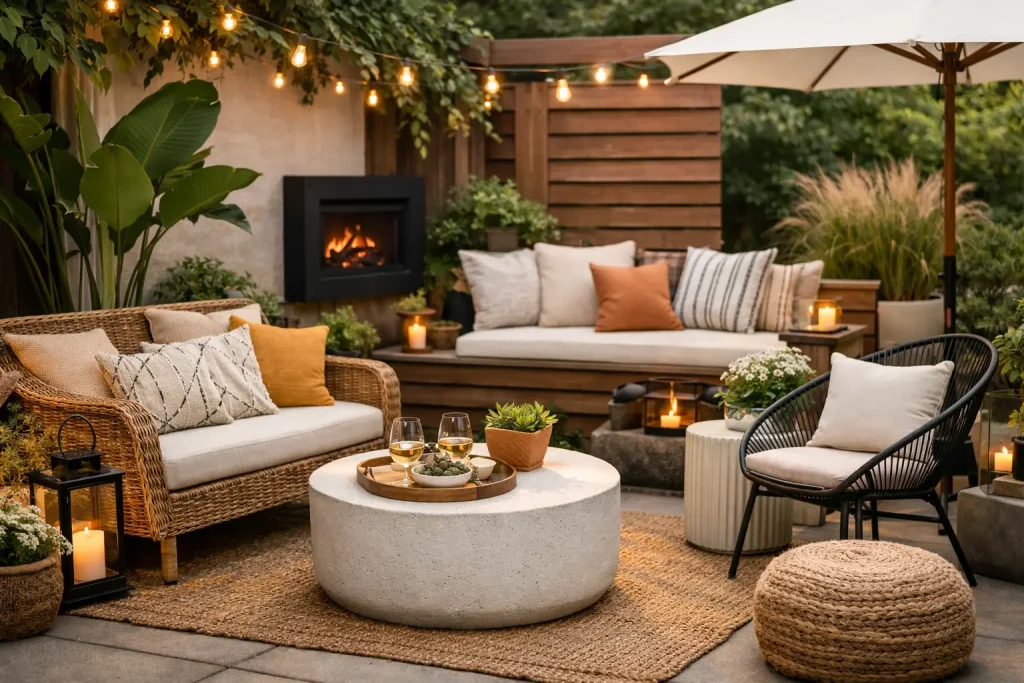
These small patio makeover ideas help you add comfort, privacy, storage, and style without crowding a compact outdoor space at your home or overspending.
A small patio can become the most-used square footage in your home – or the place where a couple of folding chairs collect pollen. The difference is rarely a major renovation. These small patio makeover ideas focus on scale, comfort, and smart layers so a compact concrete pad, balcony-style patio, or narrow backyard corner feels intentional rather than cramped.
Small patio makeover ideas that earn their space
Before buying anything, decide what you want the patio to do best. A spot for morning coffee needs a different setup than a dinner area, a grilling zone, or a private place to read after work. Trying to make a tiny footprint serve every possible purpose usually leads to too much furniture and not enough room to enjoy it.
Measure the usable area, including clearance for doors, gates, and walking paths. Then choose one primary function and one secondary function. That simple decision makes every purchase easier to judge.
1. Start with a defined floor layer
An outdoor rug is one of the fastest ways to make a patio look furnished. It visually groups seating, softens hard surfaces, and adds color without taking up any usable square footage. Choose a low-pile, outdoor-rated rug that is large enough for at least the front legs of your chairs or sofa to sit on it.
For a very narrow patio, a runner often works better than a standard rectangle. Avoid pale rugs if the space sits under trees or near a muddy lawn. A patterned charcoal, blue, terracotta, or tan option tends to hide everyday mess better while still looking pulled together.
2. Pick furniture with a lighter footprint
Oversized outdoor sectionals can swallow a small patio quickly. Look instead for slim-profile bistro chairs, stackable dining chairs, a compact loveseat, or two lounge chairs with open frames. Legs that lift furniture off the ground create more visible floor area, which helps the patio feel less boxed in.
A bistro set is ideal if meals and coffee are the priority. If relaxing matters more, choose two comfortable chairs and a small side table rather than forcing in a dining table you will rarely use. Comfort still matters, so test seat depth and back support when possible. Tiny furniture that looks right but feels unpleasant will not make the patio more usable.
3. Let one hardworking table do more
A large coffee table is often unnecessary in a compact outdoor setup. Try a round drum table, nesting tables, or a storage ottoman that can hold cushions, citronella candles, or outdoor games. Round pieces are particularly useful because there are no sharp corners interrupting the walking path.
If you entertain occasionally, nesting tables give you extra surfaces only when guests arrive. For everyday use, keep the largest piece tucked away. That flexibility is more valuable than a patio full of permanent furniture.
4. Build privacy upward, not outward
Privacy is one of the most transformative small patio makeover ideas, especially for homes with close neighbors. A freestanding outdoor screen, a simple trellis, or tall planters can block an awkward sightline without requiring a full fence project. Vertical solutions preserve the floor area you need for seating.
Climbing plants can soften a trellis beautifully, but they take time and regular care. If you want an immediate result, use weather-resistant panels or a screen paired with a few trailing planters. Check local rules and renter restrictions before attaching anything to a shared wall, railing, or structure.
5. Add lighting in three gentle layers
One bright floodlight makes a patio functional, but it does not make it inviting. Aim for a combination of overhead glow, table-level light, and a low accent near plants or a walkway. Warm-white string lights, rechargeable lanterns, and small LED candles can create a relaxed atmosphere without complicated wiring.
Hang lights high enough that people can stand and move beneath them comfortably. If there is no overhead structure, use planters with sturdy poles or choose portable lanterns instead. Solar lighting is convenient, though it depends on several hours of direct sun. In a shaded patio, rechargeable lights are usually more dependable.
6. Use planters to create walls and color
Plants bring a patio to life, but dozens of small pots can read as clutter. Use fewer, larger containers in a repeated material or color, then vary the heights of the plants inside them. A tall upright plant, a rounded filler, and a trailing plant create a fuller look than a scattered collection of single stems.
Place the tallest planters at corners or along the edge facing neighbors. Keep the center open. For low-maintenance color, choose plants based on the actual light your patio gets, not the look you saw in a sunny garden photo. Shade-loving ferns and coleus will struggle in all-day heat, while sun-loving herbs and flowering annuals need real sunlight to thrive.
7. Choose a shade solution that matches the footprint
A patio becomes more useful when it is not unbearably hot at 3 p.m. A market umbrella works well for a bistro table or two chairs and can move as the sun shifts. A shade sail provides broader coverage, but it needs safe anchor points and proper tension. It may not suit every rental or small patio layout.
For a more flexible option, consider a tilting umbrella with a heavy, stable base. Do not underestimate the base requirement. Wind can turn an underweighted umbrella into a safety issue, so follow the manufacturer guidance and close it when storms are expected.
8. Bring in weather-ready softness
Outdoor pillows, seat cushions, and a throw blanket make a patio feel like an extension of the living room. Keep the color palette tight: two main colors plus a neutral is often enough. This prevents a small space from feeling visually busy.
Fabric choices matter. Quick-drying, fade-resistant covers save time, but even durable textiles last longer when stored during heavy rain or long winter stretches. A lidded storage bench can make that habit much easier.
9. Hide the practical stuff with smart storage
Hoses, grilling tools, plant food, and spare cushions can ruin an otherwise polished patio. Choose one storage piece that fits your main needs, such as a narrow deck box, a bench with a lift-up seat, or a vertical cabinet made for outdoor use. Keep it near the activity it supports so putting items away is effortless.
Storage should not become another oversized object. Measure its lid clearance and door swing before ordering. On a narrow patio, a bench that opens from the front may be far more practical than a box that needs extra space behind it.
10. Add a focal point, but only one
Every patio benefits from a visual anchor. It could be a compact fire pit, a statement planter, a colorful outdoor wall piece, or a small fountain. The key is restraint. In a limited space, one clear focal point feels polished; five competing accessories feel crowded.
A fire feature can be cozy, but it also requires careful spacing, a stable surface, and compliance with local fire rules. If that is too much hassle, a cluster of lanterns or a sculptural planter can create the same sense of destination with less maintenance.
11. Make the transition from indoors feel intentional
The patio should feel connected to the room beside it. Repeat one or two colors from your indoor space in outdoor cushions, planters, or a rug. You do not need an exact match. A similar warm wood tone, navy accent, or natural woven texture can make the two areas feel related.
Keep the doorway area clear and welcoming. A clean threshold, a simple doormat, and lighting near the entrance can make even a modest patio feel like a real room rather than an afterthought outside the door.
12. Edit before you add more
The strongest patio makeovers often come from removing the wrong items first. Take away broken planters, unused chairs, faded decor, and anything that forces people to sidestep around it. Once the space is clear, add pieces slowly and leave some breathing room.
A small patio does not need to imitate a large backyard. It needs to make one everyday moment better, whether that is a quiet coffee, a weeknight dinner, or an easy place to sit outside when the weather is good. Build around that moment, and the space will feel generous long before it feels full.

















Leave a Comment
Your email address will not be published. Required fields are marked with *