
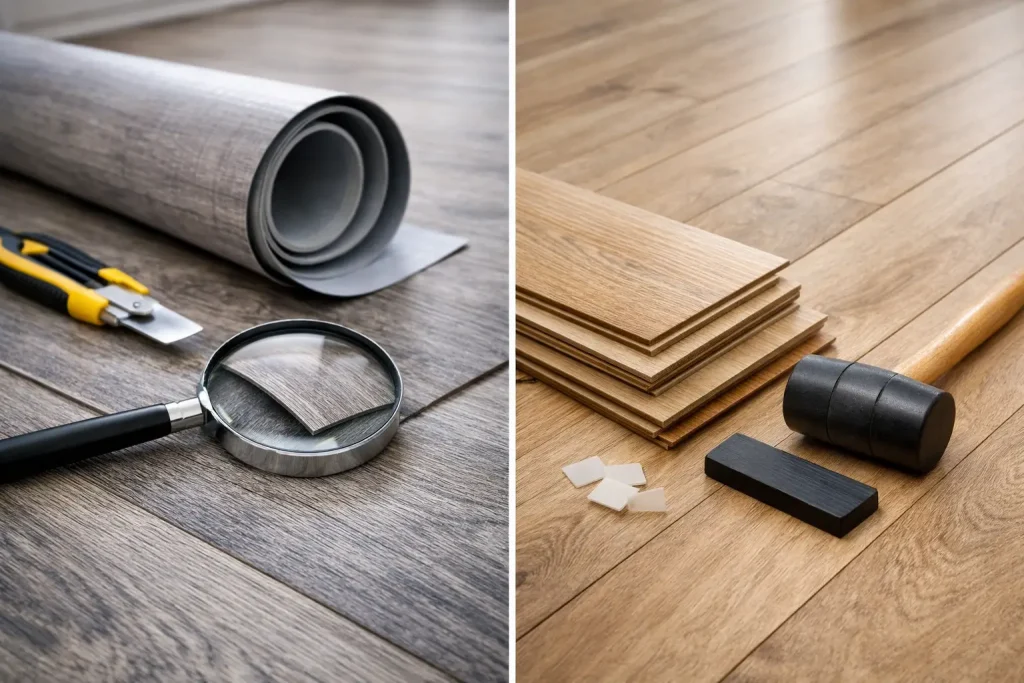
Vinyl flooring versus laminate comes down to water resistance, comfort, cost, and durability. Use this guide to choose the right floor for your home.
A spilled dog bowl, muddy shoes at the back door, and a busy kitchen can make the vinyl flooring versus laminate decision feel less like a style choice and more like a test of survival. Both floors can deliver a convincing wood look for far less than hardwood, but their performance changes sharply once water, sunlight, pets, and daily traffic enter the picture.
The better pick is not always the one with the lowest price tag or the prettiest sample in the showroom. It is the floor that fits the room, the condition of your subfloor, and how much maintenance you are realistically willing to do.
Vinyl Flooring Versus Laminate: The Core Difference
Vinyl flooring is a synthetic material built in layers, typically with a protective wear layer over a printed design and a waterproof core or backing. Luxury vinyl plank, often called LVP, is made to resemble hardwood planks, while luxury vinyl tile, or LVT, is designed to mimic stone or ceramic tile. Rigid-core options, including SPC and WPC vinyl, add structure and can help disguise minor subfloor imperfections.
Laminate flooring is also a layered product, but its core is usually made from high-density fiberboard. A photographic design layer creates the wood or stone appearance, and a clear top layer helps resist scratches and wear. It can look remarkably realistic, especially in higher-quality products with textured finishes and varied plank patterns.
That fiberboard core explains the biggest practical distinction. Vinyl is generally waterproof. Traditional laminate can be damaged when standing water reaches its seams or edges. Water-resistant laminate has improved considerably, but it still needs prompt cleanup and should not be treated like a fully waterproof floor.
Water Resistance Makes the Biggest Difference
For bathrooms, laundry rooms, mudrooms, and kitchens that see frequent spills, vinyl usually has the advantage. Quality vinyl planks can handle routine moisture without swelling, making them a lower-stress option for households with children, pets, or an active cooking schedule.
Laminate is better suited to dry spaces such as bedrooms, living rooms, dining rooms, and offices. A waterproof-rated laminate may work in some kitchens, but homeowners should read the warranty carefully. Many warranties cover topical spills only if they are cleaned within a specified time. They may not cover flooding, moisture rising from below, or water that works its way under baseboards.
Neither material is a solution for a wet subfloor or an active plumbing leak. If moisture is coming up through a concrete slab or a crawlspace, address that issue before installing any new flooring. A beautiful floor installed over a damp foundation can become an expensive redo.
Which One Looks and Feels Better?
Laminate often has a slight edge in the feel-underfoot department. Its thicker fiberboard core can make it feel firmer and more wood-like than thin vinyl, and premium laminate frequently offers deep embossing that follows the grain pattern. In a living room or bedroom, that extra texture can make a noticeable visual difference.
Vinyl has made major strides in appearance, especially in midrange and premium collections. Wide planks, matte finishes, realistic knots, and low-gloss surfaces can look convincing from normal viewing distance. Still, lower-cost vinyl may show repeated patterns or feel less substantial underfoot.
The comfort question depends on the product and installation method. Vinyl tends to feel softer and slightly warmer than tile, and some WPC rigid-core products have a cushioned feel. Laminate can sound hollow when installed as a floating floor without the right underlayment. A quality underlayment can reduce noise, improve comfort, and make a laminate installation feel more solid.
Durability Depends on the Type of Damage
Both flooring types are built for everyday living, but they fail in different ways. Vinyl stands up well to moisture and is generally resilient against dents from ordinary household use. It is a strong choice for homes with large dogs, rolling office chairs, and frequent traffic from outside.
However, vinyl can be gouged by sharp objects, and heavy furniture can leave indentations, particularly with softer products. It can also fade or discolor with intense, prolonged sunlight. Using blinds, curtains, or UV-filtering window treatments helps protect floors in bright rooms.
Laminate is often more scratch-resistant than vinyl, especially products with a higher abrasion-class rating. That can make it appealing for busy family rooms and homes with pets whose nails tend to mark softer surfaces. On the other hand, once laminate chips, swells, or separates at a seam, repair is not always simple. Individual planks may need to be replaced, and water damage can spread beyond the visible spot.
For either material, do not drag furniture across the floor. Felt pads under chair and table legs, a mat at exterior doors, and quick spill cleanup will extend the life of your investment far more than most marketing claims.
Cost: Look Beyond the Price Per Square Foot
Budget vinyl and budget laminate can both be affordable, but prices rise with thickness, texture, waterproof features, attached padding, and wear-layer quality. In many markets, laminate may be slightly less expensive at the entry level, while luxury vinyl can cost more for premium waterproof construction.
Installation affects the final number just as much as the flooring itself. Both are commonly installed as floating floors, which can reduce labor costs compared with glued-down flooring or traditional hardwood. Vinyl sheet flooring is another budget-friendly option, although it creates a different look than individual planks.
Before comparing quotes, ask what is included. Underlayment, moisture barriers, floor leveling, demolition, baseboard removal, trim, delivery, and disposal can add significant costs. A low material price does not help if the existing subfloor needs extensive preparation.
Installation and Subfloor Requirements
Floating vinyl planks and laminate are popular with confident DIYers because many use click-lock edges. The work still requires patience. A crooked first row, poor expansion gaps, or an uneven subfloor can cause gaps, lifting, and noisy movement later.
Vinyl is more forgiving in some situations, particularly rigid-core products that can bridge very minor imperfections. But it is not magic. Deep dips, raised seams, and uneven areas can eventually show through or stress the locking system. Thin glue-down vinyl is especially dependent on a smooth, well-prepared surface.
Laminate needs a flat, dry subfloor and careful moisture management over concrete. It also expands and contracts with changing conditions, so installers must leave the recommended expansion space around walls, cabinets, and fixed objects. Skipping that detail can cause buckling when the floor shifts.
If you are installing around cabinets, islands, or a complicated staircase, hiring a flooring professional may save money in the long run. The material is only part of the project. Clean cuts, smooth transitions, and correctly fitted trim are what make the finished room look intentional.
Best Rooms for Vinyl and Laminate
Vinyl is usually the easy recommendation for kitchens, bathrooms, basements, laundry rooms, and entryways. It is also practical for rental properties, pet-friendly homes, and open-plan spaces where one continuous floor needs to handle a variety of daily messes.
Laminate shines in bedrooms, dining rooms, home offices, and living areas where moisture is limited and a more wood-like texture matters. It can be an especially attractive value in a large dry room where purchasing solid hardwood would stretch the budget too far.
For basements, the choice depends on the moisture level. Vinyl is usually safer, but the concrete must still be tested and prepared according to the manufacturer’s instructions. A basement with recurring dampness needs moisture remediation first, not just new flooring.
How to Choose Without Regretting It
Start with the room’s real conditions rather than the ideal version of your household. If water, wet boots, pet accidents, or frequent cleaning are part of the routine, choose vinyl. If the room stays dry and you care most about a textured, hardwood-like appearance with strong scratch resistance, laminate deserves a close look.
Then compare samples at home. Place them near windows, under evening lighting, and next to cabinets or furniture. Check the repeat pattern across several planks, not just one sample. A floor can look perfect under store lights and completely different beside your paint color.
Finally, buy based on the whole product specification, not the brand name alone. For vinyl, look at wear-layer thickness, core type, warranty terms, and installation method. For laminate, check the abrasion rating, water-resistance claim, plank thickness, edge sealing, and required underlayment.
The right floor should make daily life easier, not turn every spill into a crisis. Choose the material that matches how your household actually moves through the room, then spend the extra attention on a sound installation and a finish you will still enjoy years from now.


















Leave a Comment
Your email address will not be published. Required fields are marked with *