
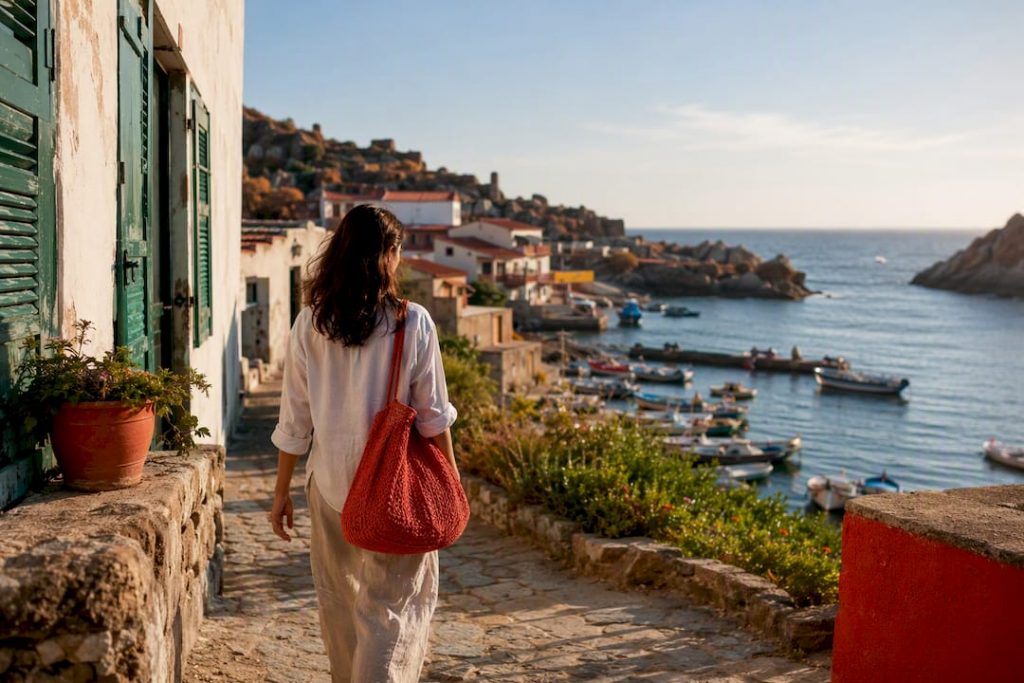
Learn how offbeat destinations deliver authentic, sustainable travel and where to find them, with planning tips for access, safety, and seasonality.
Visit offbeat destinations when you want deeper cultural exchange, fewer crowds, and travel dollars that actually reach the communities you’re visiting. Lesser-known places tend to cost less before tourism inflation sets in, and they push you to adapt in ways that build real confidence. The rest of this guide covers the specific benefits, where to look, how to plan around the trade-offs, and how to travel responsibly once you get there.
TL;DR:
- Offbeat destinations typically have fewer visitors, allowing for more authentic local experiences, better access, and lower costs compared to popular hotspots.
- Traveling to lesser-known places demands thorough planning, including checking transport reliability, healthcare access, and carrying sufficient cash and offline resources.
- Visiting quieter regions supports local communities more directly because spending tends to stay local and reduces economic leakage.
- The experience often involves embracing ambiguity, language barriers, and unpredictable logistics, which can enhance personal development and confidence.
- Popularity and increased exposure threaten the authenticity of offbeat places, making careful timing and small-group travel essential to protect their character.
Table of Contents
- Why Visit Offbeat Destinations Instead of Popular Hotspots?
- What Are Some Good Examples of Offbeat Destinations?
- How Do You Discover the Right Offbeat Destination for Your Goals?
- Sustainability and Ethical Travel in Lesser-Known Places
- What Are the Trade-Offs of Offbeat Travel, and How Do You Manage Them?
- How Offbeat Travel Changes You: What the Reporting Shows
- Our Team’s Take: When Offbeat Travel Fits and When It Doesn’t
- Further Reading to Help You Plan an Offbeat Trip
- Sources
Why Visit Offbeat Destinations Instead of Popular Hotspots?
The math on mainstream travel is lopsided. A widely cited estimate suggests 80% of travelers visit only 10% of the world, which means the overwhelming majority of the planet gets a fraction of the footfall, attention, and tourism revenue. That concentration explains why Venice feels like a theme park in July and why a fishing village three hours away might not see a foreign visitor all week.
Authenticity erodes with volume. When a destination hits a tipping point of visitors, local businesses shift to serve tourist expectations rather than local ones. Restaurants print menus in five languages before they print one in the local dialect. Craft markets swap handmade goods for factory imports because tourists buy fast and rarely notice the difference. Offbeat places haven’t hit that inflection point yet, so what you experience is closer to how people actually live, not a performance built for cameras.
Forbes has argued that mainstream travel is losing its appeal precisely because it delivers a repeatable, pre-packaged experience. An unrepeatable one, the kind you find off the main circuit, tends to leave a stronger memory and a better story.
The practical upside shows up fast once you land somewhere quiet. Consider what changes when a destination isn’t overrun:
- Fewer crowds mean better access. You get an unobstructed photo of the waterfall instead of forty strangers’ backpacks, and wildlife viewing improves because animals haven’t learned to avoid human noise.
- Prices haven’t caught up yet. Guesthouses, meals, and local guides in lesser-visited regions often run well below their equivalents in saturated tourist zones, since operators haven’t adjusted rates to match inflated demand.
- Interactions feel less transactional. Shop owners and guides in low-traffic areas often have time and genuine curiosity for conversation, rather than the rehearsed politeness that high-volume tourism produces.
- You build skills you can’t fake. Navigating a town with no English signage, figuring out a bus schedule nobody wrote down, or negotiating a price in broken pidgin sharpens adaptability faster than any guided tour.
There’s also a slower, less obvious benefit: personal development. Offbeat travel removes the safety net of predictable infrastructure. You solve problems in real time, which builds a kind of confidence that doesn’t come from checking into a resort where every contingency is already handled. Travelers who’ve spent time deliberately seeking out places others skip describe a consistent pattern: a little more effort at the planning stage buys a disproportionately richer experience once you arrive.
None of this means popular destinations are worthless. It means the return on effort, financially and experientially, tends to favor the places fewer people bother to research.
What Are Some Good Examples of Offbeat Destinations?
Offbeat doesn’t mean impossible to reach. Many of these places sit an hour or two from a major hub, which makes them realistic add-ons to a trip you’re already planning rather than an entirely separate expedition.
- Therasia, Greece. The quieter sister island to Santorini, Therasia sees a fraction of the ferry traffic and has drawn attention from National Geographic for its small-scale boutique stays and local guides who still have time to talk. It’s a 20-minute boat ride from Santorini’s main port, so you can pair the two without much extra logistics.
- Glen of Aherlow, Ireland. Tucked below the Galtee Mountains, this valley region offers heritage walking trails and community-run experiences well outside the Ring of Kerry crowds. National Geographic has profiled Ireland’s lesser-known ancient sites in this vein, places with real archaeological weight and none of the tour-bus congestion.
- Playa de Gulpiyuri, Spain. This inland “beach” near Llanes formed inside a collapsed limestone cave and fills with seawater through underground channels. It’s the kind of natural micro-wonder that rewards research over spontaneity, since access and tide timing matter.
- Umpherston Sinkhole, Australia. A collapsed limestone cave near Mount Gambier, now a sunken garden you can walk into. It draws a trickle of visitors compared to the Great Ocean Road an hour and a half south.
- Secondary cities in Southeast Asia. Skip Bangkok’s tourist core for Chiang Rai, or bypass Bali for Flores. Secondary cities usually have the infrastructure to host visitors comfortably without the saturation of the capital or the famous island next door.
- Small Pacific islands beyond Fiji and Tahiti. Places like Vanuatu’s outer islands or parts of the Solomon Islands offer marine biodiversity comparable to their famous neighbors, with a tenth of the visitor traffic.
- Rural heritage regions in the Balkans. Villages in Albania’s northern highlands or Bosnia’s Una River valley combine dramatic landscape with living traditions that haven’t been reshaped by mass tourism.
- Micro-culture festivals. Regional harvest festivals, lesser-known religious processions, or small-town music gatherings often welcome curious travelers and give a far more textured sense of a culture than a capital-city festival built for tour groups.
- Secondary wine regions. Instead of Bordeaux or Napa, regions like Georgia’s Kakheti (birthplace of qvevri winemaking) or Portugal’s Dão offer comparable quality with direct access to the winemakers themselves.
- Remote natural micro-wonders. Salt flats, sea caves, and geothermal pools that don’t make the “top ten” lists tend to be the ones with no entrance fee, no queue, and no railing between you and the view.
Discovery platforms like Atlas Obscura catalog hundreds of places in this vein, sorted by category and searchable by region, which makes them a genuinely useful starting point rather than a curiosity site to browse once and forget.
How Do You Discover the Right Offbeat Destination for Your Goals?
Pick the experience first, then find the place that delivers it. Deciding you want slow mornings in a fishing village, or three days of mountain silence, or a food scene nobody’s written about, narrows your search far faster than starting with a map and scrolling.
Once you know the kind of experience you’re after, these sources tend to surface real, current information rather than recycled listicle content:
- Atlas Obscura for unusual sites, natural oddities, and micro-attractions organized by category and country.
- Reddit’s regional travel subreddits, where recent visitors post honest trip reports, current prices, and warnings about closures or access changes.
- Local tourism board websites, which often list community-run experiences that never make it onto major booking platforms.
- National Geographic’s destination features, which regularly profile secondary and micro-destinations with genuine reporting rather than sponsored placement.
- Independent travel blogs focused on a single region, since writers who cover one place repeatedly tend to catch details a general travel site misses.
Access, seasonality, and healthcare deserve real scrutiny before you book anything. Check whether roads to the destination are seasonal (many mountain and rural routes close or become impassable in wet seasons), confirm the nearest hospital or clinic and how far it is, and look at flight or ferry frequency, since some offbeat spots have service only two or three days a week.
A practical guide to traveling off the beaten path makes the point plainly: the reward scales with the prep. That means building a short pre-trip checklist:
- Confirm your travel insurance covers medical evacuation, not just trip cancellation, since remote areas may require an airlift to reach adequate care.
- Verify your transport connections at both ends of the trip, especially any leg with infrequent departures.
- Withdraw or carry cash reserves, since ATMs are unreliable or absent in many low-traffic areas.
- Download offline maps and any translation tools before you lose signal, not after.
Pro Tip: Book your first and last night in an offbeat region in advance, even if you plan to wing the middle of the trip. Arriving somewhere with unreliable transport and no confirmed bed is the single most common way an offbeat trip goes sideways.
Sustainability and Ethical Travel in Lesser-Known Places
Money spent in a five-star resort chain routinely leaves the country within days, a pattern researchers call economic leakage. Money spent at a family-run guesthouse or a local guide’s small operation tends to stay in the community, paying for a kid’s school fees or a neighbor’s roof repair. This is one of the clearest, most concrete economic benefits of traveling off the beaten path: your spending has a shorter, more direct path to the people who live there.
A few habits make that impact real rather than theoretical:
- Hire local guides instead of booking through a foreign-owned tour operator, even when the local option takes more effort to find.
- Choose family-run stays over international chain properties whenever the destination offers a reasonable alternative.
- Avoid single-use plastics, since remote areas frequently lack the waste infrastructure to process them.
- Learn and follow local customs around dress, photography, and religious sites before you arrive, not after you’ve caused offense.
There’s an irony worth naming directly: the more an offbeat destination gets written about, including in guides like this one, the faster it risks losing what made it offbeat. Overtourism can hit a small place harder and faster than a large one, since the infrastructure was never built for volume. The fix isn’t secrecy. It’s timing and scale: visiting in shoulder season, traveling in small groups, and avoiding fragile sites during peak ecological stress periods, like nesting season for wildlife or dry season for erosion-prone trails, spreads the benefit without concentrating the damage.
What Are the Trade-Offs of Offbeat Travel, and How Do You Manage Them?
Lesser-known places rarely come with the safety net you get in a major tourist center. Being honest about the downsides is what separates a good trip from a stranded one.
- Limited medical access. Rural clinics may be understaffed or lack specialized equipment. Mitigation: research the nearest adequately equipped hospital before you go, and buy travel insurance that covers evacuation.
- Transport unreliability. Buses run late, ferries cancel for weather, and rental cars break down on unpaved roads. Mitigation: build a buffer day into your itinerary before any leg you can’t afford to miss, like an international flight.
- Language barriers. English signage and English-speaking staff thin out fast once you leave major cities. Mitigation: download an offline translation app and learn ten key phrases before departure.
- Accommodation variability. Reviews may be sparse or outdated, and the gap between what’s listed online and what actually exists can be wide. Mitigation: book refundable when possible and confirm details directly with the property by message before arrival.
Money logistics deserve their own line of planning. Carry more cash reserve than you think you’ll need. Confirm ATM reliability for your specific destination before you go, since some rural regions have machines that run out of cash or don’t accept foreign cards at all. Prebook any critical, hard-to-reverse leg of the trip, like a one-flight-a-week route or a border crossing with limited hours.
How Offbeat Travel Changes You: What the Reporting Shows
The case for offbeat travel isn’t just anecdotal. Forbes has made the argument directly: travelers increasingly want unrepeatable experiences over the polished, predictable version of a destination that mainstream tourism sells. That shift shows up in demand for smaller-group trips, longer stays in single locations, and a documented interest in destinations that haven’t been algorithmically optimized for Instagram.
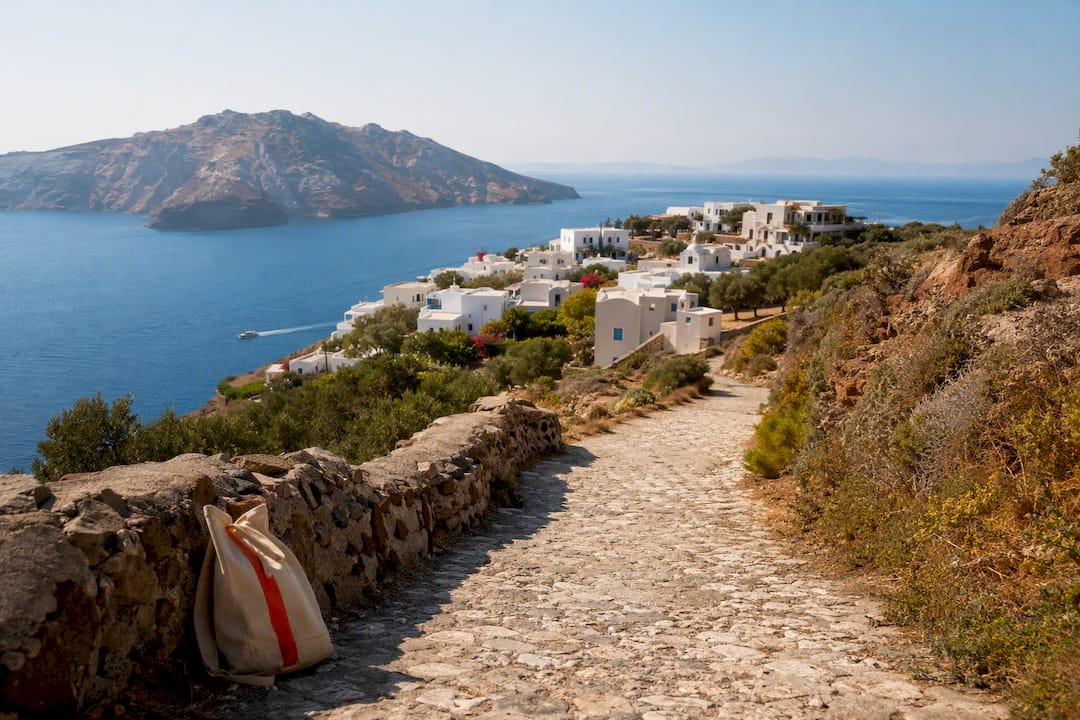
Therasia is the clearest illustrative case. Sitting just across the caldera from Santorini, one of the most photographed islands on earth, Therasia offers essentially the same volcanic scenery with a fraction of the visitors, boutique stays run by local families, and guides who have time for actual conversation instead of scripted commentary. The contrast between the two islands, twenty minutes apart by boat, is a compact demonstration of everything this article argues: same geology, radically different experience, because one place absorbed the crowd and the other didn’t.
If you’re building toward a trip like this, a few planning resources are worth bookmarking:
- Our team’s guide on what slow travel actually means for readers who want to linger rather than rush through an offbeat region.
- A pre-trip safety checklist covering the logistics gaps that trip up first-time offbeat travelers.
- Guidance on planning solo travel without overthinking every contingency before you leave.
Our Team’s Take: When Offbeat Travel Fits and When It Doesn’t
Offbeat travel rewards people who can tolerate ambiguity: uncertain transport, thin reviews, a language gap you’ll close by pointing and smiling. If that sounds stressful rather than exciting, ease in with a hub-and-spoke approach: base yourself somewhere with reliable infrastructure and take day trips to quieter spots nearby, the way Santorini and Therasia pair together.
We’d steer first-time solo travelers, anyone with a serious medical condition, or families with very young children toward a slower, more cautious version of offbeat travel rather than skipping it entirely. Slow travel, staying put longer in one under-visited region instead of sprinting between five of them, reduces the logistics load significantly while keeping the authenticity payoff intact.
Two things to try before your next trip: pick one destination from a source like Atlas Obscura you’ve never heard of, and spend thirty minutes researching its access and healthcare situation before deciding whether it fits your comfort level.
— Alexander
Further Reading to Help You Plan an Offbeat Trip
Once you’ve settled on a destination that fits your goals, the planning details matter as much as the choice itself. A few resources worth reading before you book anything: our guide to what slow travel actually means walks through how staying longer in fewer places changes both your budget and your experience, which matters more in offbeat regions where transport between towns eats time fast. The travel safety checklist covers the insurance, documentation, and emergency-planning steps that carry more weight when you’re headed somewhere without a tourist infrastructure to fall back on. And if you’re traveling with camera gear to document a place that hasn’t been photographed to death, our roundup of travel cameras for adventurous photographers can help you pack light without sacrificing image quality. Start with whichever gap in your planning feels biggest right now.
Sources
Forbes’ piece on the decline of mainstream travel lays out the cultural shift toward unrepeatable experiences. National Geographic’s feature on Therasia and its report on Ireland’s lesser-known ancient sites both offer concrete, reported examples rather than generic advice. Worldpackers’ guide to traveling off the beaten path is a solid practical resource for planning logistics, and Atlas Obscura remains one of the best discovery tools for finding micro-wonders worth building a trip around.


















Leave a Comment
Your email address will not be published. Required fields are marked with *