
Discover why smart kitchens enhance convenience and efficiency, cutting energy costs and making cooking a breeze. Upgrade your home today!
Cutting your energy bill by up to 15% while your oven preheats itself and your refrigerator reminds you to buy milk sounds like a distant fantasy, but it is quickly becoming the reality for homeowners who invest in smart kitchen technology. A lot of people assume smart kitchens are purely about flashy gadgets and high price tags, but the real story is much more grounded than that. Smart kitchens are about making your daily cooking life smoother, more efficient, and honestly more enjoyable. This guide breaks down exactly what a smart kitchen is, why the benefits are real, and how you can start applying these upgrades to your own home right now.
Table of Contents
- What defines a smart kitchen?
- The real benefits: Why homeowners are adopting smart kitchens
- Energy efficiency: Evidence behind smart kitchen savings
- How smart kitchen technology fits real life: Use cases and adoption trends
- Our unique perspective: Rethinking smart kitchens beyond tech hype
- Connect with smart home and kitchen upgrades
- Frequently asked questions
Key Takeaways
| Point | Details |
|---|---|
| Clear convenience benefits | Smart kitchens streamline routines using integrated controls, reminders, and automation. |
| Proven energy savings | Smart appliances offer documented savings of up to 15% on energy bills compared to traditional kitchens. |
| Less manual monitoring | Automated feedback loops mean fewer errors and less hands-on oversight. |
| Practical adoption steps | Matching features to your cooking habits is key to getting the most from smart kitchens. |
What defines a smart kitchen?
Before you start picturing something out of a science fiction movie, let’s get clear on what a smart kitchen actually means in practical terms. A smart kitchen is simply a cooking space where appliances and devices are connected to the internet or to each other, allowing for remote control, automation, and real-time feedback. Think of it as giving your kitchen a brain, one that communicates with you and responds to your habits.
The foundation of any smart kitchen is connectivity. Your appliances connect to a smartphone, tablet, or voice assistant, letting you monitor and control them from anywhere. Beyond that, smart home devices like smart displays, connected thermometers, and automated lighting all play supporting roles in creating a truly integrated kitchen experience.
So what separates a smart kitchen from a traditional one? The differences go deeper than just a Wi-Fi symbol on your refrigerator. Consider this side-by-side comparison:
| Feature | Traditional kitchen | Smart kitchen |
|---|---|---|
| Appliance control | Manual, in-person only | Remote via smartphone or tablet |
| Monitoring | You check it yourself | Automatic alerts and notifications |
| Maintenance tracking | You notice when something breaks | Remote diagnostics flag issues early |
| Energy management | Fixed settings, manual adjustments | Automated scheduling and optimization |
| Recipe guidance | Printed or book-based | Integrated step-by-step in-appliance coaching |
| Preheating/timing | Set and watch | Schedule remotely, receive completion alerts |
That table tells a compelling story. The gap between a traditional kitchen and a smart one is not just about convenience — it is about reducing the mental load that cooking places on you every single day.
Here is what smart kitchen appliances typically offer:
- Smartphone and tablet control: Adjust settings, start cycles, or check status from anywhere in your home or even across town.
- Reminders and notifications: Get alerts when your oven reaches temperature, when food is ready, or when a filter needs replacing.
- Remote diagnostics: Your appliance can communicate performance data directly to a service technician before a small issue becomes a costly repair.
- Recipe integration: Many smart ovens and cooktops can receive recipe data and automatically adjust temperature and cooking time.
- Voice assistant compatibility: Control everything hands-free through popular voice platforms, which is genuinely useful when your hands are covered in flour.
Smart kitchen appliances deliver convenience features like smartphone and tablet control, reminders, notifications, and remote diagnostics that meaningfully reduce maintenance friction. This is not marketing language; it is the practical payoff of appliances designed to communicate rather than just operate.
The real benefits: Why homeowners are adopting smart kitchens
Now that you have a clear picture of what smart kitchens involve, the next natural question is: why are so many homeowners actually making the switch? The answer is not one single reason. It is a combination of factors that stack together to create a genuinely better cooking experience.
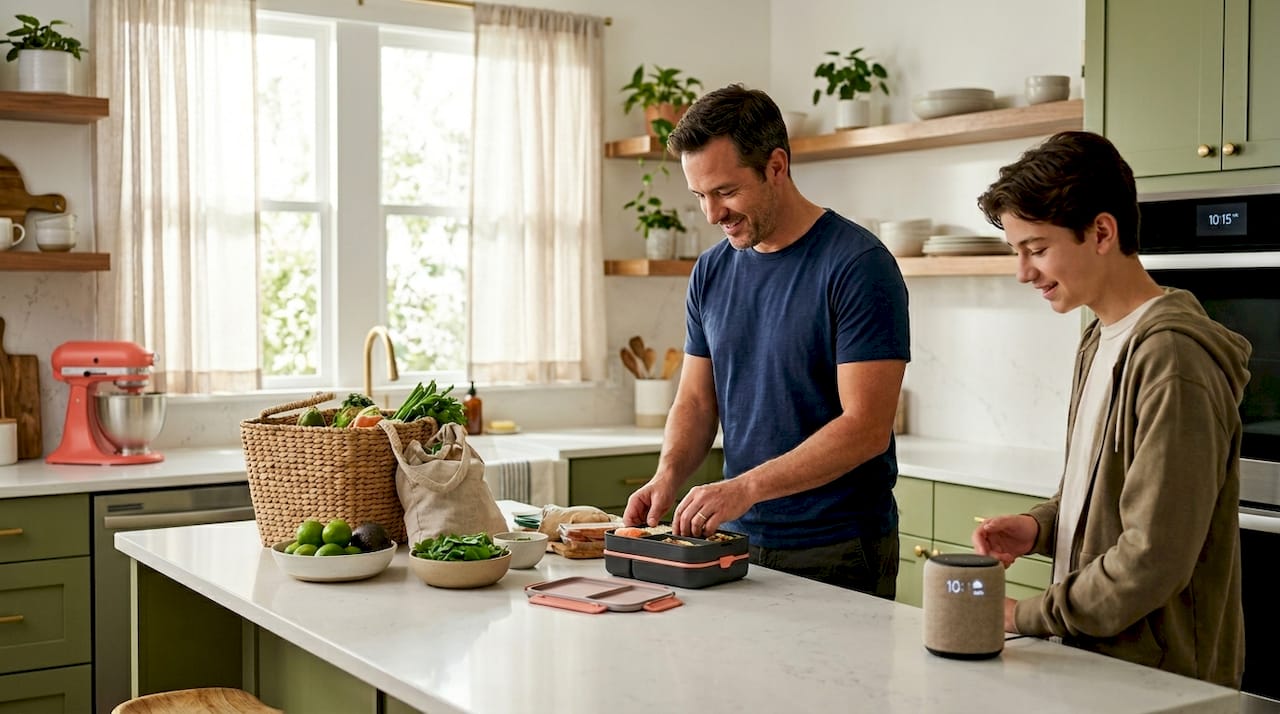
The most immediate benefit most people notice is integrated control. Instead of managing five separate appliance timers and mentally tracking what needs to happen next, your smart kitchen consolidates everything into one dashboard, usually on your phone. You can check whether the slow cooker is on the right setting while you are in the living room with your kids. You can preheat the oven on your way home from work so it is ready when you walk in the door. These small wins add up fast.
Here is a look at the core advantages homeowners consistently report:
- Fewer cooking errors: Automated temperature adjustments and step-by-step guidance mean your roast chicken is far less likely to come out dry.
- Time savings: Scheduling and remote start features eliminate the need to hover in the kitchen, freeing you up for other parts of your evening.
- Reduced food waste: Smart refrigerators can track expiration dates and suggest meals based on what is already inside, which directly cuts down on spoiled groceries.
- Better maintenance habits: Automated alerts for filter changes and part wear mean your appliances stay in peak condition longer, which protects your investment.
- Peace of mind: Did you leave the stove on? A quick check on your phone settles that anxiety instantly, which is something anyone who has driven back home to check can truly appreciate.
Smart kitchen appliances are built around the idea that convenience features like reminders and remote diagnostics genuinely reduce the friction of daily kitchen management. And when you reduce friction, you cook more, waste less, and stress about meals far less often.
The home improvement insights world is full of upgrades that promise big results and deliver small ones. Smart kitchens are different because the automation feedback loop is actually useful in daily life. When your dishwasher sends you a notification that the cycle is done, that is a small nudge that keeps your evening organized. When your oven’s probe thermometer hits the target internal temperature and automatically shuts off the heat, that is automation actively protecting your dinner.
“The most underrated smart kitchen feature is not the flashiest one. It is the simple notification that tells you your oven has reached temperature, or that your fridge door has been left open. Those small alerts prevent the everyday mistakes that cost time and money.”
Pro Tip: Start by identifying your biggest kitchen pain points before buying any smart appliances. If you constantly forget timers, a smart oven with app-based notifications is your best first purchase. If food waste is your problem, a smart refrigerator with inventory tracking will deliver the most immediate value. Matching the technology to your actual habits is what makes automation workflow tips pay off in the kitchen.
The shift to smart kitchens is also part of a broader lifestyle upgrade. People who invest in connected cooking spaces tend to cook at home more often, spend less on takeout, and report higher satisfaction with their overall everyday life upgrades. That is a meaningful return on investment that goes well beyond the appliance cost itself.
Energy efficiency: Evidence behind smart kitchen savings
Here is where things get genuinely exciting, especially if you are the kind of homeowner who watches utility bills closely. One of the most powerful arguments for smart kitchens is not about convenience at all. It is about energy savings, and the evidence is real and documented.
Peer-reviewed research indicates that smart kitchens can improve energy efficiency through tighter control and automation, with potential savings of 10 to 15% compared to traditional appliances. To put that in perspective, kitchens are among the highest energy-consuming areas in any home, accounting for a significant chunk of your monthly electricity and gas usage. A 10 to 15% reduction is not trivial.
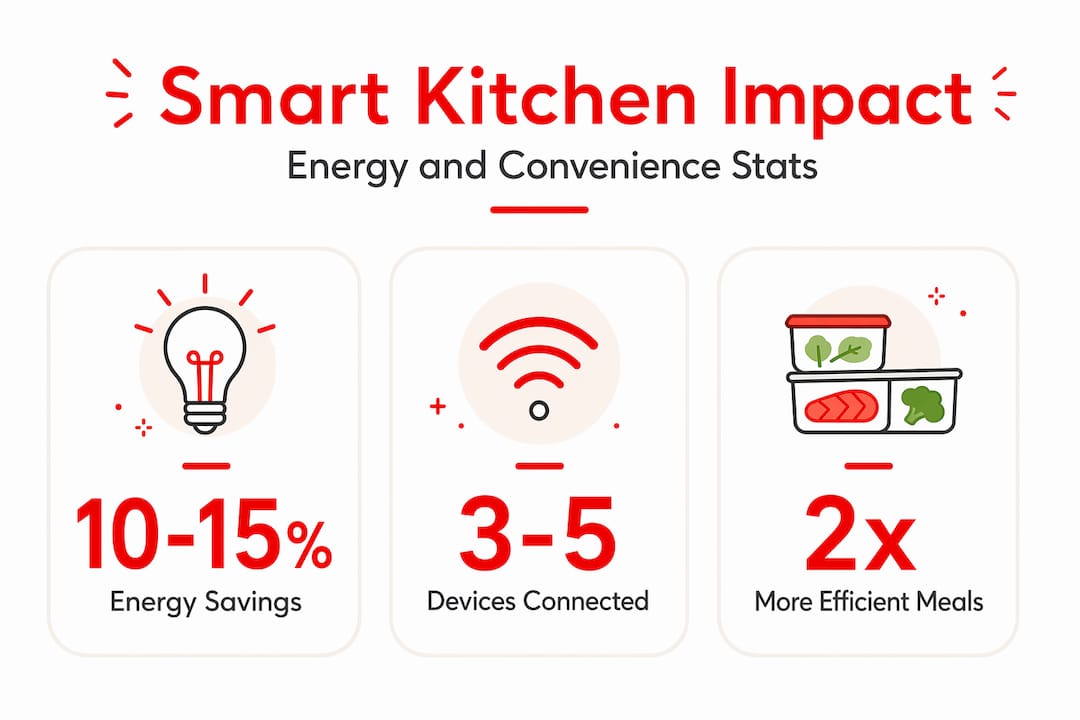
Here is a data snapshot showing how those savings can stack up:
| Appliance type | Traditional energy use | Smart appliance savings | Annual estimated reduction |
|---|---|---|---|
| Refrigerator | ~500 kWh/year | 10-15% | 50-75 kWh/year |
| Dishwasher | ~300 kWh/year | 10-15% | 30-45 kWh/year |
| Oven/range | ~700 kWh/year | 10-15% | 70-105 kWh/year |
| Combined kitchen | ~1,500+ kWh/year | 10-15% | 150-225 kWh/year |
Those numbers translate to real dollars. Depending on your local electricity rate, saving 150 to 225 kWh per year can reduce your annual energy bill by anywhere from $18 to $45 or more, just from kitchen appliances alone. Pair that with other energy efficient home upgrades throughout your house and the cumulative impact on your utility bills becomes truly significant.
How does automation actually drive these savings? It comes down to precision and scheduling. Traditional appliances run at fixed settings, often consuming more energy than a given task actually requires. Smart appliances adjust on the fly. A smart oven can reduce heating intensity once the internal temperature is stable. A smart dishwasher can run during off-peak electricity hours when rates are lower. A smart refrigerator can reduce compressor cycles when it detects the door has been opened frequently and adjusts cooling patterns accordingly.
Here are the most effective steps you can take to optimize energy use in your smart kitchen:
- Enable eco mode or energy-saving settings on every smart appliance as soon as you set it up. Many appliances ship with standard settings that prioritize speed over efficiency.
- Schedule high-energy appliances like dishwashers and ovens to run during off-peak hours, typically late at night or early morning, when electricity rates are often lower.
- Use the app dashboard to monitor which appliances draw the most power and identify any unexpected spikes that could indicate a malfunction.
- Set refrigerator temperature precisely rather than on the dial-based guessing game that traditional models require. The ideal range is 35 to 38 degrees Fahrenheit.
- Take advantage of remote diagnostics to catch inefficiencies early. A poorly sealed dishwasher door or a refrigerator with a worn gasket can silently drain energy for months before you notice.
The energy argument is compelling because it turns your smart kitchen investment into a long-term financial win. You are not just buying convenience; you are buying a kitchen that gradually pays you back through lower utility costs.
How smart kitchen technology fits real life: Use cases and adoption trends
Understanding the theory is one thing. Seeing how smart kitchens actually fit into the texture of daily life is what moves most people from interest to action. Let us walk through some real scenarios that show how these features integrate naturally into common routines.
Imagine you are a weekend baker. You love making sourdough, but the process requires precise temperature monitoring and long, sometimes unpredictable rising times. A smart oven with a connected probe thermometer and app-based notifications means you can go about your Saturday without camping in the kitchen. The oven tells you when the internal temperature hits the perfect crust-ready threshold. No more guessing. No more overcooked loaves.
Or picture a busy parent doing weeknight meal prep. You have chicken thighs in a slow cooker and pasta water on a connected burner. Instead of checking in every 20 minutes, your phone keeps you posted. The slow cooker alerts you when the chicken has reached a safe internal temperature. The smart burner automatically reduces heat once the water reaches a boil. You handle homework time with your kids while dinner essentially manages itself. That is not a far-off vision; it is what home improvement tech ideas are actively enabling right now.
Here is a breakdown of the most popular smart kitchen use cases homeowners are actually using today:
- Weeknight dinner automation: Remote preheat functions and connected timers reduce hands-on time significantly for everyday meals.
- Smart grocery management: Connected refrigerators with internal cameras let you check what you have from the grocery store, so you never buy a duplicate item again.
- Precision baking and roasting: Probe thermometers integrated with smart ovens eliminate guesswork and reduce the risk of over or under cooking.
- Holiday meal coordination: Managing multiple dishes across multiple appliances becomes far less chaotic when every appliance sends its own status updates to one app.
- Coffee routine optimization: Smart coffee makers that start brewing based on your morning alarm are a small but genuinely satisfying daily win.
Adoption trends confirm that this is not a niche interest. Market data and buyer surveys consistently show that younger homeowners and tech-enthusiast households are leading the charge, but the appeal is spreading quickly to older homeowners who are drawn in by the practical maintenance and efficiency benefits rather than the novelty factor. Understanding kitchen renovation ROI is increasingly motivating homeowners of all ages to consider smart appliances as part of broader renovation plans.
Smart appliances that sense, calculate, and automate steps while notifying you of changes reduce manual monitoring and errors most effectively when the features align with your specific daily routines. This is the crucial point that separates a smart kitchen that genuinely improves your life from one that just adds complexity.
Pro Tip: Before investing in a full smart kitchen overhaul, try introducing one smart appliance into your current routine for 60 days. Pay attention to which features you actually use versus which ones felt exciting in the store but never get touched. That 60-day experiment will give you real data about which additional upgrades will deliver genuine value in your specific household.
Adoption is also being fueled by an important practical reality: smart kitchen appliances are getting more affordable every year. What was a premium luxury two years ago is now available at mid-range price points, which makes the entry barrier far lower than most people expect.
Our unique perspective: Rethinking smart kitchens beyond tech hype
Here is the honest, somewhat contrarian take we feel is missing from most smart kitchen coverage: the people who get the most out of smart kitchens are not the most tech-savvy ones. They are the most self-aware ones.
The smartest kitchen purchase you can make has nothing to do with the most advanced model available. It is about knowing exactly where your current kitchen frustrates you, costs you time, or drains your energy, literally, and then choosing technology that precisely addresses those friction points. We have seen homeowners spend thousands on cutting-edge smart appliances only to use about 15% of the available features. That is not a smart kitchen. That is an expensive traditional kitchen with a better app.
The tech hype around smart kitchens often focuses on features that are impressive in a demonstration but rarely used in daily life. Voice-activated recipe guidance, for example, sounds incredible until you realize you are cooking in a noisy kitchen with a podcast playing, and the voice recognition keeps failing. Meanwhile, the humble notification that tells you your oven left on burns nearly 300 watts per hour, and an alert that catches a forgotten appliance pays for itself fast.
The strongest empirical signal in the research on smart kitchens is energy: peer-reviewed data points to potential improvements of 10 to 15% in energy usage compared to traditional appliances, though real-world outcomes vary depending on your specific device mix and actual behavior. That variance is the key insight. The technology creates the opportunity, but your habits determine whether the savings actually materialize.
Our perspective is this: start with energy and maintenance, not novelty. A smart refrigerator that alerts you to a door seal failure before your compressor burns out will save you far more than a connected coffee maker that brews on a schedule you could set on a traditional timer. A smart dishwasher that shifts its cycle to off-peak hours will quietly cut costs month after month without requiring any ongoing effort from you.
The tech upgrades perspective that serves homeowners best is always grounded in practical impact first. The exciting features are a bonus. The unsexy, reliable, quietly efficient ones are the real prize. When you approach your smart kitchen upgrade with that mindset, you end up with a kitchen that genuinely improves your life rather than one that just looks impressive during tours.
The bottom line is this: a smart kitchen is only as smart as the homeowner using it. The technology is ready. The question is whether your approach to choosing and using it is equally thoughtful.
Connect with smart home and kitchen upgrades
If reading this has sparked ideas for your own kitchen, you are in the right place to keep that momentum going. At Lizard’s Lunch, we cover the full spectrum of home upgrade possibilities, from practical tech solutions to renovation strategies that boost both comfort and long-term value. Whether you are just starting to explore connectivity options or you are ready to dive deep into specific product categories, you will find actionable guidance that matches where you are in the process. Check out our coverage of tech ideas for your space for a broader look at how modern technology is reshaping every room in the home. And if you want to understand the full value equation of home upgrades, our guide on home upgrades for comfort and value puts smart kitchens into the bigger picture.
Frequently asked questions
How much can smart kitchens save on energy bills?
Peer-reviewed research suggests smart kitchens can reduce energy usage by 10 to 15% compared to traditional appliances, though actual savings depend on your specific device mix and how consistently you use the energy-saving features.
What features do smart kitchen appliances offer?
Smart kitchen appliances provide smartphone and tablet control, maintenance reminders, completion notifications, and remote diagnostics, all of which combine to reduce the daily friction of managing a busy kitchen.
Are smart kitchens difficult to set up for beginners?
Most modern smart kitchen appliances are designed with straightforward app-based setup processes, and many integrate directly with voice assistants or existing smart home platforms, making them accessible even if you are not particularly tech-focused.
Does investing in smart kitchens increase home value?
Smart kitchens appeal strongly to today’s buyers, particularly younger homeowners prioritizing modern convenience and efficiency, and real estate trends suggest that well-equipped connected kitchens can contribute meaningfully to a home’s overall market appeal.


















Leave a Comment
Your email address will not be published. Required fields are marked with *