
Discover the crucial role of lighting in design and how it transforms spaces. Elevate your design choices today for a stunning impact!
Lighting is the one element that can make or break a beautifully designed space, yet most people treat it as the last checkbox on a renovation list. The role of lighting in design goes far beyond switching the lights on. It shapes how a room feels, how large it appears, how relaxed or focused you become inside it, and how every surface, material, and color reads to the eye. Whether you are an interior designer refining your craft, an architect planning spatial flow, or a homeowner about to renovate, understanding what light actually does to a space will change every decision you make going forward.
Table of Contents
- Key takeaways
- The role of lighting in design fundamentals
- How color temperature transforms a space
- Lighting, well-being, and your biological clock
- Integrating lighting from concept to completion
- My perspective on lighting as a design force
- Transform your space with smarter lighting choices
- FAQ
Key takeaways
| Point | Details |
|---|---|
| Lighting shapes perception | Light organizes space, creates hierarchy, and influences mood without moving a single wall. |
| Layer your light sources | Combining ambient, task, and accent lighting creates flexible, emotionally rich spaces. |
| Color temperature matters | Warm and cool light tones affect how materials, colors, and proportions read in a room. |
| Light supports well-being | Aligning lighting with your daily rhythm improves focus, mood, and sleep quality. |
| Start with daylight planning | Natural light analysis should happen at the design stage, not after the walls go up. |
The role of lighting in design fundamentals
Most people think of lighting as brightness. Designers know it is something much more powerful. Lighting acts as a primary architectural tool, shaping emotion, defining movement through a space, and creating sculptural layers that furniture alone cannot achieve.
How light organizes space
Light creates hierarchy. A single pendant over a dining table tells every person who walks into the room exactly where to focus. A wash of warm light across a textured stone wall makes that wall the visual anchor of the entire space. You do not need a partition to separate a living area from a kitchen nook. A change in lighting quality and intensity does the same job, more elegantly.
Vertical lighting is one of the most underused tools in residential and commercial design. When you illuminate walls rather than just floors and work surfaces, you stabilize the brightness differences across the visual field. The result is a space that feels balanced, open, and easy to be inside for long periods.
Layering: the three types every space needs
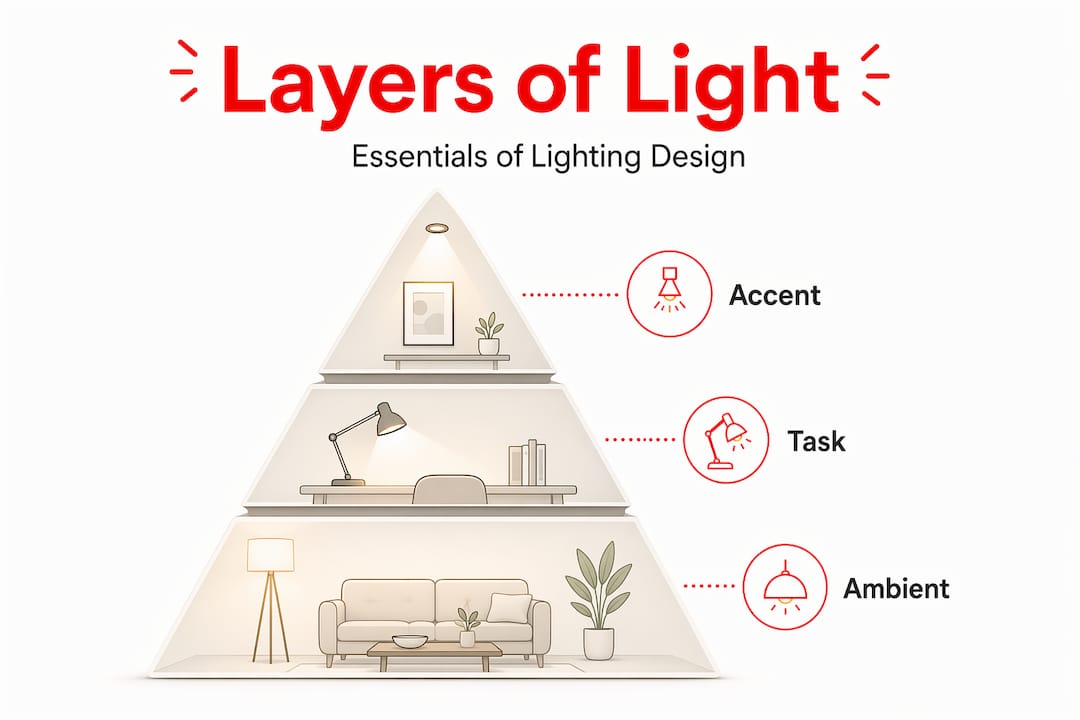
Layered lighting systems built from ambient, task, and accent sources are what separate a designed space from a simply lit one:
- Ambient lighting provides the overall base illumination. Think recessed ceiling lights, large pendants, or indirect cove lighting that fills the room with even, comfortable light.
- Task lighting targets specific activities. A reading lamp beside an armchair, under-cabinet lighting in a kitchen, or a focused desk lamp in a home office all serve this function precisely.
- Accent lighting highlights architecture, artwork, textures, and focal points. Track lighting aimed at a gallery wall, or a recessed light washing a brick feature wall, makes a room feel curated and alive.
The magic happens when all three layers work together and each one is dimmable. That flexibility lets you shift a kitchen from bright and functional at 7 a.m. to warm and intimate at dinner without changing a single fixture.
The problem with glare
Glare is a design failure, not a minor inconvenience. When a light source is brighter than the surrounding surfaces, your eye is pulled to the fixture itself rather than the space. This creates visual fatigue and stress over time. It also makes the rest of the room appear darker by contrast, which is the exact opposite of what most people intend when they install a bright light.
The fix is straightforward: shield your light sources, control beam angles, and never place a bare bulb in direct sightlines. Recessed fixtures with deep baffles, pendants with opaque shades, and wall sconces angled toward surfaces rather than eyes all eliminate glare while keeping the room beautifully lit.
Pro Tip: Restraint is your greatest lighting tool. A well-placed, well-shielded light that illuminates exactly what it should, and nothing it shouldn’t, always outperforms a ceiling crowded with fixtures blasting light in all directions.
How color temperature transforms a space
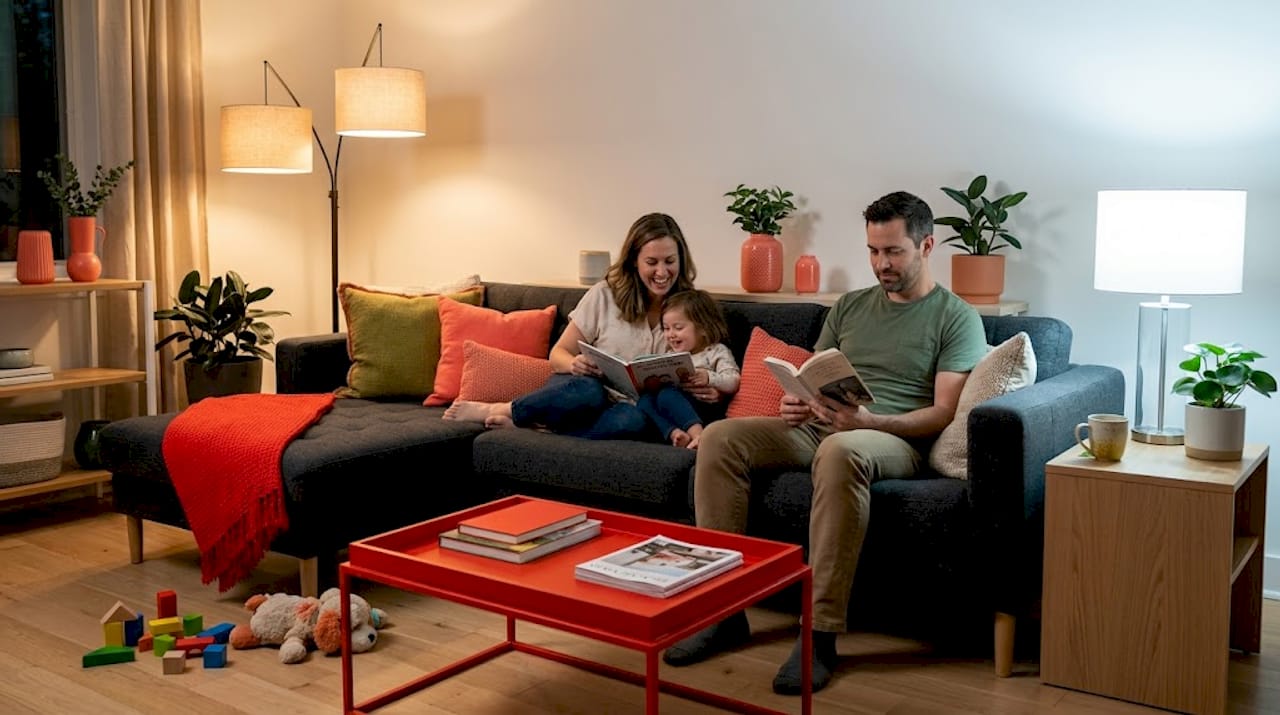
Here is something that surprises many homeowners: the color of your light changes your room more dramatically than the color on your walls. Lighting temperature is foundational, influencing emotional connection and spatial perception in ways that are immediate and visceral.
Understanding the Kelvin scale
Color temperature is measured in Kelvins (K). The range you will encounter most often in residential and commercial design runs from around 2700K to 6500K. Here is how each range performs in practice:
- 2700K to 3000K (warm white): This is the light of candles and incandescent bulbs. It compresses space slightly, softens edges, and produces a cozy, relaxed atmosphere. Bedrooms, living rooms, and dining areas thrive in this range.
- 3500K to 4000K (neutral white): A clean, crisp light that works beautifully in kitchens, bathrooms, and home offices where you need clarity without the clinical edge of a cooler tone.
- 5000K to 6500K (cool white/daylight): This range energizes and expands. It heightens alertness and makes colors appear more saturated and true. Galleries, studios, and commercial workspaces often use this end of the spectrum to sharpen focus and enlarge perceived space.
Warm light compresses and softens while cool light opens and sharpens. That is not a metaphor. It is a measurable effect on how your brain reads proportion and distance.
How light changes your materials
This is where many designers and homeowners get into expensive trouble. A paint color that looks like a soft greige in the store reads as lavender under warm incandescent light and olive under cool fluorescent light. Fabric samples, stone finishes, and wood stains all shift in undertone depending on the light source above them.
Testing materials under artificial light as well as natural daylight is non-negotiable if you want the finished room to look the way you planned. The same rule applies to tile grout, metal hardware, and even upholstery. What you approve in a showroom under cool fluorescent lighting may look completely different once installed under the warm glow of your eventual fixtures.
Pro Tip: Before committing to any wall color or material finish, take your sample home and view it under the exact lighting conditions the space will have. Morning light, afternoon sun, and evening artificial light can all read differently. Give yourself at least 48 hours of observation.
Lighting, well-being, and your biological clock
The effects of lighting on interior design extend into territory most people never consider: your body. Light regulates your circadian rhythm, which controls sleep, mood, cognitive performance, and hormone production. The design of your lighting environment is, quite literally, a health decision.
Aligning light with your daily rhythm
Your biology responds to light color and intensity in predictable ways. Bright, cool light in the morning suppresses melatonin and signals the body to wake up and stay alert. Dim, warm light in the evening promotes melatonin production and prepares the body for sleep. When your home’s lighting fights against this cycle instead of supporting it, the consequences are real.
Here is what thoughtful, circadian-aware lighting design looks like in practice:
- Morning zones: Kitchens and bathrooms benefit from adjustable lighting that can shift toward cooler, brighter tones during morning routines, keeping you alert for the day ahead.
- Workspaces: Flicker-free LEDs and natural light sustain circadian rhythms and improve visual comfort during long work sessions at home or in the office.
- Evening living spaces: Dining rooms, lounges, and bedrooms should dim toward warmer tones after sunset. This single adjustment meaningfully improves sleep quality for most people.
- Transition zones: Hallways and staircases that dim automatically as evening progresses help the body understand that the day is winding down.
Poor lighting in these zones does not just make a room feel off. It contributes to fatigue, irritability, eye strain, and disrupted sleep patterns over time. The importance of lighting in design becomes undeniable when you realize it reaches beyond aesthetics into daily physical comfort.
Energy and efficiency: the modern opportunity
Beyond well-being, modern lighting technology makes good design increasingly accessible. Automated LED systems reduce electricity use by 60 to 80 percent in commercial applications, and LEDs use up to 90 percent less power than traditional incandescent bulbs. For homeowners, that translates directly into lower utility bills without sacrificing atmosphere or quality of light. Smart dimming systems and motion sensors make this efficiency nearly effortless once installed.
Integrating lighting from concept to completion
How lighting impacts design most powerfully is when it is treated as a foundational element rather than a finishing touch. The most beautifully lit spaces you have ever stepped into were likely planned that way from the first sketch.
Starting with daylight
The role of natural light in design is the starting point for every project worth doing well. Before a single artificial fixture is specified, analyze how daylight enters the space across different times of day and throughout the seasons. Which walls catch morning sun? Where does afternoon light create harsh glare? How does the quality of light shift from north-facing windows versus south-facing ones?
Lighting should be integrated at the architectural phase so that window placement, ceiling heights, and room orientation all support the natural light strategy. Artificial lighting then steps in to fill the gaps and extend the day.
Practical strategies by room type
The table below captures how lighting design principles shift by space function and what each approach achieves:
| Room type | Primary goal | Lighting approach |
|---|---|---|
| Kitchen | Clarity and safety | Bright ambient with focused under-cabinet task lighting |
| Living room | Comfort and flexibility | Layered warm ambient, accent on art/features, dimmable |
| Bedroom | Rest and intimacy | Warm, low-positioned sources; blackout capability |
| Home office | Focus and energy | Cool-toned, flicker-free task lighting with daylight access |
| Bathroom | Accuracy and mood | Neutral task lighting around mirrors; warm ambient for relaxation |
| Dining room | Warmth and connection | Low pendant over table; dimmer essential |
Coordination with architecture and materials
One of the most common pitfalls is designing lighting in isolation from the materials and finishes in the room. Intentional lighting intensifies architectural identity when it works with the textures, colors, and forms of a space rather than simply hovering above them.
Grazing a rough plaster wall with a narrow beam of warm light makes the texture come alive. Uplighting a timber ceiling reveals warmth and grain that a simple downlight would never capture. Reflecting light off a polished concrete floor creates a luminous quality that transforms the entire room.
The coordination between lighting and color perception of materials is where experienced designers pull ahead. They do not pick finishes and then figure out lighting later. They develop both simultaneously, testing samples under the planned fixtures before anything is ordered or installed.
Pro Tip: If you are renovating a single room, install your final lighting fixtures before selecting your final paint color. Paint the walls last, once you know exactly how your light sources read in that specific space.
My perspective on lighting as a design force
I have seen rooms filled with expensive furniture and beautiful materials fall completely flat because the lighting was an afterthought. And I have walked into modest spaces with simple, thoughtful lighting that felt genuinely captivating. That contrast tells you everything you need to know about where lighting sits in the hierarchy of design decisions.
In my experience, the most common mistake even skilled designers make is treating lighting as a technical specification rather than a creative and emotional tool. You specify the fixture type, the wattage, the color temperature, and you call it done. But the real work is asking how this light should make a person feel when they stand in this room at 9 p.m. on a Tuesday. That emotional framing changes everything about how you position, layer, and control the light.
I also think the industry is at a genuinely exciting moment. Smart lighting systems allow you to program scenes that shift throughout the day, adapting to activity and time with precision that was only available in commercial projects a decade ago. Exploring options like smart home lighting has become practical and affordable for most homeowners. But technology should serve timeless principles. No dimming algorithm replaces the judgment of understanding how a specific light source interacts with a specific surface in a specific room.
My honest take: if you are planning any design project right now, put lighting on your agenda before you pick a sofa, before you choose a tile, and before you settle on a floor finish. The light you choose will determine whether all those other choices look the way you imagined. Treat it as the creative force it is, and the results will speak for themselves.
— Alexander
Transform your space with smarter lighting choices
If this article has you rethinking what your own spaces could feel like with better lighting, there is so much more to explore. From practical home improvement tips that maximize ROI to discovering the top home upgrades that genuinely increase comfort and value, you will find curated guides that help you turn these ideas into real results. Whether you want to start with a single room refresh or plan a whole-home lighting overhaul, the right resources make that process feel inspiring rather than overwhelming. Good lighting is one of the highest-return investments you can make in any space.
FAQ
What is the role of lighting in interior design?
Lighting organizes space, sets mood, and controls how every surface, color, and material reads to the eye. It functions as both a functional necessity and a primary design element that shapes how a room feels and performs.
How does color temperature affect a room?
Warm tones between 2700K and 3000K create a cozy, intimate feel and soften proportions, while cool tones between 5000K and 6500K energize the space and make colors appear sharper and truer.
Why does lighting affect the colors in my room?
Artificial light sources shift the undertones of paint, fabric, and finishes significantly compared to natural daylight. A color that looks neutral in a showroom can read completely differently under your home’s specific lighting conditions.
What are the three types of lighting used in design?
Ambient, task, and accent lighting form the three layers of a well-designed space. Ambient provides overall illumination, task focuses on specific activities, and accent highlights architectural features and focal points.
How does natural light influence design decisions?
The role of natural light in design is foundational because it affects spatial flow, color accuracy, and occupant well-being. Analyzing daylight patterns before specifying artificial fixtures prevents costly mismatches and produces spaces that feel genuinely alive.


















Leave a Comment
Your email address will not be published. Required fields are marked with *