
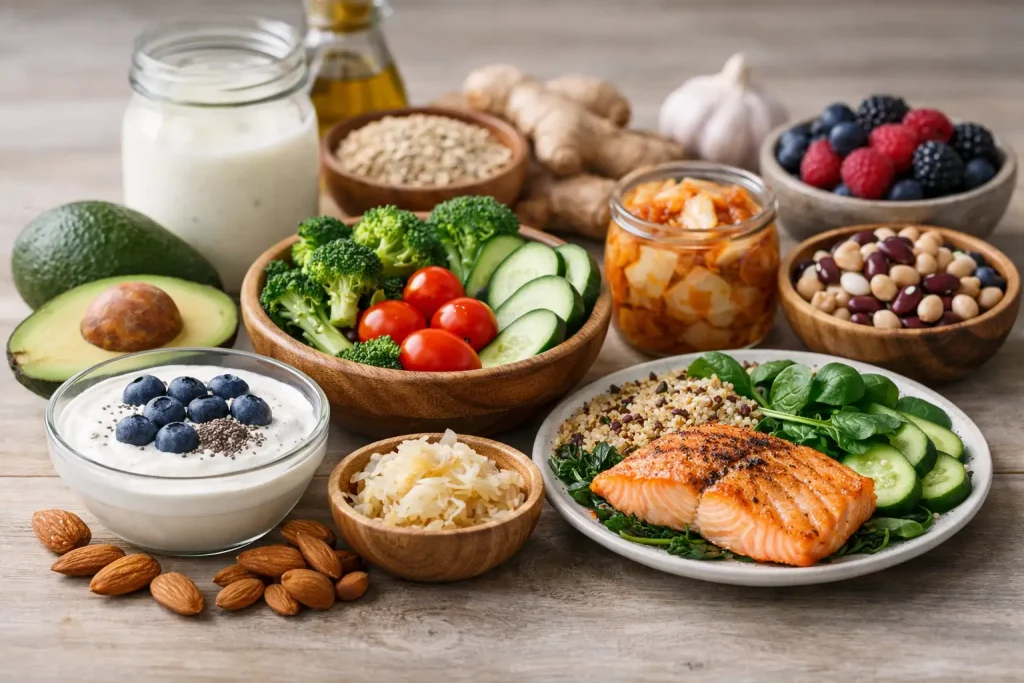
Learn which best foods for gut health support a diverse microbiome, plus simple ways to add fiber, fermented foods, and variety to everyday meals easily.
Your gut is not asking for a dramatic cleanse or a cabinet full of powders. It responds best to what lands on your plate repeatedly: plant fibers that feed beneficial microbes, fermented foods that add live cultures, and enough variety to keep meals interesting. The best foods for gut health are usually familiar grocery-store staples, not exotic ingredients with impossible prep instructions.
Gut health is broader than digestion alone. Your gut microbiome, the community of microbes in the digestive tract, helps break down certain fibers and produces compounds involved in the gut barrier and immune function. Food is only one part of the picture, though. Sleep, stress, movement, medications, hydration, and medical conditions can all affect how your digestive system feels.
Best Foods for Gut Health: 12 Smart Picks
1. Beans and lentils
Black beans, chickpeas, kidney beans, lentils, and split peas are fiber standouts. They contain resistant starch and fermentable fibers that gut microbes can use as fuel. Canned beans count, too. Rinse them well, then toss them into soups, grain bowls, tacos, salads, or pasta sauce.
If beans leave you uncomfortably gassy, start with a small portion rather than writing them off. A few tablespoons several times a week can be easier than a large bowl all at once. Lentils, especially canned or well-cooked red lentils, are often a gentler starting point.
2. Oats
Oats supply beta-glucan, a soluble fiber that supports regularity and helps create a more satisfying breakfast. Old-fashioned oats, steel-cut oats, and unsweetened overnight oats all work. Instant oats can work as well, as long as the packet is not loaded with added sugar.
Build a gut-friendly bowl with fruit, nuts, seeds, and plain yogurt or a fortified dairy-free alternative. That combination offers more fiber and more food variety than a pastry-and-coffee breakfast.
3. Yogurt with live and active cultures
Yogurt is one of the most accessible fermented foods in the American grocery aisle. Look for a label that says it contains live and active cultures, and choose plain or lightly sweetened options when possible. Sweetened yogurt is not off-limits, but dessert-level sugar can crowd out the benefits of a nutrient-dense snack.
Greek yogurt provides more protein, while regular yogurt tends to have a softer texture. For people who do not tolerate lactose well, lactose-free yogurt may be a better fit. Not every yogurt contains the same cultures, so think of it as one useful food, not a guaranteed cure for digestive complaints.
4. Kefir
Kefir is a tangy cultured milk drink with a thinner consistency than yogurt. It often contains a wider mix of live cultures, making it an easy option for smoothies, breakfast bowls, or a quick afternoon snack. Plain kefir is the most versatile choice because you can add your own berries, cinnamon, or a small spoonful of honey.
Dairy-free kefir is available in some stores, but check the label for live cultures and added sugar. If you are new to fermented foods, begin with a small serving. More is not automatically better when your gut is adjusting.
5. Sauerkraut and kimchi
Fermented vegetables bring crunch, acidity, and live cultures to meals. Add a forkful of refrigerated sauerkraut to a sandwich, grain bowl, or sausage plate. Kimchi can wake up eggs, rice, tacos, and noodles with very little effort.
The refrigerated versions are more likely to contain live cultures than shelf-stable, heat-processed products. Sodium can be high, so these are best used as a flavorful side or topping, especially for anyone watching their salt intake. Kimchi may also be too spicy for people dealing with reflux or a sensitive stomach.
6. Berries
Blueberries, raspberries, blackberries, and strawberries offer fiber plus plant compounds called polyphenols. Those compounds reach the colon and interact with gut microbes in ways researchers are still studying. Frozen berries are just as practical as fresh and are often the better value outside peak season.
Raspberries and blackberries are particularly fiber-rich. Stir them into oatmeal, yogurt, cottage cheese, or a smoothie, or keep a bag of frozen berries on hand for a quick snack that does not depend on perfect meal planning.
7. Apples
An apple is an easy gut-health choice because it contains pectin, a soluble fiber. Eat the peel when you can, since much of the fiber is there. Apples pair well with peanut butter, cheddar, oats, or a handful of walnuts.
Some people with irritable bowel syndrome find apples trigger bloating because they are high in certain fermentable carbohydrates. If that sounds familiar, it does not mean fruit is the problem. Lower-FODMAP choices such as berries, citrus, grapes, or kiwi may be more comfortable.
8. Garlic, onions, and leeks
These kitchen basics contain prebiotic fibers, including inulin and fructans, which feed certain beneficial gut microbes. They are a low-cost way to add more flavor while boosting plant diversity. Use onions and garlic as the base for soups, sauces, roasted vegetables, and stir-fries.
There is a trade-off: the same fibers that feed microbes can cause gas or cramping in sensitive people. Cooking may make them easier to tolerate, and garlic-infused oil can offer garlic flavor without the fructans for people following a low-FODMAP plan.
9. Bananas
Bananas are portable, inexpensive, and easy to digest for many people. Slightly green bananas contain more resistant starch, while ripe bananas are softer and sweeter. Both fit into a gut-conscious eating pattern, so choose the ripeness you enjoy.
Slice one over oatmeal, blend it into a smoothie, or pair it with yogurt and nuts. If you are increasing fiber overall, bananas can be a convenient bridge between low-fiber snacks and more substantial plant foods.
10. Whole grains
Brown rice, quinoa, barley, whole-wheat pasta, whole-grain bread, and farro provide fibers that refined grains leave behind. Barley is especially notable for beta-glucan, while cooled rice or potatoes can develop some resistant starch after cooking.
You do not need to replace every refined grain overnight. Try mixing brown and white rice, choosing whole-grain toast at breakfast, or using half whole-wheat and half regular pasta. Gradual swaps are more likely to become habits.
11. Nuts and seeds
Almonds, walnuts, pistachios, chia seeds, flaxseed, pumpkin seeds, and hemp seeds add fiber and healthy fats in small portions. Ground flax and chia are especially easy to stir into oats, yogurt, pancake batter, or smoothies.
For a practical upgrade, keep a jar of mixed seeds near your breakfast supplies. One or two tablespoons can add texture without turning a simple meal into a project. Drink fluids regularly when adding chia or flax, since both absorb water.
12. Leafy greens and cruciferous vegetables
Spinach, kale, collards, broccoli, Brussels sprouts, cabbage, and arugula contribute fiber and a wide range of plant compounds. Their value is not about one magic nutrient. Regularly eating different vegetables gives the microbiome a broader menu.
Raw cruciferous vegetables can be tough on some stomachs, particularly in large portions. Roasting, sauteing, steaming, or adding them to soups often improves comfort. A bag of pre-washed greens or frozen broccoli can make the habit far more realistic on busy weeks.
Variety Matters More Than Perfection
A single “superfood” cannot build a healthy eating pattern. Aim to rotate plant foods across the week: different fruits, vegetables, beans, whole grains, nuts, seeds, herbs, and spices. That approach gives your gut microbes different types of fiber to work with and prevents meals from becoming repetitive.
When increasing fiber, go slowly and drink enough water. Jumping from a low-fiber diet to huge servings of beans, bran, and raw vegetables can cause bloating, constipation, or diarrhea. Add one change at a time, such as oatmeal at breakfast or beans at two dinners per week, and pay attention to how you feel.
People with inflammatory bowel disease, celiac disease, gastroparesis, ongoing digestive symptoms, or a history of disordered eating may need individualized guidance. Severe pain, blood in the stool, unexplained weight loss, persistent diarrhea, or major changes in bowel habits deserve a conversation with a qualified clinician rather than a DIY food experiment.
The most useful next step is simple: pick one food from this list that you already enjoy, buy it this week, and give it a regular place in your meals. Gut-friendly eating works best when it feels like normal food, not a temporary health assignment.


















Leave a Comment
Your email address will not be published. Required fields are marked with *