
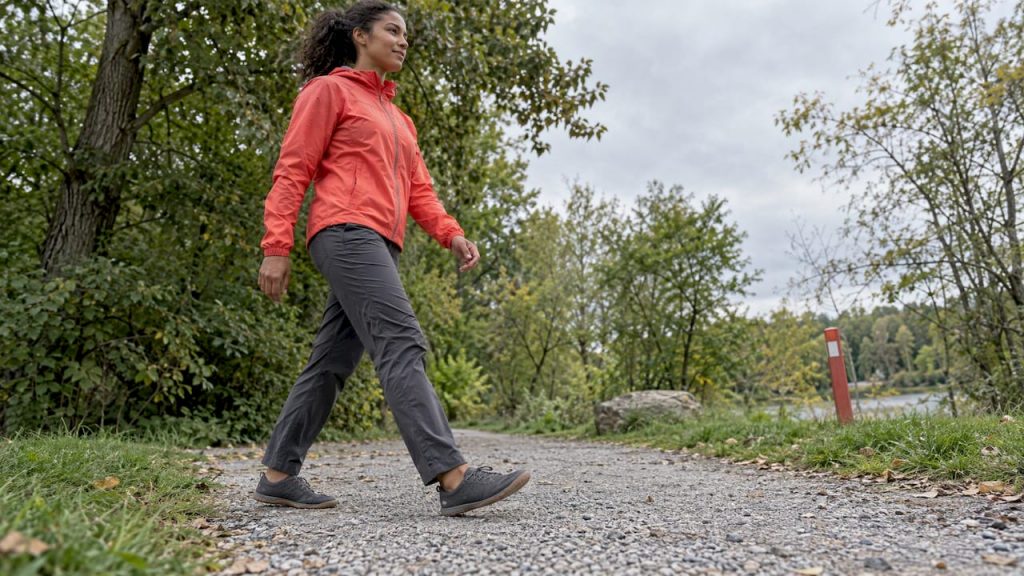
Barefoot shoes can build foot strength, balance and toe room. See what studies show, who should start slowly, and a week-by-week plan to switch safely.
Barefoot shoes, also called minimalist shoes, have a thin, flexible sole, a wide toe box and little or no difference in height between heel and forefoot. Their best-supported benefits are stronger foot muscles, better balance and more room for your toes. You get them most reliably when you ease in slowly, over weeks or months rather than days. Below, we walk through what the studies found, what it means for everyday walking and for running, who should check with a professional first, and how to switch without sore feet.
TL;DR
- Barefoot shoes have a thin sole of about 5 mm or less, a wide toe box and zero or near-zero heel drop, so your foot moves more like it does without a shoe.
- Studies show larger foot muscles after months of wear, and a four-week walking program improved foot posture and single-leg balance in young adults.
- Running research is mixed on injury rates, so treat running in them as a skill you build gradually.
- Start with 15 to 20 minutes of walking a day, and stop and rest if heel, arch or forefoot pain appears.
- People with diabetes, reduced foot sensation, plantar fasciitis, Achilles problems or past stress fractures should talk to a foot specialist first.
Table of Contents
- What counts as a barefoot shoe
- The benefits that have evidence behind them
- Barefoot shoes for walking
- Barefoot running benefits and what to expect
- Pros and cons of minimalist shoes at a glance
- Who should start, and who should check first
- A gradual transition plan
- How to choose a pair
- Children and growing feet
- Our perspective
- Reaching readers who care about healthy movement
- FAQ
- Sources
What counts as a barefoot shoe
Picture the shoe you wear most days. Chances are it has a raised, cushioned heel, a thick midsole and a toe box that narrows toward the front. A barefoot shoe flips each of those features. According to one podiatry practice’s 2026 guide, conventional athletic shoes typically have an 8 to 12 mm heel-to-toe drop and a 20 to 30 mm stack height, while barefoot shoes sit at 0 to 4 mm of drop and 2 to 10 mm of stack. “Drop” is the height difference between heel and forefoot. “Stack height” is the total thickness of sole between your foot and the ground.
The Mayo Clinic’s news network describes minimalist shoes the same way: lower to the ground, lighter and less cushioned than traditional running shoes, and designed to follow the natural form of the foot. Four features are worth knowing by name:
- Zero drop: heel and forefoot sit at the same height.
- Thin, flexible sole: you can bend and twist the shoe with your hands, and you feel the ground through it.
- Wide toe box: the front of the shoe is shaped like a foot, not like a point, so toes can spread.
- Little cushioning or arch support: your foot does the work the shoe would otherwise do.
The idea behind the design is simple. If shoes take over the job of supporting the foot, small muscles inside the foot get less to do. Take away the support and those muscles are asked to work again.
The benefits that have evidence behind them
Stronger foot muscles
This is the clearest benefit. In a 2016 MRI study, 20 runners who normally wore standard shoes moved to minimalist shoes over six months. Their leg and foot muscles grew measurably larger, mostly in the forefoot, while a matched group that stayed in standard shoes showed no change. A 2017 systematic review of transition studies also found an increase in foot muscle cross-sectional area across five studies, though it described the evidence as limited.
The large 2025 critical review by D’Août and colleagues goes further. It found little evidence that common shoe features such as cushioning, raised heels and arch support benefit healthy people during normal walking, and it argues for minimal footwear as the default for the general population. The authors report that daily minimal footwear can raise foot strength and arch stiffness by roughly 60% and improve balance.
Better balance and foot posture
Because a thin sole lets your foot feel the surface, you get more feedback about where you are in space. That feedback is called proprioception, your body’s sense of its own position. A 2024 randomized controlled trial in PLOS One had 28 young adults walk 3,000 to 5,000 steps a day in minimalist shoes for four weeks. Foot posture and single-leg balance both improved, and the gains lasted through a four-week break afterward.
That is a small, short study in young adults, so read it as a promising signal. It is also a practical one: you do not need a marathon plan to see a change, just a steady walking habit.
Room for your toes
A wide toe box lets your toes spread and share load across the forefoot. The 2026 podiatry guide cited above lists improved toe splay and forefoot load distribution among the research-backed gains, and notes that wide-toed shoes suit people with bunions, a bony bump at the base of the big toe. If your current shoes leave red marks on the sides of your feet at the end of the day, this is often the first benefit you notice.
Lighter, more natural walking
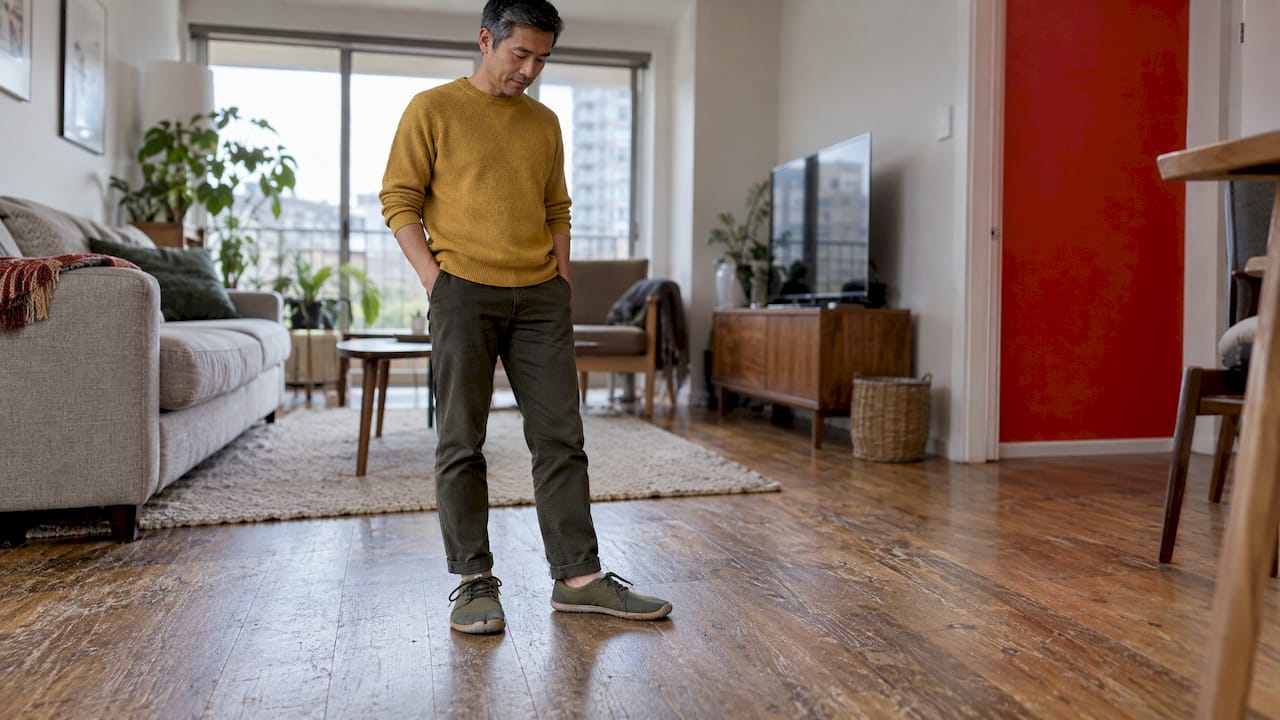
Many people find barefoot shoes feel almost like nothing on the foot. Podiatrist Kevin Springer, quoted by Ohio State’s health team, says they can build arch and foot muscles and that their light weight appeals to long-distance runners, while weightlifters like how they grip the floor.
There is a Canadian perspective on walking too. Toronto chiropodist Laura Desjardins told the Toronto Star that walking barefoot in small doses can stretch and exercise the Achilles tendon and calf, and may help stability and balance. She adds that it should happen in safe settings such as indoors or during yoga, and she advises Canadians to favor soft ground like dirt or grass over pavement.
Protection compared with going fully barefoot
A thin shoe keeps the ground feel while shielding you from glass, hot asphalt and cold. Cleveland Clinic notes that toe-style minimalist shoes protect feet compared with going barefoot and encourage shorter, more compact strides that land beneath the body. Canadian sidewalks, winter salt and gravel trails make that layer of protection worth having.
Barefoot shoes for walking
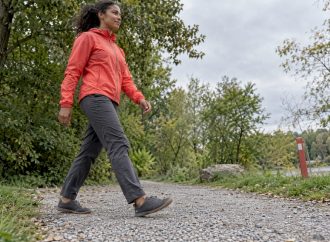
Walking is where most readers should begin, and it is where the evidence is friendliest. A walking program asks less of your Achilles tendon and the small bones of your forefoot than running does, so the load builds more gently. The trial above used a modest 3,000 to 5,000 steps a day, which is a normal day for most people.
A few habits make walking in barefoot shoes more comfortable:
- Begin on indoor floors and smooth paths before you try rough trails.
- Let your heel land lightly. Shorter steps feel more natural than long, reaching ones.
- Pair them with a few simple exercises such as toe curls and towel scrunches, where you pull a towel toward you with your toes.
- Keep a pair of regular shoes for long days on hard city pavement, airports and museum floors.
If you travel a lot, a hybrid approach is easy to pack. Our guide to the best walking shoes for travel can help you pick a supportive pair for days when you are on your feet for hours, while a minimalist pair covers relaxed strolls.
Barefoot running benefits and what to expect
Running is where the story gets more nuanced, and where a slow start matters most. A 2023 review of barefoot and minimalist running found that it tends to produce a landing on the front of the foot, lower vertical loading rates (how hard the ground pushes back), higher step rates and less energy absorbed at the knee. The same review noted more stress at the ankle and a higher injury risk when runners switch abruptly.
Other findings worth knowing:
- A 2014 systematic review found moderate evidence for lower peak vertical forces, shorter strides and faster stride frequency in barefoot running.
- A 2017 review of 15 studies with 8,399 participants found no difference in relative injury rates between habitually barefoot and shod populations, and suggested habitual barefoot runners may have fewer foot deformities.
- A 2021 update found injury rates over 26 weeks were not significantly different between conventional and minimalist shoes (37% versus 52%). Knee, shin, calf and ankle pain was higher in the minimalist group, and the authors suggest most runners limit minimalist running to about 35% of training time.
The takeaway is practical. Barefoot running changes how you load your body, and your body needs time to adapt. The American Academy of Podiatric Sports Medicine says the effects of barefoot running have not been fully documented and encourages people to work with a sports medicine podiatrist before building it into training. If running is your main goal, our comparison of walking versus running and Canada’s 150-minute target shows how to balance both.
Mixing shoe types is a sensible habit. ABC News, reporting on an Australian study, noted that runners who use many kinds of shoes report fewer injuries. Treat your minimalist pair as one tool in the rotation, not a total replacement.
Pros and cons of minimalist shoes at a glance
| What you may notice | How it works | Make it work for you |
|---|---|---|
| Stronger foot and arch muscles | Less support means small muscles do more | Add toe curls and short walks, and build up gradually |
| Better balance | Thin sole gives more ground feedback | Practice single-leg stands while brushing your teeth |
| More toe room | Foot-shaped toe box lets toes spread | Check fit at the end of the day |
| Lighter feel | Less material, less weight | Great for gym days and relaxed walks |
| Sore calves or Achilles early on | Lower heel increases load on the back of the leg | Cut back wear time and stretch calves |
| Forefoot stress if you rush | Bones and tendons adapt more slowly than muscles | Follow a stepwise plan below |
| Cold, rough ground more noticeable | Thin sole has little insulation | Choose soft surfaces and add warm socks in winter |
Who should start, and who should check first
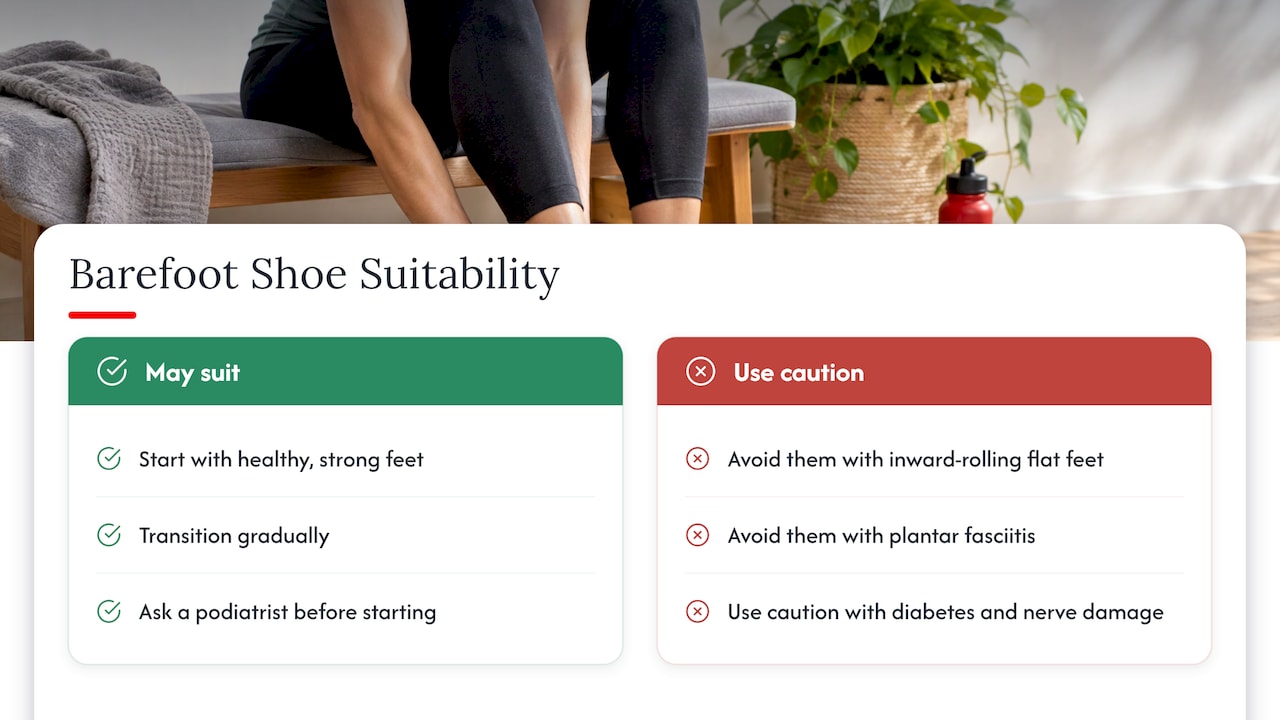
Barefoot shoes tend to suit people with healthy feet, a wish for more toe room and the patience to go slowly. A 2026 podiatry guide says they may suit people with structurally normal or high-arched feet, good foot strength and the discipline to transition gradually.
The same guide lists groups who should avoid them or use extreme caution: people with flat feet that roll inward, plantar fasciitis, Achilles tendinopathy, diabetes with nerve damage, osteoporosis, a history of metatarsal stress fractures, or significant overweight. Ohio State’s health team likewise notes that a slow transition is crucial because the shoes can bring on plantar fasciitis, which is irritation of the thick band under the arch.
If you live with diabetes or poor circulation in your legs, be especially careful. HealthLink BC warns that people with diabetes or peripheral arterial disease should not go barefoot, because reduced sensation makes injuries easier to miss and more likely to become infected. If you have any existing foot problem, ask a foot doctor, such as a podiatrist or chiropodist, for shoe recommendations before you shop. The Mayo Clinic also recommends talking with a primary care provider or sports medicine specialist before starting, particularly if you have had foot problems.
A gradual transition plan
The most repeated advice from every source we read is to go slowly. Tendons take months to adapt to a lower heel and higher load. A 2026 podiatry guide offers a 12-week walking-first protocol, which we have summarized here:
| Weeks | What to do |
|---|---|
| 1 to 2 | Wear minimalist shoes for 15 to 20 minutes of walking daily |
| 3 to 4 | Extend to 30 to 40 minutes and add toe curls, towel scrunches and single-leg balance |
| 5 to 8 | Gradually replace one walk or run session per week |
| 9 to 12 | Evaluate how your feet, calves and arches feel |
If you feel heel, arch or forefoot pain, stop, go back to supportive shoes for one to two weeks, then resume at a lower level.
Runners need an even more cautious approach. The Warne and Gruber review found that injuries during transition were 17.9 per 100 participants versus 13.4 per 100 in conventional shoes, a difference the authors called equivocal. They suggest increasing minimalist exposure by about 5% a week and trimming total running volume by 10 to 20% in the first two weeks. Their hybrid idea is to run in minimalist shoes for 10% of your daily running volume, up to 10 minutes, and raise it by 5 to 10% weekly.
The Australian study covered by ABC News found that 70% of 76 runners managed the move over 20 weeks, and the authors suggest a 10% weekly increase stretched over something like 40 weeks may help avoid pain. Desjardins goes further and says a full year of monitored foot strengthening and plyometric (jumping) training is the proper route to barefoot running.
A simple pain rule helps: if pain shows up during activity or lingers 24 hours afterward, you did too much. Dial back, and see a physiotherapist or podiatrist if it persists.
How to choose a pair
Shopping for barefoot shoes is easier once you know what to look for. Use the features from the start of this guide as your checklist:
- Sole thickness: around 5 mm or less for a true barefoot feel, or a bit thicker if you are starting out and want some buffer.
- Zero or near-zero drop: the heel should not sit higher than the forefoot.
- Flexibility: you should be able to fold the shoe and twist it.
- Toe box width: your toes should spread without touching the sides.
- Fit: try shoes on late in the day, when feet are largest, as HealthLink BC advises.
- Use: match the shoe to your activity. A gym pair, a casual pair and a trail pair do different jobs.
If you also hike, our guide to hiking boots versus trail runners in Canada explains how much sole and ankle support suits rough terrain, which is a good reminder that thin soles are not the right tool for every surface. Keep shoes clean too: our sneaker cleaning guide walks through material-first methods that suit flexible, lightweight uppers.
Socks and hygiene matter as well. A 2011 CMAJ article quoted a Toronto runner who reported foot odor and fungal infections from wearing minimalist shoes without socks. Thin, breathable socks and letting your shoes dry between wears keep things fresh.
Children and growing feet
Children’s feet develop quickly and tend to like room and flexibility. If you are choosing everyday shoes for little ones, a wide, flexible shoe fits that idea. For a broader look at everyday footwear for young children, see this footwear guidance for young children. If your child has a known foot or gait concern, a foot specialist is the right person to ask before you pick a style.
Our perspective
We love a good gear question that sends people outdoors, and barefoot shoes are a great example. The most encouraging thing about the research is that you do not have to be an athlete to feel a difference: a steady walking habit, a roomy toe box and a few foot exercises are enough to get started.
Our advice is to treat the first few months like a warm-up for your feet. Start with short walks, keep your regular shoes in the rotation, and let your body tell you when it is ready for more. Think of it as building a new skill, not flipping a switch.
We also like the hybrid mindset. A thin, flexible pair for relaxed walks and gym days, and a supportive pair for long city days or rough trails, gives you the best of both. Whatever you choose, enjoy the walk.
Alexander
Reaching readers who care about healthy movement
If you run a footwear, fitness or wellness brand and want to reach readers who are curious about how they move, we publish guest posts and banner ads. You can find the details on our advertising page.
FAQ
Are barefoot shoes good for you?
For many healthy adults, yes, when introduced gradually. Research links them to larger foot muscles, better foot posture and improved balance, and a 2025 critical review argues minimal footwear should be the default for healthy people. People with diabetes, reduced foot sensation, plantar fasciitis or Achilles problems should see a foot specialist first.
Are barefoot shoes good for walking?
Yes, walking is the easiest place to start. A four-week trial of minimalist-shoe walking improved foot posture and single-leg balance in young adults. Begin with 15 to 20 minutes a day, favor soft or smooth surfaces and increase slowly.
What are the pros and cons of minimalist shoes?
The upsides are stronger foot muscles, more toe room, a light feel and better ground feedback. The trade-offs are an adjustment period, with calf, Achilles or forefoot soreness if you rush, and less insulation on cold or rough ground. Gradual wear, a mix of shoe types and a few foot exercises keep that adjustment smooth.
How long does it take to get used to barefoot shoes?
It depends on your feet and what you do in them. A walking-first plan runs about 12 weeks, runners are advised to take 20 weeks or longer, and one Toronto chiropodist recommends a full year for barefoot running. Pain that lasts a day after activity is a signal to slow down.
Can I run in barefoot shoes?
Many people do, but the evidence on injury rates is mixed, so build up slowly. One review suggests limiting minimalist running to about 35% of training time, and sports medicine podiatrists encourage guidance before adding it to your routine.
Sources
- Barefoot Shoes: Benefits Guide 2026
- Minimalist shoes: a good choice for some, not right for everyone (Mayo Clinic News Network)
- Effects of training in minimalist shoes on the intrinsic and extrinsic foot muscle volume (2016)
- Transitioning to Minimal Footwear: a Systematic Review (2017)
- Footwear Choice and Locomotor Health Throughout the Lifespan (2025)
- A four-week minimalist shoe walking intervention (PLOS One, 2024)
- Are barefoot shoes good for you? (Ohio State Health and Discovery)
- Is it healthier to walk barefoot? Experts weigh in (Toronto Star)
- Are Minimalist Toe Shoes Good for Your Feet? (Cleveland Clinic)
- Biomechanics and Injury Prevention for Barefoot/Minimalist Running (2023)
- The Risks and Benefits of Running Barefoot or in Minimalist Shoes (2014)
- Long-Term Effects of Habitual Barefoot Running and Walking (2017)
- Update on Minimalist Running Shoes (2021)
- AAPSM Position Statement on Barefoot Running
- Who is and isn’t suited to barefoot running? (ABC News, 2023)
- Barefoot Walking 2026: Benefits, Risks and Who It’s For
- Foot Problems: Finding the Right Shoes (HealthLink BC)
- Low-tech running shoes in high demand (CMAJ, 2011)










Leave a Comment
Your email address will not be published. Required fields are marked with *