
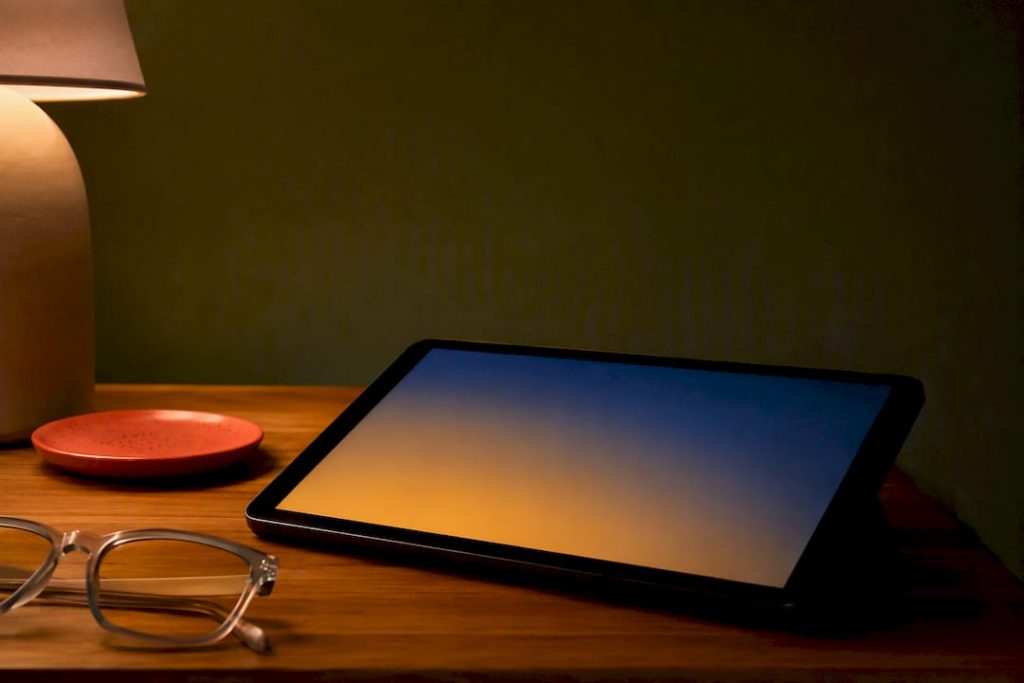
Evidence-first look at blue light glasses benefits. AAO, Cochrane and recent trials find limited eye or retinal gains. Try a two week self-test to check…
Blue light glasses deliver modest, inconsistent sleep benefits for some people but show little to no reliable evidence for reducing digital eye strain or protecting the retina. The American Academy of Ophthalmology doesn’t recommend them for routine computer use, and the Cochrane review found the evidence too weak to draw firm conclusions either way. A recent RCT meta-analysis backs that caution up: the effects trend positive but aren’t statistically significant. For most people, cheaper habits work better.
TL;DR:
- Blue light glasses show little reliable evidence of reducing digital eye strain or preventing retinal damage, with most benefits being modest and inconsistent.
- They may slightly improve sleep timing for heavy evening screen users or those with sleep issues, but current research findings are inconclusive and vary widely.
- The main factors influencing eye comfort and sleep are improving habits like blinking, reducing glare, and controlling screen brightness, rather than relying solely on blue light filtering.
- Built-in software tools and behavioral adjustments outperform lenses for sleep hygiene and eye strain relief, making them better first choices.
- Individual testing through self-trials is recommended before investing in expensive blue light glasses, as their benefits depend heavily on personal circumstances.
Table of Contents
- How Do Blue Light Glasses Actually Work?
- Do Blue Light Glasses Reduce Digital Eye Strain?
- Do Blue Light Glasses Improve Sleep?
- Can Blue Light Glasses Protect Your Retina?
- How Strong Is the Evidence, Really?
- Who Might Actually Benefit From Blue Light Glasses?
- What Are Better Alternatives to Blue Light Glasses?
- Our Team’s View at Lizard’s Lunch
- Want to Reach Readers Who Actually Research Before They Buy?
- Sources
- FAQ
How Do Blue Light Glasses Actually Work?
Blue light sits at the short end of the visible spectrum, roughly 400 to 500 nanometers, and it’s the wavelength range your eyes are most exposed to from screens, LED bulbs, and, overwhelmingly, the sun. Your retina contains a special class of cells called intrinsically photosensitive retinal ganglion cells, or ipRGCs, and they carry a light-sensitive pigment called melanopsin that responds most strongly to light around 480 nanometers. These cells don’t help you see images. They report ambient brightness to your brain’s internal clock, telling it when it’s day and when it’s night.
Blue light blocking lenses work by filtering out a portion of that short-wavelength light before it reaches your eye, either through a tint baked into the lens or a coating applied to clear lenses. Reduce the blue light hitting the ipRGCs in the evening, the theory goes, and you reduce the signal that tells your brain to stay alert. That’s the whole mechanism behind blue light glasses for sleep.
Here’s where it gets murky. There’s a real difference between the visual effects of these lenses (a tint that cuts glare, a coating that reduces reflections) and their nonvisual, circadian effects (altering melatonin release through the ipRGC pathway). Marketing copy often blurs the two, implying that anything labeled “blue light blocking” helps with both eye comfort and sleep. The Cochrane researchers point out that there’s no industry standard for how much blue light a given pair actually blocks. One brand’s “blue light glasses” might filter 10% of the relevant wavelengths; another might filter 90%. Nothing on the packaging tells you which.
Worth remembering: sunlight puts out far more blue light than any screen or LED bulb ever will. Our guide on the advantages of LED lighting breaks down how modern light sources compare to natural daylight, which puts the “danger” of screen blue light in better perspective.
A few things to keep straight about the mechanism:
- Blue light glasses filter light before it reaches the retina; they don’t change how your eyes focus or move.
- Melanopsin sensitivity peaks near 480 nanometers, not across the entire blue spectrum.
- Visual comfort (less glare) and circadian effects (melatonin timing) are separate outcomes that a lens can influence differently.
- No regulatory body sets a minimum or standard filtration percentage for consumer blue light lenses.
Do Blue Light Glasses Reduce Digital Eye Strain?
The evidence says no, not reliably. The Cochrane systematic review concluded that blue-light filtering spectacle lenses probably do not reduce short-term eyestrain from computer use. The American Academy of Ophthalmology goes further, stating flatly that there’s no evidence blue light from digital devices causes eye disease or reliably worsens eye strain in the first place. If the underlying premise is shaky, a lens designed to fix it has little to work with.
So what actually causes that gritty, tired feeling after a long stretch at your laptop? Ophthalmologists point to a much more mundane culprit: you blink less when you stare at a screen. Normal blink rate drops by roughly half during focused screen work, and each blink spreads a fresh layer of tear film across your eye. Fewer blinks means faster tear evaporation, which means dry, irritated eyes. Add in the fact that your eye muscles hold a fixed focusing distance for hours at a stretch, plus glare from overhead lighting or a bright window behind your monitor, and you’ve got the real recipe for digital eye strain. None of it has much to do with the wavelength of the light itself.
That said, blue light glasses aren’t entirely useless here. If a pair comes with an anti-reflective coating, it can cut glare from overhead lighting or window reflections, and that genuinely helps some people feel more comfortable at a screen. The tint itself, though, is doing far less work than the coating.
If eye strain is your main complaint, these steps tend to outperform special eyewear:
- Follow the 20-20-20 rule: every 20 minutes, look at something 20 feet away for 20 seconds.
- Consciously blink more often, especially during reading-heavy or video-heavy tasks.
- Keep your screen roughly 20 to 28 inches from your eyes and slightly below eye level.
- Use artificial tears if your eyes feel dry by midafternoon.
- Reduce glare with proper room lighting rather than a bright overhead fixture positioned behind you.
Pro Tip: Set a recurring timer for the 20-20-20 rule instead of relying on willpower. Most people forget within the first hour of focused work, and a timer removes the guesswork entirely.
The American Academy of Ophthalmology’s guidance on digital devices backs this up, framing blink rate and ergonomics, not blue light exposure, as the real levers for comfort. That’s a more actionable path than hoping a tinted lens does the job.
Do Blue Light Glasses Improve Sleep?
This is where the case for blue light glasses gets genuinely interesting, though still far from settled. The mechanism is sound: Harvard Health explains that melanopsin-containing ipRGCs are most sensitive to light around 480 nanometers, and evening exposure to blue-enriched light suppresses melatonin release, which can delay when you actually fall asleep. Block that wavelength range in the hours before bed, and in theory, your melatonin should rise on a more normal schedule.
Theory and clinical results don’t always line up. A 2025 meta-analysis of randomized crossover trials, using actigraphy (wrist-worn motion sensors that estimate sleep patterns objectively rather than relying on self-report) found the effects trended in a favorable direction but didn’t reach statistical significance.
By the numbers: pooled sleep onset latency showed a small average improvement with wide confidence intervals crossing zero, as did total sleep time, indicating the researchers couldn’t rule out that blue light glasses do nothing at all.
That doesn’t mean the glasses are worthless for sleep. It means the current trial evidence is too thin and too variable to say with confidence that they work for the average person. A few factors likely explain the scattered results:
- Timing varies wildly across studies. Some trials had participants wear glasses for one hour before bed; others had them wear glasses all evening starting at sunset. Circadian sensitivity to light isn’t constant across those windows.
- Filtration strength differs by product, and since there’s no labeling standard, one study’s “blue light glasses” might barely resemble another’s.
- Study designs lean small, with modest sample sizes that make it harder to detect a real but small effect, if one exists.
- Subjective and objective measures disagree. Some participants report feeling like they slept better even when their actigraphy data showed no meaningful change, a placebo or expectation effect that shows up repeatedly in this research.
That last point matters more than it might seem. If you believe a product will help you sleep, you often report sleeping better regardless of what your body actually did that night. That’s not a knock on the people running these trials. It’s a well-documented feature of how humans self-report sleep quality, and it’s part of why actigraphy and other objective measures exist in the first place.
None of this means you should ignore the idea entirely, especially if you’re a heavy evening screen user. Cleveland Clinic’s summary lands in a reasonable middle ground: blue light filtering glasses may help some people sleep better, even if they don’t prevent eye strain or improve eye health broadly. The honest takeaway is that individual response varies, and a controlled test on yourself will tell you more than any published average.
If you want to trial this properly, keep it simple. Track your typical bedtime, how long it takes you to fall asleep, and how rested you feel in the morning for one week without any change in habits. Then wear blue light glasses every evening for the following week, starting two to three hours before bed, while keeping everything else in your routine identical. Compare your notes. A sleep diary paired with consistent sleep hygiene practices will tell you far more about whether the glasses are doing anything than a single good night’s sleep will.
Can Blue Light Glasses Protect Your Retina?
Marketing claims about macular protection outrun the human evidence by a wide margin. It’s true that laboratory studies on isolated retinal cells and animal models have shown that intense, concentrated blue light exposure can damage photoreceptor cells under lab conditions. That’s a real finding, but it’s happening at light intensities and exposure durations that bear little resemblance to a person looking at a phone screen for a few hours a day.
Population-level research tells a different story. Large epidemiological studies looking at real-world screen use and age-related macular degeneration (AMD) haven’t turned up a clear, consistent link between the two. The PMC review of blue-light-filtering lenses acknowledges some potential benefit in specific contexts but is careful to flag that the supporting evidence remains limited and inconsistent across studies. That’s a meaningfully weaker claim than “blue light glasses prevent macular degeneration,” which is a line you’ll still see in some product marketing.
There’s one place where blue-light filtering does get serious clinical consideration: intraocular lens (IOL) selection during cataract surgery. Some IOLs are designed with a yellow tint that filters more blue light than a clear lens would, and ophthalmologists sometimes weigh that option for specific patients. That’s a narrow, specialized decision made between a surgeon and a patient based on individual risk factors. It has essentially nothing to do with whether you should buy $30 blue light glasses off a shopping site for daily screen use, and generalizing from one to the other is a stretch the evidence doesn’t support.
There’s also a natural process working in the background that most people never think about: your eye’s natural lens gradually yellows with age, and that yellowing itself filters an increasing amount of blue light as you get older. It’s one reason older adults are naturally less sensitive to blue-light-driven circadian effects than teenagers and young adults, whose clearer lenses transmit more of that wavelength range straight through to the retina.
Where things stand on retinal protection:
- Cell and animal studies show blue light damage only at intensities far beyond normal screen exposure.
- Population studies haven’t established a consistent link between screen use and AMD risk.
- IOL selection during cataract surgery is a specialized clinical decision, not a template for everyday eyewear choices.
- Age-related lens yellowing already reduces blue light transmission to the retina over time, independent of any glasses.
How Strong Is the Evidence, Really?
The short answer: thin, and getting only slightly less thin over time. Two sources anchor most of what we know. The Cochrane review, widely regarded as the gold standard for evidence synthesis in medicine, concluded that blue-light filtering lenses probably don’t reduce short-term computer-related eyestrain, and that evidence on sleep and macular protection is inconclusive because the underlying studies carry low certainty. The 2025 actigraphy-focused meta-analysis of randomized crossover trials found favorable but statistically non-significant pooled effects on sleep onset latency and total sleep time, with low heterogeneity across the included trials.
That combination, a rigorous systematic review finding no clear eye-strain benefit and a more recent trial meta-analysis finding a directionally positive but statistically unconvincing sleep signal, is about as close to a settled picture as this topic currently has.
| Evidence type | Key metric | Finding |
|---|---|---|
| Actigraphy RCT meta-analysis | Sleep onset latency (SOL) | Small average improvement, not statistically significant |
| Actigraphy RCT meta-analysis | Total sleep time (TST) | Small average improvement, not statistically significant |
| Actigraphy RCT meta-analysis | Heterogeneity across trials | Low heterogeneity |
| Cochrane systematic review | Short-term computer eyestrain | Probably no meaningful reduction |
| Cochrane systematic review | Sleep and macular protection | Evidence remains inconclusive |
A few methodological problems explain why the field hasn’t produced a clean answer yet. Sample sizes across the individual trials feeding into these reviews tend to be small, which limits statistical power to detect a real but modest effect. The lenses tested vary in filtration strength from study to study, since there’s no standard, so pooling results across trials means pooling apples with oranges to some degree. Timing protocols differ too. Some trials had subjects wear the glasses for a fixed window before bed; others left it open-ended. And several trials leaned on subjective sleep quality ratings rather than objective actigraphy, which introduces the placebo effect discussed earlier.
Two terms worth understanding if you read more research on this: sleep efficiency (SE), the percentage of time in bed actually spent asleep, and wake after sleep onset (WASO), the total time spent awake after initially falling asleep. Both showed no significant pooled effect in the actigraphy trials, alongside SOL and TST.
For guidance to shift meaningfully, future trials would need larger sample sizes, a standardized filtration specification so results are comparable across studies, and consistent timing protocols paired with objective measures like actigraphy rather than self-report alone. Until that happens, “inconclusive” remains the most honest word for where this evidence stands.
Who Might Actually Benefit From Blue Light Glasses?
Certain groups show a somewhat stronger signal in the existing research than the general population does. People with diagnosed insomnia, those with circadian rhythm disorders like delayed sleep phase syndrome, shift workers who use bright screens late into their working hours, and some individuals with mood-disorder-related sleep disruption appear more likely to notice a difference. That’s not a guarantee, but it’s a reasonable starting point if you fall into one of those categories and evening screen use is unavoidable for you.
If you want to find out whether they work for you specifically, run your own trial rather than taking anyone’s word for it:
- Track your baseline for one week: bedtime, time to fall asleep, and morning alertness on a simple 1 to 5 scale.
- Wear blue light glasses every evening for the next one to two weeks, starting two to three hours before bed.
- Keep everything else in your routine identical: same bedtime, same caffeine intake, same screen habits.
- Compare your notes side by side and look for a consistent pattern, not a single unusually good night.
- If you notice no real difference after two weeks, it’s reasonable to stop and put your money toward something with better evidence behind it.
When shopping, a few practical details matter more than the marketing language on the box. Look for lenses that specify an actual filtration percentage rather than a vague “blocks blue light” claim, since there’s no regulatory standard behind that phrase. Heavier amber tints filter more blue light but distort color perception, which matters if you do design or photo work in the evening. Clear-coated lenses filter less but preserve color accuracy. If you already wear prescription glasses, ask your optometrist about adding a blue-light coating to your existing lenses rather than buying a separate pair.
What Are Better Alternatives to Blue Light Glasses?
Adjusting your devices costs nothing and produces more consistent results than a lens ever will. Built-in tools like Night Shift on Apple devices and third-party software like f.lux automatically shift your screen’s color temperature warmer as evening approaches, directly reducing blue light emission at the source rather than filtering it after the fact. That’s a meaningful distinction: software changes what your screen emits, while glasses only filter what already reaches your eyes.
Behavioral changes matter just as much, if not more. Cutting screen exposure in the two to three hours before bed, getting bright light exposure during the day to reinforce your circadian rhythm, and keeping a consistent sleep and wake schedule all show more reliable effects on sleep quality than eyewear does. The color and lighting choices in your bedroom play into this too, since your whole environment sends signals to your circadian clock, not just your screen.
For eye comfort specifically, the fixes are simple and free: the 20-20-20 rule, proper screen distance, artificial tears for dryness, and desk lighting that doesn’t create glare on your monitor. Our guide to desk lamps for better eye comfort covers lighting setups that reduce strain without requiring any special eyewear at all.
- Use Night Shift or f.lux to warm your screen’s color temperature automatically each evening.
- Get outside or near a bright window during the day to anchor your circadian rhythm.
- Keep a consistent bedtime and wake time, even on weekends.
- Treat blue light glasses as a possible add-on to these habits, never a replacement for them.
Pro Tip: Layer your strategies instead of picking one. Software color-shifting plus a wind-down routine plus consistent sleep timing will do more for your sleep than any single tool, including blue light glasses, used alone.
Our Team’s View at Lizard’s Lunch
We’ve spent a lot of time sorting through wellness products that promise more than the research backs up, and blue light glasses sit in a familiar spot: not a scam, not a miracle, just an incomplete tool. Reading through the AAO’s guidance, the Cochrane review, and the newer trial data, our team at Lizard’s Lunch sees a modest possible sleep benefit for a subset of people, particularly heavy evening screen users and those with existing sleep disruption, and very little support for eye-health or retinal protection claims.
Our honest advice: don’t spend money on premium lenses before running your own two-week trial. Pair whatever you decide with the free habits that consistently outperform eyewear in the research, better sleep hygiene, warmer evening screen settings, and smarter desk lighting. If you want a next step, our pieces on sleep hygiene fundamentals and desk lighting for eye comfort are a more productive place to start than a shopping cart.
— Alexander
Want to Reach Readers Who Actually Research Before They Buy?
If you’re a brand with a product or service that belongs in front of people who read past the headline, like the readers working through this very article, An advertising program places your message in a trusted, editorial environment. We offer banner placements and guest post opportunities designed to connect brands with an audience that’s already primed to act on good information, not just skim past it. Unlike a generic ad network, you’re placing your brand alongside content readers already trust enough to finish. Check out the details and advertise with Lizard’s Lunch to see current placement options and get a quote for your campaign.
This article is general information, not a substitute for advice from a qualified doctor. Consult a qualified healthcare professional about your own circumstances before acting on anything here.
Sources
- Are computer glasses worth it? | American Academy of Ophthalmology
- Blue-light filtering spectacle lenses for visual performance, macular protection, and improving sleep quality | Cochrane
- Actigraphy RCT meta-analysis on blue-light blocking glasses (PubMed record)
- Do Blue Light Glasses Work? | Cleveland Clinic
- Can blue light-blocking glasses improve your sleep? | Harvard Health
FAQ
What Are the Downsides of Blue Light Glasses?
The main downside is spending money on a product with limited evidence behind its most common promises. Some heavily tinted lenses distort color perception, which can be a real drawback for design, photo, or video work, and there’s no labeling standard telling you how much blue light a given pair actually filters.
Who Should Consider Wearing Blue Light Glasses?
People with diagnosed insomnia, circadian rhythm disorders, or heavy evening screen use tend to show the strongest signal for potential sleep benefit in the available trials. The American Academy of Ophthalmology doesn’t recommend them for the general population’s eye health, so they’re best framed as a possible sleep aid for specific situations rather than a universal fix.
How Often Should You Wear Blue Light Glasses?
If you’re trying them for sleep, wear them consistently every evening starting two to three hours before bed, since inconsistent use makes it hard to judge whether they’re helping. For eye comfort, glare-reducing coatings can be worn anytime you’re at a screen, though the coating matters more than the tint.
How Do You Know if Blue Light Glasses Are Working?
Run a two-week self-trial: track your bedtime, time to fall asleep, and morning alertness for one baseline week, then repeat while wearing the glasses every evening. If your notes show a consistent, repeated improvement rather than one good night, that’s a genuine personal signal, even though the broader trial data remains statistically inconclusive.














Leave a Comment
Your email address will not be published. Required fields are marked with *