
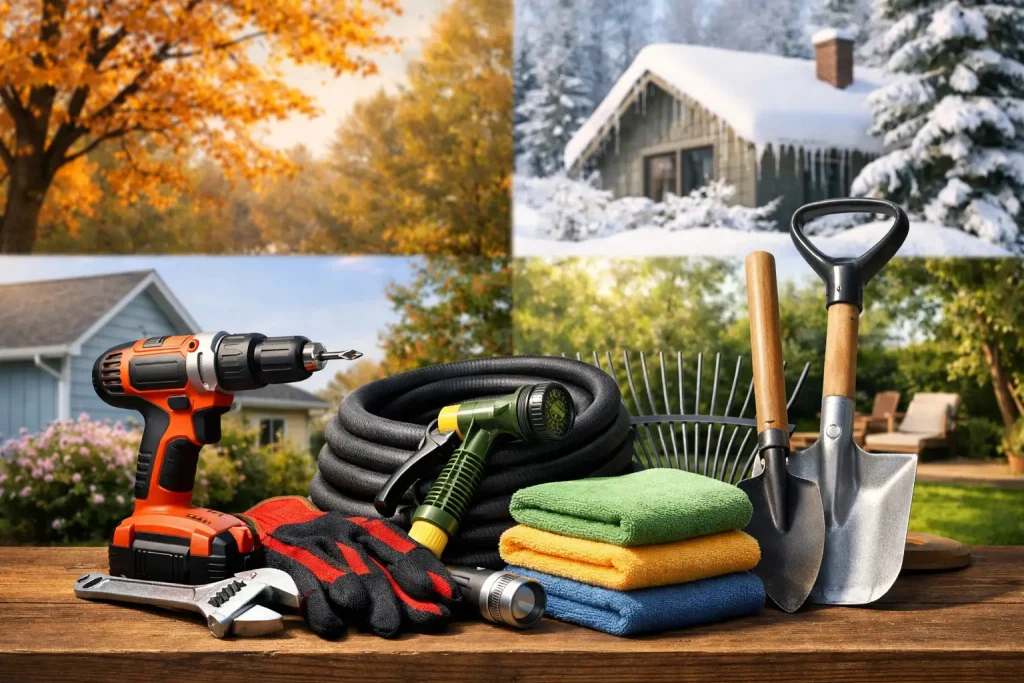
Use this guide to seasonal home maintenance to protect your roof, plumbing, HVAC, yard, and budget through every change in weather and avoid surprises.
A loose gutter, a clogged dryer vent, or a failing furnace filter rarely announces itself at a convenient time. Small maintenance jobs have a habit of becoming expensive repairs after a heat wave, heavy rain, or first hard freeze. This guide to seasonal home maintenance helps you stay ahead of those moments with practical checks that protect comfort, curb appeal, and your household budget.
You do not need to turn every weekend into a home-improvement project. The goal is to match a few high-value tasks to the weather and your home’s age, location, and systems. A newer condo in a mild climate needs a different routine than a 30-year-old house with a basement, mature trees, and snowy winters.
Start With a Simple Seasonal System
Put recurring maintenance dates on your calendar at the beginning of the year. Attach jobs to reliable seasonal cues: spring cleaning, the start of air-conditioning season, fall leaf drop, and the first cold-weather forecast. Keep a basic home file with appliance manuals, paint colors, warranty information, service records, and notes about repairs.
It also pays to walk around your property after major storms. Look for standing water, missing shingles, damaged screens, fallen branches, and changes around your foundation. Quick observations make it easier to catch a problem before it affects the interior of the house.
For safety, leave electrical-panel work, roof repairs on steep slopes, gas appliances, major plumbing leaks, and suspected mold to qualified professionals. A DIY approach can save money, but only when the job is within your skill level and does not create a larger risk.
Spring: Clear Winter’s Mess Before Rain Finds It
Spring maintenance is largely about drainage, exterior damage, and getting fresh air systems ready for warmer days. Start outside, where winter moisture often leaves the biggest clues.
Inspect the roof, gutters, and drainage
From the ground, check the roof for loose, curled, or missing shingles. Look inside the attic for water stains, damp insulation, or daylight coming through the roof deck. Those signs warrant a roofing professional, even if there is no active leak yet.
Clean leaves and debris from gutters and downspouts, then run water through them to confirm it drains freely. Downspouts should direct water away from the foundation, not dump it beside the house. If water pools near exterior walls, extend the downspout or adjust the grading. Proper drainage is one of the simplest ways to reduce basement moisture and foundation trouble.
Refresh outdoor surfaces and equipment
Check siding, trim, caulk, and exterior paint for cracks or peeling. Recaulking a small gap around a window or door is far easier than repairing water-damaged wood later. Test outdoor faucets after the freeze risk has passed, and inspect hoses for splits before using them regularly.
Service your air conditioner before the first hot stretch. Replace or clean the filter, clear leaves from around the outdoor condenser, and make sure the unit has room for airflow. If the system is blowing weakly, making new noises, or failing to cool evenly, schedule service before the busiest summer weeks.
Summer: Protect Cooling, Water, and Outdoor Living Areas
Summer puts pressure on air conditioning, decks, lawns, and plumbing. It is also a good time to spot exterior issues in dry, bright conditions.
Check your HVAC filter monthly during heavy use. A dirty filter can restrict airflow, make rooms feel uneven, and force the system to work harder. Filter schedules vary by household: homes with pets, allergies, or frequent AC use may need more frequent changes than a lightly used system.
Walk through bathrooms, the kitchen, laundry area, and basement to look for slow leaks under sinks, around toilets, and behind appliances. Watch your water bill, too. An unexplained increase can point to a running toilet, irrigation leak, or hidden plumbing issue.
Inspect decks, porches, railings, and stairs for loose boards, raised nails, splinters, or soft spots. Wash away mildew where needed, then decide whether the surface needs sealing or staining. Wood maintenance depends on sun exposure and the product used, so follow the manufacturer’s recommendations instead of applying a finish every year by default.
Summer is also the right season to trim branches that rub against the roof, siding, or power lines. Keep tree work modest if you are handling it yourself. Large limbs and anything near electrical lines belong to an insured tree service.
Fall: Prepare the House for Cold and Wet Weather
Fall is the most valuable maintenance season for many US homeowners because it is the last comfortable window to prepare for rain, ice, and freezing temperatures. Focus on keeping water out, heat in, and equipment ready.
Get heating systems and safety devices ready
Schedule a furnace, boiler, or heat pump inspection before you rely on it every day. Replace the filter and test the thermostat. If you use a fireplace, have the chimney inspected and cleaned as recommended for your type of fuel and frequency of use. Never assume a chimney is safe because it looks clean from below.
Test smoke alarms and carbon monoxide alarms, replacing batteries if your units require them. Check expiration dates as well. Many alarms must be replaced entirely after a set number of years, even if the test button still works.
Seal drafts and protect plumbing
On a windy day, feel around windows, exterior doors, attic hatches, and utility penetrations for drafts. Add weatherstripping where moving parts meet and caulk stable gaps around frames. These small fixes can improve comfort, though older windows with failed seals or rotted frames may need a more permanent repair.
Disconnect garden hoses, drain them, and shut off exterior faucets if your home has interior shutoff valves. In colder regions, insulate exposed pipes in unheated areas such as crawl spaces, garages, and basements. Know where the main water shutoff is before an emergency, not during one.
After leaves finish falling, clean gutters again. This second cleanup often matters more than the spring one because trapped wet leaves can block drainage just as winter storms arrive.
Winter: Watch the Systems Working Hardest
Winter maintenance is less about major outdoor projects and more about monitoring. Keep pathways clear, manage moisture, and respond quickly to warning signs.
Check ceilings, window frames, and attic spaces after snow or heavy rain for damp spots. If ice dams form along roof edges, do not attack them with sharp tools or salt products that can damage roofing and landscaping. Improve attic insulation and ventilation over time, and consider professional removal when heavy ice creates an immediate risk.
Keep indoor humidity balanced. Air that is too dry can be uncomfortable, but excessive humidity can create condensation on windows and encourage mold. A small hygrometer can help you see whether the issue is humidity, drafts, or poor ventilation.
Clean the dryer lint screen after every load and inspect the exterior vent flap periodically. If clothes take longer to dry, the vent may be restricted. Lint buildup is a fire hazard, making this one of the least glamorous and most worthwhile jobs on the list.
During a deep freeze, open cabinet doors below sinks on exterior walls to let warm air circulate. Letting a faucet drip may help in vulnerable plumbing situations, but it is not a substitute for insulation, heat, and a properly winterized home.
A Year-Round Home Maintenance Checklist
Some tasks do not belong to one season. Review these throughout the year:
- Replace HVAC filters based on use, pets, and manufacturer guidance.
- Test smoke and carbon monoxide alarms regularly.
- Check under sinks and around appliances for leaks.
- Keep gutters, drains, and grading clear enough to move water away from the home.
- Review your home insurance coverage after renovations, major purchases, or changes in local weather risks.
Do not let the checklist become a source of guilt. Prioritize work that prevents water intrusion, fire risk, structural damage, and system failure first. Cosmetic tasks can wait when the budget is tight.
A well-maintained home is not one that never needs repairs. It is one where you notice small changes early, make smart calls about what to handle yourself, and give the expensive systems in your home a better chance to last. Pick one season, schedule its highest-priority tasks, and let that first bit of momentum carry the rest of the year.


















Leave a Comment
Your email address will not be published. Required fields are marked with *