
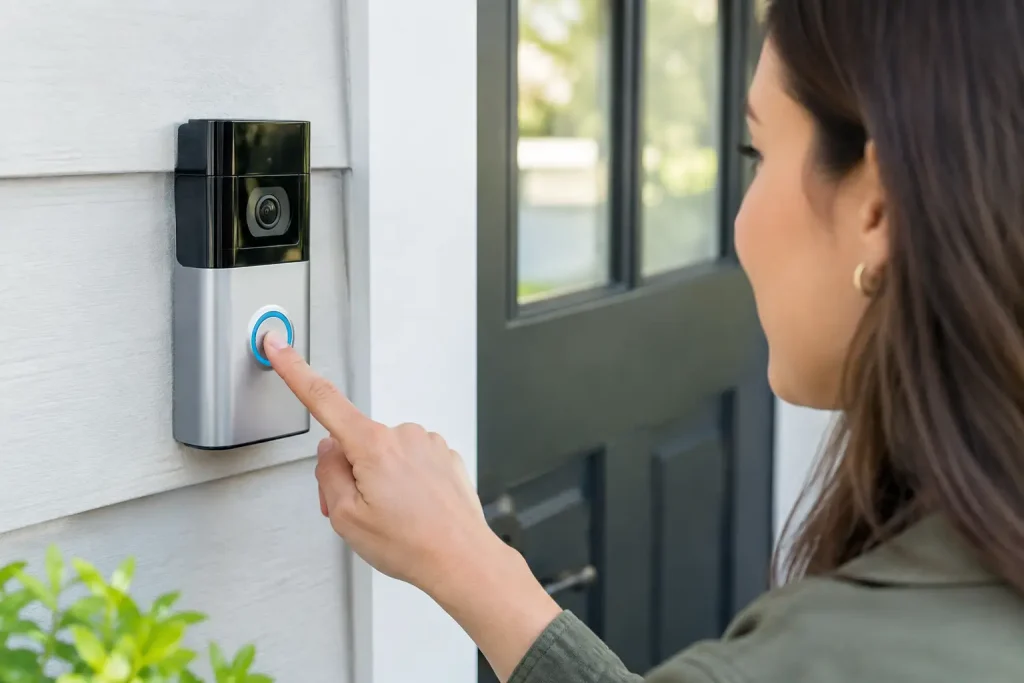
Our Ring doorbell review covers video quality, subscriptions, installation, privacy, and which homes get the most value from Ring security cameras for busy homes.
A package disappears from the porch, a delivery driver needs a signature, or someone rings while you are upstairs with headphones on. Those are the small, everyday moments that make a video doorbell feel less like a gadget and more like useful home equipment. This Ring doorbell review looks at what Ring does well, where the costs and compromises show up, and whether it makes sense for your front door.
Ring Doorbell Review: The Short Answer
Ring remains one of the easiest video-doorbell systems to recommend for people who want recognizable smart-home security without building a complicated camera setup. Its doorbells are widely available, simple to operate from a phone, and supported by a large lineup that includes battery, wired, and premium models. The basic experience is clear: motion or a doorbell press sends an alert, you open the app, and you can see and speak to the person outside.
The catch is that Ring works best when you are comfortable with a cloud-connected security product and a possible monthly subscription. Live video and instant alerts are useful without a plan, but recorded event history, richer notifications, and other features are typically tied to Ring Protect service. For a home that needs reliable recorded footage, that ongoing expense deserves as much consideration as the doorbell’s purchase price.
For many households, especially those already using Alexa devices, Ring is a convenient and capable choice. For buyers who want strictly local storage, no recurring fees, or a camera that performs perfectly in every difficult lighting condition, it may not be the ideal fit.
What Ring Doorbells Do Especially Well
Fast, practical alerts
Ring’s greatest strength is convenience. The app generally makes it easy to receive doorbell presses and motion alerts, view live video, use two-way talk, and check a recent event when something looks off. Alerts can also appear on compatible Echo speakers and smart displays, which is handy when your phone is charging in another room.
That convenience matters more than a long specification sheet. A camera only helps if you actually see the alert and can understand what is happening. Ring’s notifications, live view controls, and familiar app layout keep the core tasks accessible for first-time smart-home buyers.
A model for almost every entryway
The Ring range gives shoppers meaningful choices. Battery-powered doorbells are a strong option for renters, older homes, and locations where running wiring would be inconvenient. Wired models can provide continuous power and avoid the routine of taking down a device to recharge it. Higher-end options may add sharper video, improved low-light viewing, wider framing, or more advanced motion detection.
The right version depends less on buying the most expensive model and more on your doorway. A long driveway may benefit from more precise motion controls. An exposed front porch may call for a wired installation and stronger weather resistance. A narrow apartment hallway may simply need a compact doorbell with dependable two-way talk.
A broad security ecosystem
Ring is not limited to doorbells. Its ecosystem includes indoor and outdoor cameras, alarm components, lighting, and accessories. That can be a real advantage if you expect to expand later. Rather than managing several unrelated apps, you can keep the front door, backyard, and entry sensors within one system.
This is also where Ring can be a particularly good match for Alexa households. Voice announcements for a visitor or motion event can make the system feel more integrated into daily routines. It is not a requirement, but it adds value if your home already uses Amazon’s smart-home platform.
Video Quality and Daily Performance
Most current Ring doorbells deliver clear enough video to identify a visitor standing near the door in daylight. The better models provide improved resolution and a taller or wider view, helping you see packages closer to the threshold as well as faces. That extra vertical coverage is worth prioritizing if package delivery is your main reason for buying.
Night video is useful, though expectations should be realistic. Porch lights, streetlights, and reflective surfaces can affect any camera. A brightly backlit visitor can also be harder to see clearly. If your entrance is especially dark, adding a motion-activated porch light can improve both video and the overall security of the area.
Two-way audio is usually clear enough for quick conversations: asking a courier to leave a package, telling a guest you will be right there, or discouraging an unexpected solicitor. Like any Wi-Fi camera, though, performance depends on signal strength. A weak wireless connection near the front door can lead to delayed alerts, slow live video, or choppy audio.
Before buying, check Wi-Fi coverage where the doorbell will sit. In larger homes or houses with brick, stucco, metal, or dense exterior walls, a mesh node or Wi-Fi extender may be a smarter purchase than upgrading to a more expensive doorbell.
Battery vs. Wired: Choose for Your Routine
Battery doorbells are the simplest way to get started. They can be mounted with basic tools and work where there is no existing doorbell wiring. This makes them appealing for renters and homeowners who want a quick installation. The compromise is maintenance. Battery life varies considerably with weather, motion activity, live viewing, and settings, so heavy-traffic locations need more frequent charging.
Wired models are better for homeowners who already have compatible doorbell wiring or who are willing to hire an electrician. Constant power means less upkeep and may support features that are more demanding on the device. Installation can take more effort, but the day-to-day ownership experience is usually easier.
There is no universal winner. Choose battery power for flexibility and a low-friction setup. Choose wired power when reliability and minimal maintenance matter most.
The Subscription Question Is the Biggest Trade-Off
A Ring doorbell can notify you, provide live video, and let you talk to a visitor without an ongoing plan. But the product becomes much more useful when it can save and review recorded events. Ring Protect plans are designed for that purpose, with options and features that can vary by plan and location.
That means buyers should avoid treating the subscription as an afterthought. If you only want to answer the door remotely once in a while, basic live features may be enough. If you want to review a delivery, document suspicious activity, or check what happened while you were away, recorded history is likely essential.
Consider the long-term cost before choosing a model. A lower-priced doorbell plus several years of service can cost more than expected. On the other hand, the subscription may be worthwhile if it replaces the uncertainty of wondering whether an important event was captured.
Privacy and Neighborhood Considerations
A doorbell camera points toward an area where neighbors, pedestrians, and delivery workers may pass. Use motion zones to focus on your porch, walkway, or driveway instead of recording a wide section of the street. Turning on privacy zones, when available, can also help block areas you do not need to monitor.
It is wise to review account security settings as soon as the device is installed. Use a unique password, enable two-step verification, and keep the app updated. If more than one person in the household needs access, share it through the app rather than sharing your primary login.
Video doorbells are best used for practical awareness, not constant surveillance. Clear settings and respectful camera placement help you get the benefits without making the front porch feel overly monitored.
Who Should Buy a Ring Doorbell?
Ring is a strong pick for homeowners who want an approachable first security camera, busy families receiving frequent deliveries, and Alexa users who value smart-display alerts. It also makes sense for renters when a removable battery model and landlord rules allow installation.
It is less compelling for shoppers who refuse monthly fees, want fully local video storage, or have poor Wi-Fi at the entrance. Those buyers should compare systems built around local recording or budget for improving their home network first.
A Ring doorbell earns its place when it solves a real front-door problem: missed visitors, uncertain deliveries, or the need to check an alert without opening the door. Pick the power source that fits your home, test your Wi-Fi before mounting it, and decide upfront whether recorded video is worth the recurring cost. That approach will do more for your satisfaction than chasing the flashiest model on the shelf.
















Leave a Comment
Your email address will not be published. Required fields are marked with *