
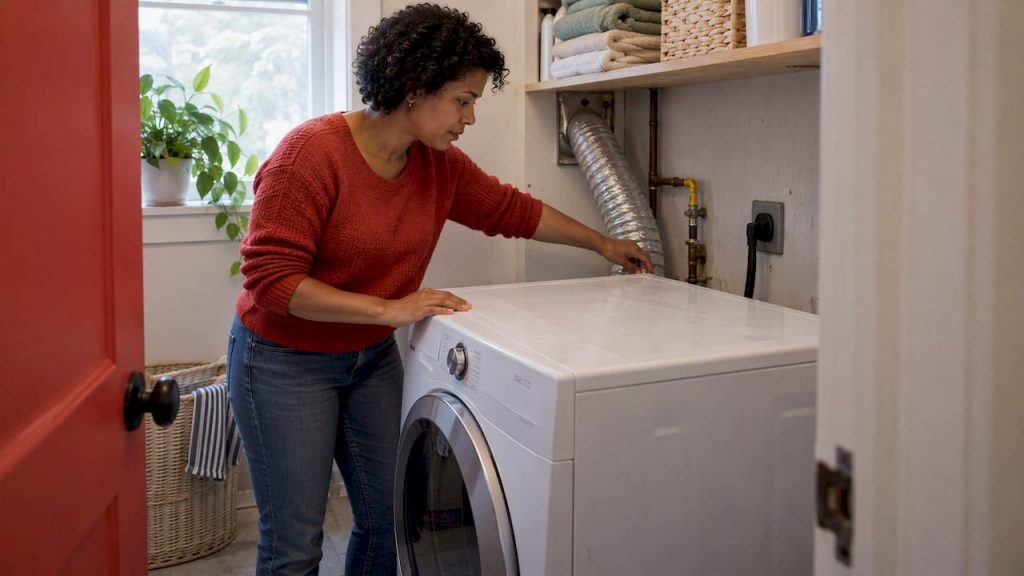
Gas or electric dryer? Compare running cost, upfront price, hookups, venting, safety and heat pump options for Canadian homes, with a clear way to choose.
If your home already has a gas line and you plan to stay for years, a gas dryer usually wins on running cost and drying speed. If you have only a 240-volt outlet, or you want the lowest price on the shelf, an electric dryer is the simpler, cheaper-to-install choice. And if you live in a condo or a laundry room with no outside wall, a ventless heat pump model may be the smartest pick of all.
That is the short version. The rest of this guide walks through the details that actually move the decision: what each type costs to buy, install and run, what your home needs to have in place, how safety rules differ, and where the new generation of heat pump dryers fits. We wrote it so you can walk into a store, or open a listing, already knowing which way you lean.
TL;DR
- Gas dryers cost more up front and need a gas hookup, but they are generally cheaper to run and dry clothes a little faster, according to a Canadian energy retailer’s comparison.
- Electric dryers cost less to buy and install, and most need only a heavy-duty 240V outlet.
- Heat pump and condensing dryers are electric, ventless and far more efficient than standard electric models, which makes them a strong fit for homes without a gas line or an exterior vent.
- Gas dryers need proper venting outdoors and a working carbon monoxide detector nearby; electric models remove the combustion risk entirely.
- Your existing hookups are the deciding factor: use what your laundry room already has unless you are renovating anyway.
Table of Contents
- How the two dryers actually differ
- Upfront cost: what you pay at the store and on install day
- Running costs: where gas pulls ahead
- Drying time and fabric care
- Energy efficiency: what the label does and does not tell you
- Gas vs electric dryer at a glance
- Hookups, outlets and venting
- Safety: what to know before you choose
- Heat pump dryers: the third option
- Which one should you choose?
- Common mistakes to avoid
- Perspective: what we think
- Want to reach readers who are making home decisions like this one?
- FAQ
- Sources
How the two dryers actually differ
Both machines tumble your clothes in a rotating drum while a fan pushes warm air through. The difference is where the heat comes from. A gas dryer burns natural gas or propane to heat the air, while an electric dryer passes current through a heating element, a coil that glows much like a toaster’s. Both types still use electricity to turn the drum and fan and to run the lights and controls, as Whirlpool’s explainer points out. That is why a gas dryer still needs a regular 120V outlet beside its gas connection.
That single difference ripples into everything else:
- Speed. A gas flame heats up fast, so gas dryers tend to finish loads slightly sooner.
- Temperature. Electric dryers generally run at lower temperatures, which is gentler on fabrics but means a longer cycle, according to Building Decarbonization Canada’s home electrification toolkit.
- Price. Gas models carry a higher sticker price, and the hookup adds to it.
- Home requirements. Gas needs a gas line and venting outdoors; electric needs a 240V circuit, and some models need no vent at all.
Think of it as a trade: gas spends more once and saves a little on every load, while electric spends less once and pays a little more each time you press start.
Upfront cost: what you pay at the store and on install day
Gas dryers typically cost more to buy than comparable electric dryers, as the Direct Energy comparison notes. The same source says electric models cost less to buy and to install. So if your budget is tight this month, electric has the edge on day one.
Installation is where homeowners get surprised. An electric dryer in a house that already has a dryer outlet is often a plug-and-go job. A gas dryer needs a gas connection, and that work should be quoted by a licensed gas fitting contractor. If your home has no gas line at the laundry room at all, running one is a separate project that can erase years of operating savings. In that situation, the honest answer is usually electric.
A few practical questions to ask before you buy:
- Is there already a gas shut-off valve behind the old dryer, or only an outlet?
- If the outlet is there, is it 240V, and what does its plug look like? Older homes and newer ones can differ, so have an electrician confirm it matches the new machine.
- How long is the vent run to the outside, and is it in good shape?
- Will delivery include removing the old unit, and does the retailer’s installer handle gas, or only electric?
Write the answers down. They will tell you more about which dryer to buy than any spec sheet.
Running costs: where gas pulls ahead
The case for gas rests on operating cost. According to Direct Energy, gas dryers are cheaper to run and dry faster than electric ones. Because natural gas is generally a cheaper way to make heat than electricity, a gas dryer that finishes a load sooner tends to cost less per cycle.
But “cheaper” depends on your local rates, and Canada is not one market. Electricity prices vary widely by province, and so do natural gas delivery charges and fixed monthly fees. Two households with identical dryers can see different savings. Propane, which some rural homes use, follows its own pricing and delivery logistics.
Here is a simple way to estimate your own numbers without guessing:
- Look at the label inside the door of any dryer you are considering. Electric models list a wattage or amperage; gas models list a gas input rating.
- Find your electricity rate in cents per kilowatt-hour and your gas rate on your latest bills.
- Estimate how long your typical load runs, and how many loads you do per week.
- Multiply it out. Electric cost per load is the kilowatts used times hours times your rate. For gas, add the gas consumed to the small amount of electricity the drum and fan use.
A household doing two or three loads a week may find the yearly gap modest, perhaps the price of a few take-out dinners. A family doing a load a day will notice the difference far more. The more you dry, the more the operating cost matters and the more a gas dryer’s higher price makes sense.
If you are trimming your overall bills, our guides on energy saving tips and how to lower your electric bill at home put the dryer in context alongside heating, lighting and other big loads.
Drying time and fabric care
Gas dryers heat quickly and reach a higher temperature, so they usually shave some minutes off a cycle. Whirlpool describes gas dryers’ dry times as slightly faster, and that is the fair way to put it: you will notice it on heavy loads like towels and jeans, less so on a handful of t-shirts.
Electric dryers take longer but run cooler. The Building Decarbonization Canada toolkit notes that those lower temperatures are less harmful to fabrics. If you wash a lot of delicate knits, athletic wear with elastic, or children’s clothes you want to last through a few siblings, the gentler heat is a real benefit.
Heat pump dryers take that idea further. They dry at low temperatures and recycle the heat, so cycles can be long, but clothes come out in good shape. If you are patient and run your dryer overnight or while you are at work, that long cycle is not a drawback. If you routinely need a load dry in forty minutes before a school run, a gas or standard electric dryer will suit your life better.
Energy efficiency: what the label does and does not tell you
It is tempting to ask which type is “more efficient,” but the answer depends on what you measure. Gas is generally cheaper per unit of heat. Heat pump dryers, though, are the efficiency champions in terms of energy consumed. According to Direct Energy, electric heat pump dryers use 20 to 60 percent less energy than standard electric dryers, which is a wide range that depends on the model and how you use it.
Regulation is also moving. Natural Resources Canada has been considering aligning dryer energy standards with ENERGY STAR criteria, a proposal it estimates would cut dryer energy use by about 25 percent. Whatever the final rules look like, the direction is clear: efficient models are becoming the norm, so looking for an ENERGY STAR mark when you shop is a sound habit.
For a wider look at why this matters for the whole house, see our piece on why energy efficiency matters for your home.
Gas vs electric dryer at a glance
| Factor | Gas dryer | Standard electric dryer | Heat pump or condensing dryer |
|---|---|---|---|
| Purchase price | Higher | Lower | Varies by model; often the highest tier |
| Installation | Needs a gas line, gas fitting and an electrical outlet | Needs a 240V outlet in most cases | Some models plug into a standard 120V outlet |
| Running cost | Generally the lowest of the three for heavy use | Higher than gas | Lower energy use than standard electric |
| Drying speed | Slightly faster | Slower | Slowest, but gentle on fabric |
| Venting | Must vent outdoors | Usually vented outdoors | No exterior vent needed |
| Combustion risk | Yes, needs venting and CO detector | None | None |
The heat pump column draws on the Building Decarbonization Canada toolkit, which notes that some models now plug into standard 120-volt outlets, and that these ventless machines use lower drying temperatures.
Hookups, outlets and venting
This is the section that settles most decisions.
Electric dryers and the 240V outlet
Most electric dryers use a heavy-duty 240V outlet, according to the toolkit above. That is not the same as the outlets you use for a phone charger. If you are moving from a gas dryer into a home with no 240V circuit, you will need an electrician to add one, which is a cost to price in. If you are replacing an existing electric dryer, the outlet is already there and you simply match the plug.
Can you use an electric dryer if your home has gas? Yes. A gas line in the house does not force a gas dryer. You can run an electric dryer on a 240V circuit regardless of whether the furnace and stove burn gas.
Gas dryers and the gas line
A gas dryer needs both a gas and an electrical hookup, as Direct Energy explains. The electrical side is the ordinary 120V connection for the drum, fan and controls. The gas side should be done by a licensed gas fitting contractor, who can also check for leaks when the work is finished. This is not a job to try with a wrench and a YouTube video.
Vented and ventless
Vented dryers push hot, moist air outdoors through a duct. Ventless dryers use condensation to collect the water vapour, which then drains or is emptied from a tank. The toolkit notes that electric ventless dryers, including condensing and heat pump models, need no exterior vent, which gives real flexibility for apartments, basement laundry rooms and interior closets.
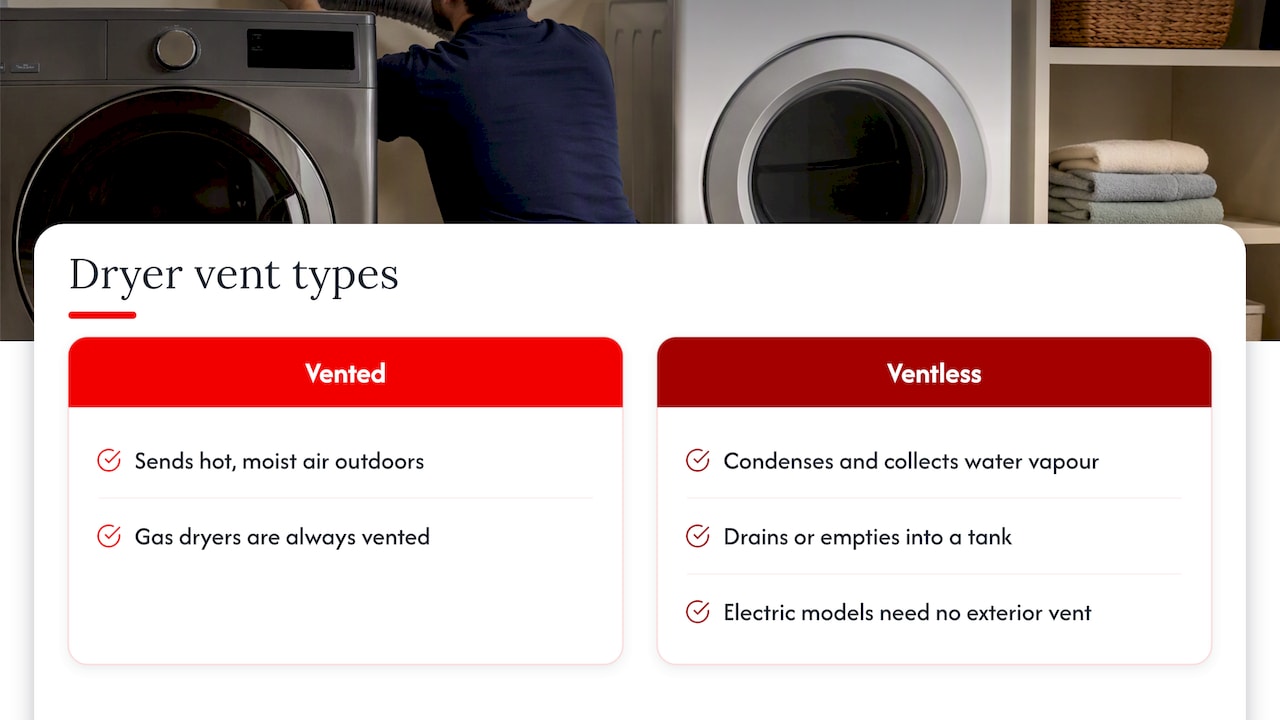
Gas dryers are always vented. In building-code terms, a presentation of the 2010 national model code materials states that exhaust ducts connected to laundry-drying equipment must discharge directly outdoors. Local codes and the current code edition in your province may add details, so confirm with your municipality or installer.
Safety: what to know before you choose
For an electric dryer, safety mostly means buying a certified product and caring for the vent and lint trap. Health Canada advises that electrical products, dryers included, must meet national safety standards and carry a certification mark such as CSA, cUL or cETL. Check for one of those marks before you buy, especially when shopping secondhand or from an unfamiliar seller.
For a gas dryer, there is one more layer. Burning fuel produces carbon monoxide, so the exhaust must go outside and the appliance should be serviced. Government of Canada guidance says to install at least one carbon monoxide detector on every level, especially outside sleeping areas, and to have a qualified technician inspect and clean fuel-burning appliances, vent pipes and chimney flues once a year.
Building Decarbonization Canada goes further and calls electric dryers the safer option because they remove the risk of carbon monoxide and carbon dioxide emissions inside the home. Properly installed and maintained gas dryers are widely used, but that point is worth weighing if you have young children, a tightly sealed home or a laundry room next to bedrooms.
Whatever you choose, a few habits help:
- Clean the lint screen after every load.
- Clear the vent duct of lint on a regular schedule, and replace crushed or kinked flexible duct.
- Never run the dryer with the vent blocked or disconnected.
- Keep the area around the machine free of stored items.
Heat pump dryers: the third option
The gas-versus-electric debate no longer covers everything on the shelf. Heat pump and condensing dryers are electric, ventless and notably efficient. The toolkit calls them more energy-efficient alternatives that use lower drying temperatures, which can be gentler on clothes and save energy.
Who should seriously consider one?
- Condo and apartment dwellers without a path to an outside wall.
- Homeowners going electric who are retiring a gas furnace or stove and do not want a gas line anywhere.
- Households with rising electricity costs who want to cut kilowatt-hours rather than switch fuels.
The trade-offs are longer cycles and, often, a higher purchase price. Some models now plug into a standard 120V outlet, which removes the electrician bill in homes without a 240V circuit. That detail is worth checking on the specific model’s spec sheet before you commit.
If you are thinking about the wider shift to electric living, our guide to why electric vehicles are worth it covers the same logic on the driveway side. And if you have ever argued about fuel in the backyard, our electric versus gas grill comparison works through a similar set of trade-offs.
Which one should you choose?
Start with what your laundry room already has, then adjust for how you live.
Choose a gas dryer if…
- A gas line already runs to the laundry area, or you are renovating and can add one at a reasonable cost.
- You do many loads a week, so lower running costs add up.
- You value faster cycles for bulky items.
- You will keep the machine for many years, and you will keep a CO detector on that level and service the appliance annually.
Samsung’s buying guide makes a similar point: if a gas line is already present, a gas dryer may deliver long-term savings.
Choose a standard electric dryer if…
- You only have a 240V outlet, and no gas line.
- You want the lowest purchase price and the simplest install.
- You do a few loads a week, so the running cost gap is small.
- You prefer gentler heat on your fabrics and do not mind slower cycles.
Choose a heat pump or condensing dryer if…
- You cannot vent outdoors, or do not want to cut a hole in a wall.
- You want to use as little energy as possible.
- You are moving away from gas throughout your home.
- You are happy to trade speed for efficiency and fabric care.
A quick worked example
Imagine two homes. In the first, a detached house in a city with a gas line behind the dryer, a family of five runs a load almost every day. A gas dryer fits: the hookup exists, the volume is high, and the faster drying keeps up with the towels. In the second, a downtown condo with a 240V outlet, no gas and a laundry closet with no exterior wall, one person does two loads a week. A ventless electric model is the realistic option, and the low volume means the higher running cost barely registers. Same question, different answers, and the difference comes from the room, not the brand.
Common mistakes to avoid
- Buying before measuring. Dryers vary in depth and width, and vent connections sit in different spots. Measure the space, including the door swing.
- Ignoring the vent. A beautiful new dryer on a clogged, long or crushed duct will run slowly and waste energy.
- Assuming gas is always cheaper overall. If you need a new gas line, the installation cost can outweigh the savings for a long time.
- Skipping the safety basics. A gas dryer without a nearby working CO detector is a gap you should close the day it is installed.
- Forgetting the certification mark. Look for CSA, cUL or cETL on the product.
Perspective: what we think
We look at appliance choices the way we look at most home decisions: the best option is the one that fits the house you actually have, not the one that wins an argument online. Across the guides we publish on energy, home upgrades and everyday gear, one pattern repeats. The cheapest-to-run product is rarely the best purchase if it needs an expensive change to your home, and the cheapest-to-buy product is rarely the best if you use it every day.
For dryers, that means we lean toward using your existing hookup. If you have gas at the machine, a gas dryer is a sensible, long-term choice. If you do not, an electric dryer is the practical answer, and a heat pump model is worth a careful look as electricity becomes the default fuel for more Canadian homes. Either way, give yourself the small gift of a carbon monoxide detector, a clean vent and a few minutes with your own utility bills.
— Alexander
Want to reach readers who are making home decisions like this one?
Our readers come to us for practical guidance on home, tech, travel and everyday life. If you run a brand or service that fits those interests, we offer banner ad placements and guest post opportunities. You can see the options on our advertise with us page.
FAQ
Is a gas dryer cheaper to run than an electric dryer?
Generally yes. Gas dryers are cheaper to run and dry faster, according to Direct Energy’s comparison. The exact saving depends on your province’s electricity and gas rates and how many loads you run. Use your own bills and the dryer’s rating label to estimate it.
Do electric dryers need a special outlet?
Most do. Most electric dryers use a heavy-duty 240V outlet, as the Building Decarbonization Canada toolkit states. Some newer heat pump models plug into a standard 120V outlet instead. Check the spec sheet and ask an electrician if you are unsure what your wall provides.
Can I use an electric dryer if my house has gas?
Yes. A gas line in your home does not require a gas dryer. If you have a 240V outlet at the laundry location, an electric dryer will work, and it avoids the need for a gas hookup and its safety checks.
Are gas dryers safe?
When installed by a licensed professional, vented outdoors and serviced, gas dryers are used safely in many homes. Government of Canada guidance recommends a carbon monoxide detector on every level and an annual inspection of fuel-burning appliances by a qualified technician. Electric dryers remove the combustion risk altogether.
Do I need a vent for every dryer?
No. Gas dryers and most standard electric dryers vent outdoors, but electric condensing and heat pump dryers are ventless, according to the toolkit above. They collect moisture as water instead of exhausting it, which suits apartments and interior laundry rooms.
Sources
- Electric vs. gas dryers: which is best? (Direct Energy)
- Gas vs. Electric Dryers: What’s the Difference? (Whirlpool Canada)
- Canada’s Home Electrification Toolkit: Dryers (Building Decarbonization Canada)
- Clothes dryers (Natural Resources Canada)
- NBC Part 6 – HVAC, NPC – Plumbing (National Research Council Canada)
- Carbon monoxide: What’s the big deal? (Canada.ca)
- Electrical product safety (Health Canada)
- Gas vs. Electric Dryers: Which is Better? (Samsung US)

















Leave a Comment
Your email address will not be published. Required fields are marked with *