
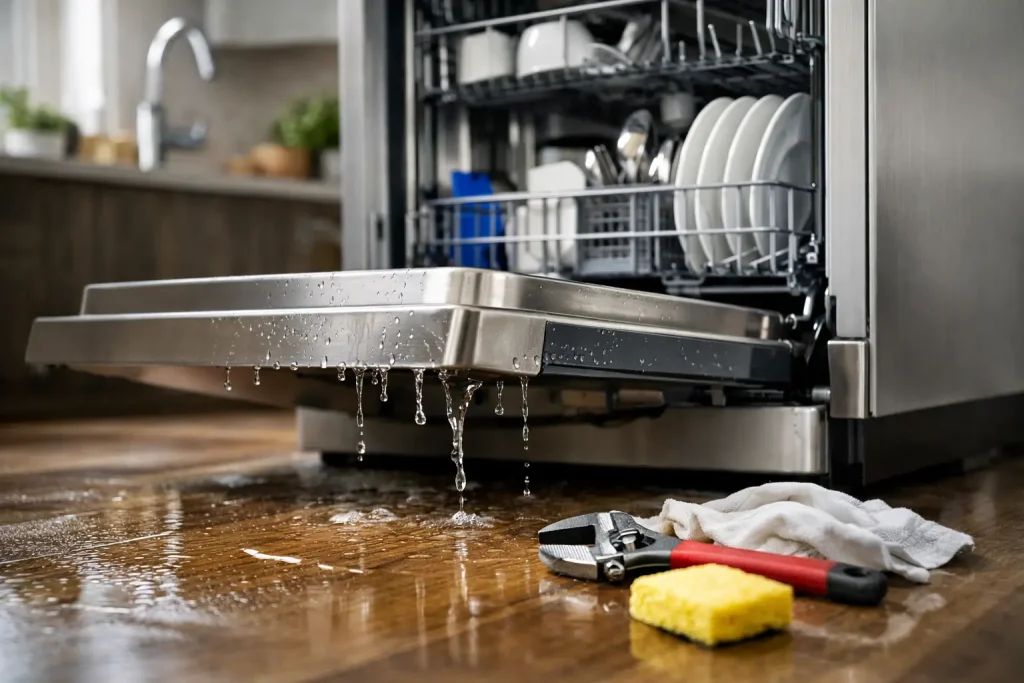
Wondering why is my dishwasher leaking? Find the common causes, safe checks to try, and signs a repair pro should handle before damage spreads at home.
A dishwasher leak rarely starts as a dramatic flood. More often, it is a damp spot below the door, a musty smell in the cabinet beside the machine, or a small puddle that returns after every cycle. If you are asking, “why is my dishwasher leaking,” act before that minor clue turns into warped flooring, damaged cabinets, or mold.
First, stop the cycle if water is actively escaping. Turn off the dishwasher at the breaker if water is near an outlet, exposed wiring, or the electrical connection under the sink. Then place towels around the base and identify when and where the water appears. That detail tells you far more than the size of the puddle.
Why Is My Dishwasher Leaking? Start With the Leak Location
A leak from the front of the dishwasher usually points to the door, gasket, detergent, or loading pattern. Water beneath the center or back of the machine more often comes from a hose, pump, inlet valve, or internal seal. Water in the cabinet under the sink may be a drain-hose or plumbing-connection problem rather than a fault inside the appliance.
Run a short cycle only after the area is dry and safe to inspect. Watch the machine during filling, washing, draining, and the first few minutes after the cycle ends. Do not pull a running dishwasher out of its opening or touch electrical parts. If you cannot see the source, a phone flashlight and a dry paper towel placed near suspected connections can help reveal the first point of moisture.
Water leaking from the door
The rubber door gasket is one of the most common culprits. It creates a watertight seal around the tub, but food residue, grease, a small tear, or a section pulled loose from its channel can let wash water escape. Wipe the gasket with warm, soapy water, then inspect it closely for cracks, flattened sections, and gaps.
Also check whether the dishwasher is level. A machine that tilts forward can send water against the door more aggressively than intended. Most models have adjustable front feet, though correcting the level may require sliding the unit out. If the dishwasher was recently installed or flooring was replaced, leveling is especially worth checking.
A crowded lower rack can cause a front leak too. Large pans, cutting boards, or utensils may block the spray arm, redirecting a strong stream directly at the door. Before assuming a part has failed, make sure both spray arms spin freely and nothing is protruding through the racks.
Too much detergent or the wrong product
Foam can force its way past an otherwise healthy door seal. Using regular dish soap by mistake creates an obvious mountain of suds, but too much dishwasher detergent, an incompatible detergent, or a rinse-aid setting that is too high can also contribute to excess foaming.
If you see lots of bubbles, cancel the cycle and remove as much foam as possible with towels. Run one or two rinse-only cycles without detergent. Do not keep adding products to fight the suds, since that can make the problem worse. Once the machine is clear, use the detergent amount recommended for your water hardness and dishwasher type.
A damaged door latch or hinge
The door must close evenly for the gasket to work. A loose latch, worn strike plate, bent hinge, or door panel that does not sit squarely can leave a tiny opening. Look for a door that springs back, needs to be pushed hard to latch, or appears uneven from left to right.
Some latch adjustments are simple, but hinge and alignment repairs can be less forgiving. If the door has become difficult to close or the appliance is still under warranty, professional service is usually the safer choice.
Leaks Under the Dishwasher Often Point to Hoses or Parts
Water pooling beneath the appliance can be harder to diagnose because several parts are hidden behind the toe-kick panel. After shutting off power and the water supply, remove the lower access panel if your model allows it. Look for loose fittings, mineral buildup, cracked rubber, or drip marks on the insulation and floor.
The most likely sources include the water supply connection, drain hose, inlet valve, circulation pump, and drain pump. A leak that starts while the dishwasher fills often suggests the inlet valve or supply line. A leak that appears when the machine drains is more likely connected to the drain hose, drain pump, or the plumbing connection under the sink.
A drain hose can split with age or loosen where it connects to the dishwasher, garbage disposal, or sink drain. Check hose clamps and look for kinks. If the hose has a visible crack, replacement is better than trying to tape it. Tape rarely holds up to heat, vibration, and repeated draining.
A failed pump seal is more involved. You may notice water collecting directly below the center of the dishwasher, a grinding noise, poor draining, or intermittent leaks that only happen during the wash portion of the cycle. Replacing a pump or seal can be a reasonable DIY repair for an experienced homeowner with the correct model-specific part, but it often requires removing the dishwasher and disconnecting water and electrical lines.
Do Not Overlook the Filter and Spray Arms
A clogged filter does not always cause a leak directly, but it can create conditions that make one more likely. Food debris can reduce drainage, leave standing water in the tub, and interfere with normal wash performance. Remove and rinse the filter according to your owner’s manual, using a soft brush for stubborn debris.
Inspect the spray arms at the same time. Clear blocked holes with a toothpick or soft brush, and make sure the arms are not cracked. A split spray arm can shoot water in an unusual direction and overwhelm the door area. This is a smaller repair than a pump replacement and may solve a leak that seems more serious than it is.
Check the Plumbing Under the Sink
When a dishwasher drains, its hose usually connects to a garbage disposal or sink drain fitting. A loose clamp or aging connection there can drip only during the drain cycle, making it easy to mistake for a dishwasher-body leak.
Open the sink cabinet, dry the connections, and run a drain cycle while watching carefully. If water appears at the disposal inlet, tighten the clamp gently or replace a damaged hose. If the disposal was installed recently and the dishwasher has never drained properly, confirm that the dishwasher drain knockout plug was removed during installation. That issue usually causes backup rather than an external leak, but it is worth correcting promptly.
When a Dishwasher Leak Needs a Professional
A clean gasket, proper loading, and a fresh detergent test can rule out several easy fixes. Beyond that point, calling an appliance technician may prevent a small repair from becoming water damage. Get professional help when you find water near wiring, see a cracked tub, suspect a failed pump or inlet valve, or cannot locate the source after observing a full cycle.
You should also call quickly if the floor feels soft, cabinet material is swelling, or the leak has likely been happening unnoticed for days. Homeowners insurance coverage varies widely, and many policies distinguish between sudden water damage and a gradual maintenance issue. Taking photos of the leak, the affected area, and any damaged materials can be useful if you need to document the problem.
A dishwasher should leave your kitchen cleaner, not leave you checking the floor after dinner. Catching the leak at its earliest stage, matching it to the right part of the cycle, and knowing when to stop troubleshooting can protect both the appliance and the room around it.


















Leave a Comment
Your email address will not be published. Required fields are marked with *