
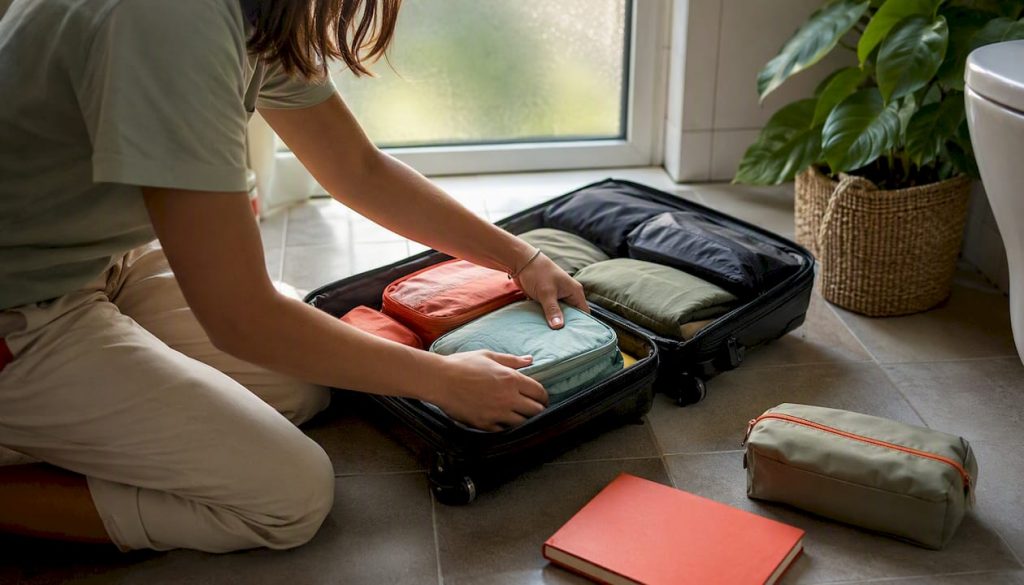
Discover over 30 proven strategies that help Canadians save on travel costs. Learn effective tips to make your next trip affordable!
The three highest-leverage moves for cutting trip costs are shifting your travel dates two to three weeks into shoulder season, choosing a structurally cheaper destination, and using points or transfer partners instead of paying cash for flights. Do those three things and you’ve already done more than most travelers ever will. Everything else on this page builds on that foundation.
Quick wins you can act on right now:
- Open Google Flights and run a flexible-date search for your destination
- Set a fare alert on Skyscanner for your target route
- Move your travel window two to three weeks earlier or later to test shoulder-season pricing
- Book carry-on only and skip checked-bag fees entirely
- Pack snacks for the airport so you skip the $18 sandwich
- Use local transit at your destination instead of taxis or ride-hail
- Check your Air Canada Aeroplan or WestJet Rewards balance before you book anything with cash
Pro Tip: Set one fare alert before you close this tab. You don’t need to have dates locked in. Just pick a destination you want to visit and let the alert do the watching for you.
Key Takeaways
The most effective ways to save on travel combine structural decisions (timing, destination, points) with consistent small habits (carry-on only, local transit, grocery stores for meals).
| Point | Details |
|---|---|
| Book in the right window | Domestic flights: 1–3 months ahead; international flights: 2–8 months ahead, per Fidelity. |
| Shift dates to shoulder season | Moving travel two to three weeks outside peak windows is the single highest-leverage cost move. |
| Use points before cash | Check Aeroplan and WestJet Rewards balances before paying cash for any flight or hotel. |
| Pack carry-on only | Avoiding checked-bag fees also unlocks cheaper intra-destination transport options. |
| Compare total stay cost | Add resort fees, taxes, and parking before comparing accommodation options. |

Table of Contents
- 1. Plan your trip budget before you book anything
- 2. How to find the cheapest flights with the right tools
- 3. Maximize your points and travel cards as a Canadian
- 4. Cut lodging costs with smarter booking and negotiation
- 5. Get around cheaply at your destination
- 6. Save on food and attractions every day of your trip
- 7. Pack carry-on only and avoid every baggage fee
- 8. Protect your savings from hidden fees, bad currency deals, and scams
- 9. Build a travel savings fund before you book
- 10. Your 30+ quick-tip checklist by category
- 11. Our team’s take on what actually moves the needle
- One-week action plan to start saving now
- Sources
1. Plan your trip budget before you book anything
The single best way to avoid overspending on a trip is to set a total budget first and then reverse-engineer every booking decision from it. Dollar Flight Club recommends starting with one number, splitting it into categories, and then using date flexibility and fare alerts to find savings that fit inside those limits.
Here’s a fast way to build your trip budget:
- Set your total trip number (flights + lodging + food + ground transport + activities + a 10–15% buffer).
- Allocate roughly 30–40% to flights, 25–30% to lodging, 15–20% to food, and the rest to transport and activities.
- Write the daily spending target for food and activities so you have a number to check against each day.
- Research your destination’s average daily cost before committing. Southeast Asia, Mexico, Portugal, and Central America tend to run far cheaper per day than Western Europe, the Caribbean, or Japan.
- If the destination doesn’t fit your budget, change the destination first before cutting the trip shorter.
Destination structure matters. A week in Lisbon or Mexico City on the same cash budget as three nights in Paris or London is not a compromise. It’s a smarter allocation. For Canadians, destinations with favorable exchange rates against the Canadian dollar (CAD) stretch every dollar further without any extra effort.
Timing rules. Shoulder season sits just outside peak travel windows: late April through May, September through October for Europe; May through June and September through November for the Caribbean and Mexico. Midweek departures (Tuesday and Wednesday) tend to show lower fares than Friday or Sunday. Fidelity recommends booking domestic flights about 1–3 months ahead and international flights 2–8 months ahead, and specifically highlights shoulder seasons and midweek departures as reliable ways to save.
Pro Tip: The highest-leverage single move is date flexibility. Before you change your destination, test moving your travel window by two to three weeks. If the price drops significantly, move the dates. If it doesn’t, then consider the destination swap.
2. How to find the cheapest flights with the right tools
The most reliable approach to finding lower fares combines flexible-date searches, multiple aggregators, and alerts set well before you’re ready to book.
The right tool for each job:
- Google Flights: Use the date grid and price calendar to scan an entire month at once. The Explore map lets you type a budget and see which destinations fit. Best for round-trip searches and comparing date flexibility visually.
- Skyscanner: Strong for one-way and multi-city searches. The “Everywhere” destination option is genuinely useful when you’re open to where you go. Set price alerts here for specific routes.
- Hopper: Predictive pricing tells you whether to buy now or wait. Useful when you have a fixed route but flexible timing and want a data-backed recommendation on when to pull the trigger.
- Travelzoo and Groupon: Both regularly list discounted packages and flash deals. Travelzoo’s “Top 20” weekly deals are worth a scan if you’re flexible on destination.
Going.com’s catalog of 75 travel savings tactics specifically highlights flexible-date searches and Google Explore as two of the most effective ways to discover cheaper fares and destinations you hadn’t considered.
Baggage and routing choices affect price more than most travelers realize. A connecting flight can cost $100–$200 less than a nonstop on the same route, and if you’re already packing carry-on only, the connection becomes much less painful. Test nearby airports too. Flying out of Hamilton instead of Toronto Pearson, or Buffalo instead of Niagara, can produce meaningful savings for southern Ontario travelers.

Booking sequence: Lock in an unusually low flight first using the 24-hour cancellation policy (which applies to most Canadian and US carriers), then book lodging. Never reverse that order. A great hotel rate means nothing if the flight price doubles while you’re deciding.
3. Maximize your points and travel cards as a Canadian
Transferring flexible points to airline partners usually yields more value than booking through a bank travel portal. The math works because airline award programs have fixed redemption rates for specific routes, and those rates often represent better value than the portal’s cash-equivalent rate.
Key Canadian programs and what each does best:
- Air Canada Aeroplan: Canada’s most versatile frequent-flyer program. Aeroplan points transfer from several major Canadian credit cards and can be redeemed on Star Alliance partners worldwide. Strong sweet spots exist for business class on partner carriers.
- WestJet Rewards: A dollar-based program (WestJet dollars) that’s simpler to use than mileage programs. Best for straightforward redemptions on WestJet flights, especially to sun destinations from Canadian hubs.
- Transferable card programs: Several Canadian credit cards earn points that transfer to Aeroplan or other partners. Check your card’s transfer partners before booking anything with cash.
- Priority Pass: Many premium Canadian travel cards include Priority Pass membership, which gives you access to airport lounges worldwide. Lounges offer free food and drinks that replace expensive airport meals, a real savings during long layovers.
Action steps to maximize one trip with points:
- Check your current points balance across all programs before you start planning.
- Look up the award chart for your target route on Aeroplan or WestJet Rewards.
- Compare the points cost to the cash price. If the points value exceeds 1.5 cents per point, redeeming is usually worth it.
- Check transfer partners if your balance is in a bank program. Transferring to Aeroplan for a Star Alliance redemption often unlocks better value.
- Watch for fuel surcharges on partner redemptions. Some carriers pass through surcharges that erode the value of award tickets.
- Avoid letting points sit idle for more than 18 months. Most programs expire inactive balances.
Common pitfalls:
- Holding a high-annual-fee travel card without a redemption plan. The fee eats your savings if you’re not actively using the benefits.
- Booking through the bank portal when a transfer partner offers a better rate.
- Ignoring blackout dates on WestJet Rewards during peak holiday windows.
Pro Tip: Before you pay cash for any flight, spend five minutes checking whether your points balance covers it at a value above 1 cent per point. If it does, redeem. If not, save the points for a higher-value redemption later.
For a deeper look at card-based rewards strategies, our cashback credit card comparison guide covers the top Canadian options in detail.
4. Cut lodging costs with smarter booking and negotiation
Picking the right accommodation type for your specific trip, then negotiating or stacking discounts, beats blind-booking on any platform. Quartz highlights choosing suburban rentals and off-peak timing as compound savings strategies that add up across a full trip.
Accommodation options and who they fit best:
- All-inclusive resorts: Best value for two or more travelers on beach trips of four or more nights. Meals, drinks, and activities are bundled, so the per-person daily cost often beats paying separately. Jettova’s travel playbook specifically notes that all-inclusives produce strong per-person savings when the math is done correctly.
- Apartment rentals: Better for stays of five or more nights, especially for families or groups. Having a kitchen cuts food costs significantly. Watch for cleaning fees and service charges that inflate the total cost.
- Budget hotels and guesthouses: Good for short stays in cities where you’ll be out most of the day. Look for properties that include breakfast.
- Hostels: The lowest nightly rate for solo travelers. Private rooms in hostels often cost less than budget hotels while still offering social common areas.
Negotiation tactics that actually work:
- Call the hotel directly after finding a rate online. Ask if they can match or beat the OTA price. Hotels prefer direct bookings because they avoid platform commissions.
- Ask about unpublished discounts: AAA/CAA, government employee, or extended-stay rates.
- Use free-night certificates from travel credit cards strategically on high-rate nights.
- Book refundable rates when possible, then rebook if the price drops closer to your travel date.
Always compare total stay cost, not nightly rate. Resort fees, destination fees, parking, and taxes can add $30–$80 per night to a hotel’s advertised price. Rentals often carry cleaning fees of $80–$150 that change the math on short stays. Dollar Flight Club recommends comparing total stay cost rather than nightly price alone. For Canadian travelers, US resort destinations frequently add resort fees that are not included in the displayed rate.
For group trips, Group Travel Network’s tips on negotiating hotel rates offer practical guidance on bulk-booking discounts and how to approach hotels directly for group pricing.

Pro Tip: Book a refundable rate first to hold your room, then keep checking the price. If it drops, cancel and rebook. Most hotels allow cancellations up to 24–48 hours before arrival.
5. Get around cheaply at your destination
Default to public transit and local transport unless the destination’s layout genuinely requires a rental car. In most major cities worldwide, a transit pass costs a fraction of a daily rental plus insurance, gas, and parking.
When a rental car makes sense vs. when it doesn’t:
- Rent when: You’re visiting rural areas, national parks, or destinations with limited public transit (road trips through the Canadian Rockies, driving the Amalfi Coast, exploring New Zealand’s South Island).
- Skip the rental when: You’re in a city with good metro or bus systems (London, Tokyo, Mexico City, New York, Barcelona). The daily cost of a rental in a major city, including parking, often exceeds $100 CAD.
Estimating the real cost of a rental: Take the daily rate, add collision damage waiver (CDW) insurance if your credit card doesn’t cover it, add estimated fuel, and add parking at your accommodation. Compare that total to the cost of a transit pass or ride-hail for the same days. The transit option wins in most urban settings.
Practical ground transport strategies:
- Buy a multi-day transit pass on arrival. Most major cities offer tourist transit cards that cost less per ride than single tickets.
- Use rideshare apps (Uber, Lyft, or local equivalents) for late-night trips or routes not well served by transit, not as your default.
- Pre-book airport transfers when the price is fixed and lower than ride-hail surge pricing. Compare the pre-booked rate to the transit option first.
- For longer distances within a country, trains and long-distance buses often beat flying once you factor in airport time and fees.
- Airport parking in Canada is expensive. Compare long-term parking at the airport to off-site lots with shuttles, or use transit to the airport when your departure city has a rail link (Toronto’s UP Express, Vancouver’s Canada Line).
Pro Tip: Download the local transit app before you land. Most major cities have one, and having it ready means you’re not fumbling with maps or overpaying for a taxi from the airport.
6. Save on food and attractions every day of your trip
Prioritizing local markets, free attractions, and making lunch your main meal are the three moves that cut daily spending without touching the quality of your experience.
Food strategies that work:
- Use grocery stores for breakfast and lunch. A baguette, cheese, and fruit from a French supermarché costs a fraction of a café breakfast. The same logic applies in every country.
- Always take the hotel’s free breakfast when it’s included. It’s already paid for and it covers your biggest meal of the day.
- Look for set lunch menus (prix fixe or “menu del día” in Spanish-speaking countries). Restaurants often serve the same dishes at lunch for 30–50% less than dinner prices.
- Find happy hour deals for drinks and appetizers in the early evening.
- Street food and market stalls are often the best food on a trip anyway. They’re also significantly cheaper than tourist-facing restaurants.
Low-cost and free activities:
- Self-guided walking tours using free apps like Google Maps or dedicated city-walk apps cover most major sights without a guide fee.
- Many museums offer free admission on specific days or evenings. Check before you pay.
- City tourism passes (like the Paris Museum Pass or London Explorer Pass) can save money if you plan to visit multiple paid attractions. Do the math before buying.
- Check local festival and event calendars. Many cities have free outdoor concerts, markets, and cultural events that aren’t in major travel guides.
Watch for tourist pricing. Restaurants immediately adjacent to major landmarks often charge two to three times the local rate. Walk one or two blocks away and prices drop noticeably. Before buying anything from a street vendor or market stall, check the going rate on Google or ask a local. NerdWallet’s travel savings guide specifically flags off-season travel and local food as reliable cost-reduction tactics.
7. Pack carry-on only and avoid every baggage fee
Packing carry-on only is one of the cleanest ways to save on travel because it cuts fees, speeds up airport transit, and opens up cheaper intra-destination options like low-cost regional carriers that charge extra for checked bags.
Packing checklist for carry-on-only travel:
- Choose a bag that fits the most restrictive carry-on dimensions (typically 55 x 40 x 23 cm / 21.5 x 15.7 x 9 inches) so it clears every airline’s rules
- Pack liquids in containers of 100 mL or less, all in one clear 1-liter bag
- Choose quick-dry, wrinkle-resistant clothing in neutral colors that mix and match
- Bring compact toiletries or plan to buy basics at your destination
- Pack a reusable water bottle (empty through security, fill after)
- Include a basic first-aid kit: pain reliever, bandages, antidiarrheal, and any prescription medications
- Bring a universal power adapter if traveling internationally
- Use compression packing cubes to fit more into less space
The 10-item rule: Challenge yourself to pack no more than 10 clothing items for any trip under two weeks. It forces you to choose versatile pieces and eliminates the “just in case” items that fill bags and trigger fees.
For a deeper guide on packing strategies, our minimalist travel packing guide covers exactly how to fit a week’s worth of travel into a single carry-on. And if you’re not sure which bag to start with, our best carry-on backpack picks are worth a look.
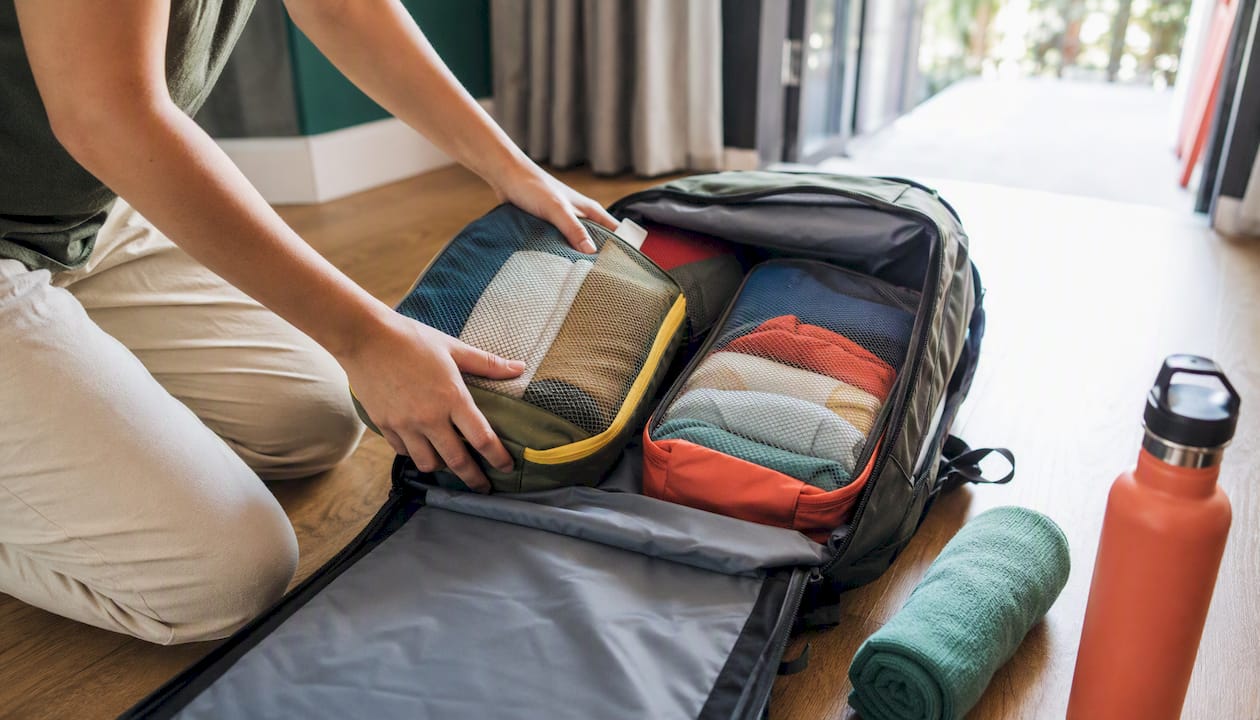
Pro Tip: Use compression packing cubes and plan one laundry day mid-trip. That combination lets you pack half the clothes you think you need and still have clean options every day.
8. Protect your savings from hidden fees, bad currency deals, and scams
Travel insurance and card-provided protections can protect your entire trip budget from a single unexpected event. Before buying a separate policy, check what your existing credit cards already cover. Many Canadian travel cards include trip cancellation, medical emergency, and baggage delay coverage that overlaps significantly with standalone policies.
Hidden fees to watch for:
- Resort and destination fees at US hotels (not included in the displayed rate)
- Tourist taxes in European cities (charged per person per night at check-in)
- Foreign transaction fees on credit cards (typically 2–3% per purchase abroad)
- ATM withdrawal fees from both your bank and the foreign ATM operator
- Airline seat selection fees, which can add $15–$50 per seat per flight
- Checked bag fees on budget carriers, which can exceed the base fare on short routes
Currency exchange strategy:
Use a no-foreign-transaction-fee credit card for purchases abroad whenever possible. For cash, withdraw from bank ATMs in the local currency rather than exchanging at airport kiosks or hotel desks, which typically offer the worst rates. Always decline dynamic currency conversion (DCC) when a foreign merchant or ATM offers to charge you in Canadian dollars instead of the local currency. DCC looks convenient but applies a hidden markup of 3–7% on top of the exchange rate.
Watch out for dynamic currency conversion. When a merchant or ATM abroad asks “Would you like to pay in Canadian dollars?” the answer is always no. Paying in the local currency lets your card’s exchange rate apply, which is almost always better than the merchant’s conversion rate. This one habit can save you hundreds of dollars on a longer trip.
Visa and entry fees for Canadians: Entry fees and visa requirements vary widely by destination and change frequently. Always check the Government of Canada’s travel pages for current entry requirements before booking. Some destinations charge arrival fees of $20–$100 USD that aren’t factored into most trip budget calculators.
For a full breakdown of what travel protection covers and when it’s worth buying separately, our travel insurance basics guide walks through the key decisions. Group Travel Network also offers a useful overview of travel protection plans for those planning group or student trips.
9. Build a travel savings fund before you book
Set up an automated vacation fund and split your total trip cost into monthly targets. That single step removes the friction of saving and makes the trip feel real and achievable rather than abstract.
Actionable steps to fund your next trip:
- Open a dedicated high-interest savings account (many Canadian banks and online banks offer these with no fees).
- Set up an automatic transfer on payday. Even $50–$100 per paycheck adds up faster than most people expect.
- Use a round-up savings app to capture micro-savings on everyday purchases.
- Identify one recurring subscription or habit to redirect toward travel for three months.
- Consider renting your home or a spare room on a short-term rental platform while you’re away. Even one or two nights of rental income can cover a flight upgrade or a full day of activities.
Sample monthly savings targets:
A $2,400 budget covers a solid week in Mexico or Central America for one person, including flights from a major Canadian hub. A $3,600 budget covers Europe in shoulder season. Fidelity’s budget travel guidance recommends setting up a dedicated savings account and redirecting small recurring transfers as a foundational step before any other trip planning.
For more ideas on living affordably and freeing up money for experiences, our minimalism lifestyle guide covers the mindset shift that makes saving for travel feel natural rather than restrictive.
10. Your 30+ quick-tip checklist by category
A fast-reference list you can scan while planning. Each item is one action.
Booking and flights:
- Set a Google Flights price alert for your target route and dates
- Use the Google Flights date grid to find the cheapest day to fly
- Search Skyscanner with “Everywhere” as the destination when you’re flexible
- Check Hopper’s “Watch” feature before buying to see if the price is predicted to drop
- Book Tuesday or Wednesday departures instead of Friday or Sunday
- Travel in shoulder season (May, September, October for most destinations)
- Test nearby airports for cheaper fares (e.g., Buffalo vs. Toronto for US routes)
- Use the 24-hour cancellation rule to lock in a low fare while you finalize lodging
- Check Travelzoo’s weekly Top 20 deals for package discounts
- Browse Groupon Getaways for discounted short-trip packages
Points and cards:
- Check your Aeroplan balance before booking any flight with cash
- Check your WestJet Rewards balance for sun-destination redemptions
- Look up your credit card’s transfer partners before using the bank portal
- Calculate points value: if it exceeds 1.5 cents per point, redeem
- Apply for a card with Priority Pass lounge access before a long-haul trip
- Use card travel credits for TSA PreCheck or NEXUS enrollment reimbursement
- Avoid letting points balances sit inactive for more than 12 months
Lodging:
- Call the hotel directly after finding an OTA rate and ask for a match or discount
- Book a refundable rate first, then rebook if the price drops
- Compare total stay cost (nightly rate + fees + taxes + parking), not just the nightly rate
- Use free-night certificates from travel cards on the highest-rate night of your stay
- For stays of five or more nights, compare apartment rentals with kitchen access
- Check whether your accommodation includes free breakfast before booking elsewhere
Transport:
- Buy a multi-day transit pass on arrival in any major city
- Pre-book airport transfers when the fixed price beats ride-hail surge pricing
- Compare long-term airport parking to off-site lots with shuttles
- Use Toronto’s UP Express or Vancouver’s Canada Line to avoid airport parking fees
- Take trains or long-distance buses for intra-country travel instead of short-haul flights
Food and activities:
- Use grocery stores for breakfast and lunch every day
- Always take the hotel’s free breakfast when included
- Look for set lunch menus at restaurants (same food, lower price than dinner)
- Find free museum days and check local festival calendars before buying activity tickets
- Walk one or two blocks from major landmarks before choosing a restaurant
Packing:
- Pack carry-on only to avoid checked-bag fees on every flight
- Choose quick-dry clothing and plan one laundry day mid-trip
- Bring a reusable water bottle and fill it after security
- Use compression packing cubes to maximize carry-on space
- Bring a universal power adapter for international trips
- Check duty-free allowances for Canadians returning home (currently $800 CAD after 48 hours abroad) on the Canada Border Services Agency site
11. Our team’s take on what actually moves the needle
Our team at Lizard’s Lunch has covered travel, lifestyle, and personal finance long enough to notice a pattern: the travelers who spend the least and enjoy the most are not the ones who found the best coupon. They’re the ones who made two or three structural decisions correctly before they ever opened a booking site.
Date flexibility and destination choice do more work than any deal-hunting app. Moving a trip by two to three weeks to land in shoulder season, or swapping a peak-demand destination for a structurally cheaper one, can reduce total trip cost by more than all the micro-savings tactics combined. Points stacking adds another layer on top of that. When you combine shoulder-season timing with an Aeroplan or WestJet Rewards redemption and a carry-on-only packing strategy, you’ve addressed the three biggest cost drivers before you’ve spent a single dollar.
The one thing our team recommends you do before you close this tab: open Google Flights, type in a destination you’ve been thinking about, and switch to the date grid view. Look at the price difference between your original dates and the two weeks on either side. That five-minute exercise has saved more trips than any promo code ever will.
One-week action plan to start saving now
- Day 1: Set fare alerts on Google Flights and Skyscanner for your target destination.
- Day 2: Pick your travel window and test moving it two to three weeks to check shoulder-season pricing.
- Day 3: Check your Aeroplan and WestJet Rewards balances and calculate points value for your route.
- Day 4: Research total accommodation costs (nightly rate + fees + taxes) for three lodging types at your destination.
- Day 5: Open a dedicated travel savings account and set up an automatic monthly transfer.
- Day 6: Plan your packing list and confirm you can travel carry-on only.
- Day 7: Check the Government of Canada travel page for entry requirements and visa fees for your destination.
Sources
Flight search and fare alerts:
- How to save money on travel: 12+ travel savings tips – NerdWallet
- Budget Travel: Plan a Trip Start-to-Finish
Deals and packages:
Points and loyalty programs:
Official Canadian resources:
Partner resources:

















Leave a Comment
Your email address will not be published. Required fields are marked with *