
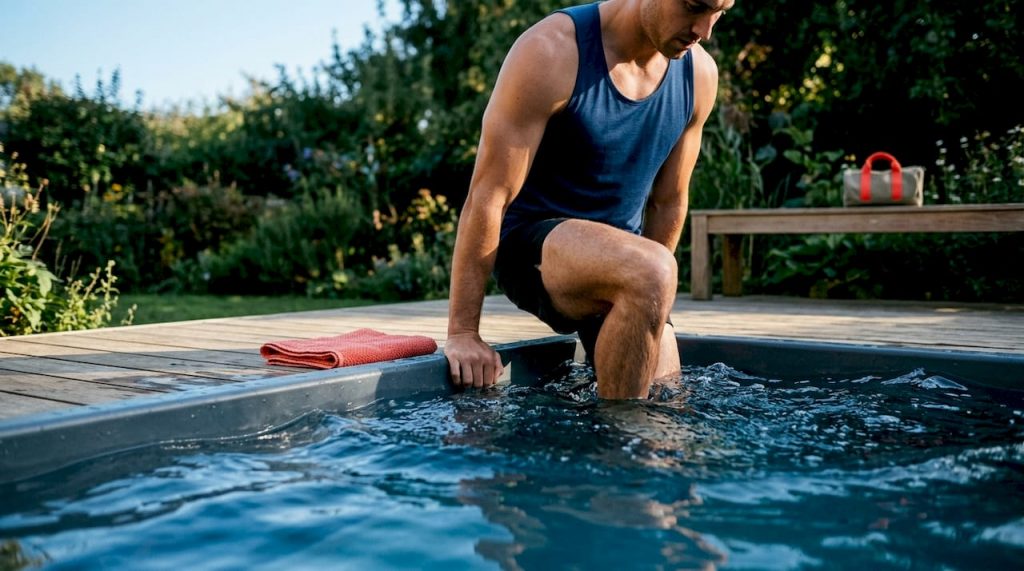
Evidence based look at cold plunge benefits and when they appear: inflammation rises immediately, stress falls at 12h, soreness eases 24–96h.
Cold plunges can genuinely ease muscle soreness and give stressed-out nervous systems a break, and a growing body of research backs both effects. But the same icy water that calms your mind can strain your heart, and jumping in right after a hard strength session may quietly work against your muscle-building goals. A systematic review and meta-analysis offers the clearest picture yet of when cold water immersion helps and when it does not, and our team at Lizard’s Lunch dug into that evidence to bring you the full story.
TL;DR:
- Cold water immersion is most beneficial for quick recovery, especially during multi-day competitions or heat-stressed training blocks, rather than daily use.
- Water temperatures typically range from 7°C to 15°C, with immersion times up to 15 minutes, but colder water and longer durations increase cardiovascular stress.
- Immediate post-exercise cold plunges may hinder muscle growth, so timing should be carefully planned around resistance training sessions.
- The most consistent benefits include reduced delayed-onset muscle soreness and a significant decrease in perceived stress about 12 hours after immersion.
- Individuals with heart conditions, uncontrolled blood pressure, or circulatory issues should seek medical advice before using cold plunges.
Table of Contents
- What counts as a cold plunge and how cold is cold enough?
- How cold water immersion supports recovery and circulation
- Cold plunge mental health effects: stress, sleep, and mood
- When the benefits actually show up: a timeline of the evidence
- Who should think twice before a cold plunge
- How to try cold water immersion safely
- Cold plunges and muscle growth: what lifters need to know
- Why our team dug into the research this closely
- Cold plunges versus ice baths and cryotherapy: what’s actually different
- Is it the cold water or the ritual? The placebo question
- When a cold plunge earns a place in your recovery routine
- Sources
- FAQ
What counts as a cold plunge and how cold is cold enough?
Cold water immersion, ice baths, cold plunges, and cold showers all describe the same basic idea: submerging your body in water well below room temperature to trigger a physiological response. The terms get used loosely, but the water temperature and how long you stay in matter more than the label.
Most research and commercial setups fall into predictable ranges:
- Study protocols commonly use water between roughly 7°C and 15°C.
- Commercial plunge tanks at gyms and spas sometimes run colder, though water colder than this increases cardiovascular stress.
- Session lengths in research vary widely, from as little as 30 seconds up to 15 minutes.
- Keeping your head and neck above water is a near-universal recommendation, regardless of temperature or duration.
How cold water immersion supports recovery and circulation
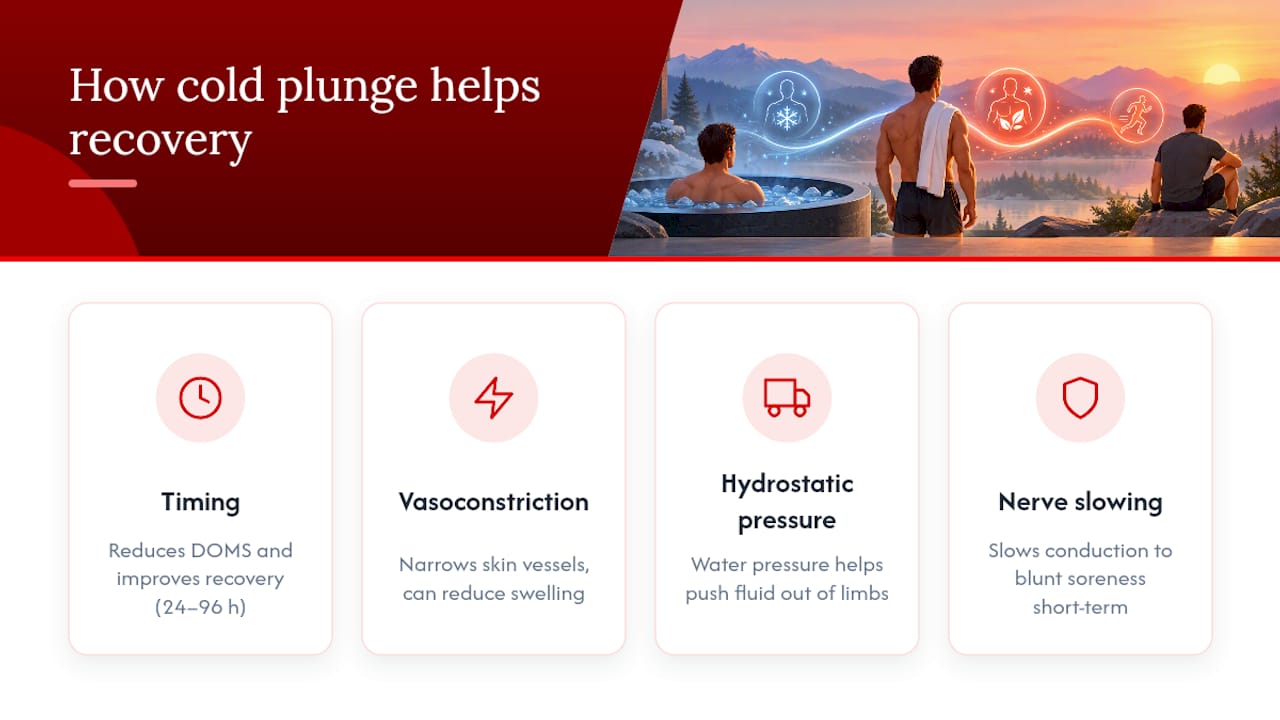
The best-documented physical benefit of cold water immersion is a reduction in delayed-onset muscle soreness, often called DOMS, along with better perceived recovery in the 24 to 96 hours after intense exercise. This lines up with what athletes have reported for decades: legs feel less trashed the next day after a cold soak.
The likely mechanisms are straightforward. Cold water causes vasoconstriction, narrowing blood vessels near the skin, which can reduce swelling in overworked tissue. Hydrostatic pressure from the water itself may help push fluid out of the limbs. Cold temperatures also slow nerve conduction velocity, which can blunt the sensation of soreness in the short term. None of these mechanisms erase damage; they change how your body processes it.
Pro Tip: Save cold plunges for situations where quick turnaround matters most, like same-day tournament games or back-to-back training sessions, rather than making them a daily habit regardless of training load.
Cold water immersion earns its keep in specific scenarios: multi-day competitions, heat-stressed training blocks, or any situation where you need to feel functional again within hours rather than days. Where the evidence gets murkier is in objective inflammation markers. Blood tests for inflammatory compounds often show inconsistent results across studies, and protocols vary so much in temperature and duration that comparing one trial to another is difficult.
One 2025 meta-analysis of 11 studies and 3,177 participants found that cold water immersion produces measurable, time-dependent effects rather than a single uniform benefit. That distinction shapes almost everything else in this article.
Cold plunge mental health effects: stress, sleep, and mood
The psychological case for cold plunges is more nuanced than headlines suggest, and timing changes everything. The same 2025 systematic review found a significant reduction in perceived stress measured roughly 12 hours after cold water immersion, a delayed effect rather than an instant mood lift.
Sleep quality showed improvement in some of the included studies, though not universally. Mood and immune-related outcomes were inconsistent across trials, which means broad claims about cold plunges fixing your mood or supercharging immunity outrun what the data currently shows.
What the research supports:
- A meaningful drop in perceived stress appears around 12 hours post-immersion, not immediately.
- Some studies report better sleep quality following regular cold water immersion.
- Mood and immune markers vary too much across trials to draw firm conclusions.
- For healthy adults, cold plunges may work as one adjunct among several for managing stress, alongside other stress management techniques and consistent sleep hygiene habits.
When the benefits actually show up: a timeline of the evidence
Timing is the detail most articles skip, and it changes how you should interpret every claim about cold plunges. The 2025 meta-analysis found that inflammatory markers actually increase immediately after immersion and again at the one-hour mark, before the more talked-about stress reduction appears roughly 12 hours later.
| Time point | Reported effect | Evidence strength |
|---|---|---|
| Immediately after | Increased inflammatory markers | Moderate, consistent across studies |
| 1 hour after | Continued elevation in inflammation | Moderate |
| 12 hours after | Significant reduction in perceived stress | Moderate, based on pooled data |
| 24 to 96 hours after | Reduced soreness, better perceived recovery | Consistent across multiple reviews |
The review pooling this data covered 11 studies and 3,177 participants, a reasonable sample for this field but still limited by small individual trial sizes, cohorts skewed heavily toward male participants, and wide variation in water temperature and immersion time from one study to the next. The well-supported claims are reduced soreness and delayed stress relief. Claims about immune boosts, fat loss, or dramatic mood transformation remain speculative at best.
Who should think twice before a cold plunge
Cold plunges carry real physical risks that deserve as much attention as the benefits. The cold shock reflex kicks in within the first few minutes of immersion and can trigger an involuntary gasp, which is exactly why keeping your head above water matters so much.
A more serious concern is autonomic conflict: submerging your head combines the body’s dive reflex with a surge of sympathetic nervous system activity, a combination that has been linked to dangerous heart rhythm disturbances even in people with no known heart condition, according to cold-water safety guidance.
- People with known heart disease, uncontrolled high blood pressure, or certain circulatory disorders should get medical clearance first.
- Hypothermia and frostbite are real risks with extended exposure or very cold water.
- Slippery surfaces around plunge tanks cause falls more often than people expect.
- Poorly maintained tanks can harbor bacteria, so ask about water treatment and cleaning schedules before you use a shared facility.
Pro Tip: If you have any cardiac history, talk to your doctor before trying cold water immersion, and always plunge with someone nearby the first several times.
How to try cold water immersion safely
Public health guidance from Public Health Ontario points to a general safe range of roughly 10°C to 15°C for most healthy adults, noting that commercial tanks running colder than that raise cardiovascular stress and risk, especially for people with circulatory or heart conditions.
Cold shock typically hits within the first three minutes of immersion, which is why a slow, supervised start matters more than toughing it out.
- Start with 30 seconds to 2 minutes in water on the milder end of the safe range.
- Increase duration gradually over several sessions rather than jumping to long immersions right away.
- Warm up beforehand with light movement so your body isn’t shocked twice.
- Keep your head and neck out of the water for the entire session.
- Have another person nearby or a phone within reach, particularly during your first few attempts.
- Rewarm gradually afterward with dry clothing and movement rather than a hot shower immediately.
- Schedule cold plunges away from hypertrophy-focused workouts, ideally several hours apart or on separate days.
These steps come directly from public-health and sport-safety guidance rather than gym folklore, and they apply whether you’re using a home tub or a commercial facility.
Cold plunges and muscle growth: what lifters need to know
If building muscle is a priority, timing your cold plunge matters as much as the water temperature. A 2024 meta-analysis found that applying cold water immersion immediately after resistance training may attenuate hypertrophic adaptations, with pooled data showing small to negligible muscle growth when cold water immersion follows resistance training compared to resistance training alone.
The likely explanation involves the same vasoconstriction that eases soreness: reduced blood flow to the muscle may interfere with the signaling pathways that drive growth.
- Avoid cold plunges immediately after sessions built around hypertrophy or strength gains.
- If you want both recovery and cold exposure, separate the two by several hours rather than stacking them back to back.
- Cold plunges fit more naturally into endurance-focused training blocks, congested competition schedules, or heat-stressed conditions where quick recovery outweighs muscle-building priorities.
Why our team dug into the research this closely
Our team at Lizard’s Lunch built this article around systematic reviews, meta-analyses, and public-health safety statements rather than anecdotes, because a topic touching cardiovascular health deserves that level of care. We prioritized sources that pooled multiple trials over single studies with small sample sizes.
If you’re a clinician or researcher and spot something worth correcting, we welcome that feedback. For more on the mental side of recovery, visit our mental wellbeing coverage, and for training-specific advice, check out our fitness section.
Cold plunges versus ice baths and cryotherapy: what’s actually different
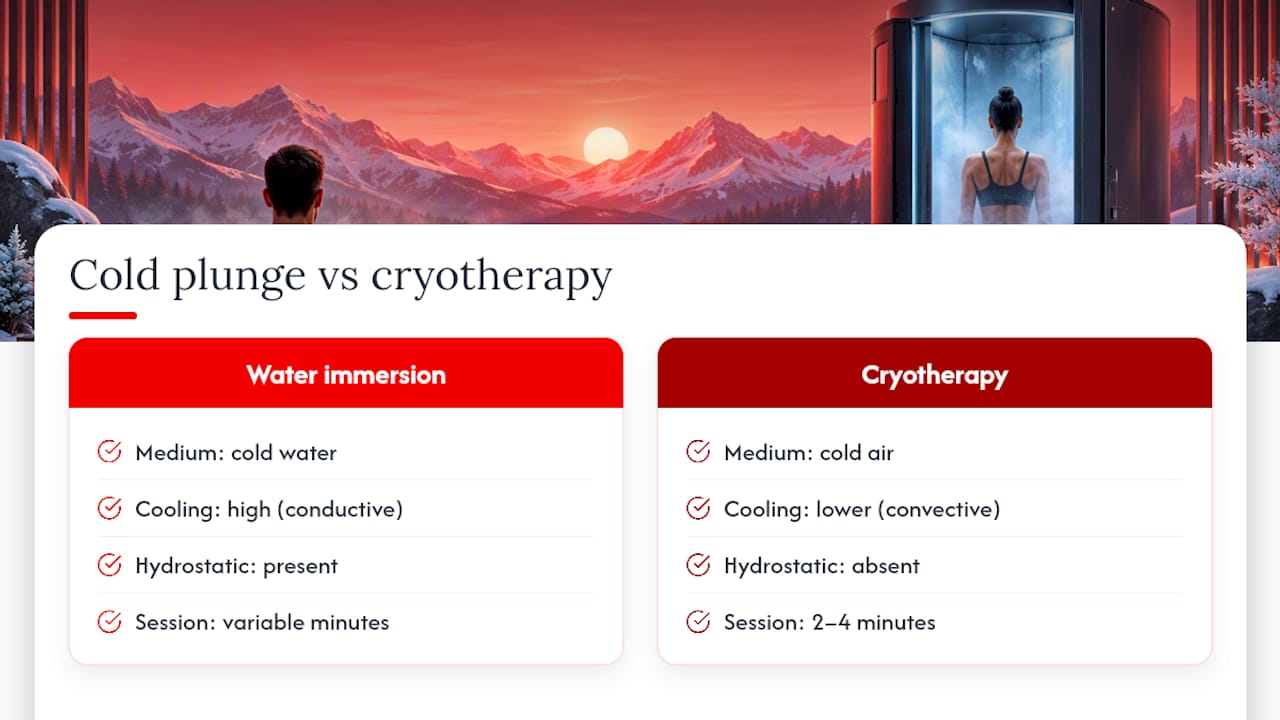
Cold plunge, ice bath, and whole-body cryotherapy get used interchangeably, but they work through different mechanisms and carry different evidence bases. A cold plunge or ice bath submerges your body in cold water, which conducts heat away from skin far more efficiently than air does. That’s why water at 10°C feels far more punishing than air at the same temperature, and why immersion protocols can trigger effects like hydrostatic pressure changes that dry cryotherapy simply cannot replicate.
Whole-body cryotherapy chambers use extremely cold air, often for two to four minutes, and skip the water entirely. Proponents claim similar soreness and mood benefits, but the research base behind cryotherapy chambers is thinner and less consistent than the water immersion literature summarized earlier in this article. The hydrostatic pressure and thermal conductivity advantages of water immersion do not apply to air-based cryotherapy, which may explain some of the divergence in reported outcomes between the two approaches.
For most people chasing the soreness-reduction and stress-relief effects described here, cold water immersion has a deeper evidence base than air-based alternatives. That doesn’t mean cryotherapy chambers are worthless, but readers should be cautious about assuming the two methods produce identical results just because both involve cold exposure. Some wellness venues, including facilities like Vitaluxe Drip Lounge, offer both water immersion and other recovery services, which lets people compare how each modality feels for their own routine.
Is it the cold water or the ritual? The placebo question
Some of what people feel after a cold plunge may come from expectation as much as physiology. Research on cold water immersion trials has noted that participant expectancy can inflate perceived recovery benefits, partly because blinding people to whether they received a “real” cold treatment is nearly impossible: you know when you’re standing in ice water.
That doesn’t mean the benefits are imaginary. The ritual itself, deliberately doing something uncomfortable and completing it, can create a genuine sense of accomplishment that shows up as reduced perceived stress, regardless of what’s happening at a cellular level. Anticipation and controlled breathing during the plunge may also engage the nervous system in ways that overlap with, but aren’t identical to, the physiological pathways researchers are still working to isolate.
This matters for how you interpret your own experience. If a cold plunge leaves you feeling calmer or more accomplished, that response is real and worth valuing, even if part of it stems from the mental framing of doing something hard on purpose rather than a purely physiological cascade. The honest takeaway is that self-reported outcomes in this field, including soreness ratings and stress scores, likely reflect a mix of genuine physiological change and psychological expectation, and untangling the two precisely remains a challenge for researchers.
When a cold plunge earns a place in your recovery routine
Cold plunges make the most sense around rapid recovery windows, acute stress relief, or as an occasional sleep aid, not as a daily fix-all. Pair realistic expectations with solid nutrition, sleep, and a training plan that accounts for periodization. Anyone with cardiac risk factors should get medical clearance before starting.
— Alexander
This article is general information, not a substitute for advice from a qualified doctor. Consult a qualified healthcare professional about your own circumstances before acting on anything here.
Sources
- Effects of cold-water immersion on health and wellbeing: A systematic review and meta-analysis | PLOS One
- Cold plunge tanks — Public Health Ontario (position/safety guidance)
FAQ
Is a cold plunge actually good for you?
For most healthy adults, cold water immersion can reduce muscle soreness and support stress reduction, though the stress benefit typically appears around 12 hours after immersion rather than instantly. People with heart disease or uncontrolled blood pressure should get medical clearance first, since the same cold exposure carries real cardiovascular risk for that group.
How often should you do the cold plunge?
There’s no single research-backed frequency, but most safety guidance favors starting with shorter, less frequent sessions and building up gradually rather than plunging daily from the start. If muscle growth is a training goal, spacing cold plunges away from hypertrophy-focused workouts matters more than hitting a specific weekly count.
Is a 3 minute cold plunge safe?
A three-minute session falls within ranges used in many research protocols, but safety depends heavily on water temperature and your own health history. Public health guidance recommends starting shorter and building up gradually, especially in colder tanks or for anyone with circulatory concerns.
What are the disadvantages of a cold plunge?
The main risks include cold shock and the gasp reflex, autonomic conflict that can affect heart rhythm, and hypothermia with extended exposure. Cold plunges used immediately after resistance training may also blunt muscle growth, according to a 2024 meta-analysis, making timing an important consideration for lifters.
















Leave a Comment
Your email address will not be published. Required fields are marked with *