
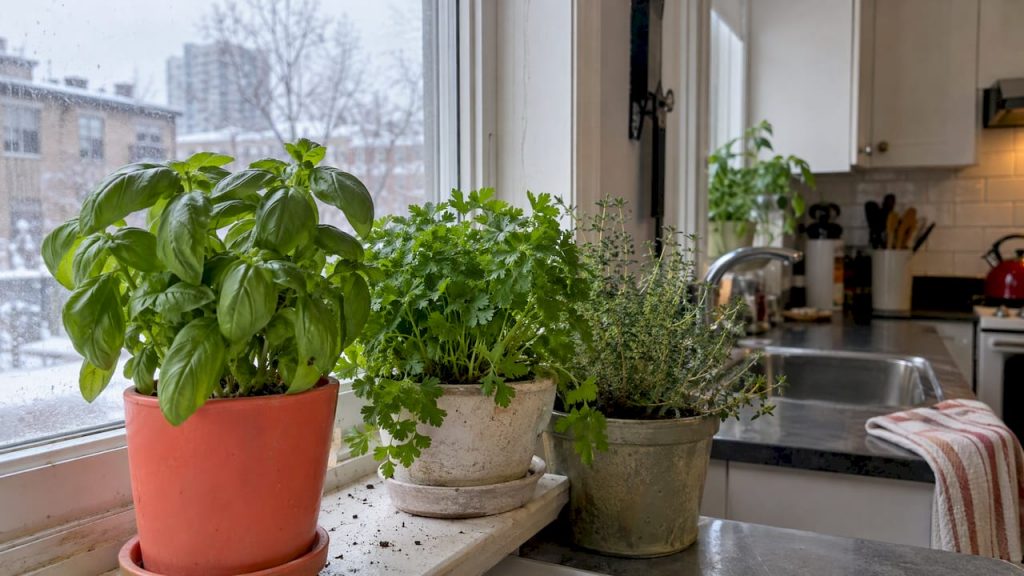
Start an indoor herb garden in Canada: pick the right herbs, light, pots and hydroponic setup, and keep basil, mint and chives thriving all winter.
An indoor herb garden is one of the easiest ways to bring a little summer into a Canadian kitchen in January. You need a bright spot, a pot with drainage, a decent potting mix and the right herbs. Add a grow light for the dark months and you can snip fresh basil, chives and mint while the snow piles up outside. Whether you have a sunny sill, a bare countertop or a spare shelf, this guide shows you how to choose a setup, pick herbs that suit it, and keep them growing.
TL;DR
- Start with light: a south-facing window is the best natural spot, and in a Canadian winter most herbs will do better with a grow light as backup.
- Begin with forgiving herbs such as basil, chives, mint, parsley, cilantro and dill, and keep thirsty and drought-loving herbs in separate pots.
- Use pots with drainage holes, a quality potting mix, and let the soil dry slightly between waterings. Overwatering is the classic beginner mistake.
- Hydroponic kits skip the soil and suit leafy herbs well, but you still need light and a dark reservoir.
- Harvest little and often, never taking more than a third of the plant at once.
Table of Contents
- Choose the setup that fits your home
- The best herbs to grow indoors
- Light: the make-or-break factor
- Pots, soil and watering
- Hydroponic herb gardens
- What to look for in an indoor herb garden kit
- Keep herbs healthy: harvesting and troubleshooting
- A simple first-month plan
- Our perspective
- Reach readers who love to grow
- FAQ
- Sources
Choose the setup that fits your home
Before you buy a single seed packet, decide where the garden will live. Three setups cover almost every Canadian home, and each one trades space, cost and effort differently.
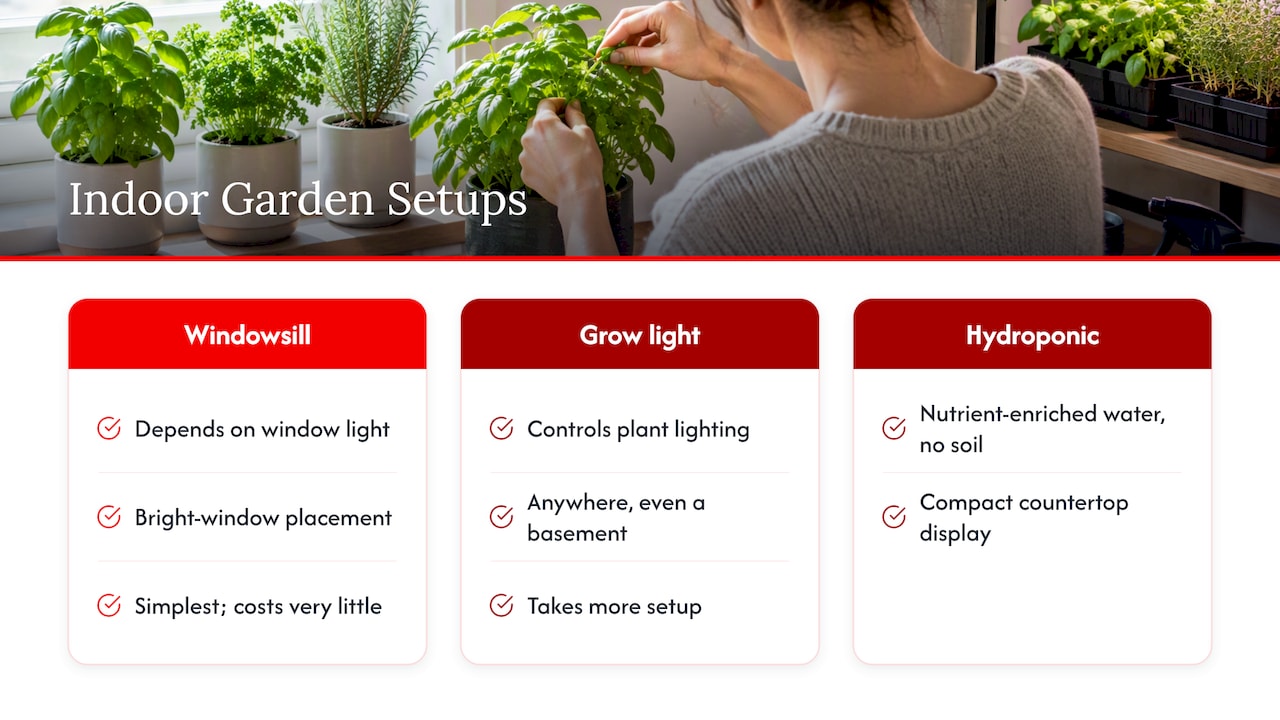
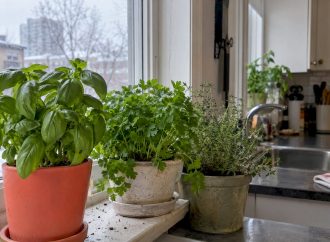
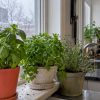
A windowsill garden is the simplest. Pots or a long planter sit in front of the brightest window you have. It costs very little and looks lovely, but it depends entirely on the light that window delivers. In a Canadian city, a south-facing window receives the most consistent light all year, according to the City of Mississauga’s indoor growing guide. East and west windows can work for gentler herbs like mint and parsley, while north windows are usually too dim for anything other than a few leafy survivors.
A grow-light garden removes the window from the equation. A shelf, a countertop corner or a rolling cart with a light above it can sit anywhere, including a basement or an apartment kitchen with poor light. It takes a little more setup, but it gives you control over how much light your plants actually receive.
A hydroponic garden grows herbs in nutrient-enriched water instead of soil. It is tidy, compact and popular with people who want a countertop display. We cover it in its own section below.
If you want a broader foundation before you commit, our step-by-step gardening guide for beginners walks through the basics of soil, watering and plant care that carry over to herbs. And if you live in a condo or a small rental, our piece on urban gardening in cities has more ideas for making a little space go a long way.
A quick way to judge your window
Stand at the window on a clear morning, midday and afternoon. If direct sun hits the sill for most of the day, you have a strong herb window. If the sun only touches it briefly, or the glass faces a wall or a tall building, plan on adding a light from day one. Remember that a closed-in porch or a deep sill can also cut the light, and that curtains and blinds count too.
The best herbs to grow indoors
Not every herb enjoys life on a countertop. Start with the ones that tolerate indoor conditions and that you will actually use in the kitchen. Home Hardware’s Canadian gardening article suggests basil, chives, cilantro, dill and mint as good indoor choices, and that list is a reliable place to begin.
Breeders have also made things easier for you. Many dwarf varieties of larger herbs suit indoor life, and Penn State Extension’s guide to growing herbs indoors is a good reference for how herbs behave when their light is not ideal.
| Herb | Best for | Light and water notes |
|---|---|---|
| Basil | Pasta, salads, pizza | Loves bright light and warmth; keep soil evenly moist; pinch off flower buds |
| Chives | Eggs, potatoes, soups | Forgiving; snip with scissors and it regrows |
| Mint | Tea, cocktails, desserts | Likes moisture; grow it in its own pot because it spreads |
| Parsley | Garnish, sauces | Handles slightly less light than most; keep evenly moist |
| Cilantro | Salsas, curries | Grows quickly; sow a few seeds every few weeks for a steady supply |
| Dill | Fish, pickles, dips | Needs good light; can get tall and floppy in dim rooms |
| Rosemary, thyme, sage | Roasts, stews | Prefer drier soil; best in soil pots with excellent drainage |
A useful rule: group herbs by their water habits. A Canadian grower’s guide notes that basil, parsley, cilantro, dill, mint, chives and lemon balm suit hydroponic systems, while Mediterranean herbs such as rosemary, thyme and sage prefer drier soil and usually do better in soil-based pots, as described in this hydroponic herb guide. The same logic works in a regular windowsill planter: keep the thirsty herbs together and the drought-lovers in their own pots.
Seeds, seedlings or cuttings?
Seeds are cheapest and give you the widest choice, but they need patience and a little extra light early on. Nursery seedlings give you something to eat sooner. Store-bought living herbs from the grocery produce aisle can also be divided and repotted, though they often arrive crowded in a small pot, so split them up and give each plant room. If you start from seed, ScottsMiracle-Gro Canada suggests using a dedicated seed-starting mix for sowing, then a quality potting mix for the herbs themselves.
Light: the make-or-break factor
If your herbs struggle, light is the most likely reason. Richters, a Canadian herb specialist, calls lack of light the main challenge of growing herbs indoors, noting that indoor light can be less than one-tenth the intensity and duration of outdoor light. That is why a plant that thrived on the balcony in July can sulk on the same sill in December.
How much natural light do herbs need?
A good baseline from a Canadian garden retailer is at least six hours of sun a day, as described by Feeds’n Needs. Many herbs would happily take more. In practice, that means a south-facing window in spring and summer, and supplemental light in the darker months.
How do you know your herbs are not getting enough? Penn State Extension says herbs without their preferred light become thin and spindly, with smaller leaves and reduced aroma. If your basil is stretching toward the glass, with long gaps between leaves and a pale colour, it is asking for more light.
When a window is not enough
For many Canadians, winter means short days, low sun angles and cold glass. Richters notes that a grow light can supplement natural light, but lights alone may not always give the vigour you want for culinary herbs, so the best results often come from combining a bright window with a light overhead. In a room with no good window at all, a light-only setup is still a workable option and plenty of home growers use one.
Choosing a grow light
Many gardeners choose full-spectrum LEDs because they mimic natural sunlight, are energy-efficient and produce the useful wavelengths without excessive heat, according to South Dakota State University Extension. That low heat matters on a shelf or close to leaves, where an old-style hot bulb could scorch tender herbs.
Size the light to your space. For a countertop or shelf, you do not need a big fixture. If your herb garden fits in a footprint of about two feet by two feet, browse these compact LED grow lights to see the kinds of fixtures made for small spaces. If you want to understand why LEDs have become the default choice, our article on the advantage of LED lights explains the energy and lifespan benefits, and our piece on LED grow lights for greenhouses goes further into how plants use different wavelengths.
Distance and timing
Colorado State University Extension suggests clamp-on reflector lights with compact fluorescent bulbs placed about 4 to 6 inches (10 to 15 cm) from the plants. That distance applies to that style of bulb. LED fixtures vary a lot in brightness, so follow the manufacturer’s recommended height for the model you buy, and watch the leaves: bleached or crispy tips mean the light is too close or too strong, while leggy growth means it is too far or too weak.
Plug the light into a simple outlet timer. Herbs do best with a consistent daily cycle, and a timer means you never forget to switch it on or off. Plants also need a dark period, so avoid leaving the light on around the clock.
Pots, soil and watering
Good roots make good herbs. Three details matter most: drainage, mix and a light touch with the watering can.
Containers
You can plant herbs in just about any container, as long as it has some drainage, says Feeds’n Needs. That opens up plenty of options: terracotta, glazed ceramic, plastic nursery pots or a long windowsill box. If you love a pretty cachepot without holes, keep the herb in a plain pot with drainage and set it inside the decorative one, emptying any water that collects at the bottom.
Colorado State University Extension adds that a saucer, liner or drain pan should catch water and protect your surface. This matters on a wooden sill or a kitchen counter, where standing water can leave marks.
For a windowsill planter box, Richters describes a size of roughly 15 cm wide, 15 cm deep and 1 m long, fitted to the window so the plants sit as close as possible to the available light. Measure your sill before you shop, since many are shallower than you expect.
Soil
Use a quality potting mix, not garden soil from the yard. Garden soil compacts in pots, drains poorly and can bring pests indoors. A light, well-draining potting mix gives roots room to breathe. Colorado State University Extension recommends premium potting mix for indoor herbs. For Mediterranean herbs like rosemary and thyme, you can improve drainage further by mixing in a little coarse sand or perlite.
Watering without drowning
The most common way to lose an indoor herb is too much love in the form of water. ScottsMiracle-Gro Canada advises checking soil moisture with your finger and letting the soil dry out appropriately between waterings. Push a fingertip about an inch into the soil: if it feels damp, wait a day; if it feels dry, water thoroughly until a little runs out of the bottom, then empty the saucer.
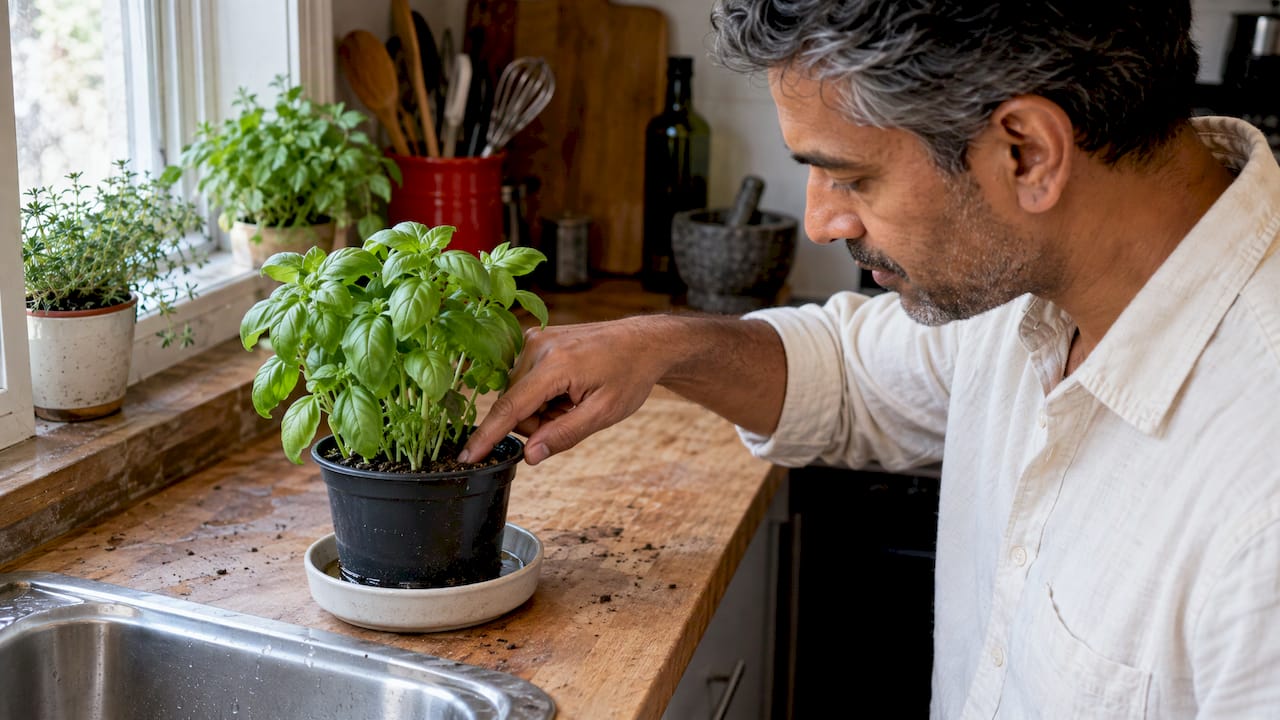
Home Hardware notes that once herbs are established, you can water about every two weeks, waiting until the soil dries. Treat that as a starting rhythm and not a rule. A small pot in a warm, sunny window dries out faster than a big pot in a cool room, and young seedlings need more frequent checks. Keep the soil moist but not waterlogged, as Feeds’n Needs puts it, and pour away any excess from the tray.
Hydroponic herb gardens
Hydroponics means growing plants in nutrient-rich water instead of soil. For herbs, that usually means a countertop unit with a small reservoir, a pump or wick, and a built-in light, or a do-it-yourself jar and net-pot system. It has become popular because it is clean, compact and good-looking, and it suits leafy herbs like basil, parsley, cilantro and mint particularly well.
What you need to know
- Keep the reservoir dark. The Penn State-affiliated gardening community at the Pennsylvania Horticultural Society advises keeping hydroponic reservoirs dark to prevent algae growth. If your jar is clear glass, wrap it in foil or opaque paper.
- Light still rules. Water and nutrients do not replace light. Most countertop units include a lamp for this reason, and a window-only setup will face the same winter challenge as a soil pot.
- Nutrients need attention. Use a fertilizer made for hydroponics and follow the label, because plain water will not feed the plants. Canadian grower guides discuss pH and nutrient concentration targets for herbs, so check the instructions that come with your nutrient mix.
- Choose the right herbs. Thirsty leafy herbs thrive. Rosemary, thyme and sage are happier in soil with sharp drainage.
Hydroponics versus potting mix
Soil is cheaper to start, more forgiving if you forget a week, and suits every herb. Hydroponics is tidier, makes watering easier and works well for people who want a display piece in a kitchen. Neither is better across the board. If you are new to growing, a soil pot teaches you a lot about how plants behave. If you travel often or dislike dirt, a self-contained unit may suit you better.
What to look for in an indoor herb garden kit
Kits bundle pots, light and often seed pods into one box, which takes the guesswork out of the first month. If you decide to buy one, judge it on these points:
- Growing method. Soil-based kits are forgiving and flexible. Hydroponic kits are cleaner and often come with a water-level indicator.
- Lighting. Look for an LED light with an adjustable arm or height, a built-in timer and a spectrum meant for plants. A kit with no light is only useful if you have an excellent window.
- Capacity. Count the planting spots. Three or four is plenty for a household that uses herbs in cooking a few times a week. More spots take more light and more counter space.
- Ongoing supplies. Check whether the kit uses proprietary seed pods or whether you can plant your own seeds. Pods are convenient, but your choice of herbs may be limited and refills add to the cost. Open systems let you grow anything that fits.
- Footprint and power. Measure your counter and the distance to an outlet, and check how much noise the pump makes if it is near where you sit or sleep.
- Ease of cleaning. Reservoirs and trays should come apart so you can rinse them. Algae and mineral buildup are easier to deal with when you can reach every surface.
A do-it-yourself setup can cost less than a branded kit. For a countertop with two to four plants, a small LED light on a clip or stand plus a few pots is often all you need. If you are tempted to go bigger, keep in mind that larger setups need stronger lights and more room.
Keep herbs healthy: harvesting and troubleshooting
Harvest the right way
Regular cutting encourages bushier growth, but do not cut more than a third off at a time, advises Colorado State University Extension. Snip just above a pair of leaves so new shoots can branch out. Taking the tips first keeps the plant compact and full.
Pinch basil flowers
Basil that flowers puts its energy into seed, and the flavour changes. A Canadian growing guide advises pinching basil flower buds right away, because leaf production drops once flowering begins and leaves taste bitter if flowers are allowed to stay for a week, as explained in this basil and herb guide. Use the pinched tips in your cooking.
Common problems and fixes
| Problem | Likely cause | What to do |
|---|---|---|
| Tall, thin, pale growth | Not enough light | Move closer to a south-facing window or add a grow light |
| Yellow leaves and soggy soil | Overwatering or no drainage | Let the soil dry, empty the saucer, check drainage holes |
| Wilting in dry soil | Underwatering or heat | Water thoroughly, move away from heating vents |
| Bitter basil | Flowering | Pinch off flower buds and harvest regularly |
| Green slime in a hydroponic jar | Light reaching the water | Cover the reservoir, clean it and refill |
| Tiny flying insects | Constantly wet soil | Let the surface dry between waterings and clear the saucer |
Because herbs are eaten, avoid spraying strong chemical pesticides on them. Start by isolating a bothered plant, wiping leaves, and fixing the conditions that attracted the pest, which is usually damp soil or low light. A garden centre can recommend products labelled safe for edible plants if you need more.
A simple first-month plan
- Week one: Pick your spot and measure it. Buy three or four herbs, pots with drainage, saucers and potting mix. Set up the light if you are using one.
- Week two: Pot everything up, water thoroughly and let the excess drain. Keep the pots in the brightest place you have.
- Weeks three and four: Check soil with your finger every few days. Rotate the pots a quarter turn so all sides get light. Take your first small harvest of chives or mint once the plants look established.
- Ongoing: Pinch basil flowers, snip regularly, and replace plants that have gone woody or tired. Succession-sow cilantro and dill, since they grow fast and then finish.
While you are in the kitchen mindset, you may like our guide to organizing kitchen cabinets fast, which helps you free up counter and shelf space for a herb corner.
Our perspective
Our team at Lizard’s Lunch sees the indoor herb garden as the friendliest doorway into gardening. It asks for very little: one bright spot, a handful of pots and a bit of curiosity. And it pays you back every time you reach for a sprig of basil instead of a plastic clamshell.
We believe the smartest approach is to start small and let light lead your decisions. Get one window or one shelf working well before you add more plants. Then explore the opportunities around it: a compact LED light for the darker months, a hydroponic countertop unit if you love a tidy display, or a windowsill planter that turns a plain ledge into a mini kitchen garden.
At Lizard’s Lunch we write guides across home, garden, tech and lifestyle because we think good ideas connect. A grow light is a tech upgrade, a herb pot is a décor choice and a fresh handful of mint is a better cup of tea. Our goal is to point you toward the opportunities that make your home a little greener and a lot more enjoyable.
Alexander
Reach readers who love to grow
If you run a business or a blog in the gardening, home or lifestyle world, our team welcomes partners who want to reach curious home growers. You can explore banner placements and guest post opportunities on our advertise with us page.
FAQ
Can I grow herbs on a windowsill without a grow light?
Yes, if the window gets plenty of direct sun. A south-facing window gives the most consistent light through the year, and Feeds’n Needs suggests at least six hours of sun daily. In deep winter, many Canadian homes will not hit that, so keep a small LED light ready as backup if plants start stretching.
Which herbs are easiest for beginners indoors?
Chives, mint, parsley and basil are forgiving starter herbs, and cilantro and dill are fun if you sow fresh seeds regularly. Mint spreads, so give it its own pot. Rosemary, thyme and sage want drier soil, so keep them apart from your thirstier herbs.
How often should I water indoor herbs?
There is no single schedule, because pot size, light and room temperature all change how fast soil dries. Check with your finger and water when the top of the soil is dry, letting extra water drain out. Home Hardware suggests that established herbs may only need water about every two weeks.
Is a hydroponic herb garden better than soil?
Neither wins in every case. Hydroponic units are clean, compact and well suited to leafy herbs, but they depend on light, a dark reservoir and the right nutrients. Soil is cheaper, more forgiving and works for every herb, including rosemary, thyme and sage.
Why are my indoor herbs tall and weak?
Usually it is a light problem. Herbs that do not get the conditions they like become thin and spindly, with smaller leaves and less aroma. Move them to a brighter window or add a grow light, then trim back leggy stems, taking no more than a third at a time.
Sources
- Here’s How to Start an Indoor Herb Garden, Home Hardware
- Indoor Herb Gardening Tips & How To, ScottsMiracle-Gro Canada
- How to Grow Your Own Indoor Herb Garden, Feeds’n Needs
- Popular Herbs To Grow Happily Indoors In Canada, Richters
- Indoor Growing Guide, City of Mississauga
- Growing Herbs Indoors, Penn State Extension
- Indoor herbs guide, Colorado State University Extension
- Harvesting the Future, South Dakota State University Extension
- Create a Windowsill Herb Garden with Hydroponic Gardening, Pennsylvania Horticultural Society
- Hydroponic Basil & Herbs Canada, Growers Guide










Leave a Comment
Your email address will not be published. Required fields are marked with *