
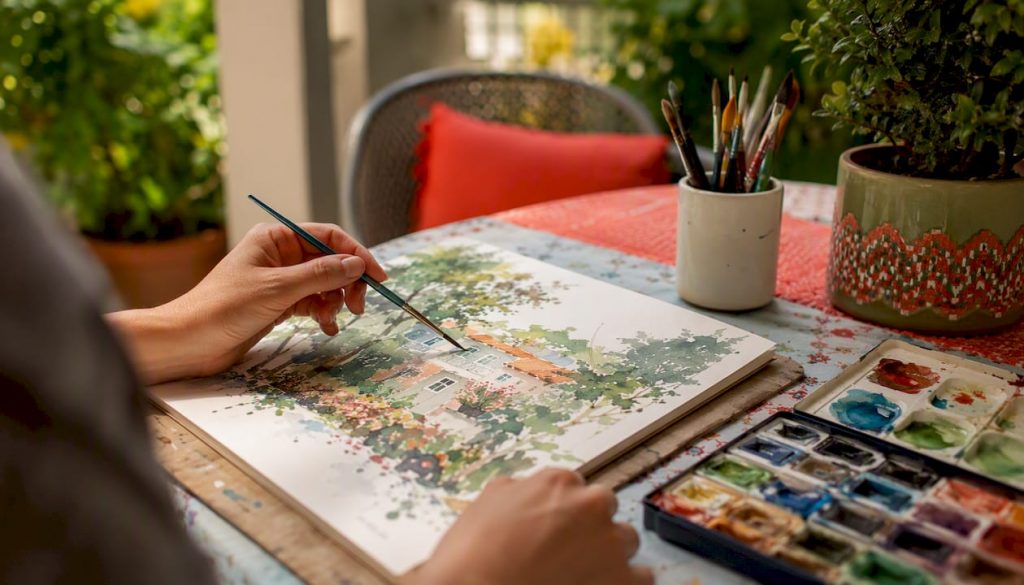
Discover how hobbies can elevate your mood, reduce stress, and enhance life satisfaction based on scientific evidence. Start today!
Hobbies lower stress, lift mood, and strengthen social connection — and the science behind that claim is more solid than most people realize. A large multinational analysis tracking roughly 93,000 older adults across 16 countries found consistent associations between hobby engagement and fewer depressive symptoms, higher happiness, and greater life satisfaction. You don’t need a dramatic life overhaul to feel those effects. Start with a single 30–45 minute session this week and pay attention to how you feel afterward.
Here’s what you’re likely to notice even from that first session:
- A quieter mind after stepping away from daily pressures
- A small but real sense of accomplishment from making or doing something
- A mood lift that lingers for an hour or more after you finish
- A reason to look forward to tomorrow
Key Takeaways
Hobbies consistently improve mental health by reducing stress, building social connection, and reinforcing self-efficacy — benefits supported by large observational studies and controlled experiments alike.
| Point | Details |
|---|---|
| Immediate physiological effect | A single 45-minute creative session reduced cortisol in roughly 75% of participants in one experimental study. |
| Large-scale observational support | A multinational analysis of ~93,000 older adults found hobby engagement linked to fewer depressive symptoms across all 16 countries studied. |
| Six core mechanisms | Stress reduction, social connection, mastery, present-focus, cognitive stimulation, and physical activity each explain part of the benefit. |
| Start small and consistent | Short sessions of 20–45 minutes, repeated three times a week, tend to outperform a single long weekly session for mood benefits. |
| Know the limits | Hobbies support mental wellness but do not replace clinical care; call or text 988 if you are in crisis. |
Table of Contents
- Why hobbies boost mental health: the core mechanisms
- What types of hobbies actually help your mental health?
- What does the research actually show?
- How to choose and start a hobby that supports your mental health
- When hobbies aren’t enough: knowing when to seek help
- Our team at Lizard’s Lunch recommends you experiment freely
- Sources
Why hobbies boost mental health: the core mechanisms
The mental health benefits of hobbies don’t come from magic. They come from specific, well-documented psychological and biological pathways that researchers have been mapping for decades.
Stress reduction (physiological). Creative activity directly affects your body’s stress chemistry. In one experimental study, a single 45-minute art-making session was associated with reduced cortisol levels and improved confidence in roughly 75% of participants. That’s a measurable physiological shift from less than an hour of painting or collage-making — no prior skill required.
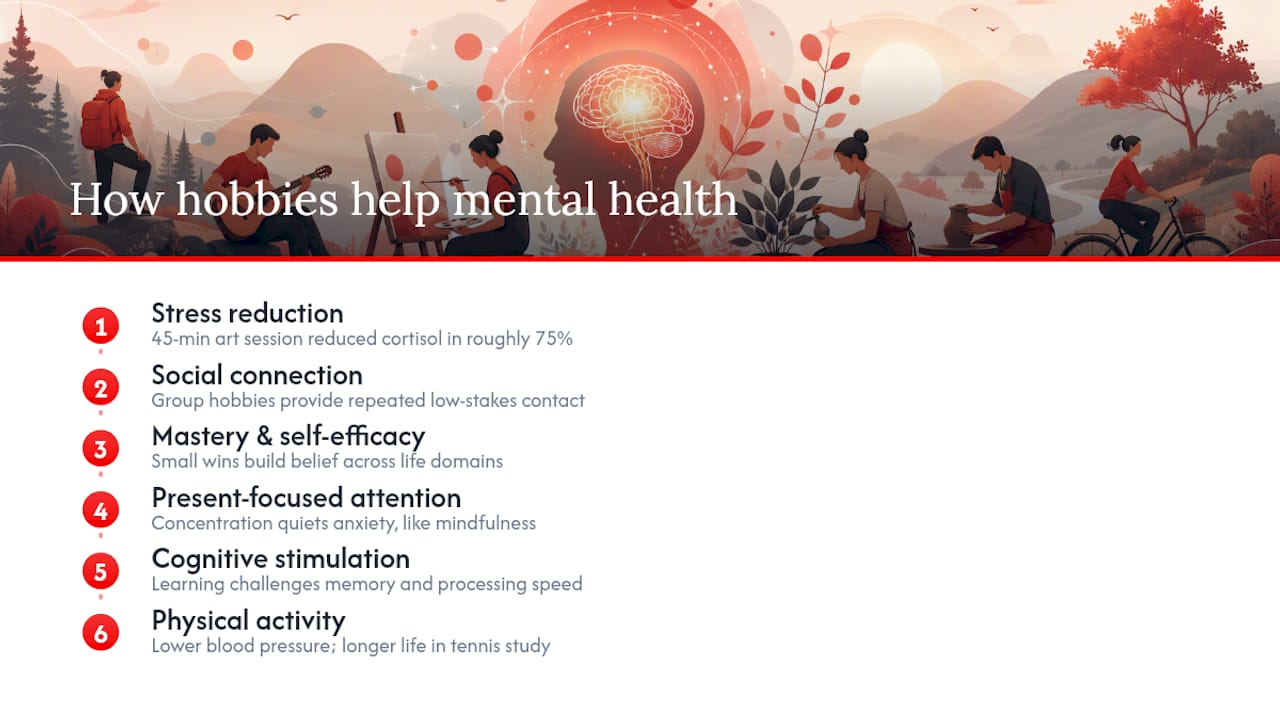
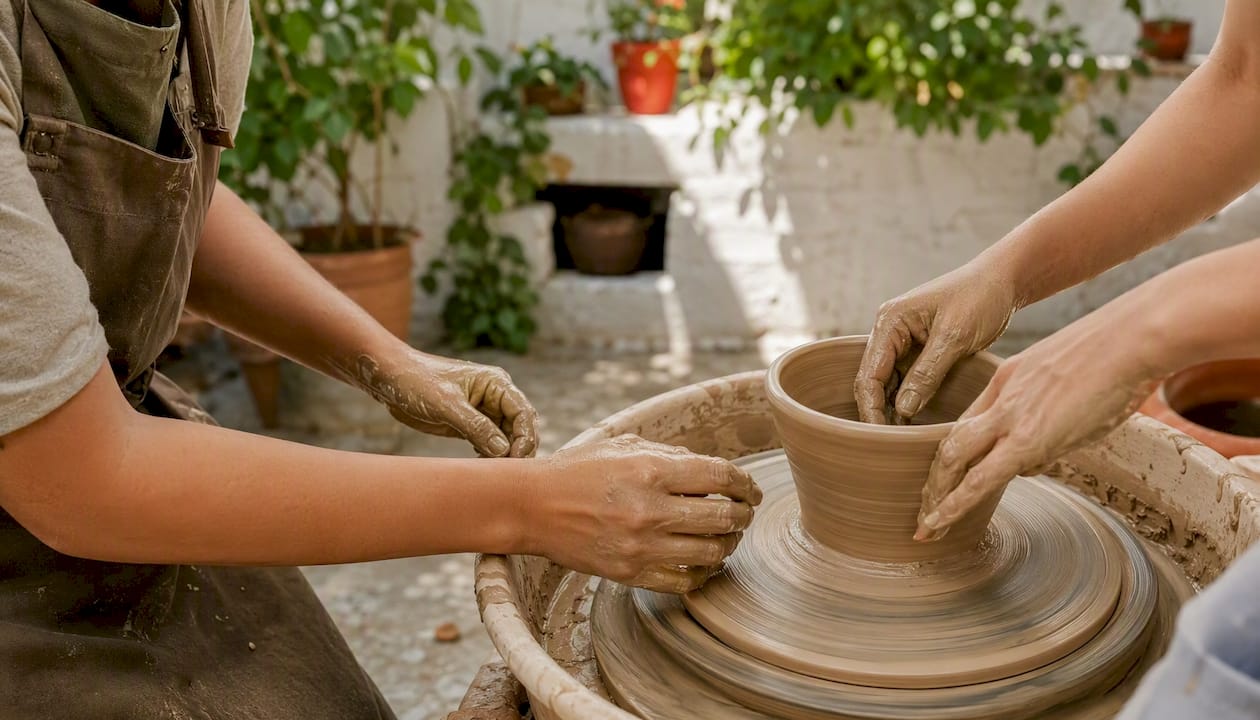
Social connection. Hobbies pursued with others — a pottery class, a running club, a book group — build the kind of repeated, low-stakes social contact that protects against isolation. Social connection is consistently identified as one of the most powerful components of hobby benefits, and group participation amplifies protective effects that solo activity alone can’t fully replicate. Local hobby communities are a particularly accessible entry point; resources like how hobby businesses gain local exposure show how active these networks can be in most cities.
Mastery and self-efficacy. Every time you improve at something — a chord progression, a sourdough loaf, a chess opening — your brain registers a small win. Psychologists call this self-efficacy: the belief that you can do hard things. That belief generalizes. People who feel capable in one domain tend to approach challenges in other areas of life with more confidence.
Present-focused attention. Hobbies that demand concentration — woodworking, knitting, drawing — pull your attention into the present moment in a way that closely resembles mindfulness practice. The mental chatter that feeds anxiety quiets when your hands are busy and your eyes are focused on a specific task.
Cognitive stimulation. Learning a new skill activates neural pathways that routine daily tasks don’t reach. Leisure activities linked to cognitive function include reading, puzzles, music, and strategy games — all of which challenge working memory and processing speed in ways that may support long-term brain health.
Physical activity. Active hobbies carry their own biological payload. Long-term tracking in the Copenhagen City Heart Study found that regular tennis players had notably longer life expectancy compared with nonplayers, with active leisure also linked to lower blood pressure and healthier cardiometabolic markers.
What types of hobbies actually help your mental health?
Research doesn’t crown one hobby as the winner. What matters is matching the activity to the mechanism you need most.
Creative arts (painting, drawing, crafts). The cortisol-reduction effect from the art-making study above applies broadly to any hands-on creative work. Try it today: Buy a $5 sketchbook and spend 30 minutes drawing whatever is in front of you. No art background needed — the process is the point.
Reading and writing. Reading literary fiction builds empathy and reduces stress; journaling helps process difficult emotions and clarify thinking. Both are free, solitary, and available at any hour. Try it today: Pick up a novel you’ve been meaning to read and commit to 20 pages before bed three nights this week.
Music — listening and playing. Systematic reviews of music and mental health report emotional and social benefits for regular music engagement, including reduced symptoms of depression and anxiety. Listening intentionally (not as background noise) and playing an instrument both count. Background music habits also shape focus and mood in ways worth understanding — research on music and focus explores that link in depth. Try it today: Put on an album you love, sit down, and listen without doing anything else for 30 minutes.
Nature-based activities and gardening. Time outdoors lowers cortisol and blood pressure through a combination of physical movement, sensory engagement, and reduced cognitive load. Gardening adds the mastery mechanism — you plant, tend, and watch something grow. Animals and nature contact also contribute to measurable stress reduction. Try it today: Buy one small herb plant and put it on your windowsill. Water it daily.
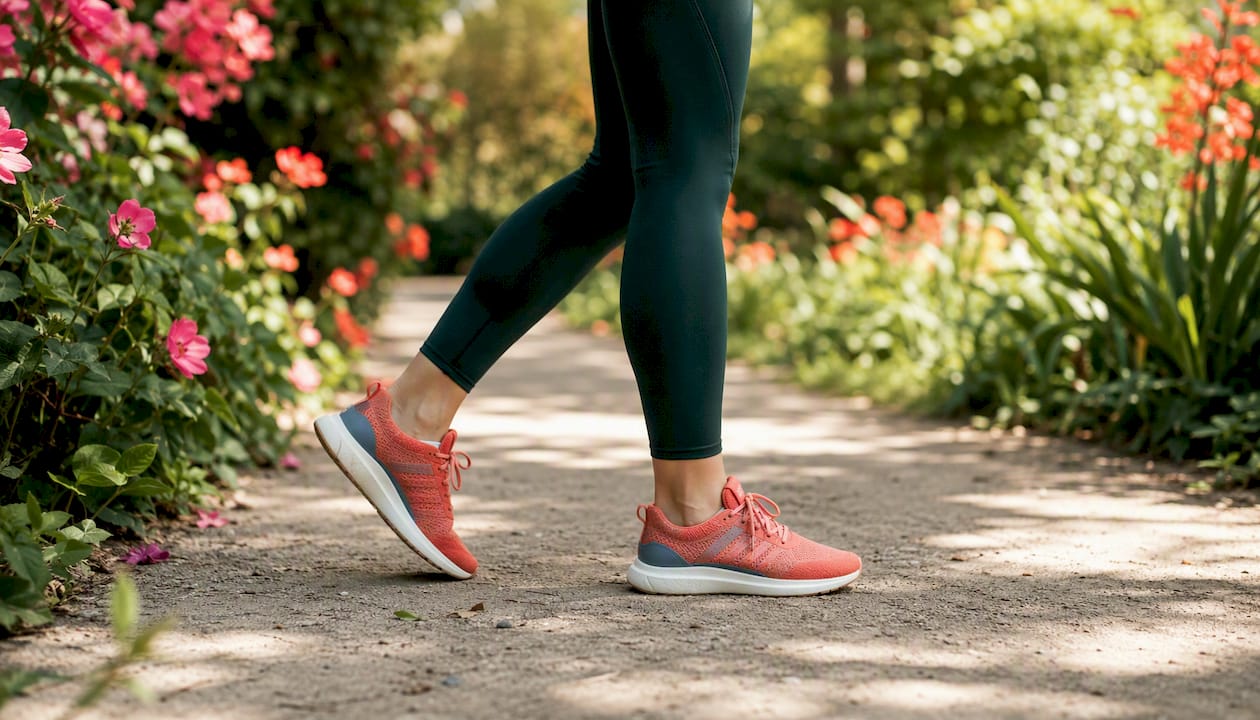
Physical sports and active leisure. Walking, tennis, pickleball, cycling — any activity that raises your heart rate combines the physiological benefits of exercise with the psychological benefits of leisure. The Copenhagen City Heart Study data on tennis players is striking: the longevity advantage over nonplayers was substantial in long-term tracking. Try it today: Walk for 30 minutes at a pace that makes conversation slightly effortful.
Clubs, volunteering, and social hobbies. These carry the strongest social-connection mechanism. Volunteering adds a sense of purpose that solo hobbies rarely match. Summer hobby ideas include group projects that work well for all experience levels. Try it today: Search for one local club or volunteer opportunity in your area and send a single inquiry email.
Skill-based hobbies (cooking, woodworking, puzzles). These are mastery machines. Each session produces a tangible result — a meal, a finished joint, a completed puzzle — that reinforces self-efficacy. UCLA Health identifies cognitive stimulation and mood benefits as two of the three proven advantages of hobbies, and skill-based activities hit both. Try it today: Cook one new recipe from scratch this week.
Pro Tip: You don’t need hour-long blocks to see results. Consistency across shorter sessions — even 20–30 minutes three times a week — tends to produce more lasting mood benefits than one long session on the weekend.
What does the research actually show?
The evidence base for leisure activities and mental health is genuinely encouraging, though it comes with important caveats about study design.
A 2024 scoping review mapped primary research through August 2024, identifying 12 articles from 11 studies. Three themes emerged consistently: reductions in depression, anxiety, and stress; improved quality of life and well-being; and strengthened social interaction and support. The authors called for further research, noting that the field is still developing methodologically.
The strongest large-scale evidence comes from the Nature Medicine multinational analysis of roughly 93,000 older adults across 16 countries. Hobby engagement predicted later improvements in life satisfaction and lower depressive symptoms across all 16 countries — a level of cross-cultural consistency that’s rare in behavioral research. Effect sizes were modest, and the study is observational, meaning it can’t prove that hobbies caused the improvements.
Harvard Health’s summary of pooled evidence across five large studies reaches the same conclusion: older adults with hobbies report better health, more happiness, and fewer depression symptoms — while being equally clear that most evidence is observational.
The experimental side is smaller but more direct. The 45-minute art-making study produced a physiological result (lower cortisol) in a controlled setting, which is a different and stronger kind of evidence than a survey. Music therapy trials and exercise studies add to the experimental picture.
Key limitations to keep in mind:
- Most large studies are observational — they show association, not causation
- Many focus on older adults; evidence for younger populations is thinner
- Self-selection is a real concern: people who feel well may be more likely to pick up hobbies
- Effect sizes in longitudinal studies tend to be modest, not transformative
The honest summary: the evidence consistently points in the same direction across very different study designs, populations, and countries. That consistency is meaningful, even without a randomized controlled trial.
How to choose and start a hobby that supports your mental health
The biggest barrier to starting is usually not time or money — it’s the paralysis of too many options combined with the fear of being bad at something new. Here’s a practical sequence to cut through both.
Step 1: Identify the mechanism you need most.
- Stress relief → choose a creative or nature-based activity
- Social connection → choose a club, class, or team sport
- Cognitive stimulation → choose a skill-based or strategy hobby
- Physical health → choose an active leisure activity
- Emotional processing → choose writing, music, or art
Step 2: Run a realistic time and cost check.
- Low cost, low time: journaling, walking, drawing, reading (under $15 to start, 20–30 minutes per session)
- Medium cost, medium time: cooking new recipes, gardening, puzzles ($20–$60 to start, 30–45 minutes per session)
- Higher investment: instrument lessons, team sports with gear, woodworking ($100+ to start, 1+ hour per session)
Start at the lowest tier that genuinely interests you. Upgrading later is easy; abandoning an expensive setup you never use is discouraging. A minimalist approach to hobbies — fewer tools, more focus — often produces better follow-through.
Step 3: Run a one-week micro-plan.
- Day 1: Pick your category and gather the simplest possible materials
- Day 2: First 30-minute session; note your mood before and after on a scale of 1–10
- Day 3: Rest or light reading about your chosen hobby
- Day 4: Second 30-minute session; try a small variation
- Day 5: Reflect: what felt good, what felt awkward?
- Day 6: Third session; invite someone to join or share what you made
- Day 7: Decide: continue, adjust, or try a different category next week
Step 4: Stack the habit.
Attach your hobby session to something you already do — right after your morning coffee, immediately after work, or before your evening routine. Habit stacking dramatically improves follow-through without requiring extra willpower. Pairing it with a healthy lifestyle framework helps you see how hobbies fit into the bigger picture of your well-being.
When hobbies aren’t enough: knowing when to seek help
Hobbies are a genuine, research-supported tool for mental wellness — but they are not a substitute for clinical care when you’re dealing with moderate-to-severe depression, anxiety disorders, trauma, or other diagnosable conditions.
If you are experiencing suicidal thoughts, severe functional decline (unable to work, eat, or maintain basic self-care), or a mental health crisis, please stop and reach out immediately. Call or text 988 (the Suicide and Crisis Lifeline) or call 911 if you or someone else is in immediate danger. These are medical emergencies, and no amount of hobby activity replaces urgent professional care.
Red flags that signal it’s time to talk to a clinician — not just pick up a paintbrush:
- Persistent low mood lasting more than two weeks that doesn’t lift with activity
- Inability to feel pleasure in things you used to enjoy (including hobbies themselves)
- Significant changes in sleep, appetite, or concentration
- Thoughts of self-harm or hopelessness
The good news: hobbies and professional treatment work well together. Many therapists actively encourage clients to identify and schedule leisure activities as part of behavioral activation — a core component of cognitive behavioral therapy. If you’re already working with a therapist or psychiatrist, bring up the hobby you’re considering. They can help you use it intentionally within your treatment plan. For broader mental health resources, the mental health section at Lizardslunch is a useful starting point.
Our team at Lizard’s Lunch recommends you experiment freely
Our team at Lizard’s Lunch has spent a lot of time with this research, and the thing that stands out most isn’t any single study — it’s the consistency. Across countries, age groups, and hobby types, the pattern holds: people who engage regularly in leisure activities they find meaningful tend to feel better. Not dramatically, not overnight, but measurably and durably.
What we’d encourage you to do is treat this month as an experiment. Pick three low-cost activities from the categories above, try each one for a week, and track your mood before and after each session. Don’t aim to be good at any of them. The benefit comes from the process — the engagement, the small wins, the moments of absorption — not from producing anything impressive. Prioritize showing up over performing well, and you’ll likely be surprised by how quickly a 30-minute session can shift your mental state.















Leave a Comment
Your email address will not be published. Required fields are marked with *